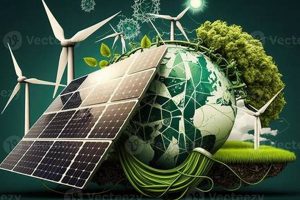
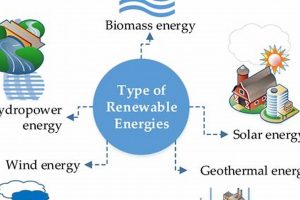
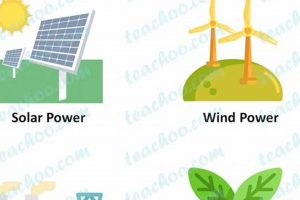
Sources of energy that are naturally replenished on a human timescale offer a sustainable alternative to finite fossil fuels. These resources include solar radiation, wind, geothermal heat, flowing water, and biomass. Solar energy, for instance, can be harnessed through photovoltaic cells converting sunlight directly into electricity, or through concentrated solar power systems which use mirrors to focus sunlight and generate heat to drive turbines. Wind energy utilizes wind turbines to convert the kinetic energy of wind into electricity. Geothermal energy taps into the Earth’s internal heat to produce electricity or provide direct heating. Hydropower utilizes the potential energy of water stored at a height to generate electricity as the water flows downwards. Biomass energy derives from organic matter, such as wood, crops, and waste, which can be burned directly for heat or converted into biofuels.
The implementation of such energy sources contributes significantly to mitigating greenhouse gas emissions, reducing dependence on fossil fuel imports, and creating energy security. Their deployment fosters economic growth through job creation in manufacturing, installation, and maintenance sectors. Historically, these resources have been utilized in various forms for centuries, but recent technological advancements have enhanced their efficiency and scalability, making them increasingly viable alternatives to conventional energy generation methods. Furthermore, widespread adoption promotes environmental conservation by reducing air and water pollution associated with fossil fuel extraction and combustion.
The following discussion will delve into the specific advantages and disadvantages of various energy types, exploring their potential for large-scale implementation and the challenges associated with their integration into existing energy grids. Technological advancements, policy incentives, and economic considerations that are driving the transition to a more sustainable energy future will also be examined.
Implementation Strategies for Sustainable Energy Sources
Maximizing the efficacy of reliance on sources that naturally replenish requires careful planning and strategic execution. The following points offer guidance on successful integration and optimization of these assets.
Tip 1: Diversify Energy Portfolio: Reliance on a single type creates vulnerability to weather patterns and resource availability. A mix of solar, wind, hydro, and geothermal provides stability and resilience.
Tip 2: Invest in Energy Storage Solutions: Intermittency of certain types, such as solar and wind, necessitates robust storage. Battery technology, pumped hydro storage, and thermal energy storage are viable options.
Tip 3: Modernize Grid Infrastructure: Legacy grids are often ill-equipped to handle distributed generation. Upgrades to smart grids, capable of managing bidirectional power flow, are essential.
Tip 4: Prioritize Energy Efficiency: Reducing overall consumption minimizes the demand placed on any energy source. Implementing energy-efficient building designs and industrial processes is crucial.
Tip 5: Implement Supportive Policy Frameworks: Government policies, such as tax incentives, feed-in tariffs, and renewable portfolio standards, can accelerate adoption by reducing initial investment costs and providing market certainty.
Tip 6: Promote Public Awareness and Education: Informed consumers are more likely to support and adopt sustainable energy technologies. Public education campaigns can address misconceptions and highlight the benefits.
Tip 7: Foster Technological Innovation: Continuous investment in research and development is necessary to improve efficiency, reduce costs, and expand the applicability of sustainable energy technologies.
Successful integration hinges on a holistic approach that considers technological feasibility, economic viability, and societal acceptance. Strategic planning and proactive implementation are paramount.
These implementation strategies offer a roadmap for effectively leveraging sustainable assets, facilitating a transition towards a cleaner and more resilient energy future. The next stage will examine specific technologies and their roles in achieving these goals.
1. Solar energy conversion

Solar energy conversion is a core component of a sustainable energy strategy, representing a direct pathway to harnessing a virtually inexhaustible energy source. The process fundamentally involves transforming solar radiation into usable forms of energy, primarily electricity or heat. The effectiveness of this transformation directly influences the overall viability of any sustainable energy system. Photovoltaic (PV) cells, which directly convert sunlight into electricity via the photovoltaic effect, exemplify this process. Concentrated Solar Power (CSP) systems, on the other hand, utilize mirrors or lenses to focus sunlight onto a receiver, generating heat that drives turbines to produce electricity. The impact of widespread solar conversion extends to reducing reliance on fossil fuels, thereby mitigating greenhouse gas emissions and promoting environmental sustainability. For example, large-scale solar farms, such as the Ivanpah Solar Electric Generating System in California, demonstrate the practical potential of solar conversion to contribute significantly to electricity grids.
Practical applications of solar conversion extend beyond utility-scale power generation. Distributed solar generation, involving rooftop solar panels on residential and commercial buildings, empowers individuals and businesses to generate their own electricity, reducing their carbon footprint and dependence on centralized power grids. Additionally, solar thermal applications, such as solar water heating and solar air conditioning, provide efficient and sustainable solutions for heating and cooling needs. The continued development of advanced solar technologies, including perovskite solar cells and bifacial panels, promises to further enhance the efficiency and cost-effectiveness of solar conversion. These ongoing innovations are critical for ensuring that solar power becomes an increasingly competitive and accessible energy option.
In summary, solar conversion plays a pivotal role in realizing a future powered by sources that naturally replenish. Its capacity to reduce carbon emissions, promote energy independence, and provide versatile applications across various sectors underscores its importance. While challenges remain, such as intermittency and land use considerations, the continued advancements in technology and supportive policy frameworks are essential for maximizing the potential of solar energy and accelerating the transition towards a more sustainable energy landscape.
2. Wind power generation

Wind power generation, as a key element of renewable energy infrastructure, represents a technologically mature method for converting the kinetic energy of wind into electricity. Its significance stems from its capacity to provide a clean energy source with minimal environmental impact, aligning with broader efforts to reduce reliance on fossil fuels and promote sustainable energy practices.
- Turbine Technology and Design
The evolution of turbine technology has significantly enhanced the efficiency and reliability of wind power generation. Modern wind turbines, characterized by sophisticated aerodynamic designs and advanced control systems, maximize energy capture from varying wind conditions. For example, the development of larger rotor diameters allows turbines to sweep a greater area, capturing more wind energy and increasing power output. Real-world implementations, such as offshore wind farms, demonstrate the viability of deploying advanced turbine technologies to harness stronger and more consistent wind resources. The implications of these advancements include reduced costs of electricity generation and improved grid integration capabilities.
- Grid Integration and Storage Solutions
Integrating wind power into existing electricity grids requires addressing the intermittent nature of wind resources. Grid operators employ sophisticated forecasting techniques and advanced grid management systems to accommodate the variable output from wind farms. Moreover, energy storage solutions, such as battery storage and pumped hydro storage, play a crucial role in mitigating fluctuations and ensuring a stable power supply. The Hornsdale Power Reserve in South Australia serves as a prime example, showcasing the effectiveness of integrating large-scale battery storage with wind power generation to provide grid stability and frequency regulation services. This integration enables a more reliable and resilient energy system, capable of accommodating a greater proportion of wind-generated electricity.
- Environmental Considerations and Mitigation Strategies
While wind power is generally considered environmentally friendly, potential impacts on wildlife, particularly birds and bats, necessitate careful planning and mitigation strategies. Turbine placement is a critical factor, with detailed environmental assessments conducted to minimize risks to local ecosystems. Innovative technologies, such as radar-based detection systems and blade feathering techniques, are employed to deter wildlife from approaching turbines, reducing collision risks. Furthermore, ongoing research focuses on developing quieter turbine designs and improved blade materials to minimize noise pollution and visual impacts. The implementation of these mitigation strategies is essential for ensuring the sustainable development of wind power generation.
- Economic Viability and Policy Support
The economic viability of wind power generation is increasingly competitive with conventional energy sources, driven by technological advancements and economies of scale. Government policies, such as tax incentives, feed-in tariffs, and renewable portfolio standards, play a crucial role in promoting wind energy deployment. These policies provide financial incentives and create a stable market for wind-generated electricity, attracting private investment and driving down costs. For example, the Production Tax Credit (PTC) in the United States has been instrumental in supporting the growth of the wind industry, incentivizing wind farm development and fostering innovation. The long-term economic benefits of wind power include reduced fuel costs, job creation, and enhanced energy security.
The diverse facets of wind power generation, ranging from turbine technology to environmental considerations and economic viability, underscore its critical role within the framework of examples renewable resource. By addressing the challenges associated with intermittency, environmental impacts, and grid integration, wind power continues to emerge as a central pillar of a sustainable energy future, contributing significantly to the reduction of greenhouse gas emissions and the diversification of energy sources.
3. Hydropower technologies

Hydropower technologies, a mature and widely implemented form of electrical generation, represent a significant category within the broader scope of sustainable power sources. Their relevance stems from the reliance on the continuous water cycle, ensuring a constant source of energy under appropriate geographical conditions. The subsequent discussion delineates key facets of hydropower technologies, illuminating their operational principles, applications, and implications.
- Dam-Based Hydropower
Dam-based hydropower involves the construction of a dam to create a reservoir, storing water at a height. This potential energy is then converted to kinetic energy as water flows through turbines, generating electricity. The Three Gorges Dam in China exemplifies this approach, providing substantial electricity generation capacity, albeit with significant environmental and social impacts. Dam-based hydropower contributes a stable source of electricity but necessitates careful environmental impact assessments and mitigation strategies due to potential effects on river ecosystems and local communities.
- Run-of-River Hydropower
Run-of-river hydropower systems divert a portion of a river’s flow through a channel to power turbines, typically without significant reservoir storage. This approach minimizes the environmental impact associated with large dams. The Cheakamus Generating Station in British Columbia, Canada, demonstrates run-of-river technology, delivering electricity with reduced alteration of the natural river flow. Run-of-river hydropower offers a more environmentally benign alternative, but its electricity generation capacity is dependent on the natural flow variability of the river.
- Pumped Storage Hydropower
Pumped storage hydropower utilizes two reservoirs at different elevations. During periods of low electricity demand, water is pumped from the lower reservoir to the upper reservoir, storing potential energy. During periods of high demand, water is released from the upper reservoir to generate electricity. The Bath County Pumped Storage Station in Virginia, USA, showcases this technology, providing grid-scale energy storage and enhancing grid stability. Pumped storage hydropower offers a valuable mechanism for balancing electricity supply and demand, particularly in systems with significant reliance on variable power sources.
- Small-Scale Hydropower
Small-scale hydropower projects, typically with a capacity of less than 10 megawatts, provide localized electricity generation for rural communities or industrial facilities. These systems can utilize existing infrastructure, such as irrigation canals or water treatment plants, minimizing environmental disturbance. Numerous examples exist worldwide, demonstrating the adaptability of small-scale hydropower to diverse geographical settings and energy needs. Small-scale hydropower offers a decentralized energy solution, enhancing energy security and promoting local economic development.
The various modalities of hydropower technologies underscore their versatility and continued relevance within the framework of naturally replenished energy sources. Each approach presents unique advantages and disadvantages, necessitating careful consideration of environmental, social, and economic factors in project planning and implementation. Hydropower continues to contribute significantly to the electricity mix globally, and ongoing technological advancements, such as improved turbine designs and environmental mitigation strategies, are further enhancing its sustainability credentials.
4. Geothermal applications

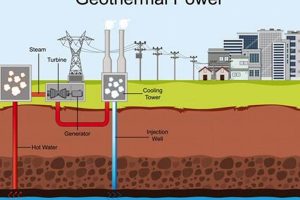
Geothermal applications, intrinsically linked to naturally replenished energy sources, represent a consistent and reliable alternative to fossil fuels. The earth’s internal heat, continuously generated through radioactive decay and residual heat from planetary formation, serves as the primary energy source. This thermal energy manifests in various forms, including high-temperature steam reservoirs, hot water aquifers, and lower-temperature ground sources, facilitating diverse applications. Geothermal power plants utilize high-temperature steam to drive turbines and generate electricity, while direct-use applications exploit lower-temperature resources for heating, cooling, and industrial processes. The Hellisheii Geothermal Power Plant in Iceland, for example, demonstrates the capacity to generate both electricity and heat for district heating, effectively harnessing a stable and renewable energy source.
The significance of these applications within the context of sustainable energy systems lies in their consistent availability and relatively small environmental footprint compared to conventional energy sources. Unlike solar or wind power, geothermal resources are not subject to diurnal or seasonal variations, providing a baseload power supply. Direct-use applications, such as geothermal heating and cooling, further reduce reliance on fossil fuels for thermal energy needs. Geothermal heat pumps, for instance, utilize the constant temperature of the earth to provide efficient heating and cooling for residential and commercial buildings, reducing energy consumption and emissions. The ongoing development of enhanced geothermal systems (EGS) aims to expand the accessibility of geothermal resources by accessing heat from dry or impermeable rocks, increasing the potential for geothermal energy production globally.
In summary, geothermal applications are essential elements of diversified and sustainable energy portfolios. Their capacity to deliver continuous power and reduce carbon emissions underscores their importance in mitigating climate change. While challenges related to resource exploration, initial capital costs, and potential localized environmental impacts exist, the continued innovation in geothermal technologies and supportive policy frameworks are crucial for maximizing the potential of this naturally replenished resource and accelerating the transition towards a more sustainable energy future.
5. Biomass energy production

Biomass energy production represents a significant category within examples of naturally replenished energy sources, deriving energy from organic matter. Its relevance is tied to the continuous cycle of plant growth and decomposition, allowing for a potentially sustainable energy source if managed responsibly. The following points detail crucial facets of biomass energy production.
- Direct Combustion
Direct combustion involves burning biomass materials, such as wood, agricultural residues, and energy crops, to generate heat for various applications, including electricity production and heating. A prime example is the use of wood chips in combined heat and power (CHP) plants, providing both electricity and district heating to communities. Sustainable forest management practices are crucial to ensure that direct combustion remains a renewable energy source, preventing deforestation and maintaining carbon sequestration rates. The implications include reducing reliance on fossil fuels for heating and electricity, provided that biomass is sourced from sustainably managed resources.
- Anaerobic Digestion
Anaerobic digestion is a biological process where microorganisms break down organic matter in the absence of oxygen, producing biogas. Biogas, composed primarily of methane and carbon dioxide, can be used as a fuel for electricity generation or upgraded to biomethane for injection into natural gas pipelines. Wastewater treatment plants commonly utilize anaerobic digestion to treat sewage sludge, generating biogas for on-site energy use. The environmental benefits include reducing methane emissions from waste disposal and providing a renewable energy source. The implications are the conversion of waste streams into valuable energy resources, promoting a circular economy.
- Biofuel Production
Biofuel production involves converting biomass into liquid fuels, such as ethanol and biodiesel, suitable for transportation. Ethanol is primarily produced from corn, sugarcane, and other starch-rich crops through fermentation, while biodiesel is produced from vegetable oils, animal fats, and recycled greases through transesterification. The use of biofuels as a transportation fuel can reduce greenhouse gas emissions compared to conventional gasoline and diesel, particularly when derived from sustainable feedstocks. For example, cellulosic ethanol, produced from non-food biomass sources like switchgrass and corn stover, offers a more sustainable alternative to first-generation biofuels. The implications include decarbonizing the transportation sector, a significant contributor to global greenhouse gas emissions.
- Gasification
Gasification is a thermal process that converts biomass into a gaseous fuel called syngas, composed primarily of carbon monoxide and hydrogen. Syngas can be used for electricity generation, heat production, or further processed into transportation fuels and chemicals. Integrated gasification combined cycle (IGCC) plants utilize syngas to power gas turbines, achieving high energy conversion efficiencies. The implications include the versatile use of biomass resources for producing a wide range of energy products, enhancing energy security and reducing reliance on fossil fuels. Also, it can be apply as an examples renewable resource.
These facets of biomass energy production highlight the diverse potential of organic matter to contribute to a sustainable energy system. While challenges related to feedstock sustainability, land use, and environmental impacts exist, the responsible management and technological advancements in biomass conversion technologies can maximize its benefits as a examples renewable resource, reducing reliance on fossil fuels and mitigating climate change.
6. Sustainable energy storage
Sustainable energy storage is fundamentally intertwined with the effective utilization of energy from examples of resources that are naturally replenished. The intermittent nature of many sustainable sources, such as solar and wind, necessitates robust storage solutions to ensure a reliable and consistent energy supply. Without efficient and scalable storage technologies, the potential of these resources remains constrained, hindering their ability to displace conventional fossil fuels. The direct result of inadequate storage is an increased reliance on dispatchable, often fossil-fuel-based, power sources to compensate for the fluctuations in energy supply from sustainable sources. This dependence undermines the overall sustainability goals of transitioning to cleaner energy systems.
The integration of storage technologies enhances the value and practicality of energy from sources that naturally replenish. For instance, battery storage systems coupled with solar photovoltaic installations allow for the capture and storage of solar energy during daylight hours, enabling its use during periods of low sunlight or at night. Similarly, pumped hydro storage facilities can store excess electricity generated by wind farms during periods of high wind, releasing it during times of low wind or peak demand. These examples demonstrate the tangible benefits of storage in mitigating the variability of energy from sustainable sources, improving grid stability, and increasing the penetration of renewable energy into the overall energy mix. Furthermore, advancements in energy storage technologies, such as redox flow batteries and compressed air energy storage, are continually expanding the possibilities for grid-scale storage, further enhancing the viability and scalability of naturally replenished energy sources.
In conclusion, sustainable energy storage is an indispensable component for the widespread adoption and effective utilization of energy from sustainable sources. It addresses the inherent intermittency challenges, enhances grid stability, and promotes a more resilient and reliable energy system. Ongoing investments in storage technologies, coupled with supportive policy frameworks, are essential to unlocking the full potential of energy from sustainable sources and accelerating the transition towards a cleaner and more sustainable energy future. The successful integration of storage into the broader energy infrastructure is a critical factor in achieving long-term sustainability goals and mitigating the impacts of climate change.
Frequently Asked Questions
The following questions address common inquiries regarding the nature and utilization of examples of renewable energy sources.
Question 1: What distinguishes a examples renewable resource from a non-renewable one?
Sources classified as “naturally replenished” are characterized by their ability to be replenished within a human timescale. Solar, wind, hydropower, geothermal, and biomass exemplify this characteristic. Non-renewable resources, such as fossil fuels and nuclear materials, are finite and cannot be regenerated at a comparable rate.
Question 2: How is the intermittency of solar and wind power addressed?
Intermittency is managed through a combination of strategies, including energy storage solutions (e.g., batteries, pumped hydro), grid diversification (integrating multiple renewable sources across a wide geographical area), improved weather forecasting, and demand-side management techniques. These strategies aim to balance supply and demand, ensuring grid stability.
Question 3: What are the primary environmental concerns associated with hydropower?
Hydropower, particularly dam-based systems, can have significant environmental impacts, including altered river ecosystems, habitat destruction, displacement of communities, and methane emissions from reservoirs. Careful planning, environmental impact assessments, and mitigation measures are essential to minimize these effects.
Question 4: Is biomass energy truly sustainable?
The sustainability of biomass energy depends on responsible sourcing and management practices. Sustainable forest management, utilization of agricultural residues, and cultivation of dedicated energy crops on marginal lands are key to minimizing deforestation, land use competition, and greenhouse gas emissions. Unsustainable biomass practices can negate the benefits and exacerbate environmental problems.
Question 5: What role do government policies play in promoting the adoption of naturally replenished energy?
Government policies, such as tax incentives, feed-in tariffs, renewable portfolio standards, and carbon pricing mechanisms, can significantly accelerate the adoption of naturally replenished energy by reducing initial investment costs, providing market certainty, and incentivizing innovation. Supportive policies are crucial for creating a level playing field and overcoming barriers to deployment.
Question 6: What are the cost trends for sources that naturally replenished?
The costs of various sources that naturally replenished, particularly solar and wind, have decreased substantially in recent years, making them increasingly competitive with conventional energy sources. Technological advancements, economies of scale, and policy support have driven these cost reductions. Continued cost declines are expected, further enhancing the economic viability of naturally replenished energy.
In essence, the effective integration of examples renewable resource necessitates a comprehensive understanding of their characteristics, challenges, and benefits. Strategic planning and technological innovation are crucial for realizing their full potential.
The subsequent article section will delve into future trends and innovations in the field.
Conclusion
The preceding exploration has elucidated the multifaceted nature of examples renewable resource, underscoring their critical role in the transition to a sustainable energy future. Solar, wind, hydropower, geothermal, and biomass, each with distinct characteristics and applications, represent viable alternatives to finite fossil fuels. Successful implementation hinges on strategic planning, technological advancements, and supportive policy frameworks to address intermittency, environmental impacts, and grid integration challenges.
The continued pursuit of innovation and the responsible deployment of these resources are essential for mitigating climate change, ensuring energy security, and fostering a more resilient and equitable energy system. The global community must prioritize the development and adoption of examples renewable resource to safeguard the environment and secure a sustainable future for generations to come. Focused action is paramount.