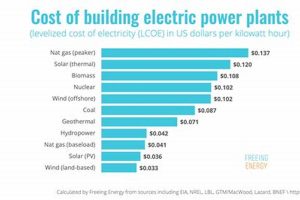
The affordability of energy sources that replenish naturally, such as solar, wind, hydro, and geothermal power, is a critical factor in the global transition to sustainable energy systems. Comparing the costs of these technologies with traditional fossil fuel-based sources requires considering not only the initial investment in infrastructure but also ongoing operational expenses, fuel costs (where applicable), and the externalities associated with each energy source. For example, while a solar photovoltaic system might require a higher upfront capital outlay, the fuel source (sunlight) is free, and operational costs are typically lower than those of a coal-fired power plant.
Evaluating the economic viability of these sustainable alternatives has significant implications for climate change mitigation, energy security, and economic development. Historically, renewable energy technologies were often considered more expensive than established fossil fuel options. However, technological advancements, economies of scale, and supportive government policies have driven down the costs of renewables considerably in recent decades. This cost reduction has made them increasingly competitive with, and in some cases cheaper than, conventional energy sources, particularly when factoring in the long-term environmental and health costs associated with fossil fuel use.
This discussion will delve into the multifaceted aspects of renewable energy economics, exploring the factors influencing cost competitiveness, the role of government policies and incentives, and the long-term economic benefits of transitioning to a sustainable energy future.
Tips for Evaluating Renewable Energy Costs
Assessing the economic viability of renewable energy requires a comprehensive understanding of various contributing factors. The following tips offer guidance for navigating this complex landscape.
Tip 1: Consider the full lifecycle cost. Analyze expenses beyond the initial investment, including operation, maintenance, and decommissioning. A seemingly inexpensive option upfront might incur significant costs over its lifespan.
Tip 2: Factor in externalities. Account for the environmental and social costs associated with different energy sources. Fossil fuels, for example, contribute to air pollution and climate change, imposing costs on society that are not reflected in their market price. Renewables, while sometimes having higher upfront costs, often have significantly lower societal costs.
Tip 3: Account for fuel price volatility. Renewable energy sources, such as solar and wind, utilize free and abundant resources, insulating consumers from the price fluctuations associated with fossil fuels.
Tip 4: Research government incentives. Many governments offer subsidies, tax breaks, and other incentives to encourage renewable energy adoption. These programs can significantly reduce the overall cost of implementation.
Tip 5: Evaluate long-term cost projections. Technological advancements and economies of scale are continually driving down the cost of renewable energy. Consider future cost trajectories when making investment decisions.
Tip 6: Compare different renewable energy technologies. The cost-effectiveness of different renewable technologies varies depending on geographic location, resource availability, and project scale. Conduct thorough research to determine the most suitable option for specific circumstances.
Tip 7: Seek expert advice. Consulting with energy professionals can provide valuable insights into the complexities of renewable energy economics and assist in making informed decisions.
By considering these factors, a clearer picture of the true costs and benefits of renewable energy emerges, facilitating informed decision-making and contributing to a sustainable energy future.
Ultimately, understanding the economic aspects of renewable energy is crucial for promoting widespread adoption and realizing the long-term benefits of a cleaner, more sustainable energy system.
1. Initial Costs

Initial costs represent a significant factor in the economic evaluation of renewable energy technologies. These upfront expenses encompass the purchase and installation of equipment, such as solar panels, wind turbines, or geothermal power plants, as well as associated infrastructure development, including grid connections and energy storage solutions. The capital-intensive nature of these initial investments often contributes to the perception that renewable energy is inherently expensive. For example, building a large-scale solar farm requires substantial investment in land acquisition, panel procurement, and grid integration. Similarly, offshore wind farms necessitate specialized vessels and infrastructure for installation in challenging marine environments. These high upfront costs can present a barrier to entry for individuals, businesses, and even some governments, potentially hindering the widespread adoption of renewable energy technologies.
However, focusing solely on initial costs provides an incomplete picture of the overall economic viability of renewable energy. While upfront expenses may be higher compared to some conventional energy sources, the absence of ongoing fuel costs and lower operating and maintenance expenses can lead to significant cost savings over the lifespan of a renewable energy project. For instance, once a solar panel system is installed, the energy source (sunlight) is free, unlike fossil fuel-based power plants that require continuous fuel purchases. Furthermore, advancements in manufacturing processes and economies of scale have contributed to a significant decline in the initial costs of renewable energy technologies over the past decade, making them increasingly competitive with traditional energy sources. Consider the falling price of solar photovoltaic modules, which has dropped dramatically, making solar power a more affordable option for consumers and businesses.
Therefore, a comprehensive cost analysis must consider both initial capital expenditures and long-term operational costs to accurately assess the economic competitiveness of renewable energy. While high upfront costs can present a challenge, the long-term cost savings, combined with the environmental and social benefits of reduced greenhouse gas emissions and improved air quality, contribute to the overall value proposition of renewable energy. Overlooking the long-term economic advantages of renewable energy based solely on initial costs can lead to suboptimal energy investment decisions and impede the transition to a sustainable energy future. Understanding the complete cost picture is essential for informed policymaking and investment strategies that promote the widespread adoption of clean energy technologies.
2. Long-term Costs

Evaluating the long-term costs associated with energy production is crucial for determining the true economic viability of any energy source, including renewables. While renewable energy technologies may require higher upfront investments, their long-term cost profiles often differ significantly from those of conventional fossil fuel-based systems. Understanding these long-term cost dynamics is essential to address the question of whether renewable energy is truly “too expensive.”
- Operational and Maintenance Costs
Renewable energy systems typically have lower operational and maintenance costs compared to fossil fuel plants. Solar and wind power, for example, require minimal maintenance due to fewer moving parts. Fossil fuel plants, on the other hand, necessitate regular maintenance of complex machinery and management of fuel supply chains. This difference in ongoing expenses can significantly impact the overall cost of energy production over the long term, potentially offsetting the higher initial investment costs of renewables.
- Fuel Costs
A key advantage of renewable energy sources is the absence of fuel costs. Solar, wind, hydro, and geothermal energy harness naturally replenishing resources, eliminating the need for ongoing fuel purchases. This contrasts sharply with fossil fuel plants, where fuel represents a significant and often volatile operating expense. The price stability associated with renewable energy provides long-term cost predictability, shielding consumers and businesses from fluctuating fuel markets.
- Decommissioning Costs
Decommissioning costs represent another factor in the long-term cost equation. While data on decommissioning renewable energy facilities is still relatively limited due to their longer lifespans, early indications suggest these costs are comparable to, or potentially lower than, those associated with decommissioning fossil fuel power plants. Further research and experience in this area will be necessary to provide more definitive comparisons.
- Life Cycle Cost Analysis
Life cycle cost analysis (LCCA) provides a comprehensive framework for evaluating the total cost of an energy system over its entire lifespan, from initial investment to decommissioning. LCCA considers all relevant costs, including capital expenditures, operational and maintenance expenses, fuel costs, and decommissioning costs. By considering the entire lifecycle, LCCA enables a more accurate comparison of the true cost of different energy sources, facilitating informed investment decisions and policy development. LCCA often reveals that while renewable energy may have higher upfront costs, their lower operating and fuel costs can lead to lower overall lifecycle costs compared to fossil fuels.
By analyzing these long-term cost factors, a more complete picture of the economic competitiveness of renewable energy emerges. The absence of fuel costs, coupled with generally lower operating and maintenance expenses, can significantly reduce the overall cost of renewable energy over its lifespan, potentially outweighing the higher initial investment. Therefore, considering long-term costs is essential for accurately assessing the affordability of renewable energy and making informed decisions about future energy investments.
3. Fuel Expenses

Fuel expenses represent a critical component in the overall cost comparison between renewable and non-renewable energy sources. A fundamental distinction between these two categories lies in the nature of their fuel source. Non-renewable energy sources, such as coal, natural gas, and oil, require continuous procurement of finite resources. These resources are subject to market fluctuations, geopolitical influences, and supply chain disruptions, all of which can significantly impact fuel expenses. This price volatility introduces uncertainty into long-term energy planning and can lead to unpredictable electricity costs for consumers and businesses. For example, the global energy crisis of 2021 demonstrated the vulnerability of economies reliant on fossil fuels, as price spikes reverberated throughout energy markets.
Renewable energy sources, conversely, derive their power from naturally replenishing resources like sunlight, wind, and water. Once the initial infrastructure is in place, the fuel itself is essentially free. This eliminates the ongoing and often volatile expense associated with procuring fuel for traditional power plants. Consider a solar photovoltaic installation: after the initial investment, the energy generated comes at no additional fuel cost. This predictable cost structure offers long-term price stability, insulating consumers and businesses from the fluctuations inherent in fossil fuel markets. This difference in fuel expenses is a key factor contributing to the decreasing cost competitiveness of fossil fuels compared to renewables.
The absence of fuel costs for renewable energy sources presents a significant advantage in the long-term economic analysis of energy production. While initial capital costs for renewable energy projects can be higher, the elimination of ongoing fuel expenses can lead to significant cost savings over the lifetime of the project. This predictability and cost stability are crucial factors in the growing adoption of renewable energy technologies and contribute directly to the evolving answer to the question, “Is renewable energy too expensive?” The shift away from fuel-dependent energy sources toward renewable alternatives represents a fundamental transition in the energy landscape, driven in part by the economic advantages associated with eliminating fuel expenses.
4. Environmental Impact

The environmental impact of energy production is a crucial factor in assessing the true cost of different energy sources and is central to the discussion surrounding the affordability of renewable energy. While traditional cost analyses often focus solely on market prices, a comprehensive evaluation must also consider the environmental externalities associated with each energy source. These externalities, such as air and water pollution, greenhouse gas emissions, and land degradation, represent costs imposed on society and the environment that are not typically reflected in market prices. Integrating these environmental costs into the economic equation provides a more complete picture of the true cost of energy production and significantly alters the discussion of whether renewable energy is “too expensive.”
- Greenhouse Gas Emissions
Fossil fuel combustion releases significant quantities of greenhouse gases, primarily carbon dioxide, which contribute to climate change. The long-term costs associated with climate change, including rising sea levels, extreme weather events, and disruptions to ecosystems, are substantial. Renewable energy sources, in contrast, produce minimal greenhouse gas emissions during operation, offering a significant environmental advantage and mitigating the long-term economic risks associated with climate change.
- Air and Water Pollution
Fossil fuel-based power plants contribute significantly to air and water pollution, impacting public health and ecosystems. Air pollutants, such as particulate matter and sulfur dioxide, are linked to respiratory illnesses and cardiovascular diseases, imposing healthcare costs on society. Water pollution from coal mining and oil spills can contaminate drinking water sources and harm aquatic life. Renewable energy sources generally have a much lower impact on air and water quality, reducing these environmental and health-related costs.
- Land Use and Degradation
Energy production can have significant land use impacts. Fossil fuel extraction, including coal mining and oil drilling, can lead to habitat destruction, soil erosion, and water contamination. While renewable energy technologies also require land, their footprint is often less impactful. For example, solar and wind farms can be co-located with other land uses, such as agriculture or grazing. Furthermore, the land use impact of renewable energy is often temporary, unlike the permanent damage associated with some fossil fuel extraction methods.
- Waste Disposal
Fossil fuel combustion generates waste products, including ash and slag from coal plants, which require disposal and can pose environmental risks. Nuclear power produces radioactive waste that requires long-term storage and management. Renewable energy technologies generate minimal waste, and some, such as solar panels, can be recycled at the end of their lifespan, further reducing their environmental impact.
By considering the full range of environmental impacts associated with different energy sources, the cost comparison between renewables and fossil fuels shifts significantly. The long-term costs associated with climate change, air and water pollution, and land degradation, while often difficult to quantify precisely, represent significant economic burdens on society. Renewable energy, by minimizing these environmental impacts, offers substantial economic benefits that are not always captured in traditional cost analyses. Therefore, incorporating environmental costs into the economic equation is essential for a complete understanding of the affordability of renewable energy and for making informed decisions about future energy investments. The transition to a sustainable energy future requires a holistic assessment of both economic and environmental costs, recognizing that protecting the environment is not merely an expense, but an investment in long-term economic stability and human well-being.
5. Government Incentives

Government incentives play a crucial role in influencing the affordability and adoption of renewable energy technologies. These incentives aim to bridge the cost gap between renewable and conventional energy sources, accelerating the transition to a more sustainable energy future. By reducing the financial burden associated with renewable energy investments, governments can stimulate market growth, encourage technological innovation, and ultimately address the question of whether renewable energy is “too expensive.” Several mechanisms are commonly employed to achieve these objectives.
Subsidies: Direct financial assistance, such as grants or rebates, can significantly lower the upfront costs of renewable energy installations. For example, the Investment Tax Credit in the United States provides a tax credit for investments in solar energy systems, effectively reducing the net cost for consumers and businesses. Such subsidies can make renewable energy projects more financially attractive, encouraging wider adoption.
Tax Credits and Deductions: Tax incentives, such as tax credits and deductions, offer financial relief to individuals and businesses investing in renewable energy. These mechanisms reduce the tax burden associated with renewable energy investments, further enhancing their economic viability. For instance, in several European countries, homeowners can deduct the cost of installing solar panels from their taxable income.
Feed-in Tariffs (FITs): FITs guarantee a fixed price for renewable energy fed into the electricity grid. This provides a stable revenue stream for renewable energy producers, encouraging investment in renewable energy projects. Germany’s early success with FITs played a significant role in driving down the cost of solar photovoltaic technology globally.
Renewable Portfolio Standards (RPS): RPS policies mandate that a certain percentage of electricity generation must come from renewable sources. These regulations create demand for renewable energy, driving investment in the sector and contributing to cost reductions through economies of scale. Many states in the US have implemented RPS policies, accelerating the growth of renewable energy capacity.
Net Metering: Net metering allows consumers who generate their own renewable energy to sell excess electricity back to the grid. This offsets the cost of electricity consumption from the grid and can significantly enhance the economic attractiveness of rooftop solar installations. Net metering policies have been instrumental in promoting residential solar adoption in countries like Australia.
The effectiveness of government incentives in promoting renewable energy adoption hinges on several factors, including policy design, market conditions, and technological advancements. Well-designed incentive programs can stimulate market growth, drive down costs, and accelerate the transition to a sustainable energy future. However, poorly designed or implemented policies can lead to unintended consequences, such as market distortions or inefficient allocation of resources. Careful evaluation and ongoing adjustments are crucial for maximizing the effectiveness of government incentives in supporting the long-term viability and affordability of renewable energy. Understanding the role of government incentives in shaping the renewable energy landscape is essential for addressing the complex question of its affordability and for crafting effective policies that promote a sustainable energy future.
6. Grid Infrastructure

Grid infrastructure plays a critical role in the economic viability of renewable energy. The existing grid, primarily designed for centralized fossil fuel power plants, often faces challenges integrating decentralized and intermittent renewable sources like solar and wind. Upgrading and expanding the grid to accommodate these resources is essential, but raises questions about cost and efficiency, directly impacting the overall expense of transitioning to renewable energy.
- Transmission Capacity
Renewable energy resources are often located far from population centers, requiring extensive transmission lines to deliver power to consumers. Building new transmission infrastructure involves significant upfront costs, potentially impacting the overall cost-effectiveness of renewable energy projects. For example, offshore wind farms necessitate long-distance subsea cables to connect to the onshore grid, adding to the project’s expense. Expanding transmission capacity is crucial for maximizing the benefits of geographically diverse renewable resources.
- Grid Stability and Reliability
The intermittent nature of solar and wind power presents challenges for grid stability. Maintaining a consistent electricity supply requires sophisticated grid management systems and potentially energy storage solutions to compensate for fluctuations in renewable energy generation. These additional requirements can influence the overall system cost, adding complexity to the economic assessment of renewable energy integration. Advanced grid technologies, such as smart grids and demand-side management, are crucial for ensuring a reliable electricity supply with increasing renewable energy penetration.
- Grid Modernization
Modernizing the existing grid to accommodate renewable energy involves integrating advanced technologies, such as smart meters, sensors, and automated control systems. These upgrades enhance grid flexibility and efficiency, enabling better integration of intermittent renewable sources and potentially reducing the need for costly new transmission lines. However, grid modernization requires substantial investments, impacting the economics of renewable energy adoption. Investing in grid modernization is crucial for enabling a smooth transition to a higher penetration of renewable energy resources.
- Energy Storage
Energy storage technologies, such as batteries and pumped hydro storage, play an increasingly important role in addressing the intermittency challenges associated with renewable energy. Storing excess renewable energy during periods of high generation and releasing it during periods of low generation or peak demand enhances grid stability and reliability. However, energy storage technologies add to the overall system cost, influencing the economic viability of renewable energy integration. As storage technologies continue to develop and costs decline, their role in enabling cost-effective renewable energy integration will become increasingly prominent.
The cost of grid infrastructure upgrades and expansion directly affects the overall expense associated with integrating renewable energy sources. While these upgrades represent a significant investment, they are essential for realizing the full potential of renewable energy and transitioning to a more sustainable energy system. Balancing the cost of grid infrastructure with the benefits of renewable energy is a key challenge in determining the most cost-effective pathway to a decarbonized energy future. The ongoing development of smart grid technologies and energy storage solutions holds significant potential for optimizing grid integration and minimizing the cost of accommodating renewable energy resources.
7. Technological Advancements
Technological advancements are central to the evolving cost dynamics of renewable energy, directly addressing the question of its affordability. Continuous innovation across various aspects of renewable energy technologies has driven significant cost reductions, making renewables increasingly competitive with conventional energy sources. Examining these advancements provides crucial insights into the trajectory of renewable energy costs and their potential to become a dominant force in the global energy landscape.
- Material Science and Manufacturing Processes
Advancements in material science have led to the development of more efficient and durable components for renewable energy systems. For example, improvements in silicon wafer production and solar cell design have significantly increased the efficiency of photovoltaic panels while simultaneously reducing manufacturing costs. Similarly, the development of lighter and stronger materials for wind turbine blades allows for larger turbines, capturing more wind energy and reducing the cost per unit of electricity generated.
- Automation and Robotics
Automation and robotics are playing an increasingly important role in reducing the cost of manufacturing and installing renewable energy systems. Automated production lines for solar panels and wind turbine components increase manufacturing efficiency and reduce labor costs. Furthermore, the use of drones and robots for site inspections and maintenance of renewable energy installations reduces operational expenses and improves safety.
- Artificial Intelligence and Machine Learning
Artificial intelligence (AI) and machine learning are being applied to optimize the performance and reduce the cost of renewable energy systems. AI algorithms can predict weather patterns to optimize wind farm output and adjust solar panel positioning for maximum sunlight capture. Predictive maintenance using machine learning can identify potential equipment failures before they occur, minimizing downtime and reducing maintenance costs.
- Energy Storage Technologies
Advancements in energy storage technologies are essential for addressing the intermittency challenges associated with renewable energy sources. The development of more efficient and cost-effective batteries, as well as advancements in pumped hydro storage and other storage solutions, enhances the reliability of renewable energy and reduces its overall cost by enabling better grid integration and reducing the need for backup power from conventional sources.
These technological advancements, coupled with supportive policies and market forces, are driving down the cost of renewable energy and reshaping the global energy landscape. As innovation continues, renewable energy is becoming increasingly cost-competitive with fossil fuels, paving the way for a cleaner, more sustainable energy future. The ongoing development and deployment of these technologies are crucial for addressing climate change and ensuring long-term energy security. Continued investment in research and development will further accelerate the pace of innovation, driving down costs and solidifying the role of renewable energy as a dominant force in the global energy mix.
Frequently Asked Questions
This section addresses common inquiries regarding the cost of renewable energy technologies, aiming to provide clear and concise information.
Question 1: Are renewable energy technologies more expensive than fossil fuels?
The cost comparison between renewable and fossil fuel energy is complex and depends on various factors, including technology type, location, and government policies. While upfront investment costs for some renewable technologies can be higher, operational costs are often lower due to the absence of fuel expenses. Furthermore, factoring in the environmental costs of fossil fuels can shift the economic balance in favor of renewables.
Question 2: How have the costs of renewable energy technologies changed over time?
The costs of renewable energy technologies, particularly solar and wind power, have decreased dramatically over the past decade due to technological advancements, economies of scale, and supportive government policies. In many regions, renewable energy is now cost-competitive with, and in some cases cheaper than, fossil fuels.
Question 3: What are the primary cost components of a renewable energy project?
The primary cost components of a renewable energy project include initial capital costs (equipment, installation, and infrastructure), operational and maintenance costs, and decommissioning costs. Financing costs and grid connection fees can also contribute to the overall project expense.
Question 4: How do government incentives impact the affordability of renewable energy?
Government incentives, such as tax credits, subsidies, and feed-in tariffs, can significantly reduce the cost of renewable energy, making it more attractive for consumers and businesses. These incentives play a crucial role in accelerating the adoption of renewable energy technologies.
Question 5: What are the long-term cost implications of relying on fossil fuels?
The long-term costs associated with fossil fuels include the environmental and health impacts of air and water pollution, the economic risks associated with climate change, and the geopolitical vulnerabilities associated with dependence on finite resources. These costs are often not fully reflected in market prices.
Question 6: How does the cost of renewable energy influence energy independence and security?
Renewable energy sources, being domestically available in many cases, can enhance energy independence and security by reducing reliance on imported fossil fuels. This can contribute to greater price stability and reduce vulnerability to geopolitical events.
Understanding the various factors influencing the cost of renewable energy is essential for informed decision-making and policy development. While initial costs can be a consideration, the long-term economic and environmental benefits of renewable energy increasingly outweigh the upfront investment.
The subsequent section will explore the future trends and projections for renewable energy costs and their implications for the global energy transition.
Is Renewable Energy Too Expensive? A Conclusion
The question of whether renewable energy is too expensive requires a nuanced understanding that extends beyond simple comparisons of initial investment costs. This exploration has revealed that evaluating the economic viability of renewable energy necessitates considering a multitude of factors, including long-term operational and fuel expenses, environmental externalities, government incentives, grid infrastructure requirements, and the transformative impact of technological advancements. While upfront costs for some renewable technologies can be higher than those for fossil fuel-based systems, the absence of fuel costs, coupled with generally lower operational and maintenance expenses, often leads to significant cost savings over the lifetime of a renewable energy project. Furthermore, incorporating the environmental and societal costs associated with fossil fuel use significantly alters the economic balance, often favoring renewable alternatives.
The transition to a sustainable energy future requires a paradigm shift in how we evaluate energy costs. A comprehensive assessment must encompass not only the immediate financial implications but also the long-term economic, social, and environmental benefits of embracing clean energy technologies. Continued investment in research, development, and deployment of renewable energy technologies, coupled with supportive policies and smart grid infrastructure development, will further drive down costs and accelerate the global transition towards a cleaner, more secure, and ultimately more affordable energy future. The question is not simply whether renewable energy is too expensive today, but rather what the long-term costs of inaction will be if we fail to embrace the transformative potential of sustainable energy solutions.