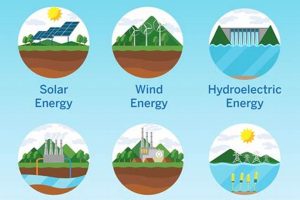
Hydropower currently generates the largest share of renewable electricity globally. Harnessing the energy of moving water, typically through dams and turbines, this technology has a long history and is deployed worldwide. A significant advantage of hydropower is its ability to provide baseload power, meaning it can consistently produce electricity unlike intermittent sources such as solar and wind.
The widespread adoption of hydropower stems from its established technology and relatively low operating costs once the initial infrastructure is in place. It plays a vital role in reducing reliance on fossil fuels and mitigating greenhouse gas emissions. Furthermore, hydropower reservoirs can offer additional benefits, including water storage for irrigation, flood control, and recreational opportunities. However, large-scale hydropower projects can also have significant environmental and social impacts, such as altering river ecosystems and displacing communities.
This dominance of hydropower in the renewable energy landscape is expected to be challenged in the coming years by the rapid growth of other renewable energy sources, particularly solar and wind power. Exploring these emerging technologies and their potential to reshape the global energy mix will be critical for a sustainable future. Further discussion will address the specific advantages and disadvantages of these diverse renewable energy technologies, their current deployment status, and their projected growth trajectories.
Tips for Utilizing Hydropower Effectively
Maximizing the benefits of hydropower while mitigating its potential drawbacks requires careful planning and implementation. The following tips offer guidance for stakeholders involved in hydropower development and management.
Tip 1: Conduct Thorough Environmental Impact Assessments: Comprehensive assessments are crucial to understand the potential effects of hydropower projects on ecosystems, biodiversity, and surrounding communities. These assessments should inform project design and mitigation strategies.
Tip 2: Prioritize Sustainable Project Design: Incorporating fish ladders, maintaining adequate downstream flow rates, and minimizing reservoir footprint are key elements of sustainable hydropower development. Such measures can help reduce negative environmental impacts.
Tip 3: Explore Alternative Hydropower Technologies: Consider run-of-river hydropower projects, which typically have a smaller environmental footprint compared to large-scale dam projects. These systems generate electricity from the natural flow of a river without requiring large reservoirs.
Tip 4: Integrate Hydropower with Other Renewables: Combining hydropower with intermittent renewable sources like solar and wind can create a more reliable and resilient energy system. Hydropower’s ability to provide baseload power can compensate for the fluctuating nature of other renewables.
Tip 5: Engage with Local Communities: Meaningful consultation and engagement with affected communities are essential throughout the project lifecycle. This ensures that local concerns and priorities are addressed and that projects contribute to local development.
Tip 6: Invest in Research and Development: Continued research and development in hydropower technologies can improve efficiency, reduce costs, and minimize environmental impacts. Innovation is crucial for maximizing the long-term potential of hydropower.
Tip 7: Promote Transparency and Accountability: Open access to information about hydropower projects, including environmental and social impact assessments, fosters public trust and ensures responsible development.
By implementing these strategies, hydropower can contribute significantly to a sustainable energy future while minimizing negative impacts on the environment and local communities. Careful consideration of these factors will be paramount for the continued and responsible development of this crucial renewable energy source.
This discussion on optimizing hydropower usage serves as a foundation for a broader exploration of the future of renewable energy and the transition to a more sustainable energy landscape.
1. Water-driven electricity generation

Water-driven electricity generation, or hydropower, stands as the most widely utilized form of renewable energy globally. This dominance stems from several key factors, including the established technology, relatively low operating costs (post-construction), and the capacity to provide consistent baseload power, unlike intermittent sources like solar and wind. The process involves converting the potential energy of stored water, often behind dams, into kinetic energy by channeling it through turbines connected to generators. This mechanical energy is then transformed into electricity. Notable examples include the Three Gorges Dam in China and the Itaipu Dam on the border of Brazil and Paraguay, both massive hydropower installations showcasing the scale and potential of this technology.
The reliance on water resources directly influences the geographical distribution of hydropower plants. Regions with abundant rainfall and suitable topography are particularly well-suited for harnessing this energy source. The predictability of river flow, particularly in dam-regulated systems, contributes significantly to hydropower’s role as a reliable baseload provider. This contrasts with the intermittency challenges faced by other renewable energy sources, highlighting a key advantage of hydropower. However, environmental considerations, including the alteration of river ecosystems, habitat disruption, and potential methane emissions from reservoirs, remain critical factors in hydropower development. Balancing energy generation with environmental preservation requires careful planning and mitigation strategies.
Understanding the central role of water-driven electricity generation within the broader context of renewable energy is crucial for informed decision-making. While hydropower currently leads in global capacity, its future trajectory depends on balancing its advantages with the environmental and social implications. The continued growth of alternative renewable sources like solar and wind power further complicates the landscape, potentially shifting the balance in the coming decades. Addressing the challenges and opportunities associated with each renewable energy source will be essential for building a sustainable energy future. The ongoing assessment of hydropowers long-term viability alongside emerging technologies remains vital for navigating the evolving energy landscape.
2. Mature technology

Hydropower’s status as the most utilized renewable energy source is intrinsically linked to its mature technological foundation. Decades of research, development, and practical application have resulted in a deep understanding of hydropower systems, enabling efficient and reliable electricity generation. This technological maturity translates into several key advantages, including lower relative capital costs compared to emerging renewable technologies, established best practices for construction and operation, and a readily available workforce skilled in hydropower engineering and maintenance. The long history of hydropower development has yielded robust and predictable performance characteristics, further solidifying its position as a dependable energy source.
Examples of this mature technology can be seen in the numerous large-scale hydropower projects operating worldwide. The Hoover Dam in the United States, completed in the 1930s, continues to provide significant electricity generation, demonstrating the longevity of well-designed hydropower infrastructure. Similarly, the Grand Coulee Dam, also in the United States, and numerous other projects across the globe highlight the enduring viability of hydropower technology. This established track record provides investors and governments with confidence in the long-term reliability and economic viability of hydropower projects.
A practical consequence of hydropower’s technological maturity is the reduced risk associated with project development and operation. The well-defined engineering principles and established construction practices minimize uncertainties and contribute to predictable cost estimations. This stability is a significant factor in attracting investment and facilitating the continued growth of hydropower capacity. However, even with a mature technology, ongoing innovation remains crucial. Advancements in turbine design, dam construction techniques, and environmental mitigation strategies are essential for enhancing the efficiency and sustainability of hydropower generation. While mature, hydropower technology must continue to evolve to address emerging challenges and maintain its relevance in a rapidly changing energy landscape.
3. Baseload power provision

A crucial aspect of hydropower’s dominance as the leading renewable energy source is its capacity to provide baseload power. Baseload refers to the minimum level of electricity demand required continuously throughout the day. Unlike intermittent renewable sources such as solar and wind, hydropower can consistently generate electricity regardless of weather conditions, making it a reliable foundation for power grids. This reliability is a significant factor in its widespread adoption and continued importance in the global energy mix.
- Consistent Electricity Generation:
Hydropower plants, particularly those with large reservoirs, can regulate water flow to generate electricity on demand. This allows them to consistently meet baseload requirements, providing a stable source of power that is not subject to fluctuations in weather patterns. This contrasts sharply with solar and wind power, which are inherently dependent on sunlight and wind availability, respectively. This consistent generation capability makes hydropower a valuable asset for grid stability and reliability.
- Grid Stability and Reliability:
The ability of hydropower to provide baseload power is essential for maintaining grid stability. A consistent supply of electricity is crucial for preventing blackouts and ensuring a reliable flow of power to consumers. Hydropowers predictability allows grid operators to balance supply and demand effectively, reducing the risk of power outages and ensuring the continuous operation of critical infrastructure. This reliability reinforces hydropowers role as a cornerstone of many electricity grids worldwide.
- Complementarity with Intermittent Renewables:
While hydropower excels in providing baseload power, its role evolves with the increasing integration of intermittent renewable sources like solar and wind. Hydropower plants can adjust their output to compensate for fluctuations in solar and wind generation, effectively smoothing out the intermittency of these sources. This complementary relationship enhances the overall reliability and stability of the grid as the share of renewable energy increases. Pumped hydro storage, where excess electricity is used to pump water uphill to a reservoir, further strengthens this synergy, providing a means to store surplus renewable energy and release it when needed.
- Energy Security and Independence:
Hydropower contributes to national energy security by reducing reliance on imported fossil fuels. By harnessing a domestic resource, hydropower can insulate countries from volatile global energy markets and price fluctuations. This energy independence strengthens national resilience and reduces vulnerability to external disruptions. Furthermore, the long lifespan of hydropower projects ensures a stable and predictable energy supply for decades, contributing to long-term energy planning and security.
The capacity of hydropower to provide baseload power is central to its position as the most used renewable energy source. This attribute makes it a valuable asset for grid stability, facilitating the integration of other renewable sources, and enhancing energy security. As the energy landscape continues to evolve, hydropower’s role in providing reliable baseload power will likely remain crucial, even as other renewable technologies mature and expand their share of the global energy mix. Understanding this core functionality is essential for appreciating the significance of hydropower in the present and future of renewable energy.
4. Environmental Considerations

Environmental considerations are inextricably linked to hydropower, the most widely used renewable energy source globally. While hydropower offers a clean energy alternative to fossil fuels, its development and operation present complex environmental challenges. Dam construction inherently alters river ecosystems, impacting water flow, sediment transport, and aquatic biodiversity. The creation of large reservoirs can inundate terrestrial habitats, displace communities, and alter downstream water quality. Furthermore, decaying organic matter in reservoirs can release methane, a potent greenhouse gas, potentially offsetting some of the climate benefits of hydropower.
The Three Gorges Dam in China, while a significant source of renewable energy, exemplifies the ecological trade-offs associated with large-scale hydropower projects. Its construction displaced over a million people and significantly altered the Yangtze River ecosystem. Similarly, the Belo Monte Dam in Brazil, despite employing a run-of-river design intended to minimize environmental impact, has faced criticism for its effects on fish migration and indigenous communities. These examples underscore the importance of comprehensive environmental impact assessments and the implementation of mitigation strategies to minimize negative consequences. Strategies such as fish ladders, controlled water releases to mimic natural flow patterns, and reforestation efforts can help mitigate some of these impacts, but they do not eliminate all environmental concerns.
Understanding the environmental footprint of hydropower is crucial for informed decision-making regarding energy development. Balancing the demand for clean energy with the need to protect ecosystems requires a nuanced approach. While hydropower offers a valuable renewable energy source, its environmental impacts necessitate careful planning, robust mitigation efforts, and ongoing monitoring. Furthermore, considering alternative renewable energy sources and promoting energy efficiency measures can reduce reliance on large-scale hydropower projects, particularly in ecologically sensitive areas. The continued growth of solar and wind power offers promising pathways towards a more sustainable energy future, potentially lessening the reliance on hydropower and its associated environmental challenges. A comprehensive understanding of these complex interactions is crucial for navigating the future of renewable energy and its role in a sustainable world.
5. Global prevalence

Hydropower’s global prevalence solidifies its position as the most utilized renewable energy source. This widespread adoption stems from several interconnected factors. The mature technology, coupled with relatively low operating costs (after initial infrastructure investment), makes hydropower an attractive option for many countries. Furthermore, the capacity to provide baseload power, a crucial requirement for stable electricity grids, distinguishes hydropower from intermittent renewable sources like solar and wind. The geographical distribution of suitable rivers and water resources also contributes to hydropower’s global reach, although this distribution is uneven, favoring certain regions with abundant water resources.
Specific examples illustrate hydropower’s global footprint. China, with its vast river systems and ambitious infrastructure projects, leads the world in hydropower capacity, exemplified by the Three Gorges Dam. Brazil, Canada, and the United States also possess significant hydropower resources and rely on them for a substantial portion of their electricity generation. Norway, with its mountainous terrain and abundant rainfall, generates nearly all of its electricity from hydropower, showcasing the potential of this resource in specific geographical contexts. These examples demonstrate how geographical factors and national energy policies influence the prevalence of hydropower in different regions. However, access to financing and technical expertise can be barriers to hydropower development in less developed countries, highlighting the uneven global distribution of this resource.
Understanding the global prevalence of hydropower provides crucial insights into the current state of renewable energy development. While hydropower currently dominates, the landscape is rapidly evolving. The decreasing costs and increasing efficiency of other renewable technologies, such as solar and wind power, are challenging hydropower’s dominance. Furthermore, growing awareness of the environmental and social impacts of large-scale hydropower projects, including habitat disruption and displacement of communities, necessitates a more nuanced approach to future development. Considering these factors alongside the ongoing global demand for clean energy underscores the importance of diversifying renewable energy portfolios and integrating various technologies to achieve a sustainable energy future.
Frequently Asked Questions
This section addresses common inquiries regarding hydropower, the most widely utilized renewable energy source globally.
Question 1: Why is hydropower considered a renewable energy source?
Hydropower relies on the water cycle, a naturally replenishing process driven by solar energy. As water evaporates, forms clouds, and precipitates as rain or snow, it replenishes rivers and reservoirs, providing a continuous source of energy.
Question 2: What are the primary advantages of hydropower?
Key advantages include its ability to provide baseload power, its established technology and relatively low operating costs (post-construction), and its role in reducing reliance on fossil fuels.
Question 3: What are the main environmental concerns associated with hydropower?
Environmental concerns include alteration of river ecosystems, disruption of fish migration patterns, inundation of terrestrial habitats, and potential greenhouse gas emissions from reservoirs.
Question 4: How does hydropower compare to other renewable energy sources like solar and wind?
Hydropower provides baseload power unlike the intermittent nature of solar and wind. However, hydropower projects often have greater environmental and social impacts than solar and wind installations.
Question 5: What is the future of hydropower in the global energy mix?
While hydropower currently dominates renewable energy generation, the rapid growth of solar and wind power suggests a shifting landscape. Hydropower’s future role will likely involve complementing these intermittent sources and providing grid stability.
Question 6: How can the environmental impacts of hydropower be mitigated?
Mitigation strategies include fish ladders, controlled water releases to mimic natural flow patterns, minimizing reservoir size, and comprehensive environmental impact assessments prior to project development.
Addressing these common questions provides a foundational understanding of hydropower’s role in the global energy landscape. Recognizing both the advantages and challenges associated with this renewable energy source is crucial for informed decision-making and the transition towards a sustainable energy future.
Further exploration of specific hydropower projects and their impacts will provide a deeper understanding of this complex and crucial energy source.
Hydropower
Hydropower’s status as the most widely used renewable energy source globally is a testament to its mature technology, capacity for baseload power provision, and established infrastructure. Its dominance stems from a combination of geographical factors, technological advancements, and economic considerations. However, the environmental and social impacts associated with large-scale hydropower projects necessitate careful evaluation and mitigation strategies. The exploration of hydropower encompassed its water-driven electricity generation, technological maturity, critical role in baseload provision, pertinent environmental considerations, and global prevalence. The discussion also highlighted the importance of balancing the benefits of hydropower with its potential drawbacks, underscoring the need for sustainable development practices and responsible resource management.
As the global energy landscape continues to evolve, hydropower’s future role remains crucial, particularly in balancing the intermittency of other renewable sources like solar and wind. Continued innovation in hydropower technology, alongside a commitment to minimizing environmental impacts, will be essential for maximizing its long-term contribution to a sustainable energy future. The transition towards a diversified renewable energy portfolio requires a comprehensive understanding of hydropower’s strengths and limitations, alongside a commitment to responsible development and resource management. The future of energy relies on a nuanced approach, balancing the need for clean energy with the imperative to protect ecological integrity and societal well-being.