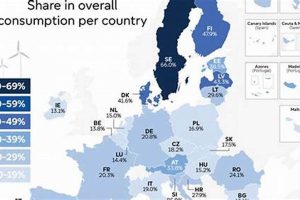
Greater reliance on sources like solar, wind, hydro, and geothermal power reflects a global shift in energy production. For instance, a nation might see its solar energy capacity double within a decade, signifying a substantial expansion of this renewable resource. This transition involves technological advancements, policy changes, and evolving market dynamics.
This shift toward sustainable energy sources offers numerous advantages. It mitigates the environmental impact associated with fossil fuels, contributing to reduced greenhouse gas emissions and improved air quality. Furthermore, it enhances energy security by diversifying supply, reducing dependence on volatile global markets, and fostering domestic job growth within the renewable energy sector. Historically, energy production relied heavily on finite resources. The recognition of their environmental impact and potential scarcity spurred the development and adoption of renewable alternatives.
This foundational understanding of the evolving energy landscape paves the way for a deeper exploration of specific technologies, policies, and market trends driving the transformation. Subsequent sections will delve into the details of individual renewable energy sectors, analyze their respective growth trajectories, and assess their future potential.
Tips for Supporting Greater Reliance on Sustainable Energy
The transition to a more sustainable energy future requires collective effort. These tips provide practical guidance for contributing to this important shift.
Tip 1: Advocate for Supportive Policies: Engaging with local and national governments to promote policies that incentivize renewable energy development and deployment is crucial. This includes supporting tax credits, renewable portfolio standards, and streamlined permitting processes.
Tip 2: Invest in Renewable Energy Technologies: Consider investing in renewable energy projects or companies. This can include direct investments in solar or wind farms or through mutual funds specializing in sustainable energy.
Tip 3: Reduce Energy Consumption: Implementing energy efficiency measures at home and in the workplace reduces overall energy demand. This can involve upgrading appliances, improving insulation, and adopting smart energy management systems.
Tip 4: Choose Renewable Energy Options: Where available, opt for electricity plans that source power from renewable resources. This can often be done through utility programs or by choosing a renewable energy provider.
Tip 5: Support Sustainable Businesses: Patronize businesses committed to sustainable practices, including those that utilize renewable energy and prioritize energy efficiency.
Tip 6: Educate and Engage: Stay informed about advancements in renewable energy technologies and policy developments. Share this knowledge with others and engage in conversations about the importance of sustainable energy.
Tip 7: Explore Community Solar or Wind Projects: Participate in community-based renewable energy initiatives, which allow individuals to benefit from renewable energy even if they cannot install their own systems.
By adopting these practices, individuals and communities can contribute significantly to the growth of renewable energy and a more sustainable future. The cumulative effect of these individual actions can drive significant change.
These actionable steps empower everyone to participate in the ongoing energy transformation. The following conclusion will reiterate the importance of these efforts and their long-term impact.
1. Technological Advancements

Technological advancements play a crucial role in the ongoing expansion of renewable energy sources. Innovation across various sectors drives efficiency improvements, cost reductions, and wider accessibility, making renewable energy increasingly competitive with conventional energy sources.
- Improved Photovoltaic Cell Efficiency:
Advances in photovoltaic cell technology have led to significant gains in efficiency, allowing more electricity generation from smaller areas. For example, the development of perovskite solar cells offers the potential for even higher efficiencies and lower manufacturing costs compared to traditional silicon-based cells. This contributes directly to increased solar energy deployment.
- Advanced Wind Turbine Design:
Larger rotor diameters, taller towers, and improved blade aerodynamics enable modern wind turbines to capture more wind energy, particularly at higher altitudes and lower wind speeds. These advancements increase capacity factors and energy yields, making wind power more cost-effective.
- Enhanced Energy Storage Solutions:
The intermittent nature of solar and wind power necessitates effective energy storage solutions. Developments in battery technology, pumped hydro storage, and other storage methods enhance grid stability and reliability, facilitating greater integration of renewable energy sources. For instance, advancements in lithium-ion battery technology have significantly reduced costs and increased energy density, enabling more efficient storage of excess renewable energy.
- Smart Grid Technologies:
Smart grid technologies optimize energy distribution and management, enabling more efficient integration of renewable energy sources. These technologies include advanced metering infrastructure, real-time monitoring systems, and demand-side management tools. They enhance grid flexibility and responsiveness, crucial for balancing variable renewable energy generation.
These technological advancements, coupled with supportive policies and market forces, are key drivers of the global increase in renewable energy capacity. Continued innovation in these areas will further accelerate the transition towards a more sustainable energy future. As costs continue to decline and efficiency improves, renewable energy sources are poised to play an increasingly dominant role in the global energy mix.
2. Policy Support
Government policies play a crucial role in shaping the trajectory of renewable energy growth. Supportive policies create favorable market conditions, incentivize investment, and accelerate the deployment of renewable energy technologies. The effectiveness of these policies significantly influences the pace of the transition towards a more sustainable energy future.
- Renewable Portfolio Standards (RPS):
RPS policies mandate that a certain percentage of electricity generation comes from renewable sources. These policies create a guaranteed demand for renewable energy, driving investment and deployment. For example, several states in the United States have RPS targets, requiring utilities to procure a specified percentage of their electricity from renewables by a certain date. This stimulates the development of new renewable energy projects.
- Feed-in Tariffs (FITs):
FITs offer guaranteed prices for renewable energy fed into the grid. This provides price stability and encourages investment in renewable energy projects, particularly for smaller-scale installations. Germany’s early adoption of FITs played a significant role in the rapid growth of its solar photovoltaic industry. This policy mechanism offers long-term price certainty, making renewable energy projects more financially attractive.
- Tax Incentives and Subsidies:
Tax credits, rebates, and other financial incentives reduce the upfront costs of renewable energy installations, making them more accessible to consumers and businesses. The Investment Tax Credit in the United States, for instance, provides a significant tax credit for investments in solar energy systems, stimulating market growth. These incentives can significantly accelerate the adoption of renewable energy technologies.
- Carbon Pricing Mechanisms:
Carbon taxes or cap-and-trade systems internalize the environmental costs associated with fossil fuel-based electricity generation, making renewable energy more cost-competitive. By putting a price on carbon emissions, these policies incentivize a shift towards cleaner energy sources. The European Union Emissions Trading System (EU ETS) is an example of a cap-and-trade system that aims to reduce greenhouse gas emissions.
These policy mechanisms, when implemented effectively, create a supportive environment for renewable energy growth. The interplay of these policies, along with technological advancements and market forces, determines the pace and scale of the transition to a more sustainable energy system. Analyzing policy effectiveness and adapting them to specific regional contexts remains crucial for maximizing their impact on renewable energy deployment.
3. Investment Growth
Investment growth plays a critical role in driving the expansion of renewable energy capacity. Increased financial flows into the renewable energy sector, encompassing research and development, manufacturing, and project deployment, are essential for accelerating the transition to a sustainable energy future. This investment fuels technological innovation, lowers costs, and expands market penetration of renewable energy technologies. The relationship between investment and deployment is cyclical; as investment drives down costs and increases efficiency, the market becomes more attractive for further investment, creating a positive feedback loop.
Several factors influence investment decisions in the renewable energy sector. Government policies, such as tax incentives and renewable portfolio standards, create stable and predictable market conditions that attract investment. Technological advancements, leading to improved efficiency and cost reductions, enhance the financial viability of renewable energy projects. Growing public awareness of climate change and the benefits of clean energy further strengthens investor confidence. For instance, the significant decline in the cost of solar photovoltaic modules over the past decade, coupled with supportive government policies, has attracted substantial investment in large-scale solar farms, demonstrating the practical impact of this relationship. Similarly, venture capital funding for innovative energy storage technologies has increased dramatically, recognizing the crucial role of storage in enabling greater integration of intermittent renewable sources.
Understanding the crucial link between investment growth and the expansion of renewable energy is paramount for policymakers, investors, and industry stakeholders. Targeted policies that incentivize investment, coupled with ongoing technological innovation, are essential for sustaining the growth of the renewable energy sector. Addressing barriers to investment, such as regulatory hurdles and financing challenges, remains crucial for unlocking the full potential of renewable energy. Continued investment growth is not merely a financial imperative; it represents a strategic investment in a sustainable future, mitigating climate change and enhancing energy security. Furthermore, investments in renewable energy generate economic benefits, creating jobs in manufacturing, installation, maintenance, and research.
4. Declining Costs
Declining costs represent a pivotal driver of the ongoing increase in renewable energy adoption. The relationship between cost reductions and market expansion creates a positive feedback loop: as technology matures and production scales increase, costs fall, making renewable energy sources increasingly competitive with conventional fossil fuels. This enhanced competitiveness attracts greater investment, further stimulating technological advancements and economies of scale, leading to even lower costs. This virtuous cycle propels the continued growth of renewable energy capacity and accelerates the global transition towards a more sustainable energy system. For example, the cost of solar photovoltaic modules has decreased by over 80% in the last decade, making solar power a cost-competitive source of electricity in many regions. Similarly, the cost of wind turbines has fallen significantly, driving the expansion of onshore and offshore wind farms.
This cost reduction is not merely a technological phenomenon; it reflects the interplay of multiple factors. Innovation in manufacturing processes, materials science, and system design contributes significantly to cost improvements. Supportive government policies, such as tax incentives and renewable portfolio standards, further stimulate market growth and economies of scale. Increased competition among manufacturers also plays a role in driving down prices. Furthermore, the learning curve effect, where costs decrease with cumulative production experience, contributes significantly to long-term cost reductions in the renewable energy sector. The declining cost of battery storage technologies also enhances the feasibility and economic viability of integrating intermittent renewable sources like solar and wind power into the grid.
Understanding the dynamics of declining costs is essential for policymakers, investors, and industry stakeholders. Continued support for research and development, coupled with effective policy frameworks, remains crucial for sustaining the downward cost trajectory. Analyzing the factors contributing to cost reductions allows for strategic interventions to further accelerate the transition to a renewable energy-powered future. Addressing remaining cost barriers, particularly in emerging technologies like wave and tidal power, will be critical for unlocking their full potential. Ultimately, declining costs are a key enabler of widespread renewable energy adoption, paving the way for a more sustainable and affordable energy future.
5. Public Awareness

Public awareness regarding climate change and the benefits of renewable energy sources plays a significant role in driving the increased adoption of these technologies. Heightened awareness translates into increased consumer demand for clean energy, creating a market pull effect that incentivizes investment and deployment. This informed public discourse influences policy decisions, encouraging governments to implement supportive policies that further accelerate the transition to renewable energy. For example, public support for renewable energy policies, such as tax incentives and renewable portfolio standards, can influence legislative outcomes. Furthermore, consumer preferences for products and services from companies committed to sustainability create market pressure for businesses to adopt renewable energy solutions.
This heightened awareness manifests in several ways. Increased media coverage of climate change and renewable energy technologies educates the public about the environmental and economic benefits of transitioning to cleaner energy sources. Educational campaigns by non-governmental organizations and advocacy groups further raise awareness and mobilize public support for renewable energy initiatives. Community-based projects, such as rooftop solar installations and community wind farms, provide tangible examples of the benefits of renewable energy, fostering local engagement and ownership. Social media platforms also play a significant role in disseminating information and fostering dialogue about the importance of renewable energy. The growing popularity of electric vehicles, driven in part by increased public awareness of air pollution and greenhouse gas emissions, further contributes to the rising demand for renewable electricity.
Understanding the crucial link between public awareness and the increase in renewable energy adoption is essential for policymakers, industry stakeholders, and advocacy groups. Targeted communication strategies, educational campaigns, and community engagement initiatives can further enhance public understanding of the benefits of renewable energy. Addressing misinformation and promoting evidence-based decision-making are crucial for fostering informed public discourse. Cultivating public support for renewable energy is not merely a communications exercise; it is a strategic imperative for achieving a sustainable energy future. Continued efforts to raise public awareness will be critical for sustaining the momentum of the global transition to renewable energy and mitigating the impacts of climate change.
Frequently Asked Questions about the Growth of Renewable Energy
This section addresses common inquiries regarding the expanding role of renewable energy sources in the global energy landscape. Clear and concise answers provide a deeper understanding of the key aspects of this transition.
Question 1: What are the primary drivers of the global increase in renewable energy capacity?
Declining costs, technological advancements, supportive government policies, growing public awareness of climate change, and increasing investor confidence are key factors driving the expansion of renewable energy.
Question 2: How do renewable energy sources contribute to climate change mitigation?
Renewable energy sources, such as solar and wind power, generate electricity without emitting greenhouse gases, reducing reliance on fossil fuels and mitigating climate change.
Question 3: What are the economic benefits associated with the growth of renewable energy?
The renewable energy sector creates jobs in manufacturing, installation, maintenance, and research, stimulates economic growth, and reduces dependence on imported fossil fuels.
Question 4: What challenges remain for the continued expansion of renewable energy?
Grid integration challenges, intermittency of some renewable sources, permitting and regulatory hurdles, and public acceptance in certain regions remain challenges for continued expansion.
Question 5: How can individuals contribute to the growth of renewable energy?
Individuals can support renewable energy by advocating for supportive policies, investing in renewable energy projects, reducing energy consumption, and choosing renewable energy options where available.
Question 6: What is the future outlook for renewable energy?
Renewable energy sources are projected to play an increasingly dominant role in the global energy mix, driven by continued cost declines, technological advancements, and supportive policies.
Understanding these key aspects of the growing renewable energy sector provides a foundation for informed decision-making and effective policy development. Continued efforts to address the remaining challenges will be crucial for realizing the full potential of renewable energy.
The following section will delve deeper into specific renewable energy technologies and their respective contributions to the global energy transition.
The Expanding Role of Renewable Energy
The growth of renewable energy capacity represents a fundamental shift in the global energy landscape. Driven by technological advancements, declining costs, supportive policies, and growing public awareness, the transition toward greater reliance on sustainable energy sources is accelerating. This analysis has explored the key drivers of this transformation, highlighting the critical role of innovation, investment, and policy support in shaping the trajectory of renewable energy development. From advancements in photovoltaic cell efficiency to the development of smart grid technologies, the continuous pursuit of innovation is unlocking the full potential of renewable resources. Furthermore, declining costs, coupled with supportive government policies, have made renewable energy increasingly competitive with conventional energy sources, attracting substantial investment and driving market expansion.
The ongoing expansion of renewable energy capacity is not merely a technological or economic imperative; it represents a crucial step towards a more sustainable future. Mitigating the impacts of climate change, enhancing energy security, and creating economic opportunities are among the multifaceted benefits of this transition. Sustaining this momentum requires continued commitment to research, development, and deployment, coupled with effective policy frameworks that incentivize investment and innovation. The future of energy hinges on the continued growth and integration of renewable sources, paving the way for a cleaner, more resilient, and sustainable energy system for generations to come.