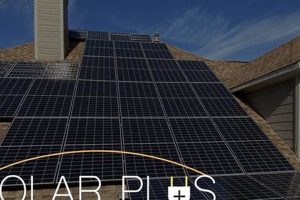
The concept involves revisiting and revitalizing existing solar energy infrastructure. This may include upgrading components, repurposing installations, or reinvesting in solar projects to enhance their efficiency and longevity. For example, replacing older solar panels with newer, more efficient models or expanding the capacity of an existing solar farm falls under this category.
Such actions hold considerable importance in the broader context of sustainable energy. It maximizes the return on initial investments, reduces the need for entirely new infrastructure projects (thereby minimizing environmental disruption), and contributes to a circular economy. Historically, the focus has been primarily on initial installation, but a growing awareness of system degradation and the potential for performance improvements underscores the necessity of revisiting and enhancing these resources.
The subsequent sections will delve into specific methods for enhancing solar energy resources, explore the economic advantages associated with these approaches, and investigate technological advancements enabling more effective and sustainable solar energy use.
Enhancing Existing Solar Installations
The following provides strategic recommendations for maximizing the output and lifespan of established solar energy systems.
Tip 1: Regular Performance Monitoring: Consistent data collection on system output, voltage, and current is essential. This allows for the early detection of performance degradation and identification of potential issues, such as shading or component failure.
Tip 2: Scheduled Maintenance and Cleaning: Soiling from dust, pollen, and other debris can significantly reduce solar panel efficiency. Establish a schedule for cleaning panels based on environmental conditions and conduct routine inspections of wiring, connections, and mounting structures.
Tip 3: Inverter Optimization: Inverters play a critical role in converting DC power to AC power. Ensure that the inverter is operating at peak efficiency and that its settings are properly configured for the specific solar panel array. Consider upgrading to a more efficient inverter model as technology improves.
Tip 4: Strategic Panel Upgrades: As solar panel technology advances, newer models offer higher efficiency and improved performance in low-light conditions. Evaluate the feasibility of replacing older panels with newer ones to increase overall system output.
Tip 5: Energy Storage Integration: Incorporating battery storage allows for the capture and utilization of excess solar energy generated during peak periods. This increases self-consumption, reduces reliance on the grid, and enhances energy independence.
Tip 6: Professional Inspections: Periodic inspections by qualified solar technicians can identify underlying problems that may not be apparent through routine monitoring. These inspections can help prevent costly repairs and ensure the system is operating safely and efficiently.
Tip 7: Optimize Tilt and Azimuth: Over time, the optimal angle for sunlight capture may shift slightly due to environmental factors or settling of the mounting structure. Check and adjust the tilt and azimuth of the panels to maximize energy production throughout the year.
Implementing these strategies can significantly improve the performance and longevity of established solar energy systems, contributing to a more sustainable and cost-effective energy future.
The concluding section will summarize the key benefits of prioritizing efforts related to established solar infrastructures.
1. Renew

The term “Renew,” in the context of “re solar,” signifies the proactive extension of an existing solar energy system’s operational lifespan. It’s a crucial element, directly impacting the efficiency and return on investment. Neglecting maintenance or failing to address minor performance issues can lead to more significant problems. In a “re solar” strategy, “Renew” functions as a preventive measure, mitigating degradation and optimizing the system’s output over time. For instance, consider a solar farm where routine inspections and timely replacements of worn connectors prevent voltage drops and minimize energy loss. This continuous attention keeps the farm operating at peak performance, increasing its overall electricity generation capacity.
A primary practical application of “Renew” lies in implementing comprehensive maintenance schedules. Such schedules encompass tasks like panel cleaning, vegetation management, and wiring inspections. These actions ensure systems perform at optimum levels and safeguard against safety hazards caused by damaged components. Furthermore, upgrading monitoring systems to incorporate more sophisticated diagnostic tools can streamline this “Renew” process. Early detection of inefficiencies leads to quicker interventions, limiting the impact of any single component failure on the overall system’s power output.
Understanding the importance of “Renew” as a foundational element of any “re solar” strategy highlights the necessity of a long-term perspective. While initial installation costs are significant, the ongoing maintenance and minor upgrades encompassed by “Renew” are comparatively lower. Ignoring these essential steps compromises the entire system’s value and undermines the long-term sustainability of the solar investment. This proactive approach, focusing on preserving and prolonging operational capacity, is essential for realizing the full potential of solar energy infrastructure.
2. Refurbish
In the context of “re solar,” the term “Refurbish” describes the process of upgrading or repairing existing solar energy system components. This activity aims to restore or enhance the system’s original performance capabilities. Rather than replacing entire systems, refurbishing targets specific areas for improvement or correction.
- Component Upgrade
Component upgrades involve replacing outdated or inefficient parts of the solar energy system with newer, more advanced versions. For example, replacing older string inverters with more modern, efficient models or upgrading combiner boxes with enhanced surge protection can improve overall system performance and reliability. This approach enhances the system’s capabilities without incurring the cost of a full system replacement.
- Wiring and Connection Repair
Over time, exposure to environmental elements can degrade wiring and connections in a solar energy system. Corrosion, loose connections, and damaged insulation can lead to energy losses and safety hazards. Refurbishing these components involves inspecting, repairing, or replacing damaged wiring and connections to ensure proper electrical conductivity and system safety. This is crucial for maintaining optimal system performance and preventing potential fire risks.
- Structural Reinforcement
The structural integrity of the mounting system is paramount for the safe and reliable operation of a solar array. Refurbishing may involve reinforcing or repairing the mounting structures to withstand wind, snow, and other environmental loads. This can include replacing corroded or damaged support beams, tightening connections, and ensuring proper grounding. Maintaining structural integrity ensures the long-term stability of the solar array and prevents potential collapses.
- Cleaning and Coating Applications
Solar panel surfaces can accumulate dirt, dust, and other debris, reducing their ability to absorb sunlight. Refurbishing may include thorough cleaning of the panels to remove these contaminants and applying protective coatings to prevent future soiling. These coatings can also enhance the panels’ resistance to ultraviolet radiation and other environmental factors, extending their lifespan and maintaining their performance.
The “Refurbish” aspect of “re solar” represents a cost-effective approach to enhancing and prolonging the life of existing solar energy assets. This proactive maintenance strategy ensures that systems continue to operate efficiently and reliably, contributing to a more sustainable energy future by maximizing the return on initial solar investments.
3. Repower

In the context of “re solar,” “Repower” signifies a substantial intervention aimed at revitalizing underperforming or obsolete solar energy installations. It involves replacing key components or systems within an existing facility with more advanced technologies, thereby significantly boosting overall efficiency and power output. This approach represents a more intensive upgrade compared to simple maintenance or refurbishment.
- Inverter Modernization
A primary facet of “Repower” is the replacement of outdated inverters. Older inverters often operate at lower efficiencies and may lack advanced grid integration capabilities. Replacing these with modern inverters that offer higher conversion rates, reactive power control, and advanced monitoring features can substantially increase the system’s energy yield and grid stability. For instance, a solar farm originally equipped with string inverters might be “repowered” using central inverters or advanced string inverters with integrated energy storage capabilities, leading to a measurable increase in power production and grid service potential.
- Panel Technology Upgrade
Another significant aspect is the replacement of existing solar panels with newer, more efficient photovoltaic (PV) modules. Technological advancements in PV manufacturing have resulted in panels with higher energy conversion efficiencies and improved performance under various environmental conditions. Replacing older panels with these advanced modules, such as bifacial panels or those employing heterojunction technology (HJT), allows for increased power generation within the same physical footprint. An example is upgrading a rooftop solar array with higher-wattage panels to maximize energy production without expanding the array’s size.
- Mounting Structure Enhancement
The “Repower” process can also address structural limitations or inefficiencies in the existing mounting system. Replacing fixed-tilt mounting structures with single-axis or dual-axis trackers can optimize panel orientation throughout the day, maximizing sunlight capture and energy production. This enhancement is particularly relevant in regions with significant seasonal variations in solar irradiance. Similarly, reinforcing or redesigning the mounting system can accommodate heavier, higher-efficiency panels or improve resistance to extreme weather events.
- System Optimization and Controls
Repowering may include integrating advanced monitoring and control systems to optimize system performance. This involves deploying smart grid technologies, such as data analytics platforms and remote monitoring systems, to identify and address inefficiencies in real-time. These systems can provide valuable insights into panel performance, inverter efficiency, and grid conditions, enabling proactive adjustments to maximize energy production and grid stability. This facet ensures the “repowered” system operates at peak efficiency and integrates seamlessly with the grid.
These facets of “Repower” collectively contribute to a more efficient, resilient, and economically viable solar energy infrastructure. By strategically upgrading key components and systems, “re solar” initiatives can unlock the full potential of existing solar assets, contributing to a cleaner and more sustainable energy future.
4. Replace

Within the framework of “re solar,” the concept of “Replace” denotes the physical substitution of entire units or substantial components within an existing solar energy system. This intervention aims to overcome obsolescence, degradation, or insufficient performance characteristics, thereby improving the overall system’s productivity and extending its operational lifespan.
- Solar Panel Substitution
One of the most common applications of “Replace” involves swapping out older solar panels with newer models boasting higher efficiency and improved performance. This may be necessary when panels degrade significantly over time, experience physical damage, or when newer technologies offer substantial gains in power output within the same footprint. Replacing older panels with bifacial modules, for example, allows for energy generation from both the front and back surfaces, increasing the system’s overall yield.
- Inverter Replacement Strategies
Another crucial aspect of “Replace” pertains to inverters. Older inverters may become unreliable or inefficient, leading to significant energy losses. Replacing these with modern inverters, potentially featuring advanced grid support functions or integrated energy storage capabilities, can improve system performance and grid stability. String inverters may be replaced with central inverters in large-scale installations, or microinverters can be used to optimize the performance of individual panels, particularly in situations where shading is a concern.
- Complete System Overhaul
In cases where the entire solar energy system has reached the end of its useful life or has suffered extensive damage, a complete system replacement may be warranted. This involves removing all existing components, including panels, inverters, racking, and wiring, and installing a new, state-of-the-art system. Such an overhaul allows for the incorporation of the latest technologies and best practices, ensuring optimal performance and a prolonged operational lifespan. It also allows for the resizing of the system to match current energy needs, which may have changed since the original installation.
- Wiring and Connector Renewal
While often overlooked, the wiring and connectors within a solar energy system are subject to degradation from environmental exposure and can become a source of inefficiency or safety hazards. Replacing deteriorated wiring and connectors with new, high-quality components ensures reliable electrical connections and minimizes energy losses due to resistance. This is particularly important in older systems where the original wiring may not meet current safety standards or may be incompatible with newer panel technologies.
The strategic application of “Replace” within a “re solar” initiative is essential for maintaining and enhancing the value of existing solar energy assets. While it often involves a higher upfront cost compared to simpler maintenance or refurbishment efforts, the long-term benefits in terms of increased energy production, improved reliability, and extended system lifespan can justify the investment. Determining the optimal timing and scope of “Replace” interventions requires careful consideration of the system’s current performance, the availability of advanced technologies, and the economic viability of the proposed upgrades.
5. Restore

Within the “re solar” paradigm, “Restore” focuses on returning a degraded or damaged solar energy system to its original operational capacity and efficiency. It addresses issues stemming from environmental factors, physical damage, or component malfunction, ensuring the system regains its intended performance levels.
- Environmental Remediation
This aspect of “Restore” deals with mitigating the impact of environmental factors on solar energy systems. Soiling from dust, pollen, or bird droppings can significantly reduce panel efficiency. Restoration efforts include thorough cleaning processes, potentially involving specialized equipment or coatings that minimize future soiling. Additionally, addressing vegetation overgrowth that causes shading is crucial. Real-world examples include desert solar farms implementing automated cleaning systems and rural installations clearing encroaching foliage to maximize sunlight exposure.
- Physical Damage Repair
Physical damage from weather events, such as hailstorms or high winds, can compromise the structural integrity and performance of solar panels. “Restore” encompasses repairing or replacing cracked, broken, or delaminated panels. Furthermore, it addresses damage to mounting structures, wiring, and other system components caused by storms, vandalism, or accidental impact. Case studies often involve solar farms undergoing extensive repairs following severe weather, requiring careful assessment of damage and replacement of affected parts to ensure continued safe and efficient operation.
- Grid Connection Re-establishment
Disruptions to the grid connection can render a solar energy system non-operational. “Restore” includes diagnosing and rectifying issues with grid interconnection equipment, such as transformers, switchgear, and protective relays. This may involve repairing or replacing damaged components, upgrading the interconnection infrastructure to meet current grid standards, and ensuring proper communication between the solar system and the utility grid. Instances of grid connection restoration often occur after power outages or equipment failures, requiring close collaboration between the solar system operator and the utility to restore seamless energy flow.
- Component Refurbishment
In some cases, restoring a solar energy system involves refurbishing specific components rather than replacing them outright. This may include repairing or rewinding transformers, reconditioning inverters, or replacing damaged connectors and wiring. Refurbishment can be a cost-effective alternative to complete replacement, particularly for high-value components or in situations where replacement parts are difficult to obtain. Examples include solar farm operators refurbishing aging transformers to extend their operational lifespan and reduce capital expenditure.
These facets highlight the multifaceted nature of “Restore” within “re solar.” By addressing environmental impacts, physical damage, grid connection issues, and component malfunctions, “Restore” ensures that existing solar energy systems regain their optimal performance and contribute effectively to sustainable energy goals. These efforts not only maximize the return on investment in solar infrastructure but also reduce the need for entirely new installations, minimizing environmental disruption and promoting a circular economy.
Frequently Asked Questions
The following addresses common inquiries regarding the practice of revisiting and revitalizing existing solar energy infrastructure. The aim is to provide clarity and factual information on this important aspect of sustainable energy.
Question 1: What distinguishes ‘re solar’ from standard solar energy practices?
Standard solar energy practices typically focus on initial installation and basic maintenance. ‘Re solar’ emphasizes a more comprehensive and proactive approach to maximizing the lifespan and efficiency of existing solar assets through upgrades, repairs, and system enhancements.
Question 2: Why is it important to focus on initiatives relating to existing solar installations?
Focusing on initiatives relating to existing solar installations allows for the maximization of return on initial investments, reduces environmental impact by minimizing the need for new infrastructure projects, and contributes to a circular economy by extending the lifespan of current assets.
Question 3: How can energy production be improved in older solar installations?
Energy production can be improved through various means, including replacing aging panels with more efficient models, upgrading inverters, optimizing panel tilt and azimuth, and integrating energy storage solutions.
Question 4: What are the main economic benefits of ‘re solar’?
The primary economic benefits include increased energy production, reduced operating costs due to improved efficiency, extended system lifespan, and potential revenue generation from grid services through energy storage integration.
Question 5: Are there any challenges associated with ‘re solar’ projects?
Potential challenges include the initial investment required for upgrades, the need for skilled technicians to perform the work, and the potential for system downtime during the upgrade process.
Question 6: What role does technology play in ‘re solar’ initiatives?
Technology plays a critical role by enabling more efficient solar panels, advanced inverters, sophisticated monitoring systems, and energy storage solutions. Technological advancements drive the improvements in performance and reliability that are central to ‘re solar’.
These FAQs provide a concise overview of the key concepts and considerations related to ‘re solar’. Prioritizing efforts relating to existing solar infrastructure ensures a more sustainable and cost-effective energy future.
The subsequent section will delve into specific case studies illustrating the practical application and benefits of ‘re solar’ projects.
Conclusion
This exploration of ‘re solar’ has highlighted its crucial role in optimizing existing solar energy assets. The strategies encompassing renew, refurbish, repower, replace, and restore provide a comprehensive framework for enhancing performance and extending the lifespan of solar installations. These proactive approaches not only maximize energy production but also contribute to a more sustainable and economically viable energy landscape.
Embracing ‘re solar’ is essential for achieving long-term sustainability goals. A continued focus on improving and maintaining current solar infrastructure will yield significant environmental and economic benefits, ensuring a cleaner and more reliable energy future for generations to come. Investment in these strategies is a commitment to a more sustainable and resilient energy system.
![Why Solar is a Renewable Source of Energy [Benefits] | Renewable Energy Solutions for a Sustainable Future | Clean & Green Power](https://pplrenewableenergy.com/wp-content/uploads/2026/04/th-454-300x200.jpg "Why Solar is a Renewable Source of Energy [Benefits] Renewable Energy Solutions for a Sustainable Future | Clean & Green Power")