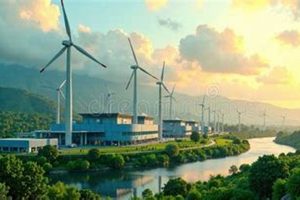
The state of Indiana is pursuing strategies to diversify its energy portfolio through increased development and utilization of sustainable power sources, including solar, wind, hydroelectric, and biomass. These initiatives aim to reduce reliance on traditional fossil fuels and foster a more environmentally friendly power grid. For example, investments in large-scale solar farms and wind turbine installations are contributing to a growing share of renewable energy generation within the state.
Transitioning to a cleaner energy landscape offers numerous advantages for Indiana. Reduced greenhouse gas emissions contribute to improved air quality and public health, while the development of a robust renewable energy sector stimulates economic growth and creates new job opportunities. Historically, Indiana’s energy production has heavily relied on coal, but increasing concerns about climate change and air pollution have spurred a shift toward cleaner alternatives, leading to policies and incentives aimed at accelerating the adoption of renewable energy technologies.
This exploration will delve further into specific programs, legislation, and ongoing projects that shape the state’s clean energy transition. Key areas of focus include the role of government incentives, private sector investment, and community engagement in facilitating a sustainable energy future for Indiana.
Tips for Supporting Sustainable Energy Development in Indiana
Individuals, businesses, and communities can play a vital role in advancing Indiana’s transition to a cleaner energy future. The following tips offer practical guidance on supporting sustainable energy initiatives within the state.
Tip 1: Explore Residential Solar Installations: Homeowners can assess the feasibility of rooftop solar panel installations to generate clean electricity and potentially reduce monthly energy bills. Several financial incentives and net metering programs are available to support residential solar adoption.
Tip 2: Support Local Renewable Energy Projects: Community solar gardens and other local renewable energy projects offer opportunities for individuals to participate in clean energy generation even without installing their own systems. Investigate local initiatives and consider investing or subscribing to these projects.
Tip 3: Advocate for Policy Changes: Engage with elected officials and advocate for policies that support renewable energy development, such as tax incentives, streamlined permitting processes, and renewable portfolio standards.
Tip 4: Reduce Energy Consumption: Implementing energy efficiency measures at home and in the workplace reduces overall energy demand and supports a cleaner energy grid. Simple steps like switching to LED lighting and improving insulation can significantly lower energy consumption.
Tip 5: Choose Renewable Energy Options: Many electricity providers offer green power programs that allow consumers to choose electricity generated from renewable sources. Selecting these programs increases demand for clean energy and encourages further development.
Tip 6: Invest in Energy-Efficient Appliances: When purchasing new appliances, prioritize models with high energy efficiency ratings. This reduces long-term energy consumption and supports the transition to a more sustainable energy landscape.
Tip 7: Stay Informed About Renewable Energy Developments: Keep abreast of advancements in renewable energy technologies and policy changes within Indiana. This knowledge empowers individuals to make informed decisions and effectively support the clean energy transition.
By actively participating in these initiatives, residents and businesses can contribute to a more sustainable energy future for Indiana, reaping the environmental and economic benefits of a cleaner, more resilient power grid.
These individual and collective actions contribute significantly to the broader goals of sustainable development within the state and pave the way for a cleaner, more secure energy future.
1. Policy Incentives

Policy incentives play a crucial role in shaping Indiana’s renewable energy landscape. These incentives, often designed to stimulate investment and growth within the renewable energy sector, directly influence the feasibility and adoption of clean energy technologies. Several key mechanisms are employed within Indiana, including tax credits, rebates, grants, and renewable portfolio standards (RPS). These mechanisms create a more favorable economic environment for renewable energy projects, encouraging both large-scale developments, such as wind farms and solar parks, and smaller-scale initiatives like residential solar installations. For example, property tax assessments for renewable energy systems are often structured to minimize financial burden on investors, further incentivizing adoption. The cause-and-effect relationship is clear: supportive policies lead to increased investment and deployment of renewable energy technologies.
The significance of policy incentives as a component of Indiana’s broader renewable energy plans cannot be overstated. They act as a catalyst for market transformation, driving innovation and competition within the clean energy sector. A real-world example of this impact can be observed in the growth of Indiana’s solar industry, spurred in part by state and federal tax credits. These incentives reduce upfront costs for businesses and homeowners, making solar installations more financially attractive. Furthermore, RPS mechanisms, which mandate that a certain percentage of electricity generated within the state comes from renewable sources, create consistent demand and provide long-term market stability for renewable energy developers. This understanding of policy incentives is practically significant because it informs investment decisions, guides policy development, and ultimately shapes the trajectory of Indiana’s transition to a cleaner energy future.
In summary, well-designed policy incentives are essential for driving the adoption of renewable energy technologies in Indiana. They create a supportive environment that fosters investment, innovation, and market growth. However, the effectiveness of these policies hinges on careful design and implementation, considering factors such as long-term market stability, technological advancements, and equity considerations. Moving forward, ongoing evaluation and adaptation of these incentives will be crucial to ensure Indiana successfully achieves its renewable energy goals and realizes the full potential of a clean energy transition.
2. Technological Advancements

Technological advancements are inextricably linked to the success of Indiana’s renewable energy plans. Progress in areas such as solar panel efficiency, wind turbine design, energy storage solutions, and smart grid technologies directly impacts the feasibility, cost-effectiveness, and overall viability of renewable energy projects within the state. These advancements drive down costs, improve performance, and enhance the integration of renewable energy sources into the existing power grid. For instance, advancements in battery storage technology address the intermittency challenges associated with solar and wind power, enabling more reliable and consistent energy delivery. This cause-and-effect relationship between technological progress and renewable energy deployment is fundamental to achieving Indiana’s clean energy goals.
The importance of technological advancements as a component of Indiana’s broader renewable energy plans is paramount. Continuous innovation in renewable energy technologies drives economic growth by creating new industries and job opportunities. Moreover, it enhances energy independence by reducing reliance on fossil fuels, and significantly contributes to environmental sustainability by mitigating greenhouse gas emissions. A real-world example can be observed in the decreasing cost of solar photovoltaic (PV) panels, which has made solar energy increasingly competitive with traditional energy sources in Indiana, leading to wider adoption and contributing to the state’s renewable energy portfolio. Furthermore, advancements in smart grid technologies improve grid management, optimizing the integration of renewable energy sources and enhancing overall grid stability and reliability.
In summary, technological advancements are not merely a supporting factor but a driving force behind the successful implementation of Indiana’s renewable energy plans. Continued investment in research and development, coupled with supportive policies that encourage innovation and adoption of new technologies, is essential for realizing the full potential of renewable energy in Indiana. This understanding is practically significant because it informs policy decisions, guides investment strategies, and ultimately shapes the future of the state’s energy landscape. Addressing challenges such as grid modernization and energy storage through technological innovation will be crucial for achieving a sustainable and resilient energy future for Indiana.
3. Private Investments
Private investments form a cornerstone of Indiana’s renewable energy plans. Capital infusion from private entities, including corporations, investment funds, and individual investors, is essential for financing the development and deployment of renewable energy projects across the state. This investment fuels the construction of large-scale solar farms, wind turbine installations, and other renewable energy infrastructure. A direct correlation exists between the level of private investment and the pace of renewable energy growth within Indiana. Increased private sector participation accelerates the transition towards a cleaner energy portfolio, fostering economic development and job creation within the renewable energy sector. This cause-and-effect relationship underscores the importance of attracting and securing private investment for the success of Indiana’s renewable energy initiatives.
The significance of private investment as a component of Indiana’s broader renewable energy plans is substantial. It not only provides the necessary financial resources for project development but also fosters innovation and competition within the renewable energy market. Real-world examples demonstrate this impact. For instance, several large corporations have invested in Indiana’s burgeoning solar industry, constructing utility-scale solar farms that contribute significantly to the state’s renewable energy generation. These investments create jobs, generate tax revenue, and stimulate local economies. Furthermore, private investment often spurs technological advancements by funding research and development in areas such as energy storage and smart grid technologies, further enhancing the viability and efficiency of renewable energy systems.
In summary, private investment serves as a critical driver for realizing Indiana’s renewable energy goals. Attracting and maintaining consistent private sector engagement requires a stable and supportive policy environment, clear regulatory frameworks, and streamlined permitting processes. Addressing challenges such as grid interconnection and transmission capacity limitations is crucial for fostering investor confidence and maximizing the impact of private investment in Indiana’s clean energy transition. The successful integration of private capital with public policy goals will ultimately determine the pace and scale of Indiana’s progress toward a more sustainable energy future. This understanding is practically significant for policymakers, investors, and stakeholders seeking to contribute to and benefit from the ongoing development of Indiana’s renewable energy sector.
4. Grid Modernization Efforts

Grid modernization efforts are integral to the successful implementation of Indiana’s renewable energy plans. The existing electricity grid, largely designed for centralized power generation from fossil fuels, requires significant upgrades to accommodate the increasing influx of decentralized renewable energy sources like solar and wind. Modernization initiatives, such as implementing smart grid technologies, enhancing transmission capacity, and improving grid flexibility, are essential for efficiently integrating these intermittent renewable resources and ensuring grid stability and reliability. This cause-and-effect relationship between grid modernization and renewable energy integration is crucial for achieving Indiana’s clean energy targets. Without a modernized grid, the full potential of renewable energy sources cannot be realized.
The importance of grid modernization as a component of Indiana’s broader renewable energy plans cannot be overstated. A robust and adaptable grid facilitates the smooth integration of renewable energy, minimizes energy losses, and enhances overall grid efficiency. Real-world examples illustrate this impact. Upgrading transformers and substations to handle increased renewable energy generation capacity strengthens the grid’s ability to deliver power reliably. Similarly, implementing advanced metering infrastructure (AMI) allows for better management of energy demand and supply, optimizing the use of renewable energy resources. Furthermore, investments in energy storage solutions, coupled with smart grid technologies, can mitigate the intermittency challenges associated with renewable sources and ensure a consistent and reliable power supply.
In summary, grid modernization is not merely a supporting factor, but a foundational requirement for achieving Indiana’s renewable energy goals. Continued investment in grid infrastructure upgrades, coupled with the adoption of smart grid technologies, is essential for realizing the full potential of renewable energy sources and ensuring a reliable and sustainable energy future for Indiana. Addressing challenges such as cybersecurity threats and interoperability issues within the modernized grid is crucial for maintaining system security and efficiency. The successful integration of a modernized grid with Indiana’s renewable energy plans will ultimately determine the state’s ability to transition to a cleaner, more resilient energy system.
5. Community Engagement

Community engagement plays a vital role in the successful implementation of Indiana’s renewable energy plans. Public acceptance and support for renewable energy projects are essential for their development and integration within communities. Engaging residents, local businesses, and community organizations through public forums, educational programs, and participatory planning processes fosters transparency and builds trust. This participatory approach addresses potential concerns, fosters a sense of ownership, and increases the likelihood of successful project implementation. This cause-and-effect relationship between community engagement and project success underscores the importance of involving local stakeholders in the decision-making process.
The significance of community engagement as a component of Indiana’s broader renewable energy plans is substantial. It fosters social equity by ensuring that the benefits and burdens of renewable energy development are distributed fairly. Furthermore, active community participation can lead to more effective and sustainable project outcomes by incorporating local knowledge and addressing community-specific needs. Real-world examples illustrate this impact. Community solar projects, where residents collectively invest in and benefit from a shared solar installation, often rely on strong community engagement for successful implementation. Similarly, public forums and workshops provide platforms for addressing concerns about the visual impact of wind turbines or the potential environmental effects of solar farms, fostering dialogue and building consensus.
In summary, community engagement is not merely a supplementary element, but a fundamental aspect of successful renewable energy development in Indiana. Building strong relationships with local communities, fostering open communication, and incorporating community feedback into project planning and implementation are crucial for ensuring the long-term sustainability and social acceptance of renewable energy projects. Addressing potential challenges such as NIMBYism (Not In My Backyard) and ensuring equitable access to renewable energy benefits requires proactive and ongoing community engagement. The successful integration of community perspectives into Indiana’s renewable energy plans will ultimately determine the state’s ability to achieve a just and sustainable energy transition.
Frequently Asked Questions about Renewable Energy in Indiana
This section addresses common inquiries regarding renewable energy development and implementation within Indiana. Understanding these key aspects is crucial for informed decision-making and effective participation in the state’s transition to a more sustainable energy future.
Question 1: What are the primary renewable energy sources being developed in Indiana?
Indiana’s renewable energy portfolio primarily focuses on solar, wind, and biomass resources. While hydroelectric power contributes to a lesser extent, solar and wind energy are experiencing significant growth driven by technological advancements and supportive policies.
Question 2: How do renewable energy projects impact local communities?
Renewable energy projects offer several potential benefits to local communities, including job creation, increased tax revenue for local governments, and economic diversification. However, careful planning and community engagement are essential to address potential concerns related to land use, visual impacts, and environmental effects.
Question 3: What incentives are available for individuals and businesses interested in adopting renewable energy?
Various financial incentives, such as tax credits, rebates, and grants, are available at the state and federal levels to encourage renewable energy adoption. Net metering programs, which allow customers to sell excess electricity generated by their renewable energy systems back to the grid, further enhance the economic viability of these investments.
Question 4: How does renewable energy integration impact the reliability of the electricity grid?
Grid modernization efforts, including the implementation of smart grid technologies and energy storage solutions, are crucial for ensuring grid stability and reliability as more renewable energy sources are integrated. These technologies help manage the intermittency of solar and wind power and optimize the flow of electricity across the grid.
Question 5: What role does energy storage play in Indiana’s renewable energy plans?
Energy storage technologies, such as batteries and pumped hydro storage, play an increasingly important role in addressing the intermittency challenges associated with renewable energy sources. Storing excess energy generated during peak production periods allows for its use during periods of lower generation, ensuring a more consistent and reliable power supply.
Question 6: How can individuals contribute to the advancement of renewable energy in Indiana?
Individuals can support renewable energy development by exploring residential solar installations, participating in community solar projects, advocating for supportive policies, reducing their own energy consumption, and choosing renewable energy options from their electricity providers.
Understanding these frequently asked questions provides a foundational understanding of Indiana’s renewable energy landscape. This knowledge empowers individuals, businesses, and communities to make informed decisions and actively participate in the ongoing transition to a cleaner, more sustainable energy future.
For further information and detailed resources, explore the subsequent sections of this comprehensive guide to renewable energy in Indiana.
Conclusion
Indiana’s pursuit of a diversified energy portfolio through renewable resources represents a significant undertaking with substantial implications for the state’s economic, environmental, and social future. This exploration has highlighted the crucial role of policy incentives, technological advancements, private investments, grid modernization efforts, and community engagement in shaping the trajectory of this transition. From the growth of solar and wind energy to the increasing importance of energy storage solutions, the state’s renewable energy landscape is evolving rapidly. Understanding the interconnectedness of these elements is crucial for effective policy development, informed investment decisions, and successful project implementation.
The transition to a cleaner energy future requires ongoing collaboration among policymakers, industry stakeholders, researchers, and community members. Continued investment in renewable energy technologies, coupled with supportive policies and robust community engagement, will be essential for maximizing the benefits of this transition. The future of energy in Indiana hinges on the successful integration of these elements, paving the way for a more sustainable, resilient, and prosperous future for all residents.