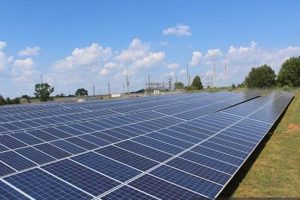
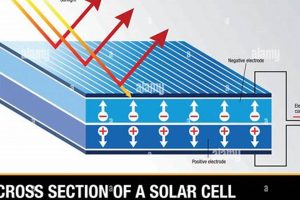
The quantity of photovoltaic-generated electricity employed within the United States is a dynamic figure, constantly shifting in response to technological advancements, policy changes, and market forces. This metric represents the total electrical power derived from sunlight captured by solar panels, measured in units such as kilowatt-hours (kWh), megawatt-hours (MWh), or gigawatt-hours (GWh) over a specific period, typically a year. As an example, in 2022, the U.S. generated approximately 200 million MWh of solar electricity.
The utilization of this energy source holds significant importance for several reasons. It contributes to a reduction in greenhouse gas emissions, lessening the nation’s dependence on fossil fuels and mitigating the effects of climate change. Furthermore, it stimulates economic growth by creating jobs in manufacturing, installation, and maintenance sectors. Historically, the contribution of this energy source to the overall U.S. energy mix was negligible. However, aggressive incentives and decreasing equipment costs have propelled rapid growth in recent years, marking it as one of the fastest-growing energy sources in the nation.
The following sections will delve into specific details regarding the growth trends of solar energy consumption, the regional variations in adoption, the economic factors influencing deployment, and the future projections for solar’s role in the U.S. energy landscape. Examining these facets provides a comprehensive understanding of current practices and future potential.
Understanding the Scale of Solar Energy Use
To comprehend the impact of photovoltaic power, consider these factors:
Tip 1: Track Annual Growth: Monitor year-over-year increases in photovoltaic electricity generation. Public sources such as the Energy Information Administration (EIA) provide data on this trajectory, illustrating the expansion of solar’s role.
Tip 2: Analyze Market Share: Evaluate the proportion of total electricity derived from solar compared to other sources, such as natural gas, coal, and nuclear. This assessment provides context for its current position in the energy mix.
Tip 3: Assess Regional Variations: Understand that solar adoption differs significantly across states due to factors like solar irradiance, state policies, and economic incentives. States like California and Arizona often lead in installed capacity.
Tip 4: Consider Capacity Factor: Note that the capacity factor of photovoltaic installations, which represents actual energy output versus potential output, is typically lower than that of fossil fuel or nuclear plants. This aspect influences the planning and integration of solar energy into the grid.
Tip 5: Examine Policy Impacts: Understand how federal and state incentives, such as tax credits and renewable portfolio standards, affect the economic viability and deployment of solar projects. These policies significantly influence the amount of solar energy consumed.
Tip 6: Differentiate Scale: Distinguish between utility-scale solar farms and distributed solar generation (e.g., rooftop solar). Each contributes differently to the total amount of solar electricity utilized and impacts grid infrastructure differently.
Tip 7: Account for Storage: Recognize that the integration of energy storage technologies, such as batteries, plays a crucial role in addressing the intermittency of solar power and enhancing its reliability as a source of electricity.
Understanding these factors provides a more granular view of how photovoltaic power currently contributes to the energy supply and helps to identify potential areas for future expansion.
This understanding is essential for developing strategies for a sustainable energy future.
1. Annual Generation

Annual Generation represents the total quantity of photovoltaic electricity produced within the United States over a calendar year. It serves as a fundamental metric for quantifying solar energy consumption. The connection is direct and proportional: increases in annual generation signify increased utilization of this energy source. Higher annual generation figures directly translate to a larger role for solar in meeting the nations electricity demands.
This metric is not merely a numerical value; it reflects the culmination of multiple factors, including installed solar capacity, weather patterns, technological advancements, and policy initiatives. For example, substantial investments in solar farms in sun-drenched states like California and Nevada directly impact annual generation figures, as do tax incentives that encourage residential rooftop solar installations. Understanding annual generation trends is critical for policymakers, energy planners, and grid operators, allowing them to assess the effectiveness of renewable energy policies, project future energy needs, and manage grid stability.
In summary, Annual Generation is a key indicator of how much solar energy the U.S. utilizes. Tracking its trends provides a tangible measure of the country’s progress toward diversifying its energy sources and reducing its reliance on fossil fuels. Understanding the factors that influence annual generation allows for targeted policy and investment decisions that can further accelerate the adoption of solar energy, enabling a more sustainable and resilient energy future. Challenges remain in accurately forecasting generation and integrating intermittent sources into the grid, necessitating continued advancements in forecasting models and grid management technologies.
2. Capacity Growth

Capacity Growth, as it pertains to photovoltaic power within the United States, is intrinsically linked to the overall quantity of solar-derived electricity consumed. It refers to the expansion of the nation’s solar energy infrastructure, measured by the increase in total installed solar power generating capability, typically expressed in megawatts (MW) or gigawatts (GW). This expansion directly influences the potential for and the realization of increased solar energy utilization.
- Installation Rate and its Impact
The rate at which new photovoltaic installations are completed and connected to the grid directly affects the availability of solar-generated electricity. For instance, a year with significant investment in new solar farms and residential rooftop installations will exhibit substantial capacity growth. This increased capacity translates into a greater volume of solar power being available to meet the demands of residential, commercial, and industrial consumers.
- Technological Advancement Implications
Technological improvements in solar panel efficiency, energy storage solutions, and grid integration technologies are critical drivers of capacity growth. Higher efficiency panels generate more power from the same surface area, effectively increasing capacity without requiring additional land. Similarly, advancements in storage technology enable better utilization of photovoltaic generation, mitigating intermittency issues and allowing for more consistent power delivery.
- Policy and Regulatory Influences
Government policies such as tax incentives, renewable portfolio standards (RPS), and feed-in tariffs play a crucial role in promoting capacity growth. Favorable policies reduce the economic barriers to solar energy investment, incentivizing developers and consumers to deploy photovoltaic systems. Conversely, restrictive policies or inconsistent regulatory frameworks can impede capacity growth, leading to slower adoption rates and reduced solar energy utilization.
- Economic Factors and Market Dynamics
The economic viability of photovoltaic projects, influenced by factors such as panel costs, installation expenses, and electricity prices, significantly impacts capacity growth. Declining panel prices and increasing electricity costs from traditional sources make solar energy more competitive, driving investment and expanding the installed capacity. Furthermore, market dynamics, such as the demand for clean energy from corporations and municipalities, also contribute to increased capacity growth.
In conclusion, Capacity Growth serves as a critical determinant of the overall level of solar energy usage in the U.S. By monitoring and understanding the interplay between installation rates, technological advancements, policy influences, and economic factors, stakeholders can gain valuable insights into the drivers of capacity expansion and its implications for meeting the country’s energy needs with clean, renewable photovoltaic resources. Continued emphasis on promoting sustainable Capacity Growth ensures a more robust and diversified energy future.
3. Regional Variance

Regional variance directly impacts the aggregate amount of photovoltaic power consumed within the United States. This variance reflects the uneven distribution of solar resources, policy landscapes, economic conditions, and grid infrastructure across different states and regions. Consequently, the quantity of electricity generated from solar installations differs significantly from one area to another, creating a heterogeneous landscape of renewable energy utilization.
The causes for these regional disparities are multifaceted. Solar irradiance, the amount of solar radiation received per unit area, is a primary determinant. States in the Southwest, such as Arizona, California, and Nevada, benefit from high levels of sunlight, making solar power generation more efficient and cost-effective. State-level policies also play a crucial role. States with robust renewable portfolio standards (RPS) mandate a specific percentage of electricity to come from renewable sources, incentivizing solar development. Furthermore, net metering policies, which allow consumers to sell excess solar energy back to the grid, enhance the economic attractiveness of residential solar installations. Real-life examples include California, which leads the nation in solar capacity due to a combination of abundant sunshine, supportive policies, and a high demand for clean energy, while states with less favorable conditions or less supportive policies often lag behind. The practical significance lies in understanding that a national assessment of photovoltaic energy consumption must account for these regional differences to accurately portray solar’s contribution to the overall energy mix.
The understanding of regional variance holds practical significance for policymakers and energy planners. Targeted strategies can be developed to address specific barriers to solar adoption in less developed regions, such as providing financial incentives, streamlining permitting processes, and investing in grid infrastructure to support the integration of distributed solar resources. Moreover, this knowledge aids in forecasting future solar energy potential and guiding investments in transmission infrastructure to facilitate the transfer of solar energy from resource-rich areas to demand centers. Challenges remain in balancing regional energy needs with national environmental goals, necessitating a coordinated approach that considers both local conditions and broader energy system dynamics. In conclusion, regional variance is a critical component of how photovoltaic resources contribute to the United States total energy utilization, requiring nuanced consideration for effective energy policy and infrastructure planning.

The proportion of total electricity generation supplied by solar energy, or its market share, directly reflects the extent to which photovoltaic resources contribute to fulfilling the nation’s energy demands. The percentage represents a tangible metric of solar’s presence within the overall energy mix, influencing perceptions, investments, and policy decisions related to renewable energy deployment.
- Solar’s Share of Total Generation
The most direct indicator of solar’s contribution is its percentage of total electricity generated in the U.S. A higher percentage denotes greater photovoltaic utilization. For example, if solar accounts for 5% of the nation’s electricity, it signifies that 5% of energy needs are being met by solar resources. Increases in this metric reflect increased adoption, technological advancements, and supportive policies. This percentage also allows for direct comparison against other energy sources such as natural gas, coal, and nuclear power, thereby placing solar within the larger energy landscape.
- Impact of Policy and Incentives
Government policies, such as tax credits, renewable portfolio standards (RPS), and feed-in tariffs, significantly influence solar’s market share. States with ambitious RPS targets often witness higher solar adoption rates as utilities seek to comply with mandates. Federal tax credits for solar installations reduce the upfront costs, thereby making solar more competitive with traditional energy sources. These policy interventions directly impact the economic viability of solar projects, driving their deployment and increasing their market share. The expiration or alteration of such policies can have a corresponding negative impact on solar’s competitiveness.
- Competitive Landscape and Pricing
The competitiveness of solar energy prices in relation to conventional electricity sources is a critical determinant of its market share. Declining solar panel prices and advancements in installation techniques have reduced the levelized cost of energy (LCOE) for photovoltaic systems, making them increasingly competitive. As solar LCOE approaches or falls below that of fossil fuel-based generation, its market share tends to increase. Furthermore, market dynamics, such as the demand for clean energy from corporations and consumers, drive the adoption of solar, further expanding its market share.
- Grid Integration and Reliability
The ability to effectively integrate solar energy into the existing grid infrastructure and ensure its reliability is critical for its market share. Intermittency is a significant challenge; solar generation fluctuates based on weather conditions and time of day. Investments in energy storage technologies, such as batteries, and advancements in grid management systems, are essential for mitigating intermittency and increasing solar’s reliability. A more reliable and predictable solar supply enhances its market share by making it a more dependable energy source for meeting baseload electricity demand.
These factors combine to determine how much photovoltaic power is actually being integrated into the country’s energy system. Understanding the interplay between these facets of the solar’s market share provides essential context to its present standing and future potential within the United States energy infrastructure.
5. Storage Integration
Storage integration significantly influences the quantity of photovoltaic electricity utilized within the United States by addressing the inherent intermittency of solar energy generation. Solar power production is dependent on sunlight, resulting in fluctuations throughout the day and during periods of cloud cover. Without energy storage, a considerable portion of solar-generated electricity may go unused during peak production times if demand is insufficient, thereby limiting the overall contribution of photovoltaic resources to the nations energy supply.
The deployment of energy storage technologies, such as lithium-ion batteries, pumped hydro storage, and flow batteries, mitigates the intermittency challenge. Storage systems capture excess photovoltaic electricity during periods of high production and release it during times of low production or high demand. This process allows for a more consistent and reliable supply of solar-derived electricity, enhancing its value and enabling it to serve a broader range of energy needs. For instance, in California, large-scale battery storage projects are increasingly paired with solar farms to provide dispatchable power during evening peak demand hours, reducing reliance on natural gas peaker plants. Similarly, residential and commercial solar installations with battery storage enable consumers to use self-generated electricity even when the sun is not shining, lowering their dependence on the grid.
By enabling the time-shifting of photovoltaic energy, storage integration enhances the economic viability and grid compatibility of solar power. As storage technologies become more cost-effective and widely deployed, the quantity of solar electricity effectively utilized within the U.S. energy mix will continue to increase. Further, ongoing research and development efforts focused on improving storage technologies and optimizing their integration with the grid are crucial for maximizing the contribution of photovoltaic power to a sustainable energy future. Challenges remain in scaling up storage capacity, reducing costs, and developing intelligent grid management systems to effectively manage distributed energy resources; however, addressing these issues will unlock the full potential of solar energy utilization.
Frequently Asked Questions
The following questions address common inquiries regarding the extent of photovoltaic energy consumption within the United States. These responses aim to provide clarity on various aspects of solar utilization.
Question 1: What percentage of total U.S. electricity generation is currently supplied by solar energy?
The specific percentage fluctuates, but recent data indicates that solar contributes a significant, yet still minority, portion of the nation’s electricity. This figure continues to rise as new photovoltaic installations come online and existing facilities become more efficient. Precise figures are available from the Energy Information Administration (EIA).
Question 2: How is the amount of solar energy used in the U.S. measured?
The quantity of solar energy consumed is typically measured in kilowatt-hours (kWh), megawatt-hours (MWh), or gigawatt-hours (GWh) generated over a specific period, often a year. This metric reflects the total electrical power derived from sunlight captured by solar panels and converted into usable energy.
Question 3: What factors influence the variability in solar energy utilization across different states?
Several factors contribute to this variability, including solar irradiance (the amount of sunlight received), state-level policies (such as renewable portfolio standards), economic incentives, and the availability of suitable land for solar installations. States with abundant sunshine and supportive policies tend to exhibit higher solar energy consumption.
Question 4: How does energy storage impact the effective use of solar power?
Energy storage technologies, such as batteries, address the intermittency of solar generation by storing excess electricity produced during peak sunlight hours and releasing it when demand is high or when sunlight is unavailable. This enhances the reliability and value of solar power, increasing its overall utilization.
Question 5: What are the primary challenges associated with increasing solar energy consumption in the U.S.?
Key challenges include intermittency, grid integration limitations, land-use considerations, upfront costs, and policy uncertainties. Overcoming these obstacles requires technological advancements, strategic infrastructure investments, and consistent, long-term policy support.
Question 6: What are the long-term projections for solar’s role in the U.S. energy mix?
Most projections indicate that solar energy will play an increasingly prominent role in the U.S. energy mix in the coming decades. Driven by decreasing costs, technological innovation, and growing demand for clean energy, solar is expected to contribute a significantly larger share of the nation’s electricity supply, aiding in the transition towards a more sustainable energy system.
In summary, while challenges persist, solar energy utilization in the U.S. is poised for continued growth, driven by technological advancements, supportive policies, and increasing demand for clean and sustainable energy sources.
The next section will delve into potential future scenarios and innovations related to solar energy technologies.
Assessment of Photovoltaic Energy Consumption in the U.S.
This discourse has examined the multifaceted elements contributing to the aggregate photovoltaic energy consumption within the United States. The examination of annual generation, capacity growth, regional variance, market share, and storage integration reveals a complex interplay of factors influencing the extent to which solar resources fulfill national electricity requirements. These elements, considered in tandem, provide a more nuanced understanding of the current state and future potential of this renewable energy source. Understanding ‘how much solar energy does the US use’ requires constant evaluation.
Continued monitoring of these metrics, coupled with strategic investments in infrastructure and supportive policies, remains critical for maximizing the role of solar power in achieving a sustainable and resilient energy future. Further investigations are imperative to address persistent challenges and unlock additional opportunities for leveraging solar resources effectively. The ongoing transition toward clean energy sources necessitates sustained commitment and informed decision-making to ensure the full realization of solar’s potential.