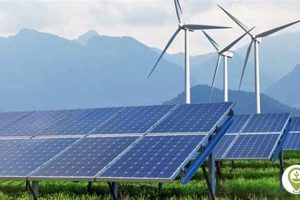
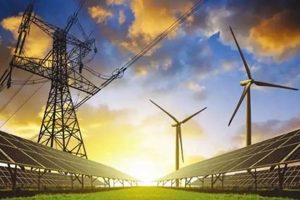
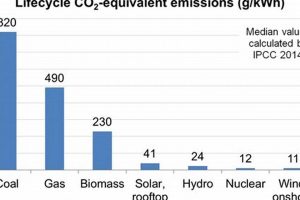
Visual representations of data related to sustainable power sources, such as solar, wind, hydro, and geothermal, provide a powerful tool for understanding trends and patterns. These visualizations can take many forms, from line charts illustrating the growth of installed capacity over time to pie charts showing the relative contribution of different renewable sources to a nation’s energy mix. For instance, a bar chart could compare the levelized cost of electricity from different renewable technologies.
The ability to clearly communicate complex information about sustainable energy is crucial for policymakers, investors, researchers, and the public. Visualizations facilitate this communication by making data easily digestible and highlighting key insights. Historical trends can be readily observed, allowing for the identification of growth areas and potential challenges. This understanding is essential for informed decision-making regarding energy policy, investment strategies, and technological development. Furthermore, compelling visuals can raise public awareness and support for the transition to a more sustainable energy future.
The following sections will delve deeper into specific aspects of renewable energy data, exploring trends in production, consumption, and investment. Further analysis will examine the role of technological advancements and policy initiatives in shaping the future of sustainable power.
Tips for Effective Visualization of Renewable Energy Data
Effective data visualization is crucial for conveying the complexities and opportunities within the renewable energy sector. These tips provide guidance on creating impactful and informative visuals.
Tip 1: Choose the Right Chart Type: Different chart types serve different purposes. Line charts are ideal for showing trends over time, while bar charts effectively compare discrete values. Pie charts illustrate proportions, and scatter plots reveal correlations.
Tip 2: Keep it Simple and Clear: Avoid cluttering charts with excessive data or unnecessary design elements. Focus on conveying a single key message effectively.
Tip 3: Use Appropriate Scaling and Labeling: Accurate scaling and clear axis labels are essential for proper data interpretation. Ensure units are clearly indicated and scales are chosen to avoid misrepresenting data.
Tip 4: Provide Context and Explanation: Charts should be accompanied by concise explanations that highlight key takeaways and provide context for the data presented. Clearly define any abbreviations or technical terms.
Tip 5: Cite Data Sources: Always cite the source of the data used in visualizations to ensure transparency and credibility.
Tip 6: Consider Your Audience: Tailor the complexity and style of visualizations to the intended audience. Technical audiences may require more detailed charts, while a general audience benefits from simpler representations.
Tip 7: Use Color Strategically: Use color to highlight key data points and differentiate between categories. Ensure color choices are accessible to individuals with color blindness.
By following these tips, visualizations of renewable energy data can effectively communicate complex information, driving informed decision-making and fostering greater understanding of this critical sector.
The effective use of data visualization plays a vital role in promoting the understanding and adoption of renewable energy solutions. The insights gained from these visualizations contribute to a more sustainable energy future.
1. Data Sources

The reliability and accuracy of visualizations depicting renewable energy trends depend fundamentally on the quality of underlying data sources. Credible sources are essential for drawing meaningful conclusions and informing effective policies. Sources like the International Energy Agency (IEA), the U.S. Energy Information Administration (EIA), and national statistical agencies provide comprehensive datasets on energy production, consumption, and capacity. These organizations employ rigorous methodologies for data collection and validation, enhancing the trustworthiness of visualizations based on their data. For example, the IEA’s annual “Renewables Market Report” offers detailed statistics on global renewable energy deployment, serving as a foundation for numerous visualizations depicting market growth and trends. Conversely, visualizations relying on less reputable or unverified sources may present misleading or inaccurate portrayals of the renewable energy landscape. Selecting appropriate data sources is the crucial first step in creating impactful and informative visualizations.
The choice of data source significantly impacts the scope and focus of a visualization. Global datasets from organizations like the IEA facilitate international comparisons and highlight broader trends. National or regional data, often available through government agencies or research institutions, provide more granular insights into specific markets. For example, visualizing data from the EIA allows for analysis of renewable energy trends within the United States, revealing state-level variations and policy impacts. Furthermore, specialized datasets focusing on particular technologies, such as solar photovoltaic or wind power, may be available from industry associations or research databases. The selected data source directly shapes the narrative and insights derived from a visualization.
Careful consideration of data sources is paramount for interpreting renewable energy visualizations accurately. Understanding the methodology employed by data providers, including data collection techniques, validation processes, and potential biases, is crucial. Transparency in data reporting and access to underlying datasets enhance the credibility of visualizations. By critically evaluating the data sources, users can assess the validity and limitations of visualizations, ensuring informed interpretations and well-founded decisions based on reliable evidence.
2. Visualization Types

Selecting appropriate visualization types is crucial for effectively communicating insights from renewable energy data. Different visualization types offer distinct advantages depending on the specific information being conveyed. Line charts excel at illustrating trends over time, making them suitable for displaying the growth of renewable energy capacity or generation over a period of years. For instance, a line chart could effectively depict the increasing global installed capacity of solar photovoltaic systems. Bar charts facilitate comparisons between different categories, allowing for visualization of the relative contributions of various renewable energy sources to a nation’s energy mix. A stacked bar chart could show the breakdown of electricity generation from wind, solar, hydro, and biomass within a specific region. Scatter plots are useful for exploring correlations between variables, such as the relationship between wind speed and energy output.
Choosing the correct visualization type enhances clarity and facilitates understanding. Pie charts effectively represent proportions, demonstrating the share of each renewable energy source in total energy consumption. Area charts showcase the cumulative contribution of different sources over time. Map-based visualizations can illustrate the geographic distribution of renewable energy resources or infrastructure, highlighting regional variations in deployment. Sankey diagrams are particularly suitable for visualizing energy flows, tracing the path of energy from generation to consumption. The selection of visualization type should align with the specific data being presented and the intended message.
Effective communication of renewable energy data relies on careful consideration of visualization techniques. Clear labeling, appropriate scaling, and concise titles are essential for accurate interpretation. Avoiding cluttered visuals and maintaining a consistent style enhances readability. The choice of visualization type directly impacts the audience’s ability to grasp key insights and understand complex data relationships. Utilizing a variety of visualization types can provide a comprehensive and nuanced perspective on the renewable energy landscape.
3. Time Scales

Time scales play a crucial role in interpreting trends depicted in visualizations of renewable energy data. The choice of time scale significantly influences the observed patterns and conclusions drawn. Short-term analyses, spanning a few months or years, might reveal seasonal variations in solar or wind power generation but may not capture longer-term growth trends. For instance, examining monthly data can highlight the impact of seasonal weather patterns on solar energy production, while annual data might obscure these fluctuations. Conversely, long-term analyses, covering decades, are essential for understanding the overall trajectory of renewable energy adoption and its impact on the broader energy system. A multi-decadal analysis could reveal the sustained growth of wind energy capacity driven by technological advancements and policy support.
The selection of an appropriate time scale depends on the specific research question or policy objective. Analyzing short-term trends is valuable for operational decision-making, such as optimizing grid integration of intermittent renewable sources. Understanding seasonal variations allows grid operators to anticipate fluctuations in renewable energy supply and adjust conventional generation accordingly. Long-term analyses are crucial for strategic planning, such as setting national renewable energy targets or assessing the long-term viability of different technologies. A long-term perspective can reveal the sustained decline in the cost of solar photovoltaics, informing investment decisions and policy incentives.
Understanding the interplay between time scales and data visualization is essential for informed decision-making in the renewable energy sector. Selecting appropriate time scales provides crucial context for interpreting trends and making accurate projections. A comprehensive analysis requires considering both short-term variations and long-term trajectories to gain a complete understanding of the dynamics of renewable energy systems. This nuanced perspective informs effective policies, investment strategies, and technological development, driving the transition to a more sustainable energy future.
4. Geographic Scope

Geographic scope significantly influences the interpretation of renewable energy visualizations. Global analyses provide a broad overview of trends, revealing regional disparities in renewable energy adoption and highlighting areas with high growth potential. For example, a global map displaying installed wind capacity per capita would reveal significant differences between leading countries in Europe and regions with nascent wind energy industries. Regional analyses offer more granular insights into specific markets, allowing for examination of policy impacts, resource availability, and grid integration challenges. Visualizing solar energy deployment within a specific state or province can reveal the influence of local incentives and grid infrastructure on adoption rates. Local-level analyses, focusing on specific cities or communities, can highlight the role of distributed generation and community-based renewable energy projects.
The choice of geographic scope should align with the specific research question or policy goal. Global analyses are valuable for understanding international trends and identifying best practices in renewable energy policy. Regional analyses are essential for tailoring policies to specific market conditions and addressing regional challenges. Local-level analyses can inform community-based initiatives and promote the adoption of distributed renewable energy solutions. Furthermore, comparing visualizations across different geographic scales can provide valuable insights into the drivers of renewable energy adoption. For instance, contrasting global trends in solar photovoltaic deployment with national-level data can reveal the influence of national policies and market structures.
Understanding the influence of geographic scope on renewable energy visualizations is crucial for informed decision-making. Selecting the appropriate geographic scale provides context for interpreting data and drawing meaningful conclusions. A multi-scalar approach, incorporating global, regional, and local perspectives, offers a comprehensive understanding of the complex dynamics driving the transition to renewable energy. This nuanced perspective informs effective policies, investment strategies, and technological development, promoting a more sustainable and equitable energy future.
5. Energy Source

Visualizations of renewable energy data necessitate clear identification of the specific energy source under consideration. Different renewable energy sources exhibit distinct characteristics, influencing their deployment patterns, growth trajectories, and overall contribution to the energy mix. Analyzing data specific to each source provides crucial insights for targeted policy development, investment decisions, and technological advancements.
- Solar Energy
Data visualizations focusing on solar energy often depict the growth of installed photovoltaic (PV) capacity, solar electricity generation, and the declining cost of solar technologies. Examples include line charts showing the exponential growth of global solar PV installations, maps illustrating the geographic distribution of solar power plants, and bar charts comparing the levelized cost of electricity from solar PV with other energy sources. These visualizations inform policy decisions related to solar incentives, grid integration, and land use.
- Wind Energy
Visualizations related to wind energy typically illustrate installed wind turbine capacity, wind electricity generation, and wind resource availability. Examples include maps showing wind speeds across different regions, line charts depicting the growth of offshore wind farms, and scatter plots correlating wind speed with energy output. These visualizations inform decisions related to wind farm siting, transmission infrastructure development, and the environmental impact of wind energy.
- Hydropower
Visualizations focusing on hydropower often depict installed hydropower capacity, electricity generation from hydropower dams, and water resource availability. Examples include bar charts comparing the capacity of different hydropower plants, line charts showing historical hydropower generation trends, and maps illustrating the location of major dams. These visualizations inform decisions related to water resource management, dam safety, and the environmental and social impacts of hydropower projects.
- Geothermal Energy
Visualizations related to geothermal energy typically illustrate installed geothermal capacity, electricity generation from geothermal power plants, and the distribution of geothermal resources. Examples include maps showing geothermal hotspots, line charts depicting the growth of geothermal power generation, and scatter plots correlating geothermal reservoir temperatures with energy output. These visualizations inform decisions related to geothermal exploration, power plant development, and the environmental impact of geothermal energy extraction.
By disaggregating data by energy source, visualizations provide a more nuanced understanding of the renewable energy landscape. This detailed perspective is essential for developing effective policies, making informed investment decisions, and accelerating the transition to a diversified and sustainable energy system. Comparing trends across different energy sources allows for identification of synergistic opportunities and targeted interventions to address specific challenges associated with each technology.
6. Units of Measurement

Accurate interpretation of visualizations representing renewable energy data relies critically on understanding the units of measurement employed. Consistent and appropriate units are essential for comparing data across different sources, time periods, and geographic regions. Misinterpreting units can lead to flawed conclusions and hinder effective decision-making in the renewable energy sector. The following facets highlight the key considerations regarding units of measurement in renewable energy visualizations.
- Energy Capacity
Energy capacity, typically measured in watts (W), kilowatts (kW), megawatts (MW), gigawatts (GW), or terawatts (TW), represents the maximum power output of a renewable energy facility. For example, a solar power plant with a capacity of 100 MW can generate up to 100 MW of electricity under ideal conditions. Accurately representing capacity units in visualizations is essential for comparing the size and potential output of different renewable energy projects and understanding their contribution to overall energy supply. Using consistent units facilitates meaningful comparisons between, for instance, a 1 GW offshore wind farm and a 500 MW solar power plant.
- Energy Generation
Energy generation, often measured in watt-hours (Wh), kilowatt-hours (kWh), megawatt-hours (MWh), gigawatt-hours (GWh), or terawatt-hours (TWh), represents the total amount of energy produced over a specific period. For example, a wind turbine generating 10 MWh of electricity per day contributes 3.65 GWh annually. Accurate representation of energy generation units in visualizations is crucial for tracking renewable energy production, assessing its contribution to meeting energy demand, and comparing the performance of different technologies. Consistent use of units enables meaningful comparisons of annual solar energy generation in different countries.
- Energy Intensity
Energy intensity, often expressed as energy consumption per unit of GDP or per capita, provides insights into the efficiency of energy use. Units might include kWh per dollar of GDP or MWh per capita. Visualizations employing these units can reveal trends in energy efficiency improvements and highlight differences in energy consumption patterns across regions. For example, comparing energy intensity across countries can reveal the effectiveness of energy efficiency policies and highlight opportunities for improvement.
- Monetary Units
Costs associated with renewable energy technologies are often presented in monetary units, such as dollars per watt ($/W) for installation costs or dollars per kilowatt-hour ($/kWh) for the levelized cost of electricity. Visualizations employing these units illustrate cost trends, facilitate comparisons between different technologies, and inform investment decisions. For instance, a chart displaying the declining cost of solar PV modules over time can demonstrate the increasing economic competitiveness of solar energy.
Understanding and correctly interpreting the units of measurement used in renewable energy visualizations is paramount for accurate analysis and informed decision-making. Consistent application of appropriate units facilitates meaningful comparisons across different data sets, enabling stakeholders to assess the performance of renewable energy technologies, track progress towards sustainability goals, and develop effective policies that promote the transition to a cleaner energy future.
7. Trends and Patterns

Visual representations of renewable energy data reveal critical trends and patterns, offering valuable insights for stakeholders across the energy sector. Analyzing these trends provides a basis for understanding the evolution of renewable energy technologies, informing investment decisions, shaping policy development, and projecting future growth trajectories. For example, long-term trends in declining costs of solar photovoltaic (PV) modules, readily apparent in line graph visualizations, have spurred significant investment in solar energy and driven its rapid global expansion. Similarly, visualizing wind energy deployment patterns through geographic information system (GIS) maps can reveal areas of high wind resource potential and guide the strategic placement of wind farms.
Examining trends and patterns within renewable energy data allows for identification of key drivers and barriers to adoption. Visualizations can illuminate the impact of policy interventions, such as renewable portfolio standards or feed-in tariffs, on market growth. For instance, comparing renewable energy capacity growth in countries with and without supportive policies can demonstrate the effectiveness of policy mechanisms in accelerating the transition to renewable energy. Furthermore, visualizations can reveal regional variations in renewable energy adoption, highlighting the influence of geographic factors, resource availability, and grid infrastructure. Analyzing these variations informs targeted policy interventions and facilitates optimized deployment strategies.
Understanding historical trends and patterns within renewable energy data is crucial for projecting future scenarios and anticipating challenges. Analyzing past growth rates, technological advancements, and policy impacts provides a foundation for forecasting future renewable energy deployment and its contribution to overall energy supply. These projections inform long-term energy planning, grid modernization efforts, and investment decisions. Furthermore, identifying emerging trends, such as the increasing integration of energy storage technologies with renewable energy systems, allows stakeholders to anticipate and address potential challenges and capitalize on emerging opportunities. By effectively analyzing trends and patterns in renewable energy data, decision-makers can make informed choices that drive the transition toward a more sustainable and resilient energy future.
Frequently Asked Questions
This section addresses common inquiries regarding the interpretation and utilization of visual representations of renewable energy data.
Question 1: How can visualizations of renewable energy data inform policy decisions?
Visualizations effectively communicate complex data, enabling policymakers to grasp key trends and patterns. This informed understanding facilitates the development of evidence-based policies targeting specific challenges and opportunities within the renewable energy sector.
Question 2: What are the limitations of relying solely on visualizations for understanding renewable energy trends?
While visualizations offer valuable insights, they should be complemented by thorough data analysis and consideration of contextual factors. Relying solely on visualizations without critical evaluation of underlying data and methodologies can lead to misinterpretations.
Question 3: How can visualizations be used to compare the performance of different renewable energy technologies?
Visualizations facilitate comparisons by presenting data on key performance indicators, such as energy capacity, generation, and cost, in a readily digestible format. Different chart types, such as bar charts or scatter plots, can highlight relative strengths and weaknesses of various technologies.
Question 4: What role do data sources play in the accuracy and reliability of renewable energy visualizations?
Data source reliability is paramount. Visualizations based on credible sources, such as established government agencies or international organizations, are more likely to provide accurate and trustworthy insights compared to those based on less reputable or unverified data.
Question 5: How can visualizations be used to track progress toward renewable energy targets?
Visualizations can effectively track progress by displaying historical trends and projecting future scenarios. Line charts, for instance, can illustrate the growth of renewable energy capacity over time, allowing stakeholders to monitor progress toward achieving specific targets.
Question 6: How can the public access and interpret visualizations of renewable energy data?
Numerous online resources, including government websites, international organizations, and research institutions, provide access to publicly available data and visualizations. Understanding the units of measurement, data sources, and visualization techniques is crucial for accurate interpretation.
Effective utilization of visualizations enhances comprehension of complex renewable energy data, fostering informed decision-making and promoting wider public engagement in the transition to sustainable energy systems.
The subsequent sections will delve into specific case studies and real-world examples, illustrating the practical application of data visualization in renewable energy analysis.
Conclusion
Visual representations of renewable energy data provide crucial insights into the complex dynamics of the global energy transition. Effective utilization of these graphical tools facilitates informed decision-making across various stakeholder groups, from policymakers and investors to researchers and the general public. Careful consideration of data sources, visualization types, time scales, geographic scope, specific energy sources, and units of measurement ensures accurate interpretation and meaningful analysis. Examination of historical trends and emerging patterns empowers stakeholders to anticipate challenges, capitalize on opportunities, and develop effective strategies for promoting renewable energy adoption.
The ongoing refinement of data visualization techniques, coupled with increasing access to comprehensive and reliable datasets, promises to further enhance understanding of the renewable energy landscape. This enhanced understanding is essential for accelerating the global transition towards a more sustainable, resilient, and equitable energy future. Continued investment in data collection, analysis, and visualization will be crucial for navigating the complexities of this transition and realizing the full potential of renewable energy technologies.