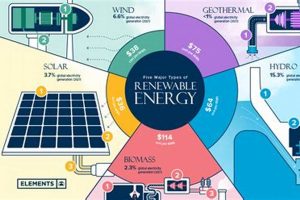
Sustainable energy sources derived from naturally replenishing resources, such as wind, solar, hydro, geothermal, and biomass, offer an alternative to traditional fossil fuels. For example, biogas derived from organic waste can power vehicles, while wind turbines generate electricity. These resources offer a continuous supply of power, reducing reliance on finite and environmentally damaging fossil fuels.
The shift towards these sustainable alternatives offers significant environmental and economic advantages. Reduced greenhouse gas emissions contribute to mitigating climate change and improving air quality. Furthermore, the development and implementation of these technologies stimulate economic growth and create new job opportunities. Historically, reliance on fossil fuels has created geopolitical dependencies and price volatility. The distributed and decentralized nature of many sustainable resources enhances energy security and independence.
This discussion will further explore the specific types of sustainable energy resources, their respective advantages and disadvantages, current technological advancements, and the policies that are driving their adoption globally. The transition to a sustainable energy future presents both challenges and opportunities, and a comprehensive understanding of these factors is crucial for effective implementation.
Tips for Supporting Sustainable Energy Adoption
Promoting wider use of sustainable energy sources requires a multifaceted approach involving individual actions, policy changes, and technological advancements. The following tips offer practical guidance for contributing to this essential transition.
Tip 1: Invest in Energy-Efficient Appliances: Choosing appliances with high energy efficiency ratings, such as Energy Star certified products, significantly reduces energy consumption and lowers utility bills. This includes refrigerators, washing machines, air conditioners, and lighting.
Tip 2: Support Renewable Energy Initiatives: Explore options for supporting renewable energy projects in local communities. This could include community solar farms, wind energy cooperatives, or advocating for policies that incentivize renewable energy development.
Tip 3: Reduce Transportation Emissions: Opting for public transportation, cycling, walking, or electric vehicles reduces reliance on fossil fuel-powered vehicles, minimizing greenhouse gas emissions and improving air quality.
Tip 4: Improve Home Insulation: Properly insulating homes reduces energy loss during heating and cooling, leading to lower energy bills and decreased reliance on power generation.
Tip 5: Advocate for Policy Changes: Supporting policies that promote renewable energy development, such as tax incentives, carbon pricing, and renewable portfolio standards, creates a favorable environment for sustainable energy growth.
Tip 6: Educate and Engage: Sharing information about the benefits of sustainable energy with friends, family, and colleagues raises awareness and encourages broader adoption of these crucial technologies.
Tip 7: Consider On-Site Renewable Energy Generation: Explore the feasibility of installing solar panels, small-scale wind turbines, or geothermal systems for residential or commercial properties to generate clean energy directly.
By adopting these strategies, individuals and communities can contribute significantly to the global transition towards sustainable energy, mitigating climate change, improving air quality, and fostering a more secure and sustainable energy future.
These practical steps offer a pathway towards a future powered by clean, sustainable resources. The subsequent sections will further explore the technological advancements and policy frameworks that are shaping this ongoing energy transformation.
1. Sustainable Sourcing

Sustainable sourcing forms the foundation of clean energy renewable fuels. It dictates that the feedstocks used for fuel production originate from resources that can be replenished naturally over a relatively short period. This stands in stark contrast to fossil fuels, which are extracted from finite reserves accumulated over millions of years. The environmental impact of fuel production is directly tied to the sourcing practices employed. For instance, biodiesel derived from sustainably harvested algae avoids the deforestation and habitat destruction often associated with unsustainable palm oil production. Similarly, using agricultural residues for bioethanol production reduces reliance on food crops, mitigating potential impacts on food security. Sustainable sourcing ensures the long-term viability of renewable fuel production by minimizing environmental damage and preserving resources for future generations.
The practical implications of sustainable sourcing extend beyond environmental protection. By establishing responsible supply chains, producers can ensure the ethical and social integrity of their operations. This includes fair labor practices, community engagement, and biodiversity conservation. Furthermore, sustainable sourcing contributes to economic development by creating new opportunities in rural communities and promoting innovation in resource management. Certification schemes, such as the Roundtable on Sustainable Biomaterials (RSB), provide frameworks for verifying the sustainability of feedstocks and ensuring transparency throughout the supply chain. These standards offer consumers confidence in the environmental and social responsibility of the renewable fuels they purchase.
Sustainable sourcing is not merely a component of clean energy renewable fuels; it is the defining principle that distinguishes them from conventional fossil fuels. It represents a fundamental shift towards a more circular and regenerative approach to energy production. While challenges remain in ensuring the sustainability of all feedstocks and supply chains, the ongoing development of certification standards and best practices continues to strengthen the connection between sustainable sourcing and the promise of a truly sustainable energy future.
2. Emission Reduction

Emission reduction represents a central objective in the transition to clean energy renewable fuels. The combustion of fossil fuels releases significant quantities of greenhouse gases, primarily carbon dioxide, contributing to climate change and air pollution. Renewable fuels offer a pathway to drastically reduce these emissions, mitigating environmental damage and promoting public health.
- Lifecycle Emissions
A comprehensive assessment of emission reduction considers the entire lifecycle of a fuel, from feedstock production to combustion. While renewable fuels generally exhibit lower lifecycle emissions compared to fossil fuels, variations exist depending on the specific feedstock and production process. For example, biofuels derived from sustainably managed forests can exhibit near-zero net lifecycle emissions, as the carbon absorbed during tree growth offsets the emissions released during combustion. Conversely, some biofuel production pathways may involve intensive agricultural practices that contribute to emissions from fertilizer use and land-use change. Accurate lifecycle analysis is crucial for evaluating the true environmental impact of renewable fuels.
- Greenhouse Gas Mitigation
The primary benefit of renewable fuels in terms of emission reduction lies in their potential to mitigate greenhouse gas emissions. Replacing fossil fuels with renewable alternatives directly reduces the release of carbon dioxide, methane, and other greenhouse gases into the atmosphere. This reduction is crucial for mitigating climate change and its associated impacts, including rising sea levels, extreme weather events, and disruptions to ecosystems. The degree of greenhouse gas mitigation achieved depends on the specific renewable fuel employed and its application. For example, using biodiesel in heavy-duty vehicles can significantly reduce emissions compared to conventional diesel fuel.
- Air Quality Improvement
In addition to greenhouse gas mitigation, renewable fuels can contribute to improved air quality. The combustion of fossil fuels releases particulate matter, nitrogen oxides, and other pollutants that contribute to respiratory problems and other health issues. Renewable fuels generally produce fewer of these harmful pollutants, leading to cleaner air and improved public health outcomes. This is particularly relevant in urban areas where air pollution poses a significant threat to public health. The transition to renewable fuels in transportation can play a crucial role in reducing urban air pollution and promoting healthier living environments.
- Carbon Capture and Storage
While renewable fuels inherently reduce emissions compared to fossil fuels, some emerging technologies aim to further enhance emission reduction through carbon capture and storage (CCS). In bioenergy with carbon capture and storage (BECCS), the carbon dioxide released during biofuel production is captured and stored underground, resulting in net negative emissions. This technology holds significant potential for removing carbon dioxide from the atmosphere and mitigating climate change. However, the feasibility and scalability of BECCS are still under investigation, and further research and development are required to fully realize its potential.
The focus on emission reduction highlights the crucial role of clean energy renewable fuels in addressing climate change and promoting a sustainable energy future. By minimizing lifecycle emissions, mitigating greenhouse gases, improving air quality, and exploring advanced technologies like CCS, renewable fuels offer a pathway towards a cleaner and healthier environment. The ongoing development and deployment of these fuels are essential for achieving global climate goals and ensuring a sustainable future for generations to come.
3. Resource Replenishment

Resource replenishment is a defining characteristic of clean energy renewable fuels, distinguishing them fundamentally from finite fossil fuels. This capacity for renewal ensures a long-term, sustainable energy supply, reducing dependence on depleting resources and mitigating the risks associated with resource scarcity.
- Natural Cycles
Renewable fuels leverage natural cycles for resource regeneration. Solar energy relies on the sun’s constant radiation, wind energy harnesses atmospheric movements driven by temperature differentials, and hydropower utilizes the water cycle. Biomass fuels utilize organic matter, which can be replenished through sustainable agricultural and forestry practices. This reliance on natural cycles ensures a continuous supply of energy feedstocks, unlike fossil fuels, which are extracted from finite reserves accumulated over geological timescales.
- Sustainable Management
Maintaining resource replenishment requires careful management practices. Sustainable forestry ensures that trees harvested for biomass energy are replanted, maintaining a balance between resource utilization and regeneration. Similarly, sustainable agriculture practices, such as crop rotation and cover cropping, maintain soil health and ensure the long-term productivity of land used for biofuel feedstock production. Water resource management is crucial for hydropower, ensuring that water usage for energy generation does not disrupt ecosystems or deplete water supplies. These management practices are essential for maintaining the long-term viability of renewable energy resources.
- Timescale of Replenishment
The timescale of resource replenishment varies depending on the specific renewable energy source. Solar and wind energy resources are effectively instantaneously replenished. Biomass resources require varying timescales for regeneration, depending on the specific feedstock. For example, fast-growing crops like switchgrass can be harvested annually, while trees used for wood pellets may require decades to reach maturity. Understanding these timescales is crucial for developing sustainable management practices that ensure resource replenishment aligns with consumption rates. Failure to manage resources within their replenishment cycles can lead to resource depletion and undermine the sustainability of renewable energy systems.
- Comparison with Fossil Fuels
The contrast between the replenishable nature of renewable energy resources and the finite nature of fossil fuels is stark. Fossil fuels, formed over millions of years, are being depleted at a rate far exceeding their natural replenishment. This depletion leads to resource scarcity, price volatility, and geopolitical instability. Renewable resources, when managed sustainably, offer a continuous and secure energy supply, reducing dependence on finite resources and mitigating the risks associated with their depletion. This fundamental difference underscores the long-term advantages of transitioning to a renewable energy future.
Resource replenishment is the cornerstone of clean energy renewable fuels, guaranteeing a sustainable energy future by aligning energy production with natural cycles and responsible management practices. This characteristic distinguishes renewable fuels from their finite counterparts, offering a pathway towards long-term energy security and environmental sustainability.
4. Energy Security

Energy security is intrinsically linked to the adoption of clean energy renewable fuels. It represents the uninterrupted availability of energy sources at affordable prices, coupled with the resilience of energy infrastructure against disruptions. Reliance on finite, geographically concentrated fossil fuels creates vulnerabilities to price volatility, supply disruptions, and geopolitical tensions. Clean energy renewable fuels, derived from diverse and geographically distributed resources, offer a pathway to enhance energy security. For example, a nation generating electricity from a mix of wind, solar, and hydro resources is less susceptible to disruptions caused by fluctuations in global oil prices or political instability in oil-producing regions. Similarly, distributed generation, such as rooftop solar panels, enhances resilience against grid failures by providing localized power generation.
The transition to clean energy renewable fuels strengthens energy independence by reducing reliance on imported fossil fuels. This is particularly relevant for nations heavily dependent on energy imports, as it reduces their vulnerability to external pressures and enhances their ability to control their energy destiny. Investing in domestic renewable energy resources creates local jobs, stimulates economic growth, and reduces the outflow of capital associated with purchasing imported fuels. Furthermore, diversified energy portfolios, incorporating a range of renewable energy technologies, enhance resilience against disruptions affecting specific resources. For instance, a prolonged period of low wind speeds can be mitigated by increased solar or hydro generation, ensuring a continuous energy supply. The development of smart grids further enhances energy security by optimizing energy distribution and enabling efficient integration of intermittent renewable energy sources.
Enhanced energy security is a crucial benefit of transitioning to clean energy renewable fuels. This transition mitigates vulnerabilities associated with fossil fuel dependence, strengthens energy independence, and promotes economic stability. By diversifying energy sources, investing in domestic renewable energy infrastructure, and developing smart grid technologies, nations can enhance their energy security and resilience while simultaneously addressing climate change and promoting a sustainable energy future. This shift represents a strategic investment in long-term stability and prosperity, offering a pathway towards a more secure and sustainable energy landscape.
5. Technological Advancement

Technological advancement is the engine driving the increasing viability and adoption of clean energy renewable fuels. Continuous innovation across various domains, from materials science to energy storage, is crucial for overcoming technical barriers, improving efficiency, and reducing the cost of renewable energy technologies. These advancements are essential for transitioning from fossil fuel dependence to a sustainable energy future powered by renewable resources.
- Improved Energy Conversion Efficiency
Advancements in materials science and engineering have led to significant improvements in the energy conversion efficiency of renewable energy technologies. For example, the development of more efficient photovoltaic materials has increased the amount of sunlight converted into electricity by solar panels. Similarly, advancements in wind turbine design, such as larger rotor diameters and improved blade aerodynamics, have increased the energy captured from wind. These efficiency gains translate directly into increased energy output from renewable energy systems, making them more competitive with fossil fuel-based power generation.
- Enhanced Energy Storage Solutions
The intermittent nature of some renewable energy sources, such as solar and wind, necessitates efficient energy storage solutions to ensure a reliable power supply. Technological advancements in battery technology, pumped hydro storage, and other energy storage systems are addressing this challenge. Improved battery chemistries, such as lithium-ion and solid-state batteries, offer higher energy density, longer lifespans, and improved safety. These advancements are crucial for integrating higher percentages of renewable energy into the grid and ensuring a stable and continuous power supply.
- Smart Grid Technologies
Smart grid technologies play a vital role in optimizing the integration and management of renewable energy resources. Advanced sensors, communication networks, and data analytics enable real-time monitoring of energy supply and demand, optimizing energy distribution, and enhancing grid stability. Smart grids enable more efficient integration of intermittent renewable energy sources, improve grid resilience, and empower consumers to manage their energy consumption more effectively. These technologies are essential for creating a modern and flexible energy infrastructure capable of supporting a high penetration of renewable energy.
- Cost Reduction through Innovation
Technological advancements have played a significant role in reducing the cost of renewable energy technologies. Economies of scale, improved manufacturing processes, and innovative materials have driven down the cost of solar panels, wind turbines, and other renewable energy components. This cost reduction has made renewable energy increasingly competitive with fossil fuels, accelerating the transition to a sustainable energy future. Continued innovation and technological advancements are essential for further reducing costs and making renewable energy accessible to a wider population.
These interconnected technological advancements are collectively driving the growth and adoption of clean energy renewable fuels. By improving efficiency, enhancing energy storage, optimizing grid management, and reducing costs, these innovations are transforming the energy landscape and paving the way for a sustainable energy future powered by renewable resources. Continued investment in research and development is crucial for accelerating this transition and realizing the full potential of clean energy renewable fuels.
Frequently Asked Questions
The following addresses common inquiries regarding sustainable energy derived from renewable sources.
Question 1: What are the primary types of sustainable energy resources suitable for fuel production?
Principal sources include biomass, biofuels derived from plant matter, biogas from anaerobic digestion, and hydrogen produced using renewable energy. Other indirect sources contribute to fuel production processes, such as solar and wind power used in manufacturing biofuels.
Question 2: How do these resources compare to traditional fossil fuels in terms of environmental impact?
Sustainable resources offer a substantial reduction in greenhouse gas emissions and minimize air and water pollution compared to fossil fuels. Their utilization contributes to mitigating climate change and improving environmental quality.
Question 3: Are there economic benefits associated with transitioning to these sustainable alternatives?
The transition stimulates job growth in the renewable energy sector, reduces reliance on volatile fossil fuel markets, and fosters innovation in energy technologies, contributing to long-term economic stability.
Question 4: What are the key challenges hindering wider adoption of these energy sources for fuel production?
Current challenges include the intermittency of some renewable resources (like solar and wind), the scalability of production processes, and the development of necessary infrastructure for widespread distribution and utilization.
Question 5: What role does government policy play in promoting the use of these sustainable fuels?
Government policies, including incentives, subsidies, and regulations, play a crucial role in encouraging investment, research, and development in the renewable energy sector. Supportive policies are essential for accelerating the transition towards widespread adoption.
Question 6: How can individuals contribute to the transition towards sustainable fuel use?
Individuals can support the transition through conscious consumer choices, such as purchasing products made with sustainable materials and supporting businesses committed to renewable energy. Advocating for supportive policies and investing in renewable energy technologies at a personal level also contribute significantly.
Understanding these fundamental aspects is crucial for informed decision-making and active participation in the ongoing global energy transition.
The subsequent sections will delve deeper into specific renewable fuel technologies, exploring their unique characteristics, benefits, and potential contributions to a sustainable energy future.
Conclusion
Clean energy renewable fuels represent a critical pathway toward mitigating climate change and ensuring long-term energy security. Exploration of these resources has revealed their potential to significantly reduce greenhouse gas emissions, diversify energy portfolios, and stimulate economic growth. Sustainable sourcing practices, coupled with continuous technological advancements, are enhancing the viability and accessibility of these fuels. Addressing challenges related to intermittency, scalability, and infrastructure development remains crucial for widespread adoption.
The transition to clean energy renewable fuels necessitates a concerted global effort. Policy support, research and development, and individual actions are essential for accelerating this transition and realizing a sustainable energy future. The continued exploration and implementation of these technologies hold the key to a cleaner, more secure, and prosperous future for all.