The utilization of radiation from the sun represents a key strategy in meeting global power demands. This approach involves capturing photons and converting them into usable electricity or thermal energy. Examples of this technology include photovoltaic cells, which directly transform sunlight into electrical current, and concentrated systems that harness solar radiation to heat fluids for power generation or direct thermal applications.
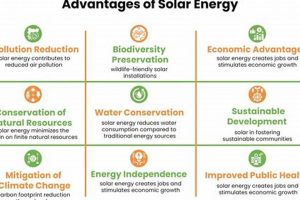
Harnessing the sun’s radiant output offers numerous advantages, including a reduction in dependence on fossil fuels and the mitigation of greenhouse gas emissions. Historically, practical application of this radiant energy has been limited by cost and efficiency. However, advancements in technology and economies of scale have made it increasingly competitive with traditional energy sources. Its ubiquity and potential for scalability make it a critical component of a sustainable energy future.
Further exploration into the specific technologies, storage solutions, and grid integration challenges associated with leveraging this renewable power source will provide a deeper understanding of its role in shaping the future energy landscape.
Tips for Maximizing Radiant Energy Collection
Effective utilization of energy derived from sunlight requires careful planning and execution. The following guidelines outline key considerations for optimizing the capture and conversion of this resource.
Tip 1: Site Selection: Optimal geographic location is paramount. Regions with high insolation levels, characterized by prolonged periods of clear skies and minimal cloud cover, will yield the most substantial returns. Factors such as latitude, altitude, and local weather patterns should be meticulously analyzed.
Tip 2: Orientation and Tilt: Proper alignment of collection devices is crucial. Orienting panels or concentrators towards true south (in the Northern Hemisphere) and adjusting the tilt angle based on seasonal variations in solar declination will maximize incident radiation.
Tip 3: Shading Mitigation: Shadows cast by surrounding structures, vegetation, or geological formations can significantly reduce energy output. Conduct thorough shading analyses and implement strategies to minimize obstruction of the collector surface.
Tip 4: Technology Selection: Choose the most appropriate conversion technology for the intended application. Photovoltaic systems are well-suited for electricity generation, while concentrated collectors are effective for thermal applications such as heating or cooling.
Tip 5: Regular Maintenance: Periodic inspection and cleaning are essential for maintaining optimal performance. Dust, debris, and other contaminants can reduce the efficiency of collection surfaces. Establish a preventative maintenance schedule to ensure long-term reliability.
Tip 6: Storage Solutions: Implement energy storage systems to mitigate the intermittent nature. Batteries, thermal storage, or other advanced storage technologies enable the decoupling of energy supply and demand, improving the overall viability of power generation.
By adhering to these guidelines, individuals and organizations can significantly improve the effectiveness and economic viability of converting sun’s radiation into usable energy. This represents a critical step towards a more sustainable and resilient energy infrastructure.
These principles lay the groundwork for a deeper understanding of the practical considerations involved in harnessing this renewable resource, paving the way for further exploration of specific applications and technological advancements.
1. Insolation Availability

Insolation availability, defined as the quantity of solar radiation received per unit area over a specified time, represents a fundamental constraint and primary driver of power generation potential. The effectiveness of utilizing the sun’s radiation as a energy source is directly proportional to insolation levels. Geographical location, atmospheric conditions, and seasonal variations significantly influence the availability of this resource, thereby impacting the design and performance of power facilities. Areas characterized by consistently high insolation, such as desert regions, offer superior opportunities for large-scale deployment compared to areas with frequent cloud cover or high atmospheric humidity. For instance, the Atacama Desert in Chile benefits from exceptional insolation, making it ideal for concentrating power projects.
The measurement and prediction of insolation are critical for accurately assessing the potential yield of any installation. Sophisticated modeling techniques, incorporating historical weather data and real-time monitoring, are employed to determine optimal system sizing and predict energy output. The type of technology deployed, whether photovoltaic or concentrated power, must be carefully matched to the specific insolation profile of the location to maximize efficiency and minimize energy losses. For example, while photovoltaic panels can function effectively under diffuse radiation conditions, concentrating power systems require direct beam radiation for optimal performance, making them less suitable for regions with frequent cloud cover.
In summary, insolation availability is a non-negotiable prerequisite for successful integration of the sun’s radiation as an electrical source. Thorough site assessment, advanced modeling techniques, and strategic technology selection are essential for realizing the full potential. Variations in insolation patterns necessitate adaptable energy storage solutions to mitigate intermittency and ensure consistent power supply, connecting insolation availability to broader challenges in the field.
2. Photovoltaic Conversion

Photovoltaic conversion represents a crucial technological pathway for directly transforming radiation from the sun into electrical energy, thereby functioning as a core component in the broader context of power derived from the sun. The process relies on the photoelectric effect, where photons strike semiconductor materials within photovoltaic cells, liberating electrons and creating an electrical current. The efficiency of this conversion process is paramount; advancements in materials science and cell design are continually pursued to enhance the amount of electricity generated from a given area of solar exposure. For instance, the development of multi-junction cells and thin-film technologies has led to increased efficiencies compared to traditional silicon-based cells, thereby bolstering the effectiveness of photovoltaic systems in harnessing power from the sun.
The practical significance of understanding photovoltaic conversion lies in its direct impact on system design, energy yield predictions, and economic feasibility. Factors such as cell efficiency, module configuration, and inverter performance all contribute to the overall performance of a photovoltaic installation. Real-world examples, such as large-scale power plants, demonstrate the scalability of photovoltaic technology for grid-connected electricity generation. Off-grid systems, often employed in remote areas or for specific applications like water pumping and telecommunications, further underscore the versatility of this technology. Furthermore, the decreasing cost of photovoltaic modules has made electricity derived from the sun increasingly competitive with conventional energy sources, driving wider adoption.
In summary, photovoltaic conversion is an indispensable mechanism for harnessing the sun’s radiant output. Its effectiveness dictates the viability of power generation, influencing both technological innovation and economic competitiveness. While challenges remain in areas such as improving cell efficiency and reducing manufacturing costs, ongoing research and development efforts hold promise for further optimizing the performance and expanding the applicability of photovoltaic systems as a key component of systems that draw electrical power from the sun.
3. Thermal Applications

The utilization of radiant energy from the sun in thermal applications represents a significant pathway for harnessing its inherent capacity. These applications leverage the energy to generate heat, serving a diverse range of needs from residential heating to industrial processes. Understanding the intricacies of these applications is critical to maximizing the effectiveness of this renewable resource.
- Solar Water Heating
This involves employing collectors to absorb radiation from the sun and transfer that heat to water. This heated water can then be used for domestic hot water needs, space heating, or even industrial processes. Examples include residential systems where rooftop collectors provide hot water for showers and washing machines, and larger-scale installations that supply hot water to commercial buildings or swimming pools.
- Concentrated Solar Power (CSP)
CSP technologies use mirrors or lenses to focus a large area of sunlight onto a small receiver. This concentrated energy heats a working fluid, which can then be used to generate electricity through a steam turbine or for direct industrial heat applications. Real-world examples include power plants that use parabolic trough or solar power tower systems to generate electricity on a large scale.
- Solar Air Heating
Similar to solar water heating, solar air heating systems use collectors to heat air. This heated air can be directly circulated into buildings for space heating or used in agricultural applications, such as crop drying. A common application is preheating ventilation air in commercial buildings to reduce the load on conventional heating systems.
- Passive Solar Heating
Passive techniques design buildings to maximize the capture and storage of energy from the sun without active mechanical systems. This involves optimizing building orientation, window placement, and thermal mass to naturally regulate indoor temperatures. Examples include south-facing windows that allow sunlight to penetrate and warm interior spaces during winter months, and the use of materials like concrete or brick to store heat and release it gradually.
The effectiveness of thermal applications in tapping into the energy provided by the sun depends on factors such as climate, technology selection, and system design. These applications provide a versatile means of leveraging renewable power for heating purposes, reducing reliance on fossil fuels and lowering carbon emissions. Continued advancements in materials science and system optimization will further enhance the role of thermal applications in the future energy landscape.
4. Energy Storage

Effective deployment of power derived from the sun necessitates robust energy storage solutions. The intermittent nature of radiant flux poses a significant challenge to grid stability and reliable energy delivery. Energy storage systems mitigate this intermittency, enabling consistent power supply regardless of sunlight availability.
- Battery Storage Systems
Battery technologies, such as lithium-ion and flow batteries, store electricity generated by power systems, releasing it when demand exceeds supply. Large-scale battery installations can provide grid-scale energy storage, supporting frequency regulation and peak shaving. For example, the Hornsdale Power Reserve in South Australia utilizes lithium-ion batteries to stabilize the grid and respond quickly to fluctuations in energy supply. Such systems are crucial for integrating large amounts of sunlight derived electrical power into existing power grids.
- Thermal Energy Storage
Thermal energy storage systems store heat generated by power systems for later use. This is particularly relevant for concentrated power plants, where excess thermal energy can be stored in molten salt or other heat-transfer fluids. This stored thermal energy can then be used to generate electricity during periods of low or no sunlight, extending the operational hours of the plant. Examples include power plants with molten salt storage that can continue to generate electricity for several hours after sunset.
- Pumped Hydro Storage
Pumped hydro storage involves pumping water from a lower reservoir to a higher reservoir during periods of excess electrical energy production. When energy demand is high, the stored water is released, flowing downhill through turbines to generate electricity. Pumped hydro facilities can provide large-scale, long-duration energy storage, supporting grid stability and facilitating the integration of intermittent resources. A notable example is the Dinorwig Power Station in Wales, which uses pumped hydro to provide rapid response power to the UK grid.
- Compressed Air Energy Storage (CAES)
CAES systems store energy by compressing air and storing it in underground caverns or tanks. When electricity is needed, the compressed air is released, heated, and used to drive turbines. CAES offers a potential solution for large-scale energy storage, particularly in regions with suitable geological formations. While fewer CAES facilities are currently operational compared to other storage technologies, ongoing research and development efforts aim to improve their efficiency and reduce costs.
The integration of energy storage technologies is essential for maximizing the utilization of energy derived from the sun. These systems address the inherent variability of resources, ensuring a reliable and dispatchable power supply. As the penetration of generated power increases, the demand for effective energy storage solutions will continue to grow, driving innovation and investment in this critical area.
5. Grid Integration

The integration of electrical power generated from the sun into existing electrical networks represents a significant engineering and economic challenge. Seamless integration is essential for maximizing the utilization of this renewable resource and ensuring grid stability. Successful grid integration necessitates addressing several key factors related to the variable nature of this power source and the operational constraints of the existing grid infrastructure.
- Voltage Regulation and Stability
Maintaining stable voltage levels within acceptable ranges is crucial for reliable grid operation. The intermittent nature of generation can cause voltage fluctuations, potentially damaging equipment and disrupting power supply. Advanced inverter technologies and reactive power compensation devices are employed to mitigate these voltage fluctuations and maintain grid stability. Real-world examples include the deployment of smart inverters that can actively regulate voltage levels in response to grid conditions, enhancing the integration capabilities of power plants.
- Frequency Control
Maintaining a constant grid frequency is essential for synchronous operation of electrical equipment. Fluctuations in generated power can disrupt grid frequency, potentially leading to instability and blackouts. Grid operators utilize various techniques, such as automatic generation control (AGC) and frequency response services, to maintain frequency stability. As more power enters the grid, sophisticated control systems are necessary to manage frequency fluctuations and ensure reliable grid operation.
- Transmission Capacity and Congestion Management
The existing transmission infrastructure may not be adequate to accommodate the influx of power from geographically dispersed plants. Transmission capacity upgrades and congestion management strategies are necessary to alleviate bottlenecks and ensure efficient delivery of power. Examples include the construction of new transmission lines to connect remote installations to load centers and the implementation of dynamic line rating systems that adjust transmission capacity based on real-time weather conditions. These enhancements are vital for realizing the full potential of this resource and avoiding curtailment of generated energy.
- Forecasting and Dispatchability
Accurate forecasting of energy production is essential for grid operators to effectively manage supply and demand. Advanced weather forecasting models and real-time monitoring systems are used to predict generated output and optimize dispatch schedules. Grid operators also rely on dispatchable resources, such as energy storage systems or flexible power plants, to compensate for forecast errors and maintain grid balance. Improved forecasting accuracy and increased dispatchability of sources of power enhance grid reliability and enable greater penetration of electrical power.
These factors are interconnected and influence the overall success of integrating generation into the electric grid. Addressing these challenges requires a coordinated effort involving grid operators, utilities, and policymakers. Successful grid integration is essential for unlocking the full potential of this renewable power source and transitioning to a more sustainable energy future.
6. Economic Viability

The economic viability of capturing and converting the sun’s radiant output is a critical determinant of its widespread adoption as a primary power source. The ability to compete effectively with traditional fossil fuel-based generation hinges on various economic factors that influence investment decisions, deployment rates, and long-term operational sustainability.
- Initial Capital Costs
The upfront investment required for establishing installations is a significant barrier to entry. These costs encompass the procurement of photovoltaic panels, inverters, mounting structures, and installation labor. Economies of scale, technological advancements in manufacturing processes, and government subsidies play a critical role in reducing these initial expenditures, making the investment more attractive to potential adopters. For example, large-scale manufacturing of photovoltaic modules in China has substantially lowered prices globally, increasing accessibility. However, the perceived risk and long payback periods may still deter some investors.
- Levelized Cost of Energy (LCOE)
LCOE is a metric used to compare the cost of electricity generation across different technologies over the lifetime of a project. It incorporates all relevant costs, including capital expenditures, operating expenses, fuel costs (if applicable), and decommissioning costs. The LCOE is a crucial factor in determining the competitiveness of generation compared to alternatives. Decreasing LCOE values have made power increasingly competitive, leading to greater market penetration in regions with favorable sunlight conditions and supportive policies. Factors influencing LCOE include insolation levels, system efficiency, financing costs, and operational lifespan.
- Government Incentives and Policies
Government policies, such as tax credits, feed-in tariffs, and renewable energy mandates, significantly impact the economic attractiveness of this power source. These incentives can reduce the initial capital outlay, provide guaranteed revenue streams, and create a stable market environment. For instance, feed-in tariffs, which guarantee a fixed price for electricity generated by photovoltaic systems, have been instrumental in driving deployment in countries like Germany. Conversely, the absence of supportive policies can hinder adoption, even in regions with abundant sunlight resources.
- Operation and Maintenance (O&M) Costs
Ongoing operational costs, including maintenance, repairs, and performance monitoring, affect the long-term economic viability. Proper maintenance is essential for maximizing system performance and extending its operational lifespan. Remote monitoring systems and automated cleaning solutions can help reduce O&M costs, improving overall profitability. For example, routine cleaning of photovoltaic panels in dusty environments can significantly increase energy production, thereby enhancing the economic return on investment. Failure to adequately address O&M can lead to reduced output and increased expenses, negatively impacting the economic case for a given project.
In conclusion, the economic viability of harnessing the sun’s radiant output is multifaceted, encompassing initial capital costs, LCOE, government incentives, and O&M expenses. These factors collectively determine its competitiveness with conventional power sources. Continuous technological innovation, supportive government policies, and efficient project management are essential for improving the economic attractiveness and driving the widespread adoption of power systems globally.
7. Environmental Impact

The extraction and combustion of fossil fuels, the predominant sources of energy globally, result in significant environmental degradation. These activities release greenhouse gases, contributing to climate change and its associated consequences, including rising sea levels, extreme weather events, and disruptions to ecosystems. Furthermore, air pollution from burning fossil fuels causes respiratory illnesses and other health problems. In contrast, energy sourced from the sun offers a pathway to mitigate these adverse environmental effects. The operational phase of generating electricity or heat directly from sunlight produces minimal emissions, thereby reducing the carbon footprint associated with energy production. For instance, replacing a coal-fired power plant with a photovoltaic array of equivalent capacity substantially reduces greenhouse gas emissions and air pollutants. Therefore, understanding the environmental impact is a crucial component of evaluating the overall benefits of transitioning to reliance on the sun.
While the operational phase presents environmental advantages, the manufacturing and disposal of technologies also have environmental considerations. The production of photovoltaic panels involves the use of certain materials and energy-intensive processes, resulting in some emissions and waste. Similarly, concentrated power facilities require land resources and water for cooling, potentially impacting local ecosystems. However, lifecycle assessments demonstrate that the overall environmental impact of power systems is significantly lower than that of fossil fuel-based alternatives. Moreover, ongoing research and development efforts are focused on improving manufacturing processes, reducing material usage, and developing more sustainable disposal methods. For example, the development of thin-film solar cells reduces material requirements compared to traditional silicon-based cells, minimizing the environmental footprint of production. Implementing effective recycling programs for end-of-life components is also crucial for minimizing waste and recovering valuable materials.
In conclusion, while challenges related to manufacturing and disposal exist, the utilization of the sun as an electrical source offers a significant opportunity to reduce the environmental impact associated with energy production. The reduction in greenhouse gas emissions, air pollution, and resource depletion compared to fossil fuel-based energy sources makes it a critical component of a sustainable energy future. Continued innovation in manufacturing processes, improved recycling practices, and responsible land management are essential for maximizing the environmental benefits. A holistic approach that considers the entire lifecycle, from production to disposal, is crucial for minimizing the environmental footprint and achieving long-term sustainability.
Frequently Asked Questions
The following frequently asked questions address common concerns and misconceptions regarding capturing and converting the sun’s radiant output into usable power.
Question 1: What are the primary limitations to widespread adoption of electrical generation from sunlight?
Limitations include the intermittent nature of radiant flux, the relatively low energy density compared to fossil fuels, and the geographic variability of insolation levels. Energy storage solutions and grid infrastructure upgrades are necessary to mitigate intermittency. Geographic constraints can be addressed through strategic site selection and the development of long-distance transmission capabilities.
Question 2: How does the efficiency of photovoltaic cells impact the overall feasibility of converting sunlight into usable power?
Photovoltaic cell efficiency directly impacts the land area required to generate a given amount of electricity. Higher efficiency cells reduce the land footprint and associated environmental impacts, lowering the overall cost per kilowatt-hour. Ongoing research focuses on improving cell efficiency through advanced materials and device designs.
Question 3: What are the primary environmental concerns associated with power installations?
Environmental concerns include the use of materials during manufacturing, land use impacts, and the potential for habitat disruption. Lifecycle assessments are crucial for evaluating the overall environmental footprint and identifying opportunities for improvement. Responsible land management practices and the development of sustainable manufacturing processes are essential for minimizing these impacts.
Question 4: What role does energy storage play in enabling a greater reliance on the sun for electricity?
Energy storage is critical for mitigating the intermittency of sunlight. Storage systems, such as batteries and thermal storage, allow for the decoupling of energy supply and demand, ensuring a reliable power supply even when direct sunlight is unavailable. The development of cost-effective and efficient energy storage technologies is essential for enabling a high percentage of penetration into electricity grids.
Question 5: How does the Levelized Cost of Energy (LCOE) for this type of technology compare to that of conventional power generation?
The LCOE has decreased significantly in recent years, making power increasingly competitive with conventional power sources. Factors such as decreasing capital costs, improved system efficiency, and government incentives contribute to this trend. In many regions, the LCOE is now comparable to or lower than that of fossil fuel-based power generation.
Question 6: What are the key policy considerations for promoting the development and deployment of power systems?
Key policy considerations include establishing clear and consistent renewable energy targets, providing financial incentives such as tax credits and feed-in tariffs, and streamlining permitting processes. Grid integration policies are also essential for ensuring that generated electricity can be efficiently transmitted and distributed. A stable and supportive policy environment is crucial for attracting investment and driving innovation.
In summary, the widespread adoption of this approach relies on addressing technological, economic, and policy challenges. Overcoming these hurdles will unlock the full potential to mitigate climate change, enhance energy security, and foster a more sustainable energy future.
The preceding section provided insights into common questions regarding systems that derive electricity from sunlight. Subsequent sections will delve into specific applications and emerging technologies related to this renewable power source.
Conclusion
This exploration of “sources of energy solar energy” has illuminated its multifaceted nature, encompassing technological intricacies, economic considerations, and environmental imperatives. A comprehensive understanding of insolation availability, photovoltaic conversion, thermal applications, energy storage solutions, and grid integration challenges is paramount for maximizing the potential of radiant energy conversion. Furthermore, economic viability and environmental impact assessments are crucial for evaluating the long-term sustainability and scalability of power generation.
Continued research, development, and strategic policy implementation are essential to overcome existing limitations and unlock the full potential of this power source. The future energy landscape necessitates a transition toward renewable and sustainable sources, and the sun stands as a critical component in achieving energy security and mitigating climate change. A commitment to innovation, investment, and responsible environmental stewardship will pave the way for a cleaner, more sustainable energy future.