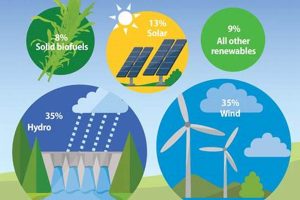
The shift from fossil fuel-based energy systems to those powered by sustainable sources, such as solar, wind, hydro, geothermal, and biomass, represents a fundamental change in energy production and consumption. This involves not only adopting new technologies for electricity generation but also adapting infrastructure, storage solutions, and distribution networks. For example, a region might invest in large-scale solar farms coupled with battery storage to provide reliable power, even when the sun isn’t shining.
Decarbonizing the energy sector is paramount for mitigating climate change and enhancing energy security. Renewable energy sources produce little to no greenhouse gas emissions during operation, a stark contrast to fossil fuels. This reduction in emissions is crucial for limiting global warming and its associated impacts. Furthermore, diversifying energy sources through renewables reduces dependence on volatile global fossil fuel markets, enhancing national energy independence and stability. Historically, energy transitions have marked significant societal shifts, from wood to coal, and then to oil and gas. The current shift toward renewables arguably represents an even more profound transformation with the potential for widespread economic and environmental benefits.
The following sections will delve deeper into the key aspects of this energy transformation, exploring specific technologies, the challenges of integration, and the policy landscape driving this global movement.
Tips for a Successful Energy Transition
Successfully transitioning to a renewable energy-based system requires careful planning and execution. The following tips offer guidance for navigating this complex process.
Tip 1: Conduct a Thorough Energy Audit: Assessing current energy consumption patterns is essential. This involves analyzing energy usage across different sectors, identifying areas for improvement, and setting realistic reduction targets.
Tip 2: Prioritize Energy Efficiency: Implementing energy efficiency measures reduces overall demand, making the transition to renewables more manageable and cost-effective. Examples include building retrofits, improved industrial processes, and promoting energy-efficient appliances.
Tip 3: Diversify Renewable Energy Sources: Relying on a mix of renewable sources, such as wind, solar, and hydro, enhances grid resilience and reduces reliance on any single technology. This approach mitigates intermittency challenges associated with individual sources.
Tip 4: Invest in Grid Modernization: Upgrading existing grid infrastructure is crucial for accommodating intermittent renewable energy sources. This includes investing in smart grids, advanced metering systems, and enhanced transmission capacity.
Tip 5: Support Research and Development: Continued investment in research and development is vital for advancing renewable energy technologies, reducing costs, and improving efficiency. Focus areas include energy storage solutions, next-generation solar panels, and innovative wind turbine designs.
Tip 6: Foster Public-Private Partnerships: Collaboration between governments, private companies, and research institutions is essential for driving innovation, scaling up renewable energy deployment, and sharing best practices.
Tip 7: Implement Supportive Policies: Government policies play a crucial role in incentivizing renewable energy adoption. Examples include feed-in tariffs, tax credits, renewable portfolio standards, and carbon pricing mechanisms.
By implementing these strategies, a more sustainable, secure, and resilient energy future can be achieved.
The concluding section will synthesize the key takeaways and offer a forward-looking perspective on the global energy transition.
1. Decarbonization

Decarbonization, the process of reducing carbon dioxide emissions, is intrinsically linked to the transition to renewable energy. The combustion of fossil fuels for energy production is a primary source of greenhouse gas emissions, driving climate change. Renewable energy sources, such as solar, wind, and hydro, offer a pathway to decarbonize the energy sector by displacing fossil fuels and significantly reducing emissions associated with electricity generation. This connection represents a cause-and-effect relationship: the need for decarbonization necessitates a shift towards renewables.
Decarbonization is not merely a component of the renewable energy transition; it is a central driving force. The urgency of addressing climate change has elevated decarbonization to a global priority, prompting governments and industries to invest heavily in renewable energy technologies and infrastructure. For example, the European Union’s commitment to becoming climate-neutral by 2050 through the European Green Deal exemplifies this focus on decarbonization-driven renewable energy adoption. Similarly, numerous countries have established carbon pricing mechanisms, such as carbon taxes or cap-and-trade systems, to incentivize emissions reductions and accelerate the transition to a low-carbon energy future. These policies underscore the practical significance of understanding the crucial link between decarbonization and renewable energy.
Decarbonizing the energy sector through the integration of renewable energy sources presents significant challenges, including intermittency, grid stability, and storage capacity. Overcoming these hurdles requires substantial investment in research and development, grid modernization, and innovative energy storage solutions. Despite these challenges, the imperative of mitigating climate change reinforces the critical role of decarbonization in guiding the global energy transition towards a sustainable and resilient future.
2. Technological Advancement

Technological advancement plays a crucial role in facilitating the transition to renewable energy. Improvements in areas such as solar panel efficiency, wind turbine design, energy storage solutions, and smart grid technologies are essential for making renewable energy sources more cost-competitive, reliable, and integrable into existing energy infrastructure. This relationship is not merely correlational; technological progress actively drives the feasibility and pace of renewable energy adoption. For instance, the development of high-capacity lithium-ion batteries has significantly enhanced the viability of electric vehicles and grid-scale energy storage, enabling greater integration of intermittent renewable sources like solar and wind power. Similarly, advancements in materials science have led to the creation of more efficient and durable solar panels, reducing costs and increasing energy yields.
Considering technological advancement as a mere component of the renewable energy transition understates its fundamental importance. It serves as a catalyst, enabling the shift away from fossil fuels and towards a sustainable energy future. Without continuous technological innovation, the widespread adoption of renewable energy would face significant limitations. The practical significance of this understanding lies in the recognition that investment in research and development is crucial for accelerating the energy transition. Examples include government funding for renewable energy research, private sector investment in new technologies, and international collaborations to share knowledge and best practices. Moreover, fostering an environment that encourages innovation and entrepreneurship in the clean energy sector is essential for driving technological breakthroughs and achieving global climate goals.
While technological advancements offer immense potential, challenges remain. Further breakthroughs are needed in areas such as energy storage, grid management, and the development of next-generation renewable energy technologies. Moreover, ensuring equitable access to these advancements is crucial for a just and inclusive energy transition. Addressing these challenges requires a concerted effort from governments, industry, researchers, and civil society to foster innovation, support deployment, and ensure that the benefits of technological progress are shared broadly.
3. Economic Opportunities

The transition to renewable energy presents significant economic opportunities. This shift is not merely correlated with economic growth; it actively drives it. Investing in renewable energy infrastructure, manufacturing, and research creates new jobs, stimulates innovation, and fosters new industries. For example, the growth of the solar and wind power sectors has led to a surge in manufacturing jobs for components like solar panels, wind turbines, and batteries. Furthermore, the development of smart grids and energy storage solutions creates opportunities for software developers, engineers, and technicians. This economic activity generates revenue, increases tax bases, and stimulates local economies. The cause-and-effect relationship is clear: transitioning to renewable energy fuels economic expansion.
Viewing economic opportunities as merely a component of the renewable energy transition understates their crucial role. These opportunities serve as a powerful incentive for businesses, investors, and governments to accelerate the shift towards sustainable energy systems. The practical significance of this understanding lies in recognizing that economic growth and environmental sustainability can be mutually reinforcing goals. For instance, government policies that incentivize renewable energy investment, such as tax credits and feed-in tariffs, can attract private capital and spur economic activity while simultaneously reducing greenhouse gas emissions. The burgeoning electric vehicle market exemplifies this synergy, creating jobs in manufacturing, battery production, charging infrastructure, and software development, while contributing to cleaner transportation.
While the economic benefits of renewable energy are substantial, addressing potential challenges is crucial. These include ensuring a just transition for workers in fossil fuel industries, managing the intermittency of renewable energy sources, and ensuring equitable access to clean energy technologies and their associated economic benefits. Policymakers and industry leaders must prioritize strategies that maximize job creation, promote workforce development, and address potential economic disparities arising from the energy transition. By proactively addressing these challenges, the shift to renewable energy can deliver substantial economic opportunities while fostering a more sustainable and inclusive future.
4. Infrastructure Development

Infrastructure development is inextricably linked to the transition to renewable energy. This connection is not simply correlational; it represents a fundamental dependency. Renewable energy sources, often geographically dispersed and intermittent, require substantial infrastructure investments to ensure efficient generation, transmission, and distribution of power. This includes upgrading existing grid networks to accommodate the influx of renewable energy, building new transmission lines to connect remote renewable energy projects to population centers, and developing smart grid technologies to manage the intermittency of sources like solar and wind power. For example, offshore wind farms necessitate specialized subsea cables and onshore substations to transmit generated electricity to the grid. Similarly, large-scale solar farms require extensive land areas and grid connections to deliver power effectively. Without significant infrastructure development, the potential of renewable energy sources remains untapped.
Considering infrastructure development as merely a component of the renewable energy transition understates its critical role. It serves as a foundational enabler, facilitating the large-scale integration of renewable energy sources and driving the shift away from fossil fuel dependence. The practical significance of this understanding lies in recognizing that infrastructure investment is not simply a cost but a crucial investment in a sustainable future. For instance, the development of transcontinental high-voltage direct current (HVDC) lines can facilitate the transmission of renewable energy across vast distances, enabling regions with abundant renewable resources to supply power to areas with higher energy demands. Similarly, investments in smart grid technologies, such as advanced metering infrastructure and grid-scale energy storage, can enhance grid stability and reliability, enabling greater penetration of intermittent renewable energy sources. Real-world examples include China’s investment in ultra-high-voltage transmission lines to connect remote wind and solar farms to its eastern coastal cities and Europe’s development of interconnected electricity grids to facilitate cross-border renewable energy trading.
While infrastructure development is essential for a successful renewable energy transition, challenges remain. These include securing financing for large-scale projects, navigating regulatory hurdles, minimizing environmental impacts, and ensuring equitable access to clean energy infrastructure. Addressing these challenges requires strategic planning, effective policy frameworks, and strong public-private partnerships. Overcoming these obstacles will unlock the full potential of renewable energy sources and pave the way for a more sustainable and resilient energy future.
5. Policy and Regulation

Policy and regulation are essential instruments for driving the transition to renewable energy. They provide the framework that shapes market dynamics, incentivizes investment, and guides the development and deployment of renewable energy technologies. Effective policies and regulations are crucial for creating a stable and predictable environment that fosters innovation, attracts private capital, and ensures a just and equitable energy transition.
- Renewable Portfolio Standards (RPS):
RPS policies mandate that a certain percentage of electricity generation comes from renewable sources. These standards create a guaranteed market for renewable energy, driving investment in new projects and stimulating technological innovation. For example, several states in the United States have implemented RPS targets, requiring utilities to source a specific percentage of their electricity from renewables by a certain date. These policies have proven effective in accelerating renewable energy deployment and reducing reliance on fossil fuels.
- Feed-in Tariffs (FITs):
FITs provide long-term contracts to renewable energy producers, guaranteeing a fixed price for the electricity they generate. This predictable revenue stream reduces investment risk and encourages the development of renewable energy projects, particularly for smaller-scale installations like rooftop solar. Germany’s early adoption of FITs played a key role in its rapid expansion of renewable energy capacity, demonstrating the effectiveness of this policy mechanism.
- Carbon Pricing Mechanisms:
Carbon pricing, through mechanisms like carbon taxes or cap-and-trade systems, internalizes the environmental cost of fossil fuel emissions. By making fossil fuels more expensive, these policies incentivize a shift towards cleaner energy sources, including renewables. The European Union Emissions Trading System (EU ETS) is a prominent example of a cap-and-trade system that has driven emissions reductions and promoted investment in renewable energy.
- Tax Incentives and Subsidies:
Governments can provide tax incentives, such as investment tax credits or production tax credits, to reduce the cost of renewable energy technologies and stimulate their adoption. Subsidies can also support research and development, fostering innovation and driving down the cost of renewable energy over time. The United States’ Investment Tax Credit (ITC) has been instrumental in driving the growth of the solar industry, demonstrating the effectiveness of targeted tax incentives.
These policy and regulatory mechanisms, implemented individually or in combination, are essential for creating a supportive environment for the renewable energy transition. Their effectiveness depends on careful design, consistent implementation, and regular evaluation. Furthermore, international cooperation and policy harmonization can play a crucial role in accelerating the global shift towards renewable energy and achieving international climate goals. Ultimately, well-designed policies and regulations are vital for unlocking the full potential of renewable energy and building a sustainable energy future.
6. Social Equity
Social equity forms an integral part of the transition to renewable energy. This connection goes beyond mere correlation; it represents a crucial ethical and practical consideration. A just transition ensures that the benefits of renewable energy, such as cleaner air and new economic opportunities, are accessible to all communities, regardless of socioeconomic status, race, or geographic location. Conversely, it also means mitigating potential negative impacts of the transition, such as job displacement in fossil fuel industries, disproportionately affecting vulnerable populations. For example, ensuring access to rooftop solar installations and energy efficiency programs for low-income households promotes equitable participation in the clean energy economy. Similarly, targeted job training and workforce development initiatives can support workers transitioning from fossil fuel industries to renewable energy sectors. Failing to prioritize social equity risks exacerbating existing inequalities and creating new ones, undermining public support for the energy transition and hindering its long-term success. This understanding necessitates proactive measures to ensure a just and inclusive transition, maximizing the societal benefits of renewable energy while minimizing potential harms.
The practical significance of integrating social equity into the renewable energy transition is multifaceted. Targeted policies and programs can address historical injustices and promote equitable access to clean energy resources and their associated benefits. Community solar projects, for instance, enable residents who may not have suitable rooftops or sufficient capital to participate in solar energy generation and share its economic advantages. Furthermore, prioritizing renewable energy development in underserved communities can create local jobs, improve air quality, and reduce energy burdens for low-income households. Real-world examples include initiatives like the New York State’s Climate Leadership and Community Protection Act, which mandates that disadvantaged communities receive a significant share of the benefits from clean energy investments. Such policies demonstrate the practical application of social equity principles in driving a more inclusive and just energy transition.
While incorporating social equity into the renewable energy transition offers substantial benefits, challenges remain. These include accurately identifying and addressing the specific needs of diverse communities, ensuring equitable access to financing and resources, and overcoming historical barriers to participation. Furthermore, effective policy implementation requires robust community engagement, data collection, and ongoing monitoring to ensure that programs are achieving their intended outcomes. Addressing these challenges requires a collaborative approach involving policymakers, community leaders, researchers, and the private sector to create a truly equitable and sustainable energy future for all. Ultimately, prioritizing social equity is not merely a matter of fairness but a crucial prerequisite for achieving a successful and enduring renewable energy transition.
Frequently Asked Questions about the Renewable Energy Transition
This section addresses common inquiries regarding the shift towards renewable energy sources, aiming to provide clear and concise information.
Question 1: What are the primary barriers to wider adoption of renewable energy?
Several factors currently hinder broader implementation. These include the intermittency of certain renewable sources like solar and wind, the upfront costs of installation, the need for grid modernization to accommodate decentralized generation, and occasional public resistance due to aesthetic or land use concerns. Addressing these challenges requires technological advancements, supportive policies, and public education.
Question 2: How does the cost of renewable energy compare to that of fossil fuels?
The cost of renewable energy technologies, particularly solar and wind, has decreased dramatically in recent years, making them increasingly competitive with fossil fuels. In many regions, renewable energy is now the cheapest source of new electricity generation. However, factors such as location, resource availability, and policy incentives influence the specific cost comparison.
Question 3: Can renewable energy sources reliably meet global energy demands?
With appropriate planning and investment, renewable energy sources possess the capacity to meet global energy needs. Diversifying renewable energy sources, incorporating energy storage solutions, and modernizing grid infrastructure are crucial for ensuring reliability and stability.
Question 4: What role does energy storage play in a renewable energy system?
Energy storage technologies, such as batteries, pumped hydro, and thermal storage, address the intermittency of renewable sources like solar and wind. Storing excess energy generated during peak production periods allows for its utilization during periods of lower generation or higher demand, ensuring a continuous and reliable power supply.
Question 5: How does the transition to renewable energy impact job markets?
The renewable energy sector creates numerous employment opportunities in manufacturing, installation, maintenance, and research. While some jobs in fossil fuel industries may be displaced, the overall impact on employment is generally positive, with the renewable energy sector offering substantial job growth potential.
Question 6: What policies are effective in promoting renewable energy adoption?
Effective policies include renewable portfolio standards, feed-in tariffs, carbon pricing mechanisms, tax incentives, and research and development funding. Supportive policies create a stable and predictable market environment, encouraging investment in renewable energy technologies and accelerating their deployment.
Understanding these key aspects of the renewable energy transition is crucial for informed decision-making and effective policy implementation. Widespread adoption of renewable energy requires a concerted effort from governments, industry, and individuals, driven by a shared commitment to a sustainable future.
The next section will explore real-world case studies of successful renewable energy integration.
Transitioning to Renewable Energy
Exploration of this critical shift reveals a multifaceted undertaking with profound implications for global sustainability, economic development, and societal well-being. Decarbonizing the energy sector through the adoption of renewable sources like solar, wind, hydro, and geothermal power is not merely a technological challenge; it represents a fundamental restructuring of energy systems, requiring significant infrastructure development, policy innovation, and societal adaptation. The analysis highlighted the interconnectedness of technological advancements, economic opportunities, policy frameworks, and social equity considerations in driving a successful transition. Furthermore, addressing challenges such as intermittency, grid stability, and equitable access to clean energy requires concerted efforts from governments, industry, researchers, and communities.
The transition to renewable energy represents a pivotal moment in human history. It offers a pathway towards a more sustainable, resilient, and equitable future, mitigating the impacts of climate change while creating new economic opportunities and enhancing energy security. The urgency of this transformation necessitates immediate and sustained action, embracing innovation, fostering collaboration, and prioritizing long-term sustainability over short-term gains. The future of energy hinges on the collective commitment to transitioning towards a renewable energy paradigm, ensuring a healthier planet and a more prosperous future for generations to come.