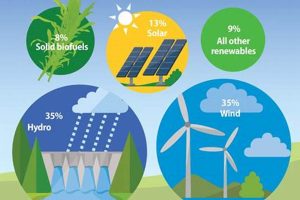
The concept of utilizing wood as a fuel source, gathered from trees, and its potential for regeneration forms the basis of assessing its sustainability. The ability of forests to regrow after trees are harvested for heating or other purposes is central to the debate surrounding its categorization. This involves considering the rate of replenishment versus the rate of consumption.
Its long-standing use throughout human history highlights its accessibility and relative simplicity as an energy provider. Managing forest resources to ensure their continuous availability offers the benefit of a locally sourced energy alternative. A commitment to sustainable forestry practices is crucial for mitigating potential environmental impacts and preserving biodiversity.
This analysis delves into the factors influencing the renewable character of this fuel, examining both the potential advantages and the necessary conditions for its responsible and eco-conscious application.
Responsible Firewood Usage
Optimizing the renewability of wood fuel requires adhering to specific principles that promote sustainable forestry and responsible consumption. Careful attention to these considerations is essential for mitigating environmental impact and maximizing the long-term viability of this resource.
Tip 1: Source Locally and Sustainably. Prioritize obtaining wood from local sources committed to sustainable forestry practices. Verify certifications, such as those from the Forest Stewardship Council (FSC), which indicate responsible forest management.
Tip 2: Season Firewood Adequately. Seasoning wood, typically for six to twelve months, reduces its moisture content, resulting in more efficient combustion and decreased emissions. Well-seasoned wood is darker in color and weighs less than freshly cut wood.
Tip 3: Burn Efficiently. Utilize modern, high-efficiency wood stoves or fireplaces that are EPA-certified. These appliances are designed to maximize heat output while minimizing particulate matter emissions.
Tip 4: Practice Proper Storage. Store wood in a dry, well-ventilated area, elevated off the ground. This prevents rot and insect infestation, ensuring the wood remains in optimal condition for burning.
Tip 5: Avoid Burning Treated Wood. Never burn treated wood, such as painted or chemically preserved lumber. Burning these materials releases harmful toxins into the air, posing a risk to human health and the environment.
Tip 6: Consider Alternative Heating Options. Explore alternative renewable heating systems, such as solar thermal or geothermal, to reduce reliance on wood fuel and diversify energy sources.
Tip 7: Support Reforestation Efforts. Actively support or participate in reforestation projects to ensure the long-term sustainability of forest resources. Planting trees helps offset carbon emissions and maintain biodiversity.
Adherence to these principles enables the responsible and efficient employment of wood fuel, fostering its potential as a renewable energy source and minimizing its environmental footprint. Responsible usage guarantees long term benefits.
The next section will explore the broader environmental impacts associated with wood fuel consumption and strategies for mitigation.
1. Sustainable forestry practices

Sustainable forestry practices are fundamental to determining whether wood can be considered a renewable energy source. These practices dictate how forests are managed to ensure their long-term health and productivity, which directly impacts the availability of wood as a fuel.
- Selective Harvesting
Selective harvesting involves removing mature or damaged trees while leaving younger, healthy trees to grow. This method promotes forest regeneration and maintains biodiversity. If employed, firewood obtained from selectively harvested areas has a higher probability of being categorized as renewable. Conversely, practices like clear-cutting, where entire areas are deforested, undermine the renewable character of wood energy.
- Reforestation and Afforestation
Reforestation, replanting trees in deforested areas, and afforestation, planting trees in areas that were not previously forested, are critical components of sustainable forestry. These activities enhance carbon sequestration and ensure a continuous supply of wood. The extent to which reforestation efforts match or exceed harvesting rates is a key indicator of renewability. The carbon released during combustion is offset by the carbon absorbed by the new growth.
- Forest Management Planning
Effective forest management plans involve comprehensive assessments of forest health, growth rates, and potential impacts of harvesting. These plans include measures for soil conservation, water quality protection, and wildlife habitat preservation. These measures ensure minimal long-term damage and increase the overall output for future use. Only when forest management is aligned with sustainability is wood fuel considered renewable.
- Certification and Monitoring
Certification programs, such as those offered by the Forest Stewardship Council (FSC), provide independent verification that forests are managed according to sustainable principles. Regular monitoring and auditing ensure compliance with these standards. Wood sourced from certified forests offers assurance that sustainable practices are in place, strengthening the argument for its renewable status. Lack of certification and monitoring raises concerns about the long-term sustainability of wood harvesting.
The integration of these sustainable forestry practices is crucial for maintaining forest health and productivity. When wood is harvested from forests managed according to these principles, it has a greater likelihood of being classified as a renewable energy source. However, without adherence to sustainable practices, the use of wood as fuel can lead to deforestation and environmental degradation, undermining its renewability.
2. Regeneration rate of forests

The capacity of forests to regenerate plays a central role in determining if firewood qualifies as a renewable energy source. The rate at which a forest can regrow after harvesting directly influences the sustainability of wood as a fuel. If the extraction of wood exceeds the forest’s natural or managed regeneration capacity, the resource becomes depleted, thus negating its renewable status.
Instances of unsustainable logging practices in regions like the Amazon rainforest exemplify this issue. When deforestation outpaces reforestation, ecosystems are compromised, biodiversity is lost, and the long-term availability of wood as a resource is jeopardized. Conversely, in sustainably managed forests, such as those in Scandinavia, harvesting rates are carefully balanced with planting and natural regeneration, ensuring a continuous supply of wood without compromising the forest’s integrity. The crucial aspect is matching the rate of firewood consumption with the forest’s ability to replenish itself.
Understanding the regeneration rate of forests is paramount for policymakers and resource managers. Implementing practices that support and enhance natural regeneration, such as protecting seedlings from grazing animals, controlling invasive species, and utilizing selective logging techniques, can improve long-term sustainability. Furthermore, investing in reforestation efforts, including planting native tree species, helps accelerate the regeneration process. Ultimately, ensuring the rate of forest regrowth matches or exceeds consumption is essential for establishing wood as a genuinely renewable energy option, requiring careful monitoring and adaptive management strategies.
3. Combustion efficiency factors
Combustion efficiency directly influences the renewability assessment of firewood. Higher efficiency implies more heat output per unit of wood consumed, reducing the demand for wood and extending the lifespan of forest resources. Inefficient combustion, conversely, necessitates the use of more wood to achieve the same energy output, accelerating deforestation and potentially surpassing the forest’s regenerative capacity. Real-world examples include the difference between open fireplaces and modern, EPA-certified wood stoves. The former often exhibit low combustion efficiency, leading to substantial heat loss up the chimney and increased wood consumption. The latter, designed with advanced combustion technology, extract more heat from the same amount of wood, lessening the impact on forest ecosystems. Therefore, optimizing combustion efficiency is essential to maximizing the renewable potential of wood fuel.
Practical application of this understanding translates into policy and technological advancements. Government incentives promoting the adoption of high-efficiency wood stoves and fireplaces can encourage consumers to reduce their wood consumption. Furthermore, research and development efforts focused on improving combustion technologies can lead to even greater efficiency gains. For instance, gasification and pyrolysis technologies show promise in extracting maximum energy from wood with minimal emissions. Education initiatives aimed at teaching proper wood seasoning techniques and efficient burning practices also contribute to more responsible and sustainable firewood usage. These efforts are crucial in ensuring that wood fuel remains a viable renewable energy option.
In summary, combustion efficiency stands as a critical factor in determining the overall sustainability of firewood as a renewable energy source. Improving efficiency reduces the strain on forest resources, mitigating deforestation risks and promoting long-term ecological balance. By prioritizing technological innovation, policy support, and public education, stakeholders can ensure that firewood contributes to a sustainable energy future. Challenges remain in balancing energy demands with environmental preservation, but the focus on enhanced combustion efficiency offers a pathway toward responsible resource utilization and a more secure renewable energy landscape.
4. Carbon neutrality consideration

The premise of carbon neutrality is central to evaluating firewood’s potential as a renewable energy source. If the carbon dioxide (CO2) released during combustion is balanced by the CO2 absorbed during the growth of the trees that provide the wood, the process is theoretically carbon neutral. This means that, over its lifecycle, the use of firewood does not contribute to a net increase in atmospheric CO2, a primary driver of climate change. However, achieving true carbon neutrality requires careful accounting and sustainable forest management practices. For instance, if a forest is cleared for firewood and not replanted, the carbon released during combustion is not offset, resulting in a net increase in atmospheric CO2.
Practical implementation of carbon neutrality considerations involves several critical steps. First, it necessitates accurate monitoring and assessment of carbon stocks in forests and the rate of carbon sequestration by growing trees. Second, it demands the implementation of sustainable harvesting practices that ensure forests are either naturally regenerating or are actively replanted at a rate commensurate with wood removal. Third, it requires optimizing combustion efficiency to minimize CO2 emissions per unit of energy produced. A real-world example can be found in well-managed forests in Germany, where harvesting is carefully regulated, and reforestation is mandatory. These forests function as carbon sinks, effectively offsetting the CO2 emissions from firewood combustion, thereby supporting the claim of carbon neutrality.
In conclusion, while firewood can theoretically be carbon neutral, this status is contingent upon responsible forest management and efficient combustion practices. Neglecting these factors can undermine the carbon neutrality claim, transforming firewood from a potentially sustainable energy source into a contributor to climate change. Therefore, a holistic approach that integrates carbon accounting, sustainable harvesting, and efficient combustion is essential for realizing the full potential of firewood as a renewable and climate-friendly energy option. Achieving this requires ongoing commitment, rigorous monitoring, and adaptive management strategies to ensure that forests continue to function as effective carbon sinks, balancing the emissions from firewood consumption.
5. Air pollutant emissions levels

The level of air pollutants emitted during the combustion of firewood constitutes a critical consideration when evaluating its viability as a renewable energy source. While wood can be replenished through sustainable forestry practices, the act of burning releases various pollutants into the atmosphere, potentially offsetting some of the environmental benefits associated with its renewability. The quantity and type of these emissions are key determinants in assessing the overall sustainability profile of this fuel.
- Particulate Matter (PM)
Particulate matter, particularly PM2.5 and PM10, represents a significant emission concern from firewood combustion. These fine particles can penetrate deep into the lungs and bloodstream, contributing to respiratory and cardiovascular diseases. The emission of PM is influenced by factors such as wood moisture content, combustion technology, and appliance maintenance. Older, inefficient wood stoves tend to produce significantly higher levels of PM compared to newer, EPA-certified models. Consequently, high PM emissions can diminish the environmental advantages of using wood as a renewable fuel.
- Carbon Monoxide (CO)
Carbon monoxide is a colorless, odorless gas produced during incomplete combustion. Elevated CO levels can pose immediate health risks, particularly in poorly ventilated spaces. The efficiency of the combustion process and the presence of adequate oxygen supply are critical factors in minimizing CO emissions. Inefficient wood stoves and improperly seasoned wood contribute to increased CO production. Therefore, controlling CO emissions is essential for ensuring the safe and sustainable use of firewood as a renewable energy source. Modern combustion technologies and proper wood seasoning practices can substantially reduce CO emissions.
- Nitrogen Oxides (NOx)
Nitrogen oxides are a group of gases formed during the high-temperature combustion of wood. NOx emissions contribute to the formation of smog and acid rain, impacting both human health and the environment. The amount of NOx produced depends on factors such as combustion temperature and the nitrogen content of the wood. While firewood combustion typically generates lower NOx emissions compared to fossil fuels, it is still an important consideration, especially in areas with high wood-burning activity. Advanced combustion technologies and emission control measures can help mitigate NOx emissions from firewood combustion.
- Volatile Organic Compounds (VOCs)
Volatile organic compounds are emitted during firewood combustion and can contribute to the formation of ground-level ozone, a major component of smog. VOCs also have direct health effects, including respiratory irritation and potential carcinogenic properties. The type and quantity of VOCs emitted depend on factors such as wood species, combustion temperature, and the presence of oxygen. Incomplete combustion, often associated with older wood stoves, tends to result in higher VOC emissions. Employing cleaner burning technologies and ensuring proper ventilation can help minimize VOC emissions from firewood combustion.
The assessment of firewood as a renewable energy source necessitates a thorough understanding of its associated air pollutant emissions levels. While sustainable forestry practices address the renewability aspect, the environmental impact of combustion emissions must also be considered. Employing cleaner burning technologies, promoting proper wood seasoning, and implementing emission control measures are crucial steps in mitigating the negative impacts of air pollutants from firewood combustion. Only by addressing both renewability and emissions can firewood be considered a truly sustainable energy option, balancing energy needs with environmental protection.
6. Local ecosystem impact
The effect on local ecosystems is intrinsically linked to the assessment of whether wood is a renewable energy source. Sustainable extraction practices, which define renewability, must account for the consequences of harvesting on biodiversity, soil health, water quality, and habitat integrity. The extraction of wood fuel, if not managed responsibly, can lead to habitat fragmentation, soil erosion, and a decline in native species populations. These negative impacts diminish the long-term viability of the forest and, consequently, challenge the premise of firewood as a renewable resource. For example, unregulated logging for firewood in certain areas of the Himalayan region has resulted in deforestation, soil degradation, and increased risk of landslides, undermining the stability and biodiversity of these fragile ecosystems. The ability of the forest to regenerate, a key component of renewability, is directly affected by the health and resilience of the local ecosystem.
The practical significance of understanding the local ecosystem effects manifests in the implementation of sustainable forestry practices. These include selective harvesting, which minimizes disturbance to the forest floor and allows for natural regeneration, and reforestation efforts that prioritize native tree species, thereby maintaining biodiversity and supporting local wildlife. The establishment of protected areas and buffer zones around sensitive ecosystems can further mitigate the impact of firewood harvesting. Certification programs, such as the Forest Stewardship Council (FSC), provide a framework for ensuring that wood is sourced from sustainably managed forests, taking into account the local ecosystem effects. Failure to consider these effects can lead to long-term environmental degradation, undermining the very foundation upon which the renewability claim rests. The consequences can extend beyond the immediate forest area, impacting downstream water resources, air quality, and the overall health of the regional environment.
In conclusion, the assessment of wood fuel’s renewable character requires a holistic approach that integrates both the regenerative capacity of forests and the broader ecological consequences of harvesting. Sustained yield forestry, biodiversity conservation, and soil and water protection are essential components of responsible forest management. When wood is extracted in a manner that preserves the integrity and resilience of the local ecosystem, it can contribute to a sustainable energy system. However, neglecting these considerations can lead to environmental degradation, diminishing the long-term viability of wood as a renewable resource. Balancing energy needs with ecosystem health remains a critical challenge, requiring ongoing monitoring, adaptive management strategies, and a commitment to sustainable practices.
Frequently Asked Questions
The following questions address common inquiries regarding the sustainable nature of wood as a fuel source.
Question 1: What criteria determine whether wood is a renewable energy source?
Wood is deemed renewable when harvested at a rate equal to or less than the forest’s capacity to regenerate. Sustainable forestry practices, including reforestation, selective harvesting, and protection of biodiversity, are crucial for ensuring this balance.
Question 2: How do unsustainable forestry practices impact the renewability of firewood?
Unsustainable practices, such as clear-cutting without reforestation, can deplete forest resources, leading to deforestation and habitat loss. This diminishes the long-term availability of wood, negating its renewable status.
Question 3: Does the type of wood-burning appliance affect firewood’s renewability?
Yes. High-efficiency wood stoves and fireplaces burn wood more completely, reducing the amount of wood required for a given heat output. This decreases pressure on forest resources, enhancing the renewability of wood fuel.
Question 4: What is the role of carbon neutrality in evaluating firewood’s renewability?
Firewood is considered carbon neutral if the carbon dioxide released during combustion is offset by the carbon absorbed during the growth of new trees. However, achieving this balance requires sustainable forest management and efficient combustion practices.
Question 5: How do air pollutant emissions from firewood combustion impact its overall sustainability?
Air pollutant emissions, such as particulate matter and carbon monoxide, can pose environmental and health risks. Employing cleaner burning technologies and ensuring proper wood seasoning can help mitigate these emissions, improving the overall sustainability profile of wood fuel.
Question 6: What are the primary ways individuals and communities can promote the sustainable use of firewood?
Individuals can source wood from certified sustainable forests, use high-efficiency appliances, and properly season wood. Communities can support local forestry initiatives, implement sustainable harvesting regulations, and educate residents on responsible firewood usage.
In conclusion, the assessment of wood as a renewable energy source hinges on responsible forest management, efficient combustion practices, and a comprehensive understanding of the environmental impacts involved.
The next section explores the future potential and challenges associated with utilizing firewood as a sustainable energy option.
Conclusion
The preceding analysis demonstrates that whether firewood is a renewable source of energy depends significantly on multifaceted factors. Sustainable forestry management, encompassing responsible harvesting practices and effective reforestation efforts, serves as a cornerstone. Furthermore, the employment of high-efficiency combustion technologies and the mitigation of air pollutant emissions are critical determinants. The inherent regenerative capacity of forests must exceed the rate of wood extraction to ensure long-term sustainability. Carbon neutrality considerations, although achievable, require stringent monitoring and responsible forest management.
The ongoing viability of firewood as a sustainable energy alternative necessitates a commitment to responsible practices at all levels, from individual consumers to policy-makers. Continuous improvements in forest management, combustion technology, and emission control are essential to realize the full potential of wood as a renewable resource. Failure to address these challenges will undermine its sustainability and perpetuate environmental degradation. Therefore, sustained efforts are imperative to ensure that firewood contributes to a secure and environmentally responsible energy future.