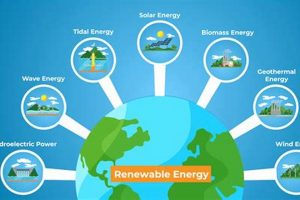
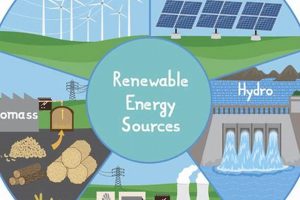
These are naturally replenishing resources, capable of being renewed within a human lifespan. Common examples include solar radiation, wind power, geothermal heat, and hydropower derived from flowing water. Biomass, sourced from organic matter, also falls into this category when sustainably managed.
Their significance lies in their potential to mitigate climate change by reducing reliance on fossil fuels, a primary contributor to greenhouse gas emissions. Deployment of these resources offers energy security, economic diversification, and the creation of new industries. Historically, societies have harnessed wind and water for mechanical power; modern technologies now allow for widespread electricity generation from these and other sustainable resources.
The subsequent discussion will explore the various types, their technological advancements, economic viability, and the policy frameworks driving their adoption. Furthermore, the challenges associated with their implementation, such as intermittency and land use, will be addressed.
Strategies for Maximizing Sustainable Resource Utilization
The following guidelines outline practical approaches for increasing the effectiveness and impact of sustainable energy initiatives.
Tip 1: Diversify Resource Portfolio: Reliance on a single type can create vulnerabilities. Geographic diversity in solar or wind installations, coupled with geothermal or hydro, enhances system resilience and stability.
Tip 2: Prioritize Energy Efficiency: Reducing overall energy demand minimizes the infrastructure requirements and resource extraction necessary to meet energy needs. Implement energy-efficient technologies and practices in buildings, transportation, and industry.
Tip 3: Invest in Energy Storage Solutions: Intermittency is a common challenge. Battery storage, pumped hydro, and thermal storage systems help to balance supply and demand, improving reliability and grid stability.
Tip 4: Modernize Grid Infrastructure: Smart grids enable better integration. Enhanced transmission lines, smart meters, and advanced grid management systems facilitate efficient distribution and real-time response to fluctuations in supply and demand.
Tip 5: Support Research and Development: Continued investment in technological advancements, such as improved solar cell efficiency and enhanced energy storage capacity, is crucial for further cost reductions and performance improvements.
Tip 6: Establish Supportive Policy Frameworks: Government incentives, regulatory standards, and carbon pricing mechanisms can accelerate adoption and create a level playing field with traditional energy sources. Clear and consistent policies are essential for long-term investment and market growth.
Adopting these strategies maximizes the potential of cleaner energy solutions, contributing to a more sustainable and resilient energy future.
The concluding section will summarize the key findings and offer recommendations for policymakers, researchers, and industry stakeholders.
1. Availability

The extent to which a particular power source is present and accessible within a specific geographic area significantly influences its viability as a large-scale energy resource. High solar insolation levels in desert regions make solar photovoltaic power a particularly attractive option. Conversely, areas with consistently strong wind patterns favor wind energy development. A lack of sufficient and predictable natural resource reduces the potential for that particular source to be primary.
The interplay between resource availability and technological capability determines the practical effectiveness of extracting power from naturally replenishing resources. While geothermal energy is theoretically available globally, economically viable extraction requires specific geological conditions, limiting widespread application. Hydropower depends on consistent rainfall and suitable topography for dam construction. The irregular and geographically constrained distribution necessitates careful resource assessment and strategic infrastructure planning.
Understanding the specific availability characteristics, including seasonal variations and geographic concentration, is critical for optimizing energy system design. Successfully integrating intermittent resources such as wind and solar requires robust grid infrastructure, energy storage solutions, and diversified energy sources. Failure to account for availability limitations can result in unreliable power supply and hinder the transition towards a sustainable energy future. Precise site assessments and resource mapping are thus prerequisites for sustainable power implementation and operation.
2. Sustainability
Sustainability, in the context of naturally replenishing resources, signifies the capacity to meet present energy needs without compromising the ability of future generations to meet their own. The direct relationship is defined by the ability to generate energy while minimizing environmental harm and resource depletion. If a naturally replenishing power source leads to significant deforestation (biomass) or habitat disruption (hydropower), it challenges the definition of sustainability, despite being renewable in origin. Unsustainable practices associated with even renewable energy can negate climate change mitigation benefits.
A critical component of sustainability is lifecycle assessment, which evaluates environmental impacts from resource extraction through energy production, use, and eventual disposal. For instance, solar panel manufacturing requires energy and materials; sustainable practices demand that the energy used in production be increasingly sourced from renewable, rather than fossil, energy. Additionally, recycling solar panels at the end of their lifespan is essential to prevent heavy metal contamination and ensures responsible resource management. The long-term viability of these resources depends on minimizing its ecological footprint across its complete lifecycle.
The practical significance of understanding the link between sustainability and renewable energy lies in informed decision-making. Governments, businesses, and individuals must assess the complete environmental impacts associated with different energy sources. This promotes investment in technologies and practices that genuinely reduce greenhouse gas emissions, conserve resources, and protect ecosystems. True sustainability requires integrating environmental considerations into energy planning, policy, and technological development, ensuring a just and equitable transition toward a cleaner energy future.
3. Technology

Technology serves as the primary enabler for harnessing power from naturally replenishing resources. The inherent variability and diffuse nature of these sources necessitate advanced technologies to efficiently capture, convert, and store energy. Wind turbines, for example, convert kinetic energy into electricity, and their efficiency is directly correlated with advancements in aerodynamics, materials science, and control systems. Similarly, solar photovoltaic (PV) technology converts solar radiation into electricity, and ongoing research focuses on improving PV cell efficiency, reducing manufacturing costs, and enhancing durability. Without these technological breakthroughs, many naturally replenishing energy sources would remain economically unviable or impractical for large-scale deployment. Consider the example of concentrated solar power (CSP) plants, which use mirrors to focus sunlight and generate high-temperature heat, driving steam turbines. The performance of CSP systems hinges on advancements in mirror reflectivity, heat transfer fluids, and thermal energy storage.
The impact of technology extends beyond energy generation to include grid integration and energy storage. The intermittent nature of wind and solar requires sophisticated grid management systems to balance supply and demand, ensuring grid stability and reliability. Smart grids, equipped with advanced sensors, communication networks, and control algorithms, facilitate the integration of distributed power generation sources. Energy storage technologies, such as batteries, pumped hydro, and compressed air energy storage, play a critical role in mitigating intermittency by storing excess energy during periods of high production and releasing it during periods of low production. Technological advancements in battery chemistry, such as lithium-ion and solid-state batteries, are rapidly improving energy density, lifespan, and safety, making energy storage solutions more cost-effective and practical.
In summary, technological innovation is indispensable for unlocking the full potential of naturally replenishing resources. Continued investment in research and development is crucial for driving down costs, improving performance, and overcoming technical barriers. Challenges remain in areas such as materials science, energy storage, and grid integration. Addressing these challenges through technological advancements is essential for achieving a sustainable energy future. The successful deployment and optimization of these resources is contingent upon the ongoing development and implementation of enabling technologies.
4. Infrastructure

The effective utilization of power from naturally replenishing sources is fundamentally dependent on the existence of robust and adaptable infrastructure. This infrastructure encompasses not only the physical components required for energy generation and distribution but also the systems necessary for management, control, and maintenance.
- Transmission Networks
Long-distance transmission lines are crucial for transporting electricity generated from geographically concentrated resources, such as wind farms or solar plants, to demand centers. Inadequate transmission capacity can constrain the utilization of remote generation sites and limit the overall contribution of cleaner energy to the grid. Upgrading and expanding transmission infrastructure are essential for integrating larger amounts of cleaner electricity and ensuring grid stability.
- Grid Modernization
Smart grids, equipped with advanced sensors, communication networks, and control algorithms, facilitate the efficient integration of distributed generation sources. These modernized grids enable real-time monitoring of grid conditions, demand response programs, and improved grid resilience to disruptions. The transition to a smart grid is essential for managing the variability and intermittency associated with certain cleaner energy technologies, such as wind and solar.
- Energy Storage Systems
The integration of energy storage technologies, such as batteries, pumped hydro, and thermal energy storage, is critical for addressing the intermittency challenge. Energy storage systems can store excess electricity during periods of high power generation and release it during periods of low power generation, smoothing out fluctuations in supply and demand. Deploying widespread storage enhances the reliability and dispatchability of cleaner sources, making them more competitive with traditional baseload power plants.
- Distribution Infrastructure
Local distribution networks must be upgraded to accommodate the increasing integration of distributed power generation from rooftop solar panels and small-scale wind turbines. Upgrading distribution infrastructure may involve reinforcing existing power lines, installing smart meters, and implementing voltage regulation equipment. These improvements ensure that distributed resources can contribute to the grid without compromising power quality or reliability.
The development and maintenance of appropriate infrastructure are critical to maximizing the value and impact of these energy sources. Substantial investment in grid modernization, transmission capacity, and energy storage solutions are necessary to support the widespread adoption and integration of resources. Failure to address these infrastructure needs can hinder the transition to a sustainable energy system and limit the potential for carbon emissions reductions.
5. Economics

The economic viability of harnessing power from naturally replenishing sources directly influences its adoption rate and overall contribution to the energy mix. The initial capital expenditures often associated with cleaner energy projects, such as solar farms or wind turbine installations, represent a significant barrier to entry. These upfront costs must be weighed against the long-term operational savings derived from reduced fuel consumption and decreased exposure to volatile fossil fuel prices. Government subsidies, tax incentives, and feed-in tariffs play a critical role in leveling the playing field, making these resources economically competitive with conventional energy sources. For instance, Germany’s Energiewende policy, featuring feed-in tariffs for clean electricity, spurred rapid deployment of solar and wind power, demonstrating the impact of economic incentives on market transformation.
Furthermore, economies of scale significantly impact the cost-effectiveness of cleaner energy technologies. Mass production of solar panels and wind turbines has led to substantial price reductions over the past decade, making them increasingly affordable and accessible. The levelized cost of energy (LCOE), a metric that compares the total cost of electricity generation over the lifetime of a project, is a crucial factor in evaluating the economic competitiveness of different power sources. The LCOE for solar and wind power has declined dramatically in recent years, making them cost-competitive with, and in some cases cheaper than, fossil fuel-based power generation. This economic shift is driving the increasing penetration of cleaner electricity in many regions. Economic impact is also visible in job creation, particularly in manufacturing, installation, and maintenance within power related industries.
The ongoing transition toward a cleaner energy economy presents both opportunities and challenges. Reducing dependence on fossil fuels mitigates the risks associated with price fluctuations and geopolitical instability. Investment in the development and deployment of cleaner technologies stimulates economic growth, creates jobs, and fosters innovation. However, the transition also requires careful management of potential economic disruptions, such as the displacement of workers in fossil fuel industries. Developing retraining programs and supporting the diversification of regional economies can help mitigate these challenges and ensure a just and equitable transition to a sustainable energy future. Economic policies and market mechanisms are essential tools for accelerating the adoption of cleaner sources and achieving long-term economic and environmental goals.
6. Environment

The environment is inextricably linked to naturally replenishing resources, representing both the source of the resources and the recipient of the impacts generated by their utilization. The extraction and conversion of these resources affect ecosystems, biodiversity, and overall environmental health. The deployment of solar farms, wind turbines, and hydroelectric dams requires careful consideration of land use, habitat disruption, and potential impacts on water resources. For instance, the construction of large-scale hydroelectric dams can lead to significant alterations in river ecosystems, affecting fish migration patterns and water quality. Therefore, a comprehensive understanding of environmental impacts is crucial for promoting sustainable practices and minimizing negative consequences.
Environmental considerations also play a pivotal role in assessing the long-term viability of naturally replenishing resources. Biomass energy, for example, can be carbon neutral or even carbon negative if derived from sustainably managed forests or agricultural residues. However, unsustainable harvesting practices can lead to deforestation, soil degradation, and increased greenhouse gas emissions. Similarly, geothermal energy extraction can release small amounts of greenhouse gases, such as carbon dioxide and methane, from underground reservoirs. Mitigation strategies, such as carbon capture and storage, can help to minimize these emissions and enhance the environmental performance of geothermal energy. A thorough environmental impact assessment, including lifecycle analysis, is essential for guiding responsible resource management and ensuring that the benefits outweigh the environmental costs. For example, offshore wind farms can create artificial reefs, benefiting marine biodiversity, but require careful siting to avoid disrupting migratory bird routes.
In conclusion, the relationship between the environment and naturally replenishing power sources is multifaceted and requires careful management. Balancing energy needs with environmental protection requires a holistic approach that considers the entire lifecycle of cleaner energy technologies. Sustainable practices, such as responsible land use planning, habitat restoration, and pollution control, are essential for minimizing negative environmental impacts and maximizing the benefits of a transition towards a cleaner energy future. The environment, therefore, is not simply a backdrop but a central consideration in the development and deployment of sustainable energy solutions, influencing both the design and operation of renewable energy systems and the policies that govern their use.
Frequently Asked Questions About Naturally Replenishing Resources
The following questions and answers address common inquiries and concerns regarding the utilization of naturally replenishing energy sources.
Question 1: Are naturally replenishing resources truly inexhaustible?
While solar, wind, and geothermal resources are considered virtually inexhaustible on a human timescale, their availability is subject to geographical and temporal variations. Hydropower relies on consistent rainfall patterns, and biomass requires sustainable management practices to avoid depletion. Therefore, responsible resource management is crucial to maintain the long-term viability of power from these resources.
Question 2: How reliable are power sources that rely on the sun or wind, given their intermittent nature?
The intermittency of solar and wind energy presents a challenge to grid stability. However, advancements in energy storage technologies, such as batteries and pumped hydro, coupled with smart grid management systems, mitigate these fluctuations. Diversifying the power portfolio with resources such as geothermal and biomass can also enhance grid reliability.
Question 3: What are the primary environmental concerns associated with utilizing power sources from solar, wind, and other similar systems?
Environmental concerns include land use for solar farms and wind turbine installations, habitat disruption, and potential impacts on wildlife. Hydropower development can alter river ecosystems. Biomass combustion releases greenhouse gases unless sustainably managed. Responsible planning and mitigation strategies are essential for minimizing these impacts.
Question 4: What is the levelized cost of energy (LCOE) for electricity generated from naturally replenishing sources compared to traditional sources?
The LCOE for solar and wind power has decreased significantly in recent years, making them cost-competitive with, and in some cases cheaper than, fossil fuel-based power generation. The economic viability of these resources varies depending on location, technology, and policy support. Continued technological advancements and economies of scale are expected to further reduce costs.
Question 5: What policy measures are most effective in promoting the adoption of cleaner electricity?
Effective policy measures include feed-in tariffs, tax incentives, renewable portfolio standards, and carbon pricing mechanisms. These policies create a level playing field, incentivize investment in cleaner power generation, and promote technological innovation. Clear and consistent long-term policy frameworks are crucial for attracting private investment and accelerating the transition to a cleaner energy system.
Question 6: Can existing electrical grids adequately handle a large-scale transition to power generation from naturally replenishing resources?
Existing electrical grids require modernization to accommodate the increasing integration of cleaner electricity. Smart grids, with advanced sensors, communication networks, and control algorithms, facilitate the efficient management of distributed generation sources. Upgrading transmission infrastructure and deploying energy storage systems are also essential for ensuring grid stability and reliability.
The answers to these questions highlight the complexities and nuances associated with transitioning to reliance on sustainable power. Addressing these challenges requires informed decision-making and strategic implementation.
The subsequent discussion will explore future trends and potential advancements in this important field.
Renewable Source of Energy
This exposition has underscored the critical role of a renewable source of energy in addressing global energy challenges and mitigating climate change. The multifaceted examination encompassed resource availability, sustainability considerations, technological advancements, infrastructural requirements, economic viability, and environmental implications. Each of these dimensions presents both opportunities and challenges that demand careful analysis and strategic action. A transition to a cleaner energy future necessitates coordinated efforts across governmental, industrial, and research sectors.
The pursuit of sustainable energy solutions remains a dynamic and evolving field. Continued innovation, informed policy decisions, and responsible resource management are essential to fully realize the potential of naturally replenishing resources. A commitment to long-term planning, rigorous evaluation, and global collaboration is paramount to secure a resilient and environmentally sound energy future for generations to come. The responsibility for a sustainable trajectory rests upon collective action and sustained dedication.