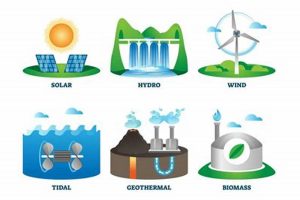
The renewable energy source derived from combusting organic matter, primarily plant-based materials, is a process that converts stored chemical energy into usable heat. This process often involves burning wood, crops, or processed agricultural waste to generate steam, which then drives turbines to produce electricity. Examples include dedicated energy crops like switchgrass, forestry residues, and even municipal solid waste that contains significant amounts of biomass.
Employing this method offers several advantages. It can reduce reliance on fossil fuels, utilize waste materials that would otherwise be discarded, and potentially contribute to carbon neutrality if the biomass is sustainably sourced and replanted. Historically, this energy form has been a primary source of heat and power for many communities and remains an important energy contributor in certain regions.
Understanding the specific types of biomass, the technologies used for its conversion, and the overall sustainability implications are key aspects to consider when evaluating its role within a broader renewable energy portfolio. The resource’s impact on land use, air quality, and carbon emissions necessitates a thorough assessment to ensure its responsible and effective utilization.
Strategies for Effective Biomass Utilization
Maximizing the benefits and minimizing the drawbacks requires careful planning and execution across all stages of the supply chain, from sourcing to conversion.
Tip 1: Prioritize Sustainable Sourcing: Establish rigorous criteria for feedstock procurement. Emphasize materials from sustainably managed forests, agricultural residues, or dedicated energy crops grown with minimal environmental impact. Certification schemes can help ensure compliance.
Tip 2: Optimize Combustion Technology: Invest in advanced combustion technologies to improve energy conversion efficiency and reduce emissions. Gasification, pyrolysis, and co-firing with other fuels can enhance performance and environmental outcomes.
Tip 3: Manage Ash Residues Responsibly: Develop strategies for the beneficial reuse of ash generated during combustion. Ash can be a valuable soil amendment or incorporated into construction materials, reducing landfill disposal and creating value.
Tip 4: Mitigate Air Pollutants: Implement effective air pollution control measures to minimize emissions of particulate matter, nitrogen oxides, and other pollutants. Technologies such as scrubbers and filters can significantly improve air quality.
Tip 5: Conduct Life Cycle Assessments: Perform thorough life cycle assessments to evaluate the overall environmental impact. These assessments should consider all stages, from feedstock production to energy generation and waste disposal, to identify areas for improvement.
Tip 6: Promote Integrated Energy Systems: Consider integrating biomass-fueled power plants with other renewable energy sources, such as solar or wind, to create a more resilient and diversified energy system.
Tip 7: Support Research and Development: Invest in ongoing research and development to improve biomass conversion technologies, develop more sustainable feedstocks, and optimize system performance.
Adopting these strategies can lead to a more efficient, environmentally sound, and economically viable approach to biomass energy production. Careful planning and responsible management are essential for realizing its full potential as a renewable resource.
These tips provide a foundation for navigating the complexities of the renewable energy resource. Further exploration into specific regional contexts and technological advancements is recommended.
1. Sustainability

The sustainability of the renewable energy produced through plant material combustion hinges on responsible resource management. Unsustainable practices, such as deforestation or the depletion of soil nutrients through intensive energy crop cultivation, undermine the renewable nature of this resource, transforming it into a contributor to environmental degradation. The cause-and-effect relationship is direct: unsustainable sourcing leads to habitat loss, decreased biodiversity, and increased carbon emissions, counteracting the intended benefits. The importance of sustainability stems from its role in preserving the long-term viability of this energy source. Without sustainable practices, the resource becomes finite, negating its advantages over fossil fuels. A real-life example illustrating this is the use of palm oil for biodiesel, where deforestation for palm plantations releases significant amounts of stored carbon, negating the intended carbon emission reductions. Understanding this connection is of practical significance because it informs policy decisions, incentivizes responsible sourcing, and drives technological innovation towards more efficient and sustainable biomass conversion methods.
Further analysis reveals that sustainable harvesting practices, such as selective logging in sustainably managed forests, can mitigate negative environmental impacts. These practices maintain forest structure, preserve biodiversity, and allow for continued carbon sequestration. Similarly, utilizing agricultural residues, such as corn stover or wheat straw, as feedstock minimizes land-use change and reduces the need for dedicated energy crops. Practical applications include the implementation of certification schemes, such as the Forest Stewardship Council (FSC) certification for wood products, which ensures that biomass is sourced from sustainably managed forests. Additionally, research into advanced biofuels derived from non-food crops and algae offers the potential for more sustainable biomass energy production.
In summary, the sustainability of this renewable energy is not an inherent characteristic but rather a conditional outcome dependent on responsible management practices. Challenges remain in ensuring consistent and verifiable sustainability across diverse feedstocks and geographical regions. Addressing these challenges and prioritizing sustainability is essential for realizing the full potential of biomass energy as a component of a broader renewable energy portfolio and for mitigating its potential negative impacts on the environment. The ongoing transition necessitates a conscientious commitment to sustainable practices.
2. Combustion Efficiency

Combustion efficiency is a critical determinant of the overall effectiveness and environmental impact when considering the use of plant-derived materials for energy production. It dictates how completely the stored energy within the biomass is converted into usable heat or electricity, influencing both the economic viability and environmental footprint of this renewable resource.
- Impact on Energy Output
Higher combustion efficiency directly translates to a greater amount of energy extracted from a given quantity of biomass. Incomplete combustion results in wasted fuel, reduced energy output, and increased emissions of pollutants. Advanced combustion technologies, such as gasification and pyrolysis, aim to maximize energy output by more thoroughly converting the biomass into usable gases or liquids.
- Role in Emissions Reduction
Efficient combustion minimizes the formation of harmful byproducts, including particulate matter, carbon monoxide, and unburned hydrocarbons. These pollutants contribute to air pollution and can have adverse health effects. Technologies such as staged combustion and flue gas treatment are employed to reduce emissions from biomass-fueled power plants.
- Influence on Economic Viability
Enhanced combustion efficiency lowers the fuel requirements for a given energy output, reducing operating costs. This improves the economic competitiveness against other energy sources, including fossil fuels. Government incentives and regulations often favor projects with higher combustion efficiency due to their reduced environmental impact and increased resource utilization.
- Technological Advancements
Ongoing research and development efforts are focused on improving combustion technologies for biomass. This includes the design of more efficient burners, the optimization of air-fuel mixtures, and the development of advanced control systems. Innovations such as biomass co-firing in existing power plants and the integration of biomass gasification with combined cycle systems hold promise for increasing combustion efficiency and reducing emissions.
The correlation between efficient combustion processes and the overall viability of the renewable energy derived from plant materials is undeniable. Maximizing efficiency not only boosts energy output and reduces environmental impact but also enhances the economic competitiveness of biomass energy, encouraging its wider adoption as a sustainable alternative to fossil fuels. Continuous improvements in combustion technologies are essential to unlock the full potential of this resource.
3. Emission Control

Combustion of plant matter releases pollutants that necessitate stringent emission control measures. This relationship underscores the critical interdependence of energy generation and environmental protection. Without adequate mitigation strategies, the air quality suffers, impacting human health and ecosystems. Particulate matter, nitrogen oxides, sulfur dioxide, and volatile organic compounds are among the primary emissions from biomass combustion. The importance of emission control stems from its role in negating the potential environmental harm caused by this otherwise renewable energy source. Examples include the installation of scrubbers and filters in biomass-fueled power plants to capture particulate matter and reduce sulfur dioxide emissions. Understanding the complexities of emission control is of practical significance for policymakers who regulate air quality, engineers designing combustion systems, and operators managing biomass power plants.
Further analysis reveals that the effectiveness of emission control strategies varies depending on the type of biomass, the combustion technology used, and the specific control measures implemented. Advanced combustion techniques, such as gasification and pyrolysis, can reduce emissions by optimizing the combustion process. Selective catalytic reduction (SCR) and selective non-catalytic reduction (SNCR) are used to control nitrogen oxide emissions. The cost-effectiveness of emission control technologies is a key factor in their adoption. Real-world applications demonstrate that compliance with stringent emission standards requires a significant investment in control technologies and continuous monitoring of emissions. Regulations often set emission limits for various pollutants, requiring operators to implement best available control technologies (BACT).
In summary, emission control is an inseparable aspect of utilizing plant matter combustion for energy. The success of this energy source as a sustainable alternative depends on the effective mitigation of air pollutants. Challenges remain in developing cost-effective and adaptable emission control technologies suitable for diverse biomass feedstocks and combustion systems. Continued research, policy development, and technological innovation are essential for ensuring that biomass energy contributes to a cleaner and more sustainable energy future. Effective emission control is critical to balancing energy needs with environmental protection.
4. Feedstock Variability

Feedstock variability is a central consideration in assessing the practical application of energy derived from combusting plant materials. The diverse nature of these feedstocks significantly influences the efficiency, emissions profile, and overall economic viability of such projects.
- Compositional Differences
Plant materials exhibit a wide range of chemical compositions, impacting combustion characteristics. Woody biomass, for instance, possesses a higher lignin content compared to herbaceous biomass, leading to variations in energy density and combustion rates. This necessitates adaptable combustion technologies capable of accommodating these compositional differences to ensure optimal performance.
- Moisture Content
Moisture content represents a critical factor affecting energy output. Wet biomass requires a greater energy input for drying prior to combustion, reducing overall efficiency. Strategies for managing moisture content, such as pre-drying or utilizing specialized combustion systems designed for wet biomass, are essential for maximizing energy recovery.
- Ash Content and Composition
The quantity and composition of ash resulting from combustion vary significantly across different feedstocks. High ash content can lead to slagging and fouling in combustion systems, reducing efficiency and increasing maintenance requirements. Furthermore, the chemical composition of ash influences its potential for beneficial reuse as a soil amendment or in construction materials.
- Supply Chain Logistics
Variations in feedstock availability, transportation costs, and storage requirements influence the overall feasibility. Agricultural residues, for example, are often seasonally available and dispersed across large geographical areas, requiring efficient collection and transportation infrastructure. Reliable and consistent access to diverse feedstocks is crucial for ensuring the continuous operation of biomass-fueled power plants.
The diverse nature of plant materials used as fuel necessitates a holistic approach that considers compositional differences, moisture content, ash characteristics, and supply chain logistics. A thorough understanding of these factors is crucial for optimizing combustion processes, minimizing environmental impacts, and ensuring the long-term economic viability. Successful implementation relies on adapting technologies and management practices to accommodate the inherent variability of these renewable resources.
5. Carbon Neutrality

Carbon neutrality, in the context of energy derived from burning plant material, signifies a state where the carbon dioxide (CO2) released during combustion is balanced by an equivalent amount of CO2 removed from the atmosphere. This concept is fundamental to evaluating the sustainability of this renewable resource.
- Biomass Growth and Carbon Sequestration
Plant material absorbs CO2 from the atmosphere during photosynthesis. This process sequesters carbon within the biomass, offsetting the CO2 released when the material is burned for energy. The extent to which biomass growth offsets combustion emissions is a primary determinant of carbon neutrality. For example, sustainably managed forests, where harvested trees are replanted, demonstrate a continuous cycle of carbon sequestration and release. However, if deforestation occurs to create land for energy crops, the carbon neutrality claim is compromised due to the release of stored carbon from the soil and loss of carbon sinks.
- Sustainable Harvesting Practices
Sustainable harvesting practices are essential for maintaining carbon neutrality. These practices ensure that the rate of biomass removal does not exceed the rate of regrowth, preserving the carbon sequestration capacity of the ecosystem. Selective logging in sustainably managed forests, where only mature trees are harvested, minimizes disturbance to the forest ecosystem and allows for continuous carbon sequestration. Conversely, clear-cutting practices, where all trees in an area are removed, disrupt the carbon cycle and can lead to a net release of CO2 into the atmosphere.
- Life Cycle Emissions Analysis
A comprehensive life cycle analysis is crucial for accurately assessing the carbon footprint of biomass energy. This analysis considers all stages, from feedstock production to energy generation and waste disposal, to determine the net carbon emissions. For example, the energy required for planting, harvesting, transporting, and processing biomass feedstocks can contribute to overall carbon emissions. Similarly, the emissions from fertilizer production and application in energy crop cultivation must be accounted for. A life cycle perspective ensures a more accurate evaluation of carbon neutrality.
- Soil Carbon Dynamics
Soil carbon dynamics play a significant role in the overall carbon balance of biomass energy systems. The cultivation of energy crops can affect soil carbon stocks, either increasing or decreasing them depending on the management practices used. No-till farming and the use of cover crops can enhance soil carbon sequestration, while intensive tillage and monoculture cropping can lead to carbon losses. Maintaining or increasing soil carbon stocks is essential for achieving true carbon neutrality.
The concept of carbon neutrality when combusting plant matter for energy is not a simple equation. Sustainable sourcing, efficient land management, and comprehensive life cycle assessments are necessary to ensure that the carbon released is genuinely offset by carbon sequestration. The long-term viability of this renewable resource depends on the integration of practices that support carbon neutrality.
Frequently Asked Questions
The following addresses common inquiries regarding the renewable energy source derived from combusting organic matter, predominantly plant-based.
Question 1: What specific materials are typically used as fuel for generating this type of renewable energy?
The fuel sources are diverse and encompass wood, forestry residues, dedicated energy crops (such as switchgrass), agricultural byproducts (like corn stover), and select components of municipal solid waste with significant organic content.
Question 2: Is the practice of burning plant matter truly carbon neutral?
Carbon neutrality is conditional. It depends on sustainable sourcing practices, ensuring that biomass regrowth offsets the carbon emissions from combustion. Deforestation or unsustainable harvesting negate this carbon neutrality.
Question 3: What are the primary pollutants emitted during the combustion of plant material, and how are they controlled?
Primary pollutants include particulate matter, nitrogen oxides, sulfur dioxide, and volatile organic compounds. Mitigation strategies encompass advanced combustion technologies and the implementation of scrubbers and filters to capture pollutants.
Question 4: How does moisture content in plant-based fuel affect energy production?
High moisture content reduces energy efficiency. Excess moisture requires energy for evaporation, diminishing the net energy output. Pre-drying and specialized combustion systems are employed to address this issue.
Question 5: What factors influence the economic viability of utilizing this renewable energy resource?
Economic viability is influenced by feedstock availability and cost, combustion efficiency, emissions control requirements, and government incentives or regulations promoting renewable energy sources.
Question 6: What is the role of sustainable forest management in the context of using wood as a fuel source?
Sustainable forest management ensures that wood harvesting does not deplete forest resources, preserves biodiversity, and allows for continuous carbon sequestration. Certification schemes, such as the Forest Stewardship Council (FSC), promote responsible sourcing practices.
In summary, responsible sourcing, advanced technologies, and careful management practices are critical to maximizing the benefits and mitigating the drawbacks of energy production from plant material combustion.
The subsequent section delves into the future prospects of this renewable energy source.
Concluding Remarks on Energy from Biomass
The preceding discussion has illuminated key facets of the renewable energy resource derived from plant material combustion. Considerations of sustainability, combustion efficiency, emission control, feedstock variability, and carbon neutrality are inextricably linked to the practical application and environmental impact of this energy source. Optimization in each of these areas is paramount for responsible utilization.
Continued refinement of technologies and a commitment to responsible sourcing are essential for realizing the full potential of this resource as a meaningful component of a diversified and sustainable energy future. Further research and diligent implementation of best practices will dictate its long-term viability and contribution to global energy needs.