



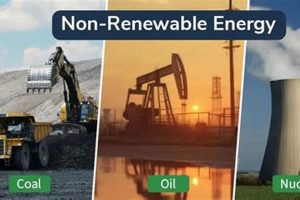
Energy sources categorized as finite are those that cannot be replenished at a rate comparable to their consumption. These resources exist in limited quantities, formed over geological timescales, meaning their extraction progressively depletes the available stock. Common examples include fossil fuels such as coal, petroleum (crude oil), and natural gas, as well as nuclear fuels like uranium.
The significance of understanding resource limitations stems from the long-term implications for energy security and environmental sustainability. Historically, the widespread availability of these resources has fueled industrial growth and societal advancement. However, their extraction and utilization are linked to significant environmental impacts, including greenhouse gas emissions, air and water pollution, and habitat destruction. The finite nature of these resources necessitates a transition towards more sustainable energy alternatives.
The following sections will delve into the specific characteristics of each major category of depletable energy sources, outlining their formation processes, extraction methods, environmental consequences, and the estimated remaining reserves. This exploration aims to provide a comprehensive overview of the reliance on these critical, yet limited, energy supplies.
Understanding the characteristics and implications associated with depletable energy reserves is crucial for informed decision-making regarding energy policy, technological innovation, and sustainable development. The following points offer key considerations when evaluating reliance on such resources.
Tip 1: Prioritize Energy Efficiency: Reducing overall energy consumption through technological advancements and behavioral changes directly lessens dependence on finite resources. This includes improving building insulation, utilizing energy-efficient appliances, and optimizing industrial processes.
Tip 2: Invest in Renewable Energy Infrastructure: Shifting towards renewable sources, such as solar, wind, and hydro power, diversifies the energy portfolio and diminishes reliance on depletable resources. Strategic investments in infrastructure, research, and development are essential for accelerating this transition.
Tip 3: Explore Carbon Capture and Storage Technologies: While not a complete solution, implementing carbon capture and storage technologies at power plants and industrial facilities can mitigate the environmental impact of utilizing fossil fuels. This process involves capturing carbon dioxide emissions and storing them underground, preventing their release into the atmosphere.
Tip 4: Promote Responsible Resource Extraction: When extracting depletable energy resources, it is imperative to adhere to stringent environmental regulations and employ best practices to minimize habitat disruption, water contamination, and greenhouse gas emissions. Comprehensive environmental impact assessments should be conducted prior to any resource extraction project.
Tip 5: Diversify Energy Supply Chains: Reducing dependence on a single source or supplier of depletable energy resources enhances energy security and mitigates risks associated with geopolitical instability or supply disruptions. This involves exploring alternative sources and establishing robust distribution networks.
Tip 6: Support Research and Development of Alternative Fuels: Investing in the development of alternative fuels, such as hydrogen, biofuels, and synthetic fuels, provides potential pathways to reduce reliance on traditional fossil fuels. These alternatives require ongoing research and development to improve their efficiency, cost-effectiveness, and environmental sustainability.
Adopting these strategies can lead to a more sustainable and resilient energy future, reducing the environmental burden associated with current energy consumption patterns and ensuring greater energy security for future generations.
The subsequent sections will further examine the economic and geopolitical implications of dwindling access to these resources, emphasizing the urgent need for a proactive shift towards a diversified and sustainable energy future.
1. Fossil Fuel Depletion

Fossil fuel depletion stands as a central issue in the discussion of finite energy resources. The limited reserves of coal, oil, and natural gas, formed over millions of years, are being consumed at rates far exceeding their natural replenishment, highlighting their non-renewable nature and posing significant challenges for future energy security.
- Finite Reserves and Consumption Rates
The earth possesses a fixed quantity of fossil fuel reserves. Current consumption rates drastically outpace the geological processes that originally created these resources. As a result, accessible and economically viable reserves are steadily diminishing. This creates pressure to explore more challenging and environmentally sensitive extraction methods, further exacerbating the problem. The core of “what energy resources are non renewable” revolves around this imbalance.
- Peak Oil and Production Declines
The concept of “peak oil” suggests that a point is reached where global oil production reaches a maximum and then begins an irreversible decline. While the precise timing of peak oil remains debated, the underlying principle applies to all fossil fuels: at some point, extraction becomes more difficult and yields less, leading to a reduction in overall supply. This phenomenon directly underscores what energy resources are non renewable and their limited nature.
- Environmental and Economic Impacts of Extraction
The extraction of fossil fuels carries substantial environmental and economic costs. Activities such as oil drilling, coal mining, and fracking can lead to habitat destruction, water pollution, and increased greenhouse gas emissions. These costs not only damage ecosystems but also add to the financial burden of fossil fuel dependence. The consideration of these externalities reinforces the need to move away from relying on what energy resources are non renewable.
- Geopolitical Implications of Resource Control
Access to and control over fossil fuel reserves have significant geopolitical implications. Countries with abundant reserves wield considerable economic and political power, while those reliant on imports are vulnerable to supply disruptions and price volatility. This uneven distribution of resources can lead to international tensions and conflicts, further highlighting the risks associated with dependence on what energy resources are non renewable.
The interconnectedness of these factors underscores the fundamental challenge posed by fossil fuel depletion. Addressing this challenge requires a concerted effort to transition towards sustainable energy sources and to adopt policies that promote energy efficiency and conservation. The recognition of “what energy resources are non renewable” is the first step in this critical shift.
2. Nuclear Fuel Limitation

While nuclear power does not emit greenhouse gasses during electricity generation, the nuclear fuel cycle relies on finite resources, primarily uranium. This dependence establishes a direct connection to the category of depletable energy sources. Uranium-235, the isotope primarily used in conventional nuclear reactors, constitutes less than 1% of natural uranium ore. Extracting and enriching this isotope is an energy-intensive process. Moreover, the total estimated reserves of uranium, accessible through current mining technologies, are limited. This scarcity implies that, despite its potential for high energy output, nuclear fission based on uranium is ultimately constrained by the availability of a finite geological resource, fitting squarely within what energy resources are non renewable.
The practical significance of this limitation becomes apparent when considering the long-term energy strategies of nations. A complete reliance on conventional nuclear power would eventually deplete uranium reserves, necessitating either a shift to alternative reactor designs that can utilize more abundant isotopes (like thorium) or a transition to other forms of energy generation. For example, France, a nation heavily reliant on nuclear power, actively researches advanced reactor technologies and explores uranium extraction from unconventional sources, acknowledging the limitations of readily available, high-grade uranium ores. The cost of uranium can fluctuate greatly depending on supply and demand, with increased fuel cost which in turn increases electricity rates.
In conclusion, the reliance on uranium as the primary fuel source for nuclear fission establishes a clear link between nuclear power and the broader issue of finite resources. While it offers a low-carbon alternative to fossil fuels, the limited availability of uranium underscores that nuclear energy, in its current form, is not a perpetually sustainable solution. Recognition of this limitation is crucial for informed energy planning and for prioritizing research and development into alternative nuclear fuel cycles and renewable energy technologies, aligning with the broader goal of transitioning away from what energy resources are non renewable.
3. Geological Formation Time

The vast timescales required for the natural creation of certain energy resources form the core of their classification as finite. The extended periods needed for geological processes to generate these resources contrast sharply with the rapid rates at which humanity extracts and consumes them, directly contributing to concerns about resource depletion and impacting the answer to “what energy resources are non renewable.”
- Fossil Fuel Genesis
Fossil fuels, including coal, oil, and natural gas, originate from the compressed and transformed remains of ancient organic matter, typically plant and animal life from hundreds of millions of years ago. The transformation process requires specific geological conditionshigh pressure, heat, and anaerobic environmentsacting over immense durations. The time required for these conditions to occur naturally makes it impossible to replenish fossil fuels at rates comparable to human consumption, thus, fossil fuels are a key component of what energy resources are non renewable.
- Uranium Enrichment and Deposition
While not organic in origin, the concentration of uranium deposits also depends on slow geological processes. The formation of economically viable uranium ores involves complex cycles of weathering, erosion, transport, and precipitation over geological epochs. These processes selectively concentrate uranium from dilute sources in the Earth’s crust. The rarity of these concentrated deposits, coupled with the lengthy timeframe required for their formation, places uranium within the category of what energy resources are non renewable.
- Disparity Between Formation and Consumption
The fundamental issue arising from extended geological formation times is the significant mismatch between the rate at which these resources are created and the rate at which they are consumed. Human societies extract fossil fuels and uranium at rates millions of times faster than the geological processes that originally created them. This disparity inevitably leads to resource depletion and the realization of peak production points, directly underlining the finite nature of these resources and the core principles of what energy resources are non renewable.
- Implications for Sustainability
The recognition of the geological time constraints inherent in the formation of certain energy resources has profound implications for sustainability. It necessitates a shift away from reliance on finite resources and towards renewable energy sources that can be replenished on human timescales. Understanding the geological origins of fossil fuels and uranium is essential for developing responsible energy policies and promoting a transition to a more sustainable energy future, ultimately redefining the understanding and usage of what energy resources are non renewable.
In summary, the prolonged geological timescales required for the creation of fossil fuels and uranium establish a fundamental constraint on their availability and long-term sustainability. The vast difference between formation and consumption rates underscores the importance of recognizing them within the context of finite resources and prioritizing the development of alternative, renewable energy sources to address future energy needs and challenge what energy resources are non renewable.
4. Environmental Consequences

The extraction, processing, and combustion of depletable energy sources invariably lead to significant environmental consequences. This impact is an inherent characteristic solidifying the classification of these resources within the framework of “what energy resources are non renewable.” These activities initiate a cascade of effects, ranging from localized habitat destruction to global climate alteration, all stemming from the fundamental fact that these energy reserves are finite and their exploitation has a direct and often irreversible impact on the environment.
Consider the example of mountaintop removal coal mining in Appalachia. This practice involves the complete removal of mountaintops to access coal seams, resulting in deforestation, soil erosion, and the contamination of waterways with heavy metals and sediment. Similarly, oil spills, such as the Deepwater Horizon disaster, release vast quantities of crude oil into marine ecosystems, causing widespread damage to marine life and coastal habitats. The burning of fossil fuels, particularly coal, releases greenhouse gasses, contributing to global warming and climate change. These examples illustrate how the utilization of resources fitting the category of “what energy resources are non renewable” carries substantial environmental costs that extend far beyond the immediate vicinity of extraction or consumption.
Ultimately, the environmental consequences associated with the use of these energy supplies are a critical factor in the urgent need for a transition to sustainable energy alternatives. The recognition of the finite nature of these resources, coupled with the acknowledgement of their detrimental environmental impact, underscores the imperative to develop and deploy renewable energy technologies and to adopt energy efficiency measures that will minimize reliance on “what energy resources are non renewable”. The practical significance of this understanding lies in its capacity to inform energy policy decisions and to motivate individual and collective actions aimed at mitigating the adverse effects of energy production and consumption on the planet.
5. Resource Scarcity Impact

The finite nature of certain energy resources directly influences their availability, leading to scarcity. This scarcity, in turn, profoundly impacts economic, geopolitical, and technological landscapes, thereby underscoring the critical importance of understanding “what energy resources are non renewable.” The following points outline specific impacts arising from this scarcity.
- Price Volatility and Economic Instability
As reserves diminish and demand persists, the prices of these energy resources become increasingly volatile. This price fluctuation introduces instability into national economies dependent on them, affecting industries reliant on affordable energy and potentially leading to inflation and economic recession. For instance, sharp increases in oil prices have historically triggered economic downturns, demonstrating the economic risk associated with reliance on “what energy resources are non renewable.”
- Geopolitical Competition and Conflict
The uneven distribution of energy resources across the globe fosters competition for access and control. Countries with limited domestic reserves may become reliant on imports, creating vulnerabilities to supply disruptions and potentially leading to geopolitical tensions or even armed conflicts over access to strategic resources. The competition for oil reserves in regions like the Middle East exemplifies the geopolitical implications of depending on “what energy resources are non renewable.”
- Technological Innovation and Transition Costs
Resource scarcity incentivizes technological innovation aimed at improving extraction efficiency, developing alternative energy sources, and enhancing energy conservation. However, the transition to new technologies often requires significant upfront investment, posing economic challenges for both governments and private sector entities. The development of renewable energy technologies like solar and wind power, spurred by concerns over fossil fuel depletion, highlights the technological response to, and economic costs associated with, “what energy resources are non renewable.”
- Environmental Degradation and Resource Depletion Feedback Loop
As easily accessible reserves dwindle, extraction efforts often target more challenging and environmentally sensitive locations, leading to increased habitat destruction, pollution, and greenhouse gas emissions. This environmental degradation, in turn, can further constrain resource availability, creating a feedback loop where scarcity exacerbates environmental problems and environmental problems worsen scarcity. The exploitation of tar sands and deep-sea oil reserves illustrates this feedback loop, demonstrating the environmental risks inherent in pursuing increasingly scarce “what energy resources are non renewable.”
These interconnected facets highlight the complex consequences of resource scarcity stemming from the finite nature of “what energy resources are non renewable”. Effectively managing the transition to sustainable energy systems requires a comprehensive understanding of these impacts, as well as coordinated efforts to mitigate economic vulnerabilities, promote international cooperation, foster technological innovation, and protect the environment.
6. Dependence Implications

Reliance on finite energy sources engenders a range of critical implications that directly influence economic stability, geopolitical dynamics, and environmental sustainability. This dependence stems from the fundamental characteristic of limited reserves, shaping vulnerabilities that necessitate careful consideration and strategic planning. The fact that “what energy resources are non renewable” are limited, dictates nations policies and alliances.
The ramifications of dependence are multifaceted. Economically, nations heavily reliant on importing these energy supplies are subject to price fluctuations and potential supply disruptions, impacting industries and consumers alike. Geopolitically, control over significant reserves of these resources confers considerable power, potentially leading to international tensions and conflicts over access. Environmentally, the continued extraction and consumption of these resources contribute significantly to greenhouse gas emissions and ecological degradation. Germany’s reliance on Russian natural gas, for example, demonstrates the economic and geopolitical vulnerabilities associated with dependence on a single supplier of a depletable energy source. This dependence created significant economic challenges when supply disruptions occurred, highlighting the risks inherent in relying on what energy resources are non renewable.
Addressing the dependence implications tied to “what energy resources are non renewable” requires a multifaceted strategy. Diversification of energy sources, investments in renewable technologies, and improvements in energy efficiency are crucial steps. Furthermore, international cooperation and the development of sustainable energy policies are essential for mitigating the risks associated with resource scarcity and environmental degradation. The long-term prosperity and security of nations depend on a transition away from reliance on finite energy sources and towards a more sustainable energy future. The sooner the world moves away from “what energy resources are non renewable” the safer for future generations.
7. Peak Production Concerns

Peak production, a central concept related to finite energy resources, signifies the point at which the maximum rate of extraction is reached, followed by an inevitable decline. This phenomenon is inherently linked to the understanding of “what energy resources are non renewable.” As finite resources, such as oil, natural gas, and coal, are continuously extracted, the easily accessible and economically viable reserves are gradually depleted. This depletion leads to increasing difficulty and cost associated with extraction, eventually resulting in a peak in overall production. Understanding these concerns is a critical component in assessing what energy resources are non renewable, as the eventual decline in their production capacity signals their finite nature. The Hubbert peak theory, originally applied to oil production, serves as a prominent example, illustrating how production rates for finite resources follow a predictable pattern of growth, peaking, and subsequent decline.
The practical significance of peak production lies in its implications for energy security and economic stability. Anticipating the timing and magnitude of peak production allows governments and industries to plan for the transition to alternative energy sources and to mitigate potential economic shocks. For instance, recognizing the impending decline in conventional oil production has spurred investment in unconventional sources, such as shale oil and tar sands, as well as renewable energy technologies. However, these alternatives often come with higher extraction costs and environmental consequences, reinforcing the need for a broader shift towards sustainable energy systems. The global energy market’s response to predicted peaks in oil production underscores the need to prepare for reduced output from what energy resources are non renewable.
In conclusion, peak production concerns represent a critical dimension in the context of finite energy resources. The inevitable decline in production rates for these resources necessitates proactive planning and strategic investments in alternative energy sources. Addressing the challenges associated with peak production requires a comprehensive approach that encompasses technological innovation, policy interventions, and international cooperation, all aimed at reducing dependence on “what energy resources are non renewable” and fostering a more sustainable energy future. As non-renewable energy declines, it’s important to understand the consequences of this decline.
Frequently Asked Questions
This section addresses common inquiries regarding energy resources categorized as non-renewable. The information aims to clarify misunderstandings and provide accurate insights into the nature and implications of these finite energy sources.
Question 1: What specifically defines an energy resource as non-renewable?
An energy resource is classified as non-renewable if it cannot be replenished at a rate comparable to its consumption. These resources exist in limited quantities, formed over geological timescales spanning millions of years. Once depleted, their natural regeneration is practically unachievable within human lifespans.
Question 2: Are all fossil fuels considered non-renewable?
Yes, all fossil fuels, including coal, petroleum (crude oil), and natural gas, are classified as non-renewable. Their formation depends on the slow transformation of organic matter under specific geological conditions, making their replenishment exceedingly slow compared to current consumption rates.
Question 3: Is nuclear energy a renewable energy source?
While nuclear power generation itself does not directly emit greenhouse gases, the fuel used in most nuclear reactors, uranium, is a finite resource. Therefore, conventional nuclear energy is not considered a renewable energy source.
Question 4: How does the rate of consumption affect the availability of non-renewable resources?
The rate of consumption directly impacts the lifespan of non-renewable resources. Higher consumption rates accelerate depletion, leading to increased scarcity and potential price volatility. Sustainable management and efficient utilization are essential for extending the availability of these resources.
Question 5: What are the primary environmental concerns associated with using non-renewable resources?
The use of non-renewable resources is linked to a range of environmental concerns, including greenhouse gas emissions, air and water pollution, habitat destruction, and the potential for accidents during extraction and transportation. These concerns necessitate a transition to cleaner, more sustainable energy sources.
Question 6: What role does technology play in addressing the limitations of non-renewable resources?
Technological innovation plays a crucial role in mitigating the limitations of non-renewable resources. This includes developing more efficient extraction methods, improving energy conservation technologies, and creating alternative energy sources that can reduce dependence on finite resources.
Understanding the finite nature and associated challenges of non-renewable energy resources is crucial for informed decision-making and the development of sustainable energy policies.
The next section will explore the potential alternative energy solutions to these non-renewable resources.
Concluding Assessment
The preceding analysis has comprehensively explored the defining characteristics, implications, and challenges associated with “what energy resources are non renewable.” From the geological timescales required for their formation to the environmental consequences of their extraction and utilization, these resources present fundamental limitations for long-term energy sustainability. The inherent scarcity, coupled with dependence-related vulnerabilities and peak production concerns, underscores the urgent need for a strategic shift towards alternative energy paradigms.
Continued reliance on diminishing reserves carries profound risks, demanding decisive action to mitigate potential economic instabilities, geopolitical tensions, and environmental degradation. The future requires a commitment to diversifying energy portfolios, investing in renewable technologies, and fostering international cooperation to ensure a stable and sustainable energy future. The imperative is clear: a proactive transition away from “what energy resources are non renewable” is essential for safeguarding the well-being of future generations and the health of the planet. The recognition of “what energy resources are non renewable” is a critical first step.


![Top 5: What are Renewable Resources? [Explained] | Renewable Energy Solutions for a Sustainable Future | Clean & Green Power](https://pplrenewableenergy.com/wp-content/uploads/2026/03/th-165-300x200.jpg "Top 5: What are Renewable Resources? [Explained] Renewable Energy Solutions for a Sustainable Future | Clean & Green Power")