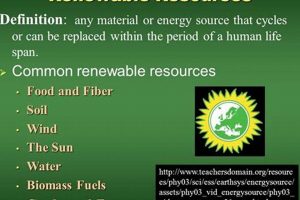
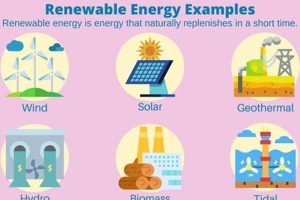
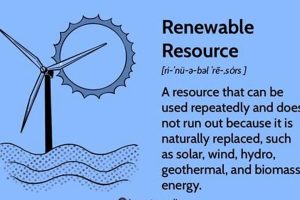
Naturally occurring assets that can replenish themselves over a relatively short period are vital for sustaining life and supporting economic activities. These assets, constantly renewed by natural cycles or processes, provide essential materials and energy. Instances of these resources include sunlight, wind, water, geothermal heat, and biomass. Sunlight offers radiant energy that can be converted to electricity. Wind generates kinetic energy that drives turbines. Water provides hydroelectric power and irrigation. Geothermal heat offers thermal energy for heating and electricity generation. Biomass, such as wood and crops, can be burned for heat or converted to biofuels.
The sustainable utilization of these resources is critical for mitigating climate change, reducing reliance on finite fossil fuels, and ensuring long-term environmental stability. Historically, civilizations have depended on these self-regenerating assets for survival. The transition to greater reliance on them promises improved air and water quality, reduced greenhouse gas emissions, and the creation of new economic opportunities in sustainable industries. Their careful management safeguards ecological balance and preserves these resources for future generations.
The subsequent sections will delve into specific attributes, practical applications, and considerations for managing several of these important self-replenishing assets. This discussion will provide a more in-depth understanding of their role in powering a sustainable future and maintaining environmental health.
Guidance on Managing Replenishable Assets
Proper stewardship of resources that naturally regenerate is essential for economic stability and environmental health. The following recommendations offer guidance for maximizing the long-term benefits of these resources while minimizing negative impacts.
Tip 1: Implement Sustainable Harvesting Practices: In the case of biomass resources like forests, adopt harvesting methods that ensure regrowth and prevent deforestation. Selective logging, reforestation initiatives, and the use of sustainable forestry certifications are crucial.
Tip 2: Invest in Renewable Energy Infrastructure: Focus on expanding the deployment of solar, wind, geothermal, and hydro-power technologies. Governments and private entities should invest in research, development, and infrastructure projects that promote widespread adoption.
Tip 3: Optimize Water Resource Management: Implement efficient irrigation techniques, promote water conservation in urban and agricultural settings, and protect watersheds to ensure a reliable supply of clean water.
Tip 4: Diversify Energy Sources: Avoid over-reliance on any single type of resource. A diversified portfolio of self-replenishing energy options enhances resilience and reduces vulnerability to fluctuations in supply or demand.
Tip 5: Support Research and Innovation: Continue to fund research into new technologies and methods for harnessing them more efficiently and sustainably. This includes advancements in energy storage, materials science, and resource management.
Tip 6: Promote Public Awareness and Education: Educate the public about the importance of these assets and the role they can play in conserving them. Public awareness campaigns can encourage responsible consumption and support for sustainable policies.
Sound resource management is fundamental for a secure and sustainable future. By implementing these strategies, communities and nations can maximize the benefits of these resources while minimizing environmental impacts, thereby ensuring their availability for generations to come.
The following sections will explore practical applications of these strategies and delve deeper into specific examples of successful resource management initiatives.
1. Solar Energy Potential

Solar energy potential is fundamentally linked to self-replenishing assets as a primary example of a perpetually available energy source. Sunlight, the origin of solar energy, continuously reaches the Earth, providing a virtually inexhaustible supply. Consequently, technological applications designed to harness solar energy, such as photovoltaic cells and concentrated solar power systems, represent a direct utilization of a natural process. The intensity of solar radiation and the duration of sunlight hours dictate the energy yield achievable at any given location, making geographical factors crucial in assessing feasibility. Regions with higher solar irradiance levels demonstrate greater aptitude for large-scale solar energy production. For instance, arid regions like the Southwestern United States and the Sahara Desert possess exceptional solar energy potential, leading to significant investment in solar farms.
The conversion of solar energy into usable electricity significantly reduces reliance on fossil fuels, thereby mitigating greenhouse gas emissions and air pollution. Solar photovoltaic (PV) technology directly converts sunlight into electricity using semiconductors. Concentrated solar power (CSP) systems use mirrors to focus sunlight onto a receiver, which heats a fluid that drives a turbine to generate electricity. These systems can also incorporate thermal energy storage, allowing for electricity generation even when the sun is not shining. The cost-effectiveness of solar energy has significantly improved over the past decade, making it increasingly competitive with traditional energy sources. Government incentives and technological advancements have further propelled its adoption across residential, commercial, and industrial sectors.
In conclusion, solar energy potential is a critical component of the self-replenishing energy landscape. While variability in sunlight availability poses a challenge, technological advancements and strategic deployment can maximize its benefits. Increased investment in solar energy infrastructure and supportive policies are vital for achieving a sustainable energy future. Further research into energy storage solutions is essential to address the intermittency associated with solar power, ensuring reliable electricity supply and its role in decreasing our reliance on non-replenishing assets.
2. Wind Power Capacity

Wind power capacity represents a crucial component of self-replenishing resources, serving as a direct result of atmospheric conditions and solar radiation. The uneven heating of the Earth’s surface creates pressure gradients, thereby generating wind. This naturally occurring phenomenon provides kinetic energy, which wind turbines convert into electrical power. Consequently, wind power capacity is intrinsically tied to the availability and predictability of wind resources across various geographical locations. Regions with consistent and high wind speeds exhibit greater potential for developing viable wind energy projects. Areas such as the Great Plains in the United States, coastal regions in Europe, and mountainous passes worldwide have emerged as key sites for wind farm development, illustrating the dependence of wind power capacity on natural wind patterns.
The importance of wind power capacity lies in its ability to provide a clean, emission-free energy alternative to fossil fuels. Wind turbines harness kinetic energy without consuming water resources or releasing greenhouse gases during operation. This contributes significantly to reducing carbon footprints and mitigating the effects of climate change. Moreover, wind power capacity enhances energy security by diversifying energy sources and reducing reliance on finite reserves. Countries with robust wind energy sectors, such as Denmark and Germany, have demonstrated the practical feasibility of integrating substantial wind power into their energy grids. Denmark, for example, has often generated over 40% of its electricity from wind, demonstrating the potential for wind power to serve as a major contributor to a nation’s energy supply.
In summary, understanding wind power capacity is vital for transitioning towards a sustainable energy future. Challenges associated with wind energy, such as intermittency and visual impact, require ongoing research and technological improvements. Advanced forecasting techniques and energy storage solutions are essential to address intermittency. Careful site selection and community engagement are necessary to minimize visual impacts. Despite these challenges, the abundant availability of wind energy and its environmental benefits position wind power capacity as a cornerstone of self-replenishing energy systems, contributing to a cleaner and more sustainable energy mix.
3. Hydropower Generation

Hydropower generation stands as a prominent illustration of renewable natural resource utilization. Harnessing the kinetic energy of flowing water, it converts potential energy into mechanical power, which drives turbines to produce electricity. This process capitalizes on the continuous water cycle, rendering it a replenishing energy source.
- Dam Infrastructure
Dams are structural elements, often large-scale, designed to control and store river water. Dams create reservoirs that serve as elevated water sources, subsequently released through turbines. The construction of dams can have significant environmental and social impacts, including altered river ecosystems, displacement of communities, and changes in sediment transport. Examples include the Hoover Dam in the United States and the Three Gorges Dam in China, each demonstrating the scale and impact of hydropower dams.
- Run-of-River Systems
Run-of-river systems utilize the natural flow of a river without significant water storage. These systems minimize environmental impacts compared to traditional dams, but their power output is subject to seasonal variations in river flow. Their smaller footprint and reduced impact on aquatic ecosystems make them a preferable choice where feasible. Examples include many smaller hydro projects in mountainous regions, demonstrating environmentally conscious hydropower.
- Pumped Storage Hydropower
Pumped storage hydropower systems involve pumping water from a lower reservoir to a higher reservoir during periods of low electricity demand, typically at night. During peak demand, the stored water is released to generate electricity. These systems act as energy storage solutions, enhancing grid stability and accommodating variable power inputs from other renewable sources, such as solar and wind. Facilities include the Bath County Pumped Storage Station, illustrating the scale of energy storage through hydropower.
- Environmental Considerations
The environmental consequences of hydropower generation require careful evaluation. Dams can impede fish migration, alter water temperature, and change downstream sediment flow. Implementing mitigation measures, such as fish ladders, minimum flow requirements, and sediment management strategies, is essential to minimize ecological damage. Balancing the benefits of clean energy production with environmental stewardship remains a central challenge in hydropower development.
Consideration of the benefits and limitations of hydropower is critical for sustainable power management. Evaluating each of these facets provides a context for a better understanding of renewable energy use in a world of diminishing resources, while maintaining stable ecosystems.
4. Geothermal Feasibility

Geothermal feasibility is inextricably linked to the domain of renewable natural resources, representing a direct application of Earths internal heat for energy production. The term denotes the evaluation of geological, technological, economic, and regulatory factors to ascertain the viability of geothermal projects. These projects, if deemed feasible, harness heat from the Earths crust, a continuously replenishing resource, to generate electricity or provide direct heating. Geothermal energy is independent of diurnal cycles or weather patterns, offering a stable, baseload power source unlike solar or wind. Regions with significant geothermal gradients, such as Iceland, New Zealand, and parts of the western United States, exhibit higher geothermal feasibility, leading to the development of geothermal power plants and direct-use applications.
The successful utilization of geothermal energy requires careful consideration of subsurface geology, reservoir characteristics, and drilling techniques. Geothermal feasibility studies assess reservoir temperature, permeability, and sustainability to ensure long-term energy extraction. Enhanced Geothermal Systems (EGS) are being developed to access geothermal resources in areas with low permeability, expanding the geographic applicability of geothermal energy. Moreover, the environmental impact of geothermal projects, including land use, greenhouse gas emissions, and potential seismic activity, must be thoroughly evaluated and mitigated. Iceland, for instance, derives a substantial portion of its electricity and heating from geothermal resources, demonstrating the practical significance of geothermal feasibility in achieving energy independence and reducing reliance on fossil fuels.
In conclusion, geothermal feasibility plays a pivotal role in unlocking the potential of renewable natural resources. Comprehensive assessments and technological advancements are essential to overcome challenges associated with geothermal development and maximize its benefits. Continued research and investment in geothermal energy can contribute significantly to a sustainable energy mix, ensuring a reliable and environmentally responsible source of power. The integration of geothermal energy into national energy strategies requires recognition of its baseload capabilities and its potential to complement other renewable energy sources, fostering a balanced and resilient energy system.
5. Biomass Sustainability

Biomass sustainability represents a critical facet of renewable natural resources. As organic matter derived from recently living organisms, biomass offers a potentially renewable energy source. Its sustainability, however, depends on the rate of replenishment and the environmental impact of harvesting and processing. When biomass is harvested at a rate exceeding its regrowth, or when land use changes lead to deforestation, it ceases to function as a replenishing resource. Real-world consequences of unsustainable biomass practices include deforestation in Southeast Asia due to palm oil production and soil degradation from intensive agriculture for biofuel feedstock. Therefore, a holistic understanding of biomass sustainability is indispensable for managing it effectively as a renewable resource.
Sustainable biomass practices necessitate careful management of land use, harvesting techniques, and processing methods. For instance, utilizing agricultural residues, such as corn stover or rice husks, for energy production can minimize the demand for dedicated biomass crops. Forest management practices that prioritize selective logging and reforestation ensure the long-term health and productivity of forest ecosystems. Anaerobic digestion of organic waste, including sewage sludge and food scraps, can generate biogas while reducing landfill waste and greenhouse gas emissions. These examples illustrate how sustainable biomass management contributes to a circular economy and reduces dependence on finite resources.
Ultimately, the role of biomass within renewable natural resources is contingent upon the adoption of sustainable practices that balance energy production with environmental stewardship. Challenges persist in ensuring compliance with sustainability standards, particularly in global supply chains. Addressing these challenges requires robust monitoring systems, transparent reporting mechanisms, and effective enforcement of regulations. By prioritizing sustainable biomass management, society can harness the benefits of this renewable resource while minimizing its potential environmental consequences, thereby ensuring its long-term contribution to a sustainable energy future.
6. Ecosystem Regeneration

Ecosystem regeneration is intrinsically linked to the sustained availability of naturally replenishing assets. The capacity of ecosystems to recover from degradation or disturbance directly influences the reliability and quality of resources they provide. Soil health, water purification, pollination services, and climate regulation are ecosystem functions essential for the continued availability of renewable resources. Deforestation, for example, diminishes forest ecosystems’ ability to regenerate timber, purify water, and sequester carbon. Conversely, reforestation and sustainable forest management promote ecosystem regeneration, thereby ensuring the long-term availability of forest-based resources and mitigating climate change impacts. The health of coral reefs affects fisheries and coastal protection, while wetland restoration enhances water quality and flood control, underscoring the practical significance of ecosystem regeneration for a sustainable renewable resources examples strategy.
Practical application of ecosystem regeneration principles involves implementing conservation and restoration projects tailored to specific ecosystems. Riparian buffer zones, for instance, can improve water quality by filtering pollutants and stabilizing stream banks. Agricultural practices that promote soil health, such as cover cropping and no-till farming, enhance soil fertility and reduce erosion. Controlled burns, when carefully managed, can stimulate forest regeneration and reduce the risk of catastrophic wildfires. Urban green spaces, including parks and green roofs, improve air quality, reduce the urban heat island effect, and provide habitats for wildlife. The success of these interventions hinges on a comprehensive understanding of ecological processes and adaptive management strategies that respond to changing environmental conditions.
In summary, ecosystem regeneration constitutes an indispensable element in sustaining nature’s provision of replenishing goods. Degradation of ecosystems undermines the long-term availability and quality of these resources, necessitating proactive measures to promote ecosystem health. Challenges remain in balancing human activities with ecological conservation, particularly in the face of increasing population pressures and climate change. Prioritizing ecosystem regeneration through policy interventions, economic incentives, and community engagement is paramount for ensuring the continued availability of renewable resources and fostering a sustainable future. This interconnection between nature’s regenerative ability and its renewable resources necessitates a holistic approach to environmental management.
Frequently Asked Questions Regarding Renewable Natural Resources
This section addresses common inquiries regarding self-replenishing assets, aiming to clarify their characteristics, utilization, and importance.
Question 1: What distinguishes renewable natural resources from non-renewable resources?
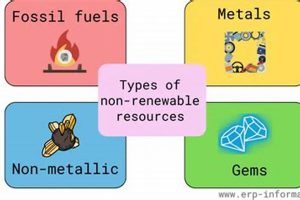
Renewable natural resources replenish naturally over a relatively short period, whereas non-renewable resources exist in fixed quantities and cannot be replenished at a rate comparable to their consumption.
Question 2: How does solar energy qualify as a renewable resource?
Solar energy is derived from sunlight, a virtually inexhaustible source of energy that continuously reaches Earth. This ongoing availability makes solar energy a naturally replenishing resource.
Question 3: What factors determine the sustainability of biomass as a renewable resource?
The sustainability of biomass depends on responsible land use practices, harvesting rates that do not exceed regrowth, and efficient conversion technologies that minimize environmental impacts.
Question 4: Why is water considered a renewable natural resource?
Water is part of a continuous hydrological cycle involving evaporation, condensation, and precipitation, ensuring a consistent replenishment of freshwater sources, provided the cycle is not severely disrupted by pollution or over-extraction.
Question 5: What are the primary challenges associated with harnessing wind energy as a renewable resource?
Key challenges include intermittency due to fluctuating wind patterns, the visual impact of wind turbines on landscapes, and the need for efficient energy storage solutions to ensure a reliable power supply.
Question 6: How does ecosystem regeneration contribute to the sustained availability of renewable resources?
Ecosystem regeneration enhances soil health, water purification, pollination services, and climate regulation, all of which are essential for the continued provision of renewable resources and the maintenance of ecological balance.
These inquiries and responses provide a foundational understanding of what defines self-replenishing assets and their critical role in environmental sustainability.
The following section explores policy implications and future trends related to the utilization of these assets.
Conclusion
This examination of renewable natural resources examples underscores their critical role in a sustainable future. Solar, wind, water, geothermal, and biomass represent viable alternatives to finite fossil fuels, each offering distinct advantages and challenges. Effective management, technological innovation, and policy support are crucial to maximize their potential and mitigate environmental impacts. The principles of sustainability must guide the extraction and utilization of these resources to ensure their long-term availability.
Recognizing the strategic importance of self-replenishing assets is paramount for global energy security and environmental stewardship. Investment in research, infrastructure, and education is essential to accelerate the transition towards a resource-efficient economy. The responsible and equitable utilization of renewable natural resources examples will determine the future trajectory of human civilization and the health of the planet. A commitment to these assets is not merely an option but a necessity for a resilient and prosperous world.
![Guide to What Energy Resources Are Renewable [+Future] | Renewable Energy Solutions for a Sustainable Future | Clean & Green Power](https://pplrenewableenergy.com/wp-content/uploads/2026/03/th-516-300x200.jpg "Guide to What Energy Resources Are Renewable [+Future] Renewable Energy Solutions for a Sustainable Future | Clean & Green Power")