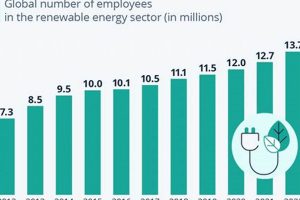
Opportunities within the renewable energy sector leverage core chemical engineering principles for process design, optimization, and analysis. These roles contribute to developing, improving, and implementing technologies like biofuel production, battery development, solar cell manufacturing, and hydrogen generation. For example, a chemical engineer might work on improving the efficiency of biofuel production from algae or develop new catalysts for electrolysis in hydrogen production.
This field offers significant potential for career growth due to the increasing global demand for sustainable energy solutions. The development and implementation of such technologies are crucial for mitigating climate change and ensuring long-term energy security. Historically, chemical engineers have played a vital role in traditional energy sectors. Their expertise is now increasingly sought after in the transition towards renewable resources, making it a dynamic and impactful career path.
The following sections will explore specific career options, required skill sets, educational pathways, and future trends within this burgeoning field. This information aims to provide a comprehensive overview for aspiring and practicing engineers interested in contributing to a sustainable energy future.
Tips for Pursuing a Career in Renewable Energy for Chemical Engineers
This section offers practical guidance for individuals seeking opportunities within the renewable energy sector.
Tip 1: Develop a Strong Foundation in Core Chemical Engineering Principles: A thorough understanding of thermodynamics, transport phenomena, chemical kinetics, and process control is essential for success in this field.
Tip 2: Gain Specialized Knowledge in Renewable Energy Technologies: Focus on specific areas such as biofuels, solar energy, wind energy, hydrogen production, or energy storage. Online courses, specialized certifications, and advanced degrees can provide this expertise.
Tip 3: Seek Relevant Internships and Research Experience: Practical experience through internships or research projects in renewable energy provides valuable hands-on skills and strengthens resumes.
Tip 4: Network with Professionals in the Field: Attending industry conferences, joining professional organizations, and connecting with professionals on online platforms can provide valuable insights and career opportunities.
Tip 5: Develop Strong Analytical and Problem-Solving Skills: Renewable energy projects often involve complex challenges requiring creative solutions. Honing these skills is crucial for career advancement.
Tip 6: Stay Updated on Industry Trends and Technological Advancements: The renewable energy sector is constantly evolving. Keeping abreast of the latest developments is essential for remaining competitive.
Tip 7: Highlight Relevant Skills and Experience in Applications: Tailor resumes and cover letters to emphasize skills and experience directly applicable to the specific renewable energy position being sought.
By following these tips, aspiring professionals can effectively position themselves for a successful and rewarding career in renewable energy. These recommendations provide a roadmap for navigating the job market and achieving career goals within this dynamic sector.
The concluding section will offer a final perspective on the evolving landscape of renewable energy and the vital role chemical engineers play in shaping its future.
1. Process Design & Optimization

Process design and optimization are fundamental to the successful implementation of renewable energy technologies. Chemical engineers leverage their expertise in thermodynamics, fluid mechanics, heat and mass transfer, and reaction kinetics to design efficient and cost-effective processes for producing biofuels, developing advanced battery systems, manufacturing solar cells, and generating hydrogen fuel. Optimization strategies are crucial for minimizing energy consumption, reducing waste generation, and maximizing the yield of desired products. For instance, in biofuel production, process optimization can involve improving the efficiency of biomass pretreatment, fermentation, and downstream purification steps to enhance overall biofuel yield and reduce production costs. In solar cell manufacturing, optimized chemical processes can lead to higher cell efficiencies and reduced material usage.
The practical significance of process design and optimization in renewable energy extends beyond economic considerations. Optimized processes contribute to minimizing the environmental impact of renewable energy technologies. By reducing waste and improving resource utilization, chemical engineers play a vital role in ensuring the sustainability of these technologies. For example, designing closed-loop systems for water usage in biofuel production minimizes water consumption and reduces wastewater discharge. Similarly, optimizing the synthesis of materials for solar cells can reduce the need for hazardous chemicals and minimize the environmental footprint of manufacturing processes. Life cycle assessments are often employed to evaluate the environmental impact of different process designs and identify areas for improvement.
Effective process design and optimization are critical for advancing renewable energy technologies and achieving a sustainable energy future. Challenges remain in optimizing complex processes and integrating different renewable energy sources into existing energy infrastructure. Continued research and development in process intensification, process control, and systems integration are essential to overcoming these challenges and maximizing the potential of renewable energy. The role of chemical engineers in process design and optimization is therefore crucial for driving innovation and ensuring the successful transition to a sustainable energy landscape.
2. Technology Development
Technology development forms a cornerstone of renewable energy advancement, inextricably linked with the contributions of chemical engineers. Their expertise is essential for innovating and refining technologies across various renewable energy sectors. For example, in the realm of solar energy, chemical engineers play a critical role in developing new materials and fabrication processes for higher-efficiency photovoltaic cells. This involves manipulating the chemical composition and structure of materials to enhance light absorption and electron transport, ultimately leading to increased solar energy conversion. In biofuel production, chemical engineers contribute to developing advanced bioreactors and catalysts that optimize fermentation processes, resulting in higher biofuel yields and reduced production costs. These examples illustrate the cause-and-effect relationship between technology development and the work of chemical engineers, demonstrating how their expertise directly translates into tangible advancements in renewable energy technologies.
The importance of technology development as a component of chemical engineering jobs in renewable energy cannot be overstated. It represents a continuous drive for improvement and innovation, pushing the boundaries of what is possible in sustainable energy production. The development of advanced battery technologies, for instance, relies heavily on the expertise of chemical engineers to design and synthesize new electrode materials and electrolytes with enhanced energy density, cycle life, and safety. Similarly, in the field of hydrogen production, chemical engineers are at the forefront of developing novel electrolysis techniques and photocatalytic systems for efficient hydrogen generation from water using renewable energy sources. These technological advancements are crucial for realizing the full potential of renewable energy and achieving a sustainable energy future. The practical significance of this understanding lies in its ability to guide research efforts, attract investment, and inform policy decisions related to renewable energy development.
In summary, technology development is an integral part of chemical engineering in the renewable energy sector. It fuels continuous progress towards more efficient, cost-effective, and sustainable energy solutions. While significant advancements have been made, ongoing challenges remain, including the need for further improvements in energy storage technologies, cost reductions in hydrogen production, and enhanced durability of solar cells. Addressing these challenges requires continued investment in research and development, coupled with the dedicated efforts of skilled chemical engineers pushing the frontiers of technology. The future of renewable energy hinges on these continued advancements, underscoring the vital role chemical engineers play in shaping a sustainable energy landscape.
3. Sustainable Solutions

Sustainable solutions represent a core focus of chemical engineering within the renewable energy sector. The inherent interdisciplinary nature of this field necessitates a holistic approach, considering environmental, economic, and social factors in developing and implementing renewable energy technologies. Chemical engineers play a crucial role in designing processes and systems that minimize environmental impact, maximize resource efficiency, and contribute to a circular economy.
- Waste Reduction and Resource Utilization:
Minimizing waste and maximizing resource utilization are paramount in achieving sustainable renewable energy solutions. Chemical engineers contribute by designing processes that minimize waste generation, recover valuable byproducts, and utilize renewable resources efficiently. For example, in biofuel production, waste biomass can be converted into valuable products like biochar or biogas, reducing landfill waste and providing additional revenue streams. Similarly, chemical engineers develop processes for recycling and recovering materials from solar panels and wind turbine blades, minimizing the environmental impact of these technologies at the end of their life cycle.
- Life Cycle Assessment and Environmental Impact:
Life cycle assessment (LCA) is a critical tool for evaluating the environmental impact of renewable energy technologies throughout their entire life cycle, from raw material extraction to manufacturing, operation, and end-of-life disposal. Chemical engineers utilize LCA to identify environmental hotspots and develop strategies for minimizing the overall environmental footprint of renewable energy systems. This includes considering factors such as greenhouse gas emissions, water consumption, land use, and potential environmental toxicity. LCA informs decision-making regarding material selection, process design, and waste management strategies, contributing to environmentally responsible renewable energy solutions.
- Circular Economy Principles:
The transition to a circular economy is essential for achieving sustainable development. Chemical engineers apply circular economy principles to renewable energy systems by designing closed-loop processes, maximizing resource reuse and recycling, and minimizing waste generation. This includes developing innovative technologies for material recovery and recycling, designing processes for reusing components and materials, and optimizing resource utilization throughout the entire value chain. For example, chemical engineers can develop processes for recovering valuable metals from spent batteries or for repurposing retired wind turbine blades into construction materials, contributing to a more circular and sustainable economy.
- Systems Thinking and Integration:
Sustainable solutions require a systems-level approach that considers the interconnectedness of different components and processes within the renewable energy system. Chemical engineers apply systems thinking to design integrated biorefineries that utilize multiple biomass feedstocks and produce a range of bio-based products, maximizing resource utilization and minimizing waste. They also contribute to the integration of different renewable energy sources, such as solar and wind power, into existing energy grids, ensuring grid stability and reliability while maximizing the use of renewable energy. This holistic perspective is crucial for achieving truly sustainable and resilient energy systems.
These facets of sustainable solutions underscore the critical role of chemical engineers in developing and implementing environmentally responsible and economically viable renewable energy technologies. Their expertise in process design, systems analysis, and life cycle assessment is essential for minimizing environmental impact, maximizing resource efficiency, and creating a truly sustainable energy future. The ongoing development and refinement of these sustainable practices are crucial for mitigating climate change and ensuring long-term energy security.
4. Research & Innovation

Research and innovation are the driving forces behind advancements in renewable energy technologies. Chemical engineers play a critical role in this domain, contributing to the development of novel materials, processes, and systems that enhance the efficiency, cost-effectiveness, and sustainability of renewable energy sources. This continuous pursuit of improvement is essential for overcoming technical challenges and unlocking the full potential of renewable energy.
- Materials Science for Renewable Energy:
Developing advanced materials is crucial for improving the performance and durability of renewable energy technologies. Chemical engineers contribute by synthesizing and characterizing new materials with tailored properties for applications such as solar cells, batteries, fuel cells, and catalysts. For instance, research on perovskite materials holds promise for developing next-generation solar cells with higher efficiencies and lower manufacturing costs. Similarly, the development of solid-state electrolytes is critical for enhancing the safety and performance of lithium-ion batteries for energy storage. These advancements in materials science are essential for driving innovation and improving the overall effectiveness of renewable energy systems.
- Process Intensification and Optimization:
Process intensification aims to develop more efficient and compact processes for renewable energy production. Chemical engineers employ techniques such as microreactor technology, membrane separation, and supercritical fluid extraction to enhance process efficiency, reduce energy consumption, and minimize waste generation. For example, microreactors can be used for the efficient production of biofuels, while membrane separation technologies can be employed for water purification and desalination powered by renewable energy sources. These advancements in process intensification contribute to more sustainable and cost-effective renewable energy production.
- Systems Integration and Modeling:
Integrating different renewable energy sources into existing energy infrastructure requires sophisticated systems analysis and modeling. Chemical engineers develop models to simulate the performance of renewable energy systems, optimize their integration into the grid, and ensure grid stability and reliability. This involves analyzing factors such as energy storage requirements, grid management strategies, and the intermittent nature of renewable energy sources like solar and wind power. Advanced modeling techniques are essential for designing robust and resilient renewable energy systems that can effectively meet future energy demands.
- Catalysis and Reaction Engineering for Renewable Energy:
Catalysis plays a vital role in many renewable energy processes, such as biofuel production, hydrogen generation, and CO2 conversion. Chemical engineers develop novel catalysts and optimize reaction conditions to enhance the efficiency and selectivity of these processes. For example, designing efficient catalysts for water splitting is crucial for producing green hydrogen using renewable electricity. Similarly, developing catalysts for converting CO2 into valuable chemicals or fuels offers a promising pathway for mitigating climate change and utilizing captured carbon emissions. Research in catalysis and reaction engineering is essential for advancing renewable energy technologies and creating a more sustainable energy future.
These interconnected areas of research and innovation demonstrate the crucial role chemical engineers play in advancing renewable energy technologies. Continued investment in research and development, coupled with the ingenuity and expertise of chemical engineers, is essential for overcoming technical challenges, improving the performance and cost-competitiveness of renewable energy systems, and ultimately achieving a sustainable energy future. The ongoing exploration of these research areas will shape the future of renewable energy and its contribution to a cleaner and more sustainable world.
5. Systems Analysis

Systems analysis plays a crucial role in optimizing renewable energy systems and integrating them effectively into existing infrastructure. Chemical engineers utilize systems analysis techniques to model, evaluate, and optimize the performance of complex energy systems, considering factors such as resource availability, energy demand, environmental impact, and economic feasibility. This holistic approach is essential for developing sustainable and efficient renewable energy solutions.
- Resource Assessment and Optimization:
Renewable energy systems rely on various resources, including solar radiation, wind, biomass, and water. Systems analysis techniques enable chemical engineers to assess the availability and variability of these resources and optimize their utilization for energy production. This involves developing models to predict resource availability, designing systems to capture and convert energy efficiently, and integrating storage solutions to address the intermittent nature of some renewable resources. For example, systems analysis can be used to optimize the placement of wind turbines in a wind farm to maximize energy capture based on wind patterns and terrain.
- Energy System Modeling and Simulation:
Developing accurate models of renewable energy systems is crucial for predicting their performance and optimizing their design. Chemical engineers use simulation tools to model the behavior of different components within the system, such as solar panels, wind turbines, batteries, and fuel cells. These models consider factors such as energy conversion efficiency, energy storage capacity, and grid integration requirements. Simulations help engineers evaluate different design options, predict system performance under various operating conditions, and identify potential bottlenecks or areas for improvement. For instance, system modeling can be used to evaluate the impact of integrating a large-scale solar power plant into the electricity grid.
- Grid Integration and Stability Analysis:
Integrating renewable energy sources into existing power grids presents unique challenges due to the intermittent nature of solar and wind power. Systems analysis techniques enable chemical engineers to assess the impact of renewable energy integration on grid stability and reliability. This involves analyzing factors such as grid capacity, voltage fluctuations, and frequency variations. Engineers use advanced control systems and energy storage solutions to mitigate the impact of intermittency and ensure a stable and reliable power supply. For example, systems analysis can be used to determine the optimal size and placement of battery storage systems to support grid stability when solar or wind power output fluctuates.
- Techno-Economic Analysis and Optimization:
The economic viability of renewable energy projects is a critical factor in their successful implementation. Chemical engineers perform techno-economic analyses to evaluate the costs and benefits of different renewable energy technologies and systems. This involves considering factors such as capital costs, operating costs, energy production, and revenue generation. Systems analysis techniques are used to optimize system design and operation to minimize costs and maximize the return on investment. For example, techno-economic analysis can be used to compare the cost-effectiveness of different biofuel production pathways or to evaluate the economic feasibility of a solar-powered desalination plant.
These facets of systems analysis highlight its importance in developing and implementing effective renewable energy solutions. Chemical engineers with expertise in systems analysis are essential for optimizing the performance, reliability, and economic viability of renewable energy systems, contributing to a sustainable energy future. The continued development and application of advanced systems analysis techniques will be crucial for maximizing the potential of renewable energy and achieving a successful transition to a cleaner and more sustainable energy landscape.
Frequently Asked Questions
This section addresses common inquiries regarding career paths in renewable energy for chemical engineers.
Question 1: What specific skills are highly sought after for these roles?
Expertise in process design, optimization, and control, coupled with knowledge of specific renewable energy technologies (e.g., biofuels, solar, wind, hydrogen), are highly valued. Strong analytical, problem-solving, and communication skills are also essential.
Question 2: How can a chemical engineer transition into the renewable energy sector?
Targeted postgraduate studies, specialized certifications, or online courses focused on renewable energy technologies can facilitate a career transition. Seeking relevant internships or research experience is also beneficial.
Question 3: What are the typical entry-level positions in this field?
Entry-level positions often include process engineer, research and development engineer, or project engineer roles within renewable energy companies, research institutions, or government agencies.
Question 4: What is the long-term career outlook in renewable energy for chemical engineers?
The long-term outlook is positive. The increasing global demand for sustainable energy solutions suggests continued growth and diversification of opportunities within this sector.
Question 5: Are there opportunities for international collaboration in this field?
Renewable energy is a global challenge and opportunity. International collaborations are common, offering possibilities for work on international projects or with multinational organizations.
Question 6: How does experience in traditional energy sectors translate to renewable energy?
Skills in process design, optimization, and project management are transferable. Supplementing existing expertise with knowledge specific to renewable energy technologies is key for a successful transition.
This FAQ section provides a concise overview of key considerations for individuals exploring career opportunities in renewable energy. A deeper exploration of specific technologies and career pathways is highly encouraged.
Further resources and detailed information on specific career paths within the renewable energy sector will be explored in the following sections.
Chemical Engineering Jobs in Renewable Energy
This exploration has highlighted the multifaceted nature of chemical engineering jobs in renewable energy, encompassing process design and optimization, technology development, sustainable solutions implementation, impactful research and innovation, and comprehensive systems analysis. These roles are instrumental in addressing global energy challenges and driving the transition towards sustainable practices. The demand for skilled chemical engineers within this sector is expected to grow significantly as the world increasingly relies on renewable energy sources.
The future of energy hinges on continued innovation and the dedicated efforts of professionals committed to sustainable solutions. Chemical engineers possess the skills and knowledge to play a pivotal role in shaping this future, contributing to a cleaner, more sustainable world powered by renewable energy. The transition to a renewable energy future presents significant opportunities for career growth and societal impact, urging skilled professionals to contribute their expertise to this vital field.