The continuous stream of charged particles emanating from the sun represents a potentially vast, yet challenging, source of power. This outward flow, primarily composed of protons and electrons, carries significant energy as it traverses the solar system. Harnessing this energy could provide a sustainable alternative to traditional methods of electricity generation. For instance, hypothetical structures positioned in space could intercept this stream and convert the kinetic energy of the particles into usable electrical power.
Capturing and utilizing this resource could offer numerous advantages, including a reduction in reliance on fossil fuels and a decrease in greenhouse gas emissions. Historically, the focus of energy production has been primarily on terrestrial resources. However, as technology advances, the possibility of tapping into extraterrestrial sources becomes increasingly plausible. This has the potential to fundamentally reshape global energy landscapes, offering a more secure and environmentally friendly future.
The subsequent sections will delve into the technological hurdles that need to be overcome, the economic considerations surrounding the development of such systems, and the potential environmental impacts associated with large-scale implementation. It will also examine the ongoing research and development efforts aimed at making this concept a viable energy solution.
Harnessing Extraterrestrial Energy Streams
Successful realization of power generation from the solar outflow necessitates careful consideration of several crucial factors. These guidelines aim to provide a framework for research, development, and eventual deployment.
Tip 1: Material Science Advancements: Durable, radiation-resistant materials are paramount. The intense particle flux in space demands materials capable of withstanding constant bombardment without degradation. For example, alloys incorporating self-healing properties could extend the lifespan of collection structures.
Tip 2: Efficient Energy Conversion Technologies: Novel methods for converting the kinetic energy of charged particles into electricity are essential. Direct conversion technologies, such as those based on plasma physics principles, offer potential advantages over traditional electromechanical systems.
Tip 3: Orbit Selection and Station Keeping: Optimal orbital placement is critical for maximizing energy capture and minimizing operational costs. Strategic positioning at specific Lagrange points could provide stable locations with consistent exposure to the solar outflow.
Tip 4: Minimizing Space Debris Generation: Responsible deployment practices are crucial to prevent the creation of space debris. End-of-life disposal strategies must be implemented to ensure the long-term sustainability of space-based infrastructure.
Tip 5: Cost-Effective Launch Systems: Reducing the cost of launching infrastructure into space is a key factor in making this approach economically viable. Developing reusable launch vehicles and exploring in-space construction techniques can significantly lower overall project expenses.
Tip 6: Comprehensive Environmental Impact Assessments: Thorough evaluations are necessary to assess the potential effects on the space environment and Earth’s magnetosphere. Understanding and mitigating potential disruptions are essential for responsible implementation.
These considerations highlight the multi-faceted nature of successfully implementing technologies for converting the stream of charged particles from our star to useful energy. Careful attention to these areas is critical for achieving a sustainable and economically viable energy future.
The following sections will elaborate on the economic and environmental challenges, along with long-term prospects associated with large scale generation from extraterrestrial sources.
1. Particle Kinetic Energy

The kinetic energy possessed by the charged particles within the solar outflow is the foundational element upon which any prospective energy-harvesting system depends. The quantity of energy available is directly proportional to the mass and velocity of these particles, defining the potential for power generation. Understanding the dynamics of this energy is crucial for designing efficient capture and conversion mechanisms.
- Velocity Distribution of Solar Wind Particles
The velocity of particles within the stream varies significantly depending on solar activity and location within the stream. Slower, denser flows contrast sharply with high-speed streams originating from coronal holes. These varying velocities directly impact the kinetic energy available for capture. Accurately characterizing and predicting velocity distributions is therefore critical for effective system design.
- Composition and Mass Density
The composition of the outflow primarily consists of protons and electrons, with trace amounts of heavier ions. The density of these particles fluctuates, impacting the overall mass flux and thus the kinetic energy. Higher density regions offer greater potential for energy capture, but also present increased challenges for material durability due to higher collision rates.
- Energy Flux Calculation and Measurement
Accurate measurement of the energy flux is essential for assessing the viability of specific capture locations and technologies. Sophisticated instruments aboard spacecraft are used to measure particle velocities and densities, enabling calculation of the kinetic energy flux. These measurements are then used to refine models and inform the design of energy-harvesting systems.
- Impact on Capture Technology Design
The characteristics of the particle kinetic energy directly influence the design of potential capture technologies. Strategies will differ depending on whether they aim to harvest energy from low-density, high-velocity flows or from denser, slower flows. The size and shape of capture structures, as well as the conversion mechanisms employed, must be optimized for the specific energy profile of the target environment.
The efficient harvesting of energy from charged particles necessitates a deep understanding of the kinetic energy they possess. Characterizing the particle velocity, composition, and density are all crucial factors in designing and deploying effective energy capture systems. Maximizing energy capture requires adapting technology to the specific characteristics of the stream, making continuous monitoring and modelling essential for the long-term success of any potential energy generation system.
2. Space-Based Infrastructure

The practicality of harnessing solar outflow hinges entirely on the establishment of robust space-based infrastructure. This infrastructure constitutes the physical and operational framework necessary for capturing, converting, and transmitting the energy inherent within the stream of charged particles emanating from the sun. Without dedicated platforms, collection mechanisms, and power transmission systems located in space, realizing the potential of this energy source remains fundamentally impossible. The complexity and scale of the required infrastructure represent a significant technological and logistical undertaking.
A primary component of this infrastructure is the collection array, a network of specialized devices designed to intercept the flow of charged particles. These arrays might employ magnetic fields to guide particles towards conversion units, or utilize solid-state collectors to directly capture particle energy. Efficient power conversion is critical; thus, the infrastructure must also incorporate advanced systems for transforming the captured particle energy into usable electricity, potentially using high-efficiency thermoelectric generators or plasma-based converters. Subsequently, this power would need to be transmitted back to Earth, requiring advanced beam-forming technologies and high-power microwave or laser transmission systems. An example of hypothetical designs involves large-scale orbital platforms positioned at Lagrangian points to maximize exposure and minimize orbital drift.
Effective space-based infrastructure demands substantial investment in research, development, and deployment. The challenges are multifaceted, encompassing radiation hardening of materials, long-term reliability of components in the harsh space environment, and the cost-effective construction and maintenance of large-scale orbital structures. Overcoming these challenges is essential to unlock a sustainable and scalable energy source from the constant stream of particles from our star, with the establishment of reliable space-based platforms acting as the foundation of this endeavor. The absence of robust and efficient space infrastructure constitutes a fundamental barrier to the viability of harnessing this resource.
3. Conversion Efficiency Challenges

Effective conversion of the kinetic energy of solar outflow particles into usable electrical power represents a paramount technical obstacle. The diffuse nature of the outflow, coupled with the relatively low energy of individual particles, necessitates highly efficient conversion processes to achieve practical energy yields. Overcoming these challenges is critical for the economic viability of harnessing this energy source.
- Low Particle Density and Flux
The rarefied nature of the stream translates to a low particle flux, meaning only a small amount of energy arrives per unit area per unit time. This necessitates extremely large collection areas to intercept sufficient energy for meaningful power generation. The requirement for large structures in space presents significant engineering and cost constraints.
- Particle Energy Spectrum
The energy of individual particles within the flow varies considerably. Many particles possess relatively low kinetic energy, making efficient conversion difficult. Conversion technologies must be capable of effectively capturing and utilizing energy from a broad spectrum of particle energies, requiring sophisticated and adaptable designs.
- Direct Energy Conversion Limitations
Current direct energy conversion technologies, such as solid-state devices or plasma-based converters, face inherent efficiency limitations. Material properties, operating temperatures, and physical constraints restrict the maximum achievable conversion efficiency. Improving these technologies requires fundamental advances in materials science and plasma physics.
- Power Transmission Losses
Even with efficient energy conversion in space, transmitting the generated power back to Earth introduces further losses. Microwave or laser power beaming, the most promising transmission methods, are subject to atmospheric attenuation, beam spreading, and receiver inefficiencies. Minimizing these transmission losses is crucial to maximize the overall system efficiency.
The inherent limitations in capturing and converting the energy from the solar outflow necessitate ongoing research and development efforts focused on improving conversion efficiencies at every stage of the process, from initial particle interception to final power delivery. The economic feasibility of tapping this resource hinges directly on overcoming these conversion efficiency challenges.
4. Economic Viability Hurdles

The development of economically viable energy systems based on the solar outflow faces significant hurdles. The high initial capital investment required for space-based infrastructure presents a major obstacle. Launch costs, construction expenses for large-scale collection and conversion platforms, and the development of efficient power transmission systems contribute substantially to the overall cost. Unless these upfront expenses can be significantly reduced, this technology is unlikely to compete with more established energy sources. For instance, the construction of even a single, pilot-scale power generation satellite could easily exceed the budgets of several national space agencies, requiring international collaboration or private sector investment on an unprecedented scale.
Operational costs also pose a considerable challenge. Maintaining infrastructure in the harsh space environment requires continuous monitoring, repairs, and component replacements. Radiation damage, micrometeoroid impacts, and thermal stresses can degrade system performance and shorten the lifespan of critical components. Furthermore, the ongoing cost of station-keeping, debris avoidance, and power transmission needs to be factored into the overall economic equation. The long-term cost-effectiveness of this energy source depends on minimizing these operational expenses through advanced automation, remote maintenance capabilities, and the development of durable, radiation-resistant materials. A potential solution is robotic maintenance, reducing the need for expensive manned missions.
Ultimately, the economic viability of utilizing the stream of charged particles from our star relies on a combination of technological breakthroughs, cost reductions in space access and infrastructure development, and a supportive policy environment. Without significant advancements in these areas, the dream of tapping this abundant energy resource will remain largely theoretical. The long-term success is intertwined with the maturity of the space economy and innovations in power transmission.
5. Environmental Impact Studies

Rigorous environmental impact studies are crucial for assessing the potential consequences of large-scale energy generation from the solar outflow. Before the deployment of any space-based power system, a thorough understanding of its potential effects on the Earth’s magnetosphere, the space environment, and potentially, even Earth’s climate is essential.
- Disturbances to the Earth’s Magnetosphere
Large-scale collection of charged particles could potentially alter the Earth’s magnetosphere, the protective magnetic field surrounding the planet. These alterations might impact satellite operations, radio communications, and even the aurora borealis. Detailed modeling and simulation are necessary to predict and mitigate any adverse effects. For instance, changes to the magnetosphere could expose satellites to increased radiation, shortening their lifespan and disrupting services like GPS.
- Space Debris Generation
The deployment and operation of extensive space-based infrastructure invariably carry the risk of generating space debris. Collisions between spacecraft and debris can create a cascade effect, increasing the overall population of debris and posing a threat to existing and future space missions. Careful design, operational protocols, and end-of-life disposal strategies are vital to minimize debris generation. For example, defunct collection platforms must be de-orbited or moved to graveyard orbits to prevent collisions.
- Impacts on the Upper Atmosphere
The transmission of power from space to Earth via microwave or laser beaming could potentially affect the upper atmosphere. Absorption of energy by atmospheric gases could lead to localized heating or changes in atmospheric chemistry. Studies are needed to assess the magnitude and long-term consequences of these impacts. An analogous example is the potential impact on ozone layer from high-altitude aircraft exhaust.
- Electromagnetic Interference
The operation of high-power space-based systems could generate electromagnetic interference that disrupts terrestrial communication systems. Careful frequency selection, shielding, and operational protocols are necessary to minimize this interference. International regulations and coordination are essential to prevent conflicts between different space-based and terrestrial systems. For instance, specific frequency bands might need to be reserved for power transmission to avoid interfering with existing satellite communication services.
These facets underscore the importance of comprehensive environmental impact studies in evaluating the feasibility and sustainability of power generation. These studies are not merely procedural requirements but are integral to responsible development. Addressing potential environmental concerns proactively will be crucial for gaining public acceptance and ensuring the long-term viability of energy derived from the sun’s constant particle stream. Without proper environmental safeguards, pursuing this resource could inadvertently create new and unforeseen environmental challenges.
Frequently Asked Questions
The following questions address common inquiries and misconceptions regarding the feasibility, practicality, and implications of harnessing the kinetic energy of charged particles from the Sun as a source of power.
Question 1: What is the fundamental principle behind energy capture from the solar outflow?
The process entails intercepting the continuous flow of charged particles (primarily protons and electrons) emanating from the Sun. By utilizing magnetic fields or solid-state collectors, the kinetic energy of these particles can be converted into electrical energy. This requires specialized space-based infrastructure.
Question 2: Is the energy from the solar wind truly “renewable”?
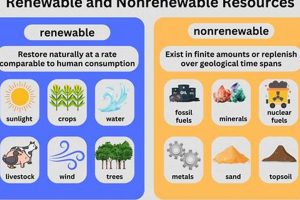
Yes, the Sun continuously emits charged particles, making this energy source effectively inexhaustible on human timescales. The rate of emission is subject to solar cycles, but the flow is essentially constant and does not deplete over time.
Question 3: Why is space-based infrastructure necessary for capturing this energy?
The Earth’s atmosphere and magnetosphere significantly attenuate the charged particle flux. Placing collection infrastructure in space circumvents these barriers, allowing for more efficient interception and conversion of energy.
Question 4: What are the primary technological hurdles to overcome?
Significant technological challenges include developing durable, radiation-resistant materials, improving energy conversion efficiencies, reducing the cost of space launches, and mitigating potential environmental impacts on the space environment.
Question 5: What are the economic considerations associated with energy from the solar outflow?
The high upfront capital investment for space-based infrastructure and the ongoing operational costs are major economic considerations. Reducing launch costs, developing reusable spacecraft, and improving system reliability are crucial for economic viability.
Question 6: What are the potential environmental impacts of this energy source?
Potential environmental impacts include disturbances to the Earth’s magnetosphere, the generation of space debris, and potential interference with terrestrial communication systems. Thorough environmental impact studies are essential to mitigate these risks.
These questions and answers provide a foundational understanding of the opportunities and challenges associated with harnessing energy from the continuous particle emission of our star. Further research and technological advancements are necessary to realize the full potential of this resource.
The following section will provide an analysis of future research direction and prospective areas of development to enable viability of energy generation from the charged particle outflow of the sun.
Conclusion
This exploration has elucidated the multifaceted nature of “solar wind renewable energy.” Significant technological and economic obstacles remain before it can become a viable alternative to conventional energy sources. The inherent challenges associated with capturing, converting, and transmitting energy from the stream necessitate sustained research and development. Furthermore, a rigorous assessment of potential environmental impacts is essential for responsible implementation.
Despite these challenges, the prospect of tapping into an inexhaustible extraterrestrial resource warrants continued investigation. The future viability of “solar wind renewable energy” hinges on breakthroughs in materials science, space infrastructure development, and power transmission technologies. Addressing these fundamental issues will determine whether this potentially transformative energy source can contribute to a sustainable future.