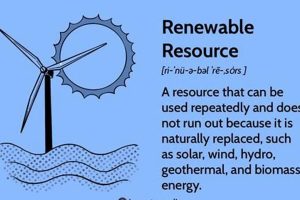
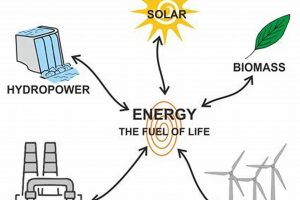
Harnessing power from naturally replenishing resources offers a sustainable alternative to traditional fossil fuels. These resources are characterized by their ability to be replenished at a rate equal to or greater than their rate of consumption, ensuring long-term availability. For instance, power derived from the sun, wind, or flowing water falls under this category.
The significance of transitioning to these sustainable power generation methods lies in their environmental advantages and long-term economic benefits. Reduced greenhouse gas emissions contribute to mitigating climate change, while the establishment of domestic energy industries fosters job creation and energy independence. Historically, reliance on finite resources has led to geopolitical instability and environmental degradation, underscoring the importance of diversified and sustainable energy portfolios.
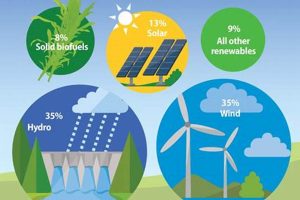
This document will specifically identify solar, wind, and hydropower as key examples of continuously replenished power origins. A brief overview of each will illustrate their individual characteristics and contributions to a cleaner energy future.
Strategies for Understanding Sustainable Power Options
The following guidelines are provided to enhance understanding of continuously replenished power sources and their practical applications.
Tip 1: Focus on Resource Availability: When evaluating a potential sustainable power source, prioritize analysis of the resource’s long-term availability in a specific geographic location. For example, solar power’s feasibility depends heavily on average daily sunlight hours in a region.
Tip 2: Assess Environmental Impact: Conduct a comprehensive environmental impact assessment, considering factors beyond carbon emissions. Land use, potential effects on wildlife, and water consumption are critical considerations.
Tip 3: Analyze Economic Viability: Perform a thorough cost-benefit analysis, including initial investment, operational expenses, and potential revenue streams. Government incentives and long-term fuel cost savings should be factored into the economic model.
Tip 4: Investigate Technological Advancements: Stay informed about the latest technological developments in sustainable power generation. Advancements in solar panel efficiency, wind turbine design, and energy storage systems can significantly improve performance and reduce costs.
Tip 5: Consider Grid Integration Challenges: Evaluate the challenges associated with integrating intermittent power sources into existing electrical grids. Smart grid technologies and energy storage solutions are essential for ensuring grid stability.
Tip 6: Explore Policy and Regulatory Frameworks: Understand the relevant policy and regulatory frameworks governing sustainable power development. Government mandates, tax incentives, and permitting processes can significantly influence project feasibility.
Tip 7: Promote Public Awareness and Education: Public acceptance and support are crucial for the successful adoption of sustainable power technologies. Promote public awareness campaigns to educate communities about the benefits of these sources.
These guidelines offer a structured approach to understanding continuously replenished power options, promoting informed decision-making and sustainable energy development.
Moving forward, ongoing research and development, coupled with supportive policies, are essential for realizing the full potential of continuously replenished power sources.
1. Solar Power

Solar power represents a significant component within the broader category of constantly replenished power generators. Its inclusion among examples such as wind and hydropower stems from its reliance on a perpetually available resource: sunlight. The photovoltaic process converts solar radiation directly into electricity, circumventing the need for finite fossil fuels and mitigating greenhouse gas emissions. The widespread adoption of solar power, driven by decreasing costs and increasing efficiency, directly contributes to a more sustainable energy landscape. For example, large-scale solar farms in California and utility-scale rooftop solar programs demonstrate the practical impact of solar technology on grid decarbonization.
Furthermore, solar power’s distributed nature makes it a viable option for both grid-connected and off-grid applications. Remote communities lacking access to centralized power grids can benefit from solar home systems, improving living standards and fostering economic development. The technology’s modularity enables scalability, accommodating diverse energy needs ranging from individual households to large industrial facilities. Recent advancements in solar panel materials and energy storage technologies further enhance the reliability and versatility of solar power, addressing the intermittency challenges associated with its dependence on weather conditions. Investments in research and development also hold potential in creating a sustainable future.
In summary, solar power stands as a pivotal element within the portfolio of sustainable power resources. Its reliance on a readily available resource, coupled with its environmental and economic benefits, positions it as a key driver of the transition to a cleaner energy future. Overcoming challenges related to intermittency and land use through technological innovation and strategic planning is crucial to realizing the full potential of solar energy in achieving global sustainability goals.
2. Wind Energy

Wind energy represents a significant component of sustainable electricity generation, characterized by its capacity to harness kinetic energy from wind through turbines and convert it into electrical power. As a component of sustainable electricity options, wind energy offers a promising avenue for reducing reliance on conventional fossil fuels and mitigating associated environmental impacts.
- Technological Advancements and Efficiency
Ongoing technological advancements in turbine design and materials science are continuously enhancing the efficiency of wind energy conversion. Modern wind turbines, often incorporating advanced aerodynamic principles and lightweight composite materials, can capture a greater percentage of wind energy, increasing electricity output. This directly contributes to the economic viability of wind farms and their capacity to compete with conventional power sources.
- Environmental Considerations
While wind energy offers substantial environmental benefits in terms of reduced greenhouse gas emissions, potential impacts on wildlife, particularly birds and bats, necessitate careful site selection and mitigation strategies. Environmental impact assessments are crucial for identifying and minimizing potential ecological consequences. Additionally, decommissioning and recycling of wind turbine components at the end of their operational lifespan require attention to ensure sustainability throughout the entire lifecycle.
- Grid Integration and Intermittency
The intermittent nature of wind, characterized by fluctuating wind speeds and periods of calm, poses challenges for grid integration. Energy storage solutions, such as batteries or pumped hydro storage, can help to mitigate the intermittency of wind power and ensure a stable supply of electricity to the grid. Furthermore, advanced grid management technologies and forecasting models can optimize the integration of wind energy into existing power networks.
- Economic and Social Impacts
Wind energy projects create employment opportunities in manufacturing, construction, operation, and maintenance. The development of wind farms can also stimulate economic activity in rural communities, providing income to landowners and supporting local businesses. However, community engagement and consultation are essential to ensure that wind energy projects are developed in a socially responsible manner, addressing concerns related to visual impacts and noise pollution.
The multifaceted nature of wind energy underscores its importance as a sustainable electricity option. Continued innovation, responsible development practices, and supportive policies are essential for maximizing the contribution of wind energy to a cleaner energy future.
3. Hydropower

Hydropower, a process of generating electricity through the force of moving water, constitutes a significant component within the scope of sustainable electricity resources. Its inclusion alongside solar and wind power is predicated on its reliance on a perpetually renewing natural cycle: the water cycle. Dams create reservoirs, enabling controlled release of water to drive turbines, converting kinetic energy into electrical energy. Unlike fossil fuel-based electricity generation, hydropower produces minimal greenhouse gas emissions during operation, contributing to a reduction in atmospheric pollutants. The Grand Coulee Dam on the Columbia River serves as a notable example, providing substantial electricity to the Pacific Northwest region of the United States while also supporting irrigation and flood control. The integration of hydropower strengthens a sustainable power portfolio’s reliability and capacity, supporting grid stability and energy security.
However, the construction and operation of hydroelectric facilities are not without environmental impact. Dam construction can alter river ecosystems, disrupting fish migration patterns and affecting water quality. Mitigation strategies, such as fish ladders and minimum flow requirements, are often implemented to minimize these effects. Small-scale hydropower projects, also known as micro-hydro, offer a less environmentally disruptive alternative, utilizing the natural flow of water without requiring large dams. These smaller projects can provide electricity to remote communities and reduce dependence on diesel generators. Further advancements in hydrokinetic turbine technology allow electricity extraction from rivers and tidal flows without dam construction, offering a potentially less impactful approach to water-based power generation.
In conclusion, hydropower remains a vital component of sustainable power, offering a reliable and low-emission energy source. Addressing environmental challenges associated with large-scale dam construction through mitigation strategies and exploring alternative hydro technologies, such as small-scale hydro and hydrokinetic systems, are crucial for maximizing hydropower’s contribution to a sustainable energy future. The strategic integration of hydropower alongside other continuously replenished power sources, such as solar and wind, ensures a balanced and resilient electricity system.
4. Sustainability

The concept of sustainability is intrinsically linked to the practical implementation and long-term viability of solar, wind, and hydropower as energy sources. Sustainability, in this context, encompasses environmental stewardship, economic feasibility, and social equity. The selection and development of these generators directly address concerns related to climate change mitigation, resource depletion, and public health impacts associated with conventional fossil fuel reliance.
The causal relationship between sustainability and deployment of these electricity origins is multifaceted. The utilization of solar, wind, and hydropower directly reduces greenhouse gas emissions, thus mitigating the effects of global warming. This proactive approach to minimizing environmental impact is a cornerstone of sustainability. Furthermore, these sources utilize domestic resources, fostering energy independence and reducing reliance on volatile global fuel markets. For instance, the growth of the wind energy sector in the American Midwest has created employment opportunities and stimulated economic development in rural communities, demonstrating the social and economic dimensions of sustainability. However, the long-term ecological effects, particularly for hydropower, require careful planning and mitigation to ensure sustainability goals are fully met.
In summary, the incorporation of sustainability principles throughout the entire lifecycle of these energy sources from resource extraction and manufacturing to power generation and decommissioning is essential for realizing their full potential as contributors to a cleaner and more equitable energy future. Challenges remain, particularly regarding grid integration and land use optimization, but ongoing innovation and policy support are crucial for navigating these hurdles and solidifying the role of solar, wind, and hydropower as cornerstones of a sustainable energy economy.
5. Accessibility

The concept of accessibility plays a pivotal role in determining the practical applicability and widespread adoption of sustainable electricity, particularly solar, wind, and hydropower. Accessibility, in this context, refers to the availability of these energy resources, the technological infrastructure required to harness them, and the economic factors that influence their deployment in diverse geographical locations and socioeconomic contexts. The success of these renewable power sources hinges not only on their environmental benefits but also on their ability to provide affordable and reliable energy to communities across the globe.
The availability of solar irradiance, wind resources, and water flow varies significantly across different regions, directly affecting the feasibility of each technology. For example, regions with high average solar radiation are more conducive to solar power generation, while areas with consistent wind patterns are more suitable for wind energy. Hydropower, in turn, relies on the presence of suitable river systems and topography. Beyond resource availability, accessibility also encompasses the technological infrastructure required to convert these resources into usable energy. The cost of solar panels, wind turbines, and hydroelectric dams, as well as the necessary grid infrastructure for transmission and distribution, can be significant barriers to entry, particularly in developing countries. Government policies, such as feed-in tariffs and tax incentives, can play a crucial role in enhancing the economic accessibility of these energy sources and promoting their wider adoption. The scalability and modularity of resources are key factors influencing deployment in diverse regions and contribute toward affordable and reliable power to communities globally.
In summary, accessibility is a crucial determinant of the extent to which solar, wind, and hydropower can contribute to a global sustainable energy transition. Overcoming challenges related to resource availability, technological costs, and infrastructure development requires a multifaceted approach involving technological innovation, supportive government policies, and international cooperation. By addressing the accessibility barriers, it is possible to unlock the full potential of these renewable power generators and provide clean, affordable, and reliable energy to communities worldwide, contributing to a more sustainable and equitable future.
6. Environmental Impact

The intersection of continuously replenished energy sources and environmental impact constitutes a critical area of consideration in the pursuit of sustainable power generation. While often perceived as environmentally benign alternatives to fossil fuels, solar, wind, and hydropower each possess unique ecological footprints that warrant careful evaluation and mitigation strategies. Understanding these impacts is essential for ensuring responsible deployment and maximizing the overall environmental benefits of these energy technologies.
- Land Use Considerations
The deployment of solar and wind farms requires significant land areas, potentially leading to habitat loss, fragmentation, and impacts on biodiversity. Large-scale solar installations can alter land surface albedo, affecting local climate patterns and water cycles. Wind farms can disrupt migratory bird and bat populations, necessitating careful site selection and mitigation measures such as turbine curtailment during peak migration periods. Hydropower, through dam construction, can inundate vast areas of land, displacing communities, altering river ecosystems, and impacting downstream water availability.
- Water Resource Alterations
Hydropower dams can significantly alter river flow regimes, impacting aquatic habitats, fish migration patterns, and downstream water quality. Reduced sediment transport can lead to erosion of downstream riverbanks and deltas. Solar power plants, particularly concentrated solar power (CSP) facilities, may require substantial water resources for cooling, potentially straining water supplies in arid regions. Wind energy, while generally less water-intensive, can indirectly impact water resources through manufacturing processes and turbine washing.
- Material Extraction and Manufacturing
The manufacturing of solar panels, wind turbines, and hydropower equipment requires the extraction of raw materials, including rare earth elements, metals, and concrete. These extraction and manufacturing processes can have significant environmental impacts, including habitat destruction, water pollution, and greenhouse gas emissions. Furthermore, the disposal and recycling of end-of-life components pose challenges, requiring responsible waste management strategies to minimize environmental harm.
- Greenhouse Gas Emissions and Life Cycle Analysis
While solar, wind, and hydropower produce minimal greenhouse gas emissions during operation, a comprehensive life cycle analysis (LCA) is necessary to account for emissions associated with manufacturing, transportation, installation, and decommissioning. The LCA provides a holistic assessment of the environmental footprint of each energy technology, enabling informed decision-making and identification of opportunities for emission reduction. Additionally, the construction of hydropower reservoirs can lead to methane emissions from decomposing organic matter, particularly in tropical regions.
In conclusion, assessing and mitigating the environmental impacts associated with continually renewed power generators is crucial for ensuring their long-term sustainability. Integrating environmental considerations into project planning, implementation, and operation is essential for minimizing ecological harm and maximizing the contribution of these energy technologies to a cleaner and more sustainable future. Continued research and development of environmentally friendly materials and technologies are vital for reducing the life cycle impacts of sustainable electricity.
7. Economic Viability

The economic viability of solar, wind, and hydropower is paramount for their widespread adoption and contribution to a sustainable energy future. The economic considerations surrounding these power sources encompass initial capital investment, operational expenses, energy production efficiency, and the interplay with existing energy markets and infrastructure. Without demonstrable economic competitiveness, the environmental and social benefits of these renewable resources cannot be fully realized.
- Levelized Cost of Energy (LCOE)
The Levelized Cost of Energy (LCOE) serves as a crucial metric for comparing the economic competitiveness of different power generation technologies, including solar, wind, and hydropower. LCOE represents the average net present cost of electricity generation for a power plant over its lifetime, allowing for a direct comparison of costs across technologies with varying capital costs, operating expenses, and energy output profiles. Declining LCOE values for solar and wind have significantly enhanced their competitiveness with traditional fossil fuel-based power plants in many regions. The LCOE of hydropower is highly dependent on site-specific factors, such as dam construction costs and water availability.
- Capital Costs and Financing
The initial capital costs associated with constructing solar, wind, and hydropower facilities can be substantial, often requiring significant upfront investment. Securing financing for these projects is crucial, and the availability of government subsidies, tax incentives, and low-interest loans can significantly enhance their economic viability. Public-private partnerships and innovative financing models are also playing an increasing role in facilitating the deployment of these renewable energy projects. The cost of raw materials, manufacturing, and installation also impacts the projects.
- Operational and Maintenance Expenses
While solar, wind, and hydropower have relatively low operating costs compared to fossil fuel plants (due to the absence of fuel expenses), ongoing maintenance and repairs are necessary to ensure their long-term reliability and efficiency. Wind turbine maintenance, for example, can be costly due to the height and complexity of the equipment. Hydropower dams require regular inspections and maintenance to ensure structural integrity and prevent potential safety hazards. Solar panel cleaning and inverter replacements are also part of the operational expenses for solar power plants.
- Grid Integration Costs and Revenue Streams
Integrating variable power sources like solar and wind into existing electricity grids can require investments in grid infrastructure upgrades and energy storage solutions to address intermittency challenges. The costs associated with grid integration can impact the overall economic viability of these renewable energy projects. Furthermore, revenue streams for solar, wind, and hydropower facilities depend on electricity market prices, power purchase agreements (PPAs), and the availability of renewable energy certificates (RECs) or other incentives.
The economic viability of solar, wind, and hydropower is a dynamic and evolving landscape, influenced by technological advancements, policy support, and market conditions. As technology improves and costs decline, these sustainable sources become increasingly competitive, driving their wider adoption and contributing to a cleaner and more sustainable energy future. Continued innovation and supportive policies are essential for ensuring the long-term economic success of solar, wind, and hydropower, fostering their widespread integration into the global energy mix.
Frequently Asked Questions
The following section addresses common inquiries regarding three power generation forms drawing from self-replenishing origins: solar, wind, and hydropower. The intent is to provide clarity on frequently encountered questions about these important energy sources.
Question 1: How does the reliability of solar and wind power compare to that of fossil fuel power plants?
Solar and wind power generation are inherently variable, dependent on weather conditions. Fossil fuel plants offer dispatchable power, meaning they can be ramped up or down to meet demand. However, integrating energy storage solutions and advanced grid management technologies can enhance the reliability of solar and wind power. Furthermore, diversifying renewable energy sources and geographically dispersing solar and wind farms can help mitigate the impact of localized weather patterns.
Question 2: Are there any significant environmental drawbacks associated with hydropower?
Hydropower dams can have substantial environmental impacts, including alteration of river ecosystems, disruption of fish migration, and potential methane emissions from reservoirs. Careful site selection, implementation of mitigation measures such as fish ladders, and exploration of run-of-river hydropower projects can help minimize these impacts.
Question 3: What is the lifecycle carbon footprint of solar panels and wind turbines?
While solar panels and wind turbines produce minimal greenhouse gas emissions during operation, emissions are associated with their manufacturing, transportation, and disposal. Life cycle assessments (LCAs) indicate that the carbon footprint of solar and wind power is significantly lower than that of fossil fuel-based power generation. Ongoing research and development efforts are focused on reducing the embodied carbon in these technologies.
Question 4: How do government policies impact the economic viability of these energy sources?
Government policies, such as tax incentives, feed-in tariffs, and renewable portfolio standards, play a crucial role in promoting the economic viability of renewable sources. These policies can help level the playing field between these power generators and fossil fuels by offsetting the higher upfront costs associated with renewable energy technologies.
Question 5: What are the primary barriers to wider adoption of continuously replenished power sources?
Barriers to wider adoption include intermittency challenges, high upfront costs, land use concerns, and the need for grid infrastructure upgrades. Addressing these barriers requires continued technological innovation, supportive government policies, and public acceptance of renewable energy projects.
Question 6: Can solar, wind, and hydropower completely replace fossil fuels in the future?
While a complete transition to 100% renewable energy is technically feasible, it requires significant investments in energy storage, grid modernization, and demand-side management strategies. A diversified mix of sources, including solar, wind, hydropower, and other renewable technologies, is likely to be necessary to ensure a reliable and affordable energy supply.
In summary, the information presented herein addresses key questions surrounding the implementation and impact of solar, wind, and hydropower technologies. A thorough understanding of these issues is essential for informed decision-making and effective planning for a sustainable energy future.
The next section will provide a summary of the key takeaways from this article.
Concluding Remarks
This document has explored solar, wind, and hydropower as examples of renewable energy, examining their operational principles, advantages, and limitations. Each source presents unique environmental and economic considerations. Solar and wind exhibit intermittency, requiring energy storage solutions and grid modernization. Hydropower, while reliable, carries environmental consequences associated with dam construction. Effective deployment necessitates a comprehensive understanding of resource availability, technological advancements, and regulatory frameworks.
The future of sustainable energy depends on informed decision-making and strategic planning. Continued research, technological innovation, and supportive policies are crucial for maximizing the potential of these renewable sources. A diversified energy portfolio, incorporating a mix of renewable technologies and demand-side management strategies, is essential for achieving a secure, reliable, and environmentally responsible energy future. Therefore, a steadfast commitment to advancing and integrating these resources remains paramount.