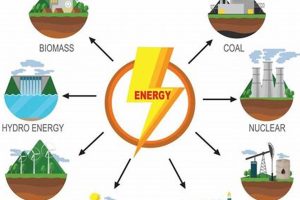
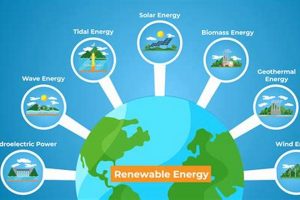
Harnessing power from naturally replenishing resources stands as a cornerstone of sustainable energy strategies. Such resources, unlike finite fossil fuels, offer a continuous supply of energy, minimizing environmental impact and promoting long-term energy security. Examples include solar radiation, wind currents, flowing water, geothermal heat, and biomass.
The utilization of these sustainable alternatives is vital for mitigating climate change by reducing greenhouse gas emissions associated with traditional energy production. Furthermore, these energy sources contribute to decreased air and water pollution, improve public health, and create economic opportunities through technological advancements and job creation. Historically, societies have relied on renewable resources like wind and water power, but modern technologies have significantly enhanced the efficiency and scalability of these methods.
Considering these factors, the following sections will delve into specific renewable energy technologies, exploring their current status, future potential, and the challenges associated with their widespread adoption.
Optimizing Renewable Energy Integration
Effective integration of sustainable power generation necessitates careful planning and strategic implementation across various sectors. The following recommendations outline key considerations for maximizing the benefits of readily available, naturally recurring power sources.
Tip 1: Prioritize Grid Modernization: Investment in smart grid technologies is crucial for efficiently managing the variable nature of renewable energy sources. Upgrading transmission infrastructure enables better distribution and storage of intermittent power generation.
Tip 2: Implement Supportive Policies: Governments should enact policies that incentivize the development and deployment of renewable energy projects. Tax credits, feed-in tariffs, and renewable portfolio standards can stimulate investment and accelerate adoption.
Tip 3: Foster Technological Innovation: Continuous research and development are essential for improving the efficiency and reducing the cost of renewable energy technologies. Investing in areas such as energy storage, advanced materials, and grid management software is paramount.
Tip 4: Diversify the Energy Mix: Relying on a single renewable energy source can expose the energy system to vulnerabilities. Diversifying the renewable energy portfolio across various technologies, such as solar, wind, hydro, and geothermal, enhances resilience and stability.
Tip 5: Promote Community Engagement: Engaging local communities in the planning and implementation of renewable energy projects can foster support and address potential concerns. Community ownership models can also distribute economic benefits more widely.
Tip 6: Enhance Energy Storage Capabilities: Addressing the intermittency of some options requires developing robust energy storage solutions. Batteries, pumped hydro storage, and thermal energy storage can buffer fluctuations in renewable energy supply.
Tip 7: Standardize Interconnection Procedures: Streamlining the process for connecting renewable energy projects to the grid can reduce costs and delays. Standardized interconnection agreements and transparent regulatory frameworks are essential.
These recommendations provide a framework for enhancing the effective utilization of sustainable power resources. By adopting these strategies, societies can move towards a cleaner, more secure, and sustainable energy future.
The subsequent sections will provide a deeper dive into specific renewable energy technologies, exploring their unique characteristics and applications.
1. Scalability

Scalability, in the context of renewable energy sources, refers to the capacity for widespread deployment and expansion to meet growing energy demands. Its relevance lies in determining whether a particular energy source can transition from niche applications to large-scale contributions to the global energy mix, effectively displacing fossil fuels.
- Resource Abundance and Geographic Distribution
A scalable renewable energy source must be derived from resources that are abundant and widely distributed across the globe. Solar radiation and wind currents, for example, are available in varying degrees in most regions, facilitating distributed generation and reducing reliance on centralized infrastructure. A resource concentrated in a few locations limits scalability due to geopolitical constraints and transmission challenges.
- Technological Adaptability and Deployment
Scalability is also dependent on the adaptability of the associated technologies to diverse environments and application scales. Solar photovoltaic (PV) systems can be deployed on rooftops, integrated into building facades, or constructed as large-scale solar farms. This versatility enhances their scalability compared to technologies that require specific geological or geographical conditions, such as geothermal or tidal energy.
- Economic Feasibility at Scale
The economic viability of a renewable energy source must improve as deployment scales up. Economies of scale, driven by manufacturing advancements, standardized installation practices, and optimized supply chains, are essential for reducing the levelized cost of energy (LCOE). This cost reduction is critical for widespread adoption and competitiveness against conventional energy sources.
- Grid Integration and Storage Solutions
A scalable renewable energy source must be effectively integrated into existing grid infrastructure and supplemented by robust energy storage solutions. Intermittency challenges associated with solar and wind power require advanced grid management systems, demand response programs, and energy storage technologies, such as batteries or pumped hydro storage, to ensure reliable power supply at scale.
The scalability of a renewable energy source is a critical determinant of its potential to contribute significantly to a sustainable energy future. Resources that are abundant, adaptable, economically viable, and readily integrated into existing energy systems hold the greatest promise for meeting growing energy demands while minimizing environmental impact. Further development and deployment strategies should prioritize these scalable options to accelerate the transition towards a cleaner energy landscape.
2. Availability

Availability, in the context of renewable energy, defines the extent to which a particular resource is consistently and reliably accessible for energy generation. Its influence on determining the “most important renewable energy source” stems from the necessity for a dependable energy supply, regardless of fluctuating environmental conditions or geographical limitations.
- Geographic Distribution and Resource Intensity
The geographical distribution of a renewable energy resource significantly impacts its overall availability. Solar irradiance, while present globally, varies significantly by latitude, cloud cover, and seasonal changes. Similarly, wind resources are concentrated in specific regions with consistent wind patterns. A resource that is widely distributed, even with varying intensity, offers greater availability due to reduced reliance on localized optimal conditions. Conversely, concentrated resources necessitate extensive transmission infrastructure, potentially limiting overall accessibility.
- Temporal Consistency and Predictability
Temporal consistency refers to the predictability and stability of resource availability over time. Solar energy availability fluctuates daily and seasonally, requiring accurate forecasting for effective grid management. Wind energy exhibits similar variability, although short-term forecasting has improved significantly. Geothermal energy offers relatively consistent availability, as does hydroelectric power in regions with stable water sources. Predictable availability enhances the dispatchability of a resource, increasing its reliability as an energy source.
- Technological Accessibility and Extraction
The ease and cost-effectiveness with which a renewable energy resource can be harnessed directly impact its practical availability. While solar radiation is theoretically abundant, the efficiency and cost of photovoltaic panels influence the economic viability of capturing that energy. Similarly, geothermal energy requires specific geological conditions and drilling technologies, limiting accessibility despite the resource’s potential. The maturity and affordability of extraction technologies are thus crucial factors in determining the usable availability of a resource.
- Infrastructure and Transmission Capacity
Even if a renewable energy resource is geographically abundant and temporally consistent, its actual availability is constrained by the existing infrastructure for transmission and distribution. Regions with high wind potential, for instance, may lack the necessary transmission lines to transport the generated electricity to demand centers. Upgrading and expanding grid infrastructure are therefore essential for maximizing the available renewable energy resources and ensuring a reliable energy supply.
The interplay of geographic distribution, temporal consistency, technological accessibility, and infrastructure capacity collectively determines the practical availability of renewable energy resources. Evaluating these facets is critical for identifying which resource can reliably contribute to a sustainable energy system and ultimately qualify as a “most important renewable energy source” in specific contexts.
3. Environmental Impact

The evaluation of environmental impact is intrinsically linked to the designation of any renewable energy source as paramount. All energy generation methods exert some influence on the environment, ranging from land use and resource extraction to emissions and waste disposal. A truly crucial renewable energy source necessitates a minimal negative environmental footprint relative to its energy output and in comparison to conventional fossil fuels. Cause-and-effect relationships are paramount; the extraction of materials for solar panels, for example, can lead to habitat disruption, while wind turbine placement may affect bird and bat populations. Understanding these consequences is crucial for informed decision-making.
The significance of minimizing environmental impact is underscored by real-world examples. Hydropower, while a renewable resource, can drastically alter river ecosystems, affecting fish migration and water quality. Similarly, biomass energy, if sourced unsustainably, can contribute to deforestation and carbon emissions. In contrast, solar and wind power, when appropriately sited and managed, exhibit lower lifecycle environmental impacts compared to fossil fuels. The practical implication of this understanding involves rigorous environmental assessments, sustainable sourcing practices, and mitigation strategies to minimize potential harm associated with renewable energy deployment. This includes responsible land management, waste recycling programs, and innovative technological developments to reduce material use and improve efficiency.
In conclusion, the determination of a “most important renewable energy source” cannot occur without thorough consideration of its environmental implications. Balancing energy needs with ecological preservation requires a holistic approach that acknowledges both the benefits and drawbacks of each renewable energy technology. Overcoming challenges associated with environmental impact necessitates continued research, policy development, and a commitment to sustainable practices to ensure that renewable energy deployment contributes to a healthier planet.
4. Economic Viability

Economic viability serves as a critical determinant in assessing any renewable energy source’s potential to become a substantial component of the global energy landscape. A resource, irrespective of its environmental benefits or technological feasibility, must demonstrate competitiveness with traditional energy sources to achieve widespread adoption and displace reliance on fossil fuels.
- Levelized Cost of Energy (LCOE)
The Levelized Cost of Energy (LCOE) represents the average net present cost of electricity generation for a plant over its lifetime, encompassing all costs from construction to decommissioning. A renewable energy source with a lower LCOE is more economically attractive. For example, the declining LCOE of solar photovoltaic (PV) technology has enabled its rapid expansion in many regions, making it cost-competitive with coal and natural gas power plants. This cost reduction is directly correlated to its increasing importance in energy portfolios.
- Capital Investment and Financing
The upfront capital investment required for renewable energy projects, such as wind farms or solar power plants, can be substantial. Access to affordable financing and investment incentives plays a pivotal role in making these projects economically viable. Government subsidies, tax credits, and favorable loan terms can significantly reduce the financial burden on developers and investors, thereby accelerating the deployment of renewable energy technologies and elevating their importance in the energy mix. Examples include feed-in tariffs and renewable portfolio standards.
- Operation and Maintenance Costs
While renewable energy sources typically have lower fuel costs compared to fossil fuels, operation and maintenance (O&M) expenses must be considered. Wind turbines, for instance, require periodic maintenance and repairs, while solar PV systems may experience degradation over time. Minimizing O&M costs through technological advancements, predictive maintenance strategies, and efficient supply chains is crucial for enhancing the economic viability of renewable energy projects and ensuring their long-term competitiveness.
- Externalities and Social Costs
Economic assessments of renewable energy sources must account for externalities and social costs associated with both renewable and non-renewable energy production. Fossil fuels generate air pollution, greenhouse gas emissions, and other environmental damages, imposing significant social costs. Incorporating these externalities into economic analyses can enhance the competitiveness of renewable energy sources by reflecting the true cost of conventional energy production. Carbon pricing mechanisms, such as carbon taxes or cap-and-trade systems, can internalize these costs and further incentivize the adoption of cleaner energy technologies.
The economic viability of renewable energy sources, as defined by LCOE, access to financing, O&M costs, and the incorporation of externalities, is a decisive factor in determining their potential to become a prominent component of a sustainable energy future. Renewable energy sources that demonstrate economic competitiveness and offer attractive investment opportunities are more likely to be widely adopted, contributing significantly to mitigating climate change and enhancing energy security.
5. Technological Maturity

The technological maturity of a renewable energy source is a pivotal factor in determining its viability and potential for widespread adoption. It reflects the level of development, refinement, and proven performance of the technologies used to harness and convert renewable resources into usable energy. This maturity directly influences the reliability, efficiency, cost-effectiveness, and scalability of the energy source, thereby impacting its designation as a key contributor to a sustainable energy future.
- Reliability and Performance Track Record
A mature technology possesses a well-established track record of reliable operation under diverse environmental conditions. For example, solar photovoltaic (PV) technology has demonstrated consistent performance over decades, with established degradation rates and predictable energy output. Conversely, some emerging renewable technologies may lack sufficient operational data to accurately assess their long-term reliability, hindering their immediate deployment at scale. The proven reliability of a technology significantly increases investor confidence and accelerates its integration into the energy grid.
- Efficiency of Energy Conversion
Technological maturity correlates directly with the efficiency of converting renewable resources into usable energy. Mature technologies typically exhibit higher conversion efficiencies, maximizing energy output from a given resource input. For instance, advanced wind turbine designs, employing aerodynamic optimization and sophisticated control systems, achieve higher energy capture rates compared to older models. Efficiency improvements reduce the land footprint and material requirements per unit of energy generated, contributing to lower environmental impacts and improved economic viability.
- Standardization and Manufacturing Scalability
Mature technologies benefit from well-defined industry standards and scalable manufacturing processes, facilitating mass production and cost reductions. Standardized components and installation procedures streamline project development and reduce technical risks. Solar PV modules, for example, are manufactured using highly automated processes, resulting in significant cost declines over the past decade. Scalable manufacturing ensures that the technology can meet growing demand without encountering significant supply chain bottlenecks or cost escalation.
- Integration with Existing Infrastructure
Technological maturity also encompasses the ease with which a renewable energy source can be integrated into existing energy infrastructure, including transmission grids and distribution networks. Mature technologies typically have established interconnection standards and grid management protocols, enabling seamless integration without compromising grid stability. Solar and wind power, for example, have developed advanced grid integration solutions, such as smart inverters and forecasting tools, to mitigate intermittency challenges. The ability to integrate smoothly into existing systems reduces the need for costly infrastructure upgrades and facilitates broader adoption.
The technological maturity of a renewable energy source is thus a multifaceted attribute that influences its reliability, efficiency, scalability, and grid integration capabilities. Technologies with a proven track record, high conversion efficiencies, standardized manufacturing processes, and seamless grid integration are better positioned to contribute significantly to a sustainable energy future and are more likely to be considered critical components of the evolving energy landscape.
6. Grid Integration
Effective grid integration is paramount when considering the potential of any renewable energy source to become a primary contributor to energy supply. The capacity to seamlessly and reliably integrate fluctuating sources into existing electrical grids dictates their viability and overall impact on energy security and sustainability.
- Intermittency Management
The intermittent nature of renewable resources, such as solar and wind, poses significant challenges to grid stability. Managing this variability requires advanced forecasting techniques, flexible generation resources, and robust energy storage solutions. The “most important renewable energy source” must be amenable to effective intermittency management strategies to ensure consistent power delivery and prevent grid disruptions. For example, regions heavily reliant on wind power require accurate wind forecasting models and fast-ramping natural gas plants to compensate for sudden drops in wind generation. Without these capabilities, the value of the renewable resource is diminished.
- Transmission Infrastructure Development
Access to adequate transmission infrastructure is essential for transporting renewable energy from generation sites to demand centers. Many renewable energy resources are located in remote areas, necessitating significant investments in new transmission lines and upgrades to existing infrastructure. The “most important renewable energy source” must be strategically located or have access to efficient transmission networks to minimize transmission losses and ensure reliable power delivery. For instance, large-scale solar farms in desert regions require high-voltage transmission lines to transport electricity to urban areas hundreds of miles away. Insufficient transmission capacity can severely limit the utilization of otherwise abundant renewable resources.
- Grid Modernization and Smart Grid Technologies
Integrating renewable energy sources effectively requires modernizing existing electrical grids with smart grid technologies. Smart grids utilize advanced sensors, communication networks, and control systems to optimize power flow, enhance grid stability, and enable real-time monitoring of grid conditions. The “most important renewable energy source” should be compatible with smart grid technologies to maximize its contribution to a resilient and efficient energy system. Smart inverters, for example, can provide voltage and frequency support to the grid, while advanced metering infrastructure allows for demand response programs that can shift electricity consumption to match renewable energy availability.
- Energy Storage Integration
Energy storage technologies, such as batteries, pumped hydro storage, and thermal energy storage, play a crucial role in mitigating the intermittency of renewable energy sources and enhancing grid reliability. The “most important renewable energy source” will likely require integration with energy storage systems to provide dispatchable power and ensure a stable energy supply. For example, pairing solar PV with battery storage allows for the delivery of electricity during peak demand hours, even when the sun is not shining. The ability to effectively integrate energy storage solutions is essential for maximizing the value and reliability of renewable energy resources.
The successful grid integration of renewable energy sources is therefore contingent on addressing intermittency, investing in transmission infrastructure, modernizing grid technologies, and integrating energy storage solutions. Without adequate attention to these factors, the potential of any renewable energy source, regardless of its inherent benefits, to become a primary contributor to the energy mix will be severely constrained.
Frequently Asked Questions About Renewable Energy Prioritization
This section addresses common inquiries concerning the relative importance of different renewable energy resources. The aim is to provide clear, concise answers based on current scientific understanding and technological developments.
Question 1: What factors determine if a renewable energy source is considered more significant than others?
The assessment considers a multitude of factors, including scalability, availability, environmental impact, economic viability, technological maturity, and ease of grid integration. A source excelling in several of these categories holds a higher overall significance.
Question 2: Is one renewable energy source universally recognized as the most important?
No single renewable energy source can be universally designated as most important. The optimal mix of renewable resources varies significantly based on geographic location, resource availability, economic conditions, and policy priorities within a specific region or country.
Question 3: How does technological advancement influence the prioritization of renewable energy sources?
Technological innovation plays a critical role in improving the efficiency, reducing the costs, and enhancing the grid integration capabilities of renewable energy technologies. A source benefiting from rapid technological advancements may rise in importance over time.
Question 4: What role do government policies and incentives play in determining the importance of renewable energy sources?
Government policies, such as tax credits, feed-in tariffs, and renewable portfolio standards, can significantly influence the economic viability and deployment of renewable energy technologies. Supportive policies can elevate the importance of specific resources by creating favorable market conditions.
Question 5: How does energy storage impact the assessment of renewable energy source importance?
The availability of cost-effective and scalable energy storage solutions is essential for mitigating the intermittency challenges associated with certain renewable energy sources, such as solar and wind. Effective energy storage can enhance the reliability and dispatchability of these resources, increasing their overall importance.
Question 6: What are the long-term implications of prioritizing specific renewable energy sources over others?
Prioritizing certain renewable energy sources can lead to both positive and negative long-term consequences. A diversified approach, incorporating a mix of renewable resources tailored to local conditions, is generally recommended to mitigate risks and maximize the benefits of renewable energy deployment.
In conclusion, determining the “most important renewable energy source” involves a complex evaluation of various factors, with no single solution applicable to all circumstances. A comprehensive and adaptive approach is crucial for harnessing the full potential of renewable energy resources.
The subsequent sections will explore case studies of renewable energy deployment in different regions, highlighting the unique challenges and opportunities associated with each location.
Conclusion
This exploration has demonstrated that the “most important renewable energy source” is not a singular entity, but rather a confluence of factors dependent on specific contexts. Scalability, availability, environmental impact, economic viability, technological maturity, and grid integration all contribute to a nuanced understanding. No single resource universally satisfies all criteria. Thus, generalized pronouncements regarding its absolute importance are inherently flawed. The optimal solution lies in a tailored approach.
Future energy strategies must prioritize comprehensive assessments that consider both global needs and localized resources. Continued investment in research, policy development, and infrastructure improvements will be critical to maximizing the potential of all renewable energy sources, moving societies closer to a sustainable and secure energy future. The responsibility for informed decision-making regarding energy investments rests with policymakers, industry leaders, and individual citizens alike.