


This public sector financial institution, established in 2011 under the Ministry of New and Renewable Energy (MNRE), plays a pivotal role in India’s transition to sustainable energy. It provides financial assistance for... Read more »
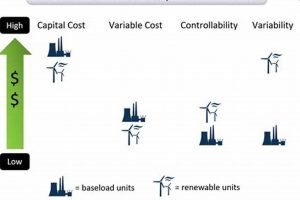
The minimum level of demand on an electrical grid over a 24-hour period must be constantly supplied. Traditionally, this steady, always-on supply has been met by sources like coal, nuclear, or large... Read more »

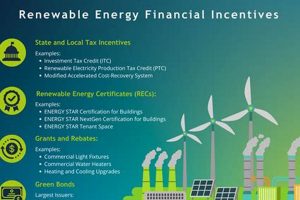
Governments frequently employ financial mechanisms to stimulate the growth and adoption of sustainable power sources. These mechanisms can take various forms, such as tax credits, rebates, exemptions, and accelerated depreciation allowances, often... Read more »

This organization operates within the rapidly expanding renewable energy sector. It focuses on the development, application, and potentially the manufacturing of technologies that harness sustainable sources like solar, wind, hydro, or geothermal... Read more »
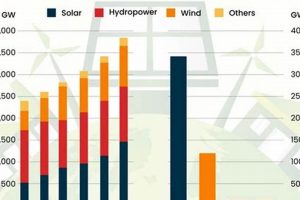
Iceland’s electricity and heat generation relies almost entirely on renewable sources. Hydropower contributes significantly to electricity production, while geothermal resources dominate heating. A small fraction of the nation’s energy still comes from... Read more »
This executive department within the United States federal government bears responsibility for the nation’s nuclear security, scientific discovery, energy independence, and environmental cleanup. It oversees a vast network of national laboratories and... Read more »
Programs focused on sustainable power generation, including solar, wind, hydro, and biomass energy, are offered by numerous institutions across the United Kingdom. These educational opportunities range from short, focused certifications to postgraduate... Read more »
The Japanese company Eneos Holdings, Inc. is actively involved in the development and distribution of sustainable power sources, including solar, wind, and biomass energy. For example, the company operates solar power plants... Read more »
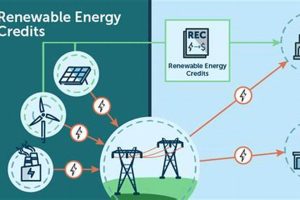
Renewable energy certificates (RECs), also known as green tags or tradable renewable certificates (TRCs), represent the environmental attributes of one megawatt-hour (MWh) of electricity generated from a renewable source. These attributes can... Read more »
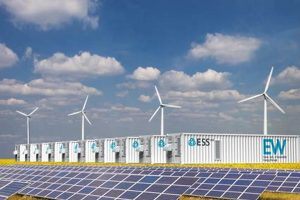
Energy storage systems (ESS) paired with renewable sources like solar and wind power offer a solution to the intermittent nature of these resources. For example, excess solar energy generated during peak sunlight... Read more »