

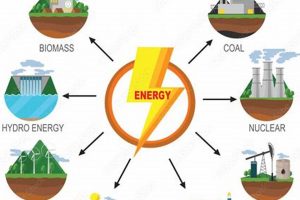

Energy resources are broadly categorized into two fundamental types: those that replenish naturally over relatively short periods, and those that exist in finite quantities and are depleted with use. Examples of the... Read more »
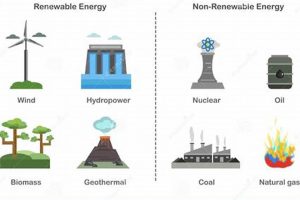
Resources are categorized based on their capacity for replenishment. Those that naturally regenerate at a rate equal to or faster than their consumption are considered sustainable, while those with finite reserves that... Read more »

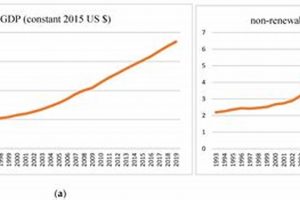
The utilization of finite resources like coal, oil, and natural gas for power generation and other applications represents a significant portion of global energy use. For example, burning coal to generate electricity... Read more »
Continuously available renewable power sources, such as hydropower, geothermal, and biomass, provide a consistent energy supply regardless of time of day or weather conditions. For example, a geothermal power plant harnesses the... Read more »
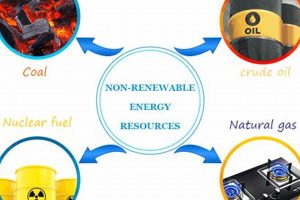
Crude oil, a naturally occurring liquid fossil fuel found in geological formations beneath the Earth’s surface, is refined to produce a wide range of products, including gasoline, diesel, kerosene, heating oil, and... Read more »
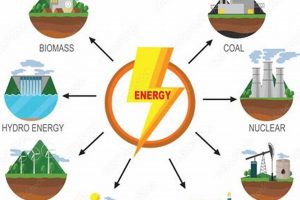
Fossil fuels (coal, oil, and natural gas) and nuclear energy are finite resources that significantly impact the environment during extraction, processing, and utilization. Burning fossil fuels releases greenhouse gases, primarily carbon dioxide,... Read more »
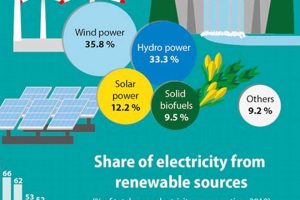
The cost comparison between energy derived from finite resources like fossil fuels (coal, oil, and natural gas) and that generated from replenishable sources like solar, wind, and hydro is a complex issue... Read more »
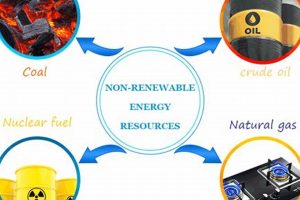
The detrimental effects of non-renewable energy sources stem primarily from their finite nature and the environmental consequences associated with their extraction and utilization. Fossil fuels, such as coal, oil, and natural gas,... Read more »
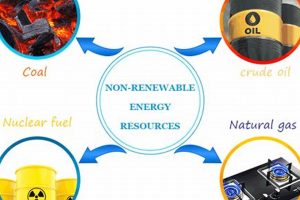
Resources like coal, oil, and natural gas are finite and deplete over time with use. These fuels were formed from ancient organic matter subjected to immense pressure and heat over millions of... Read more »
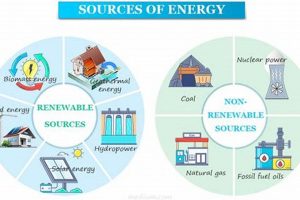
Finite energy resources derived from geological processes over millions of years are commonly categorized into distinct groups based on their origin and extraction methods. These include fossil fuels like coal, petroleum, and... Read more »