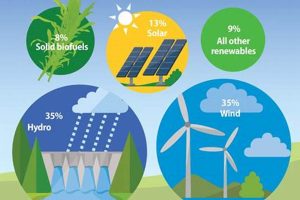
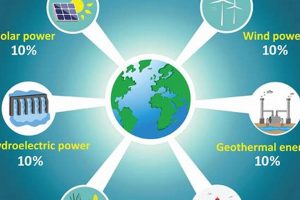
The economic viability of diverse methods for generating power from replenishable resources is a subject of ongoing analysis. Determining the most cost-effective option necessitates considering factors such as geographic location, technological advancements, resource availability, and specific project requirements. Solar photovoltaic (PV) technology, for instance, involves converting sunlight directly into electricity.
The pursuit of economically sound and environmentally conscious energy solutions is driven by the imperative to mitigate climate change, enhance energy security, and reduce reliance on finite fossil fuels. Historically, renewable technologies faced challenges regarding upfront investment costs. However, continuous innovation and economies of scale have significantly reduced these expenses, making them increasingly competitive with traditional energy sources.
The following sections will delve into a comparative analysis of various renewable options, examining their levelized cost of energy (LCOE), deployment challenges, and future prospects. Factors influencing the economic competitiveness of different technologies, such as government subsidies and carbon pricing mechanisms, will also be addressed.
Strategies for Evaluating Economical Renewable Energy Options
Assessing the most financially prudent approach to harnessing renewable energy requires careful consideration of multiple variables. Optimizing energy procurement and generation necessitates a strategic and informed approach.
Tip 1: Conduct a Thorough Resource Assessment: Evaluate the specific renewable resources available at the project site. Solar irradiance, wind speed, or hydro potential will significantly impact the energy output and overall economic viability.
Tip 2: Analyze Levelized Cost of Energy (LCOE): The LCOE provides a standardized metric for comparing the total cost of energy generation over the lifetime of a project. This includes capital costs, operational expenses, and fuel costs (if applicable).
Tip 3: Consider Government Incentives and Subsidies: Investigate available federal, state, and local incentives, such as tax credits, grants, and rebates. These financial mechanisms can significantly reduce the upfront investment and improve the project’s return on investment.
Tip 4: Explore Power Purchase Agreements (PPAs): PPAs offer a mechanism to secure long-term contracts with utilities or other entities to purchase the generated renewable energy. This provides revenue stability and reduces financial risk.
Tip 5: Evaluate Technological Advancements: Emerging renewable energy technologies, such as advanced solar panels or energy storage solutions, can offer improved efficiency and reduced costs. Continuously monitor technological developments to identify potential opportunities.
Tip 6: Incorporate Life Cycle Assessment: Analyze the environmental impact of the entire renewable energy system, from manufacturing and installation to operation and decommissioning. This holistic approach ensures long-term sustainability and cost-effectiveness.
By systematically implementing these strategies, stakeholders can make informed decisions regarding renewable energy investments, maximizing economic benefits while promoting environmental stewardship.
The subsequent sections will examine the ongoing innovations and policy changes that are shaping the future landscape of renewable energy economics.
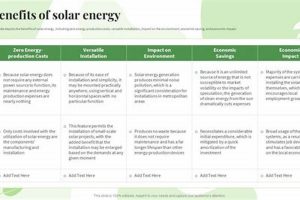
1. Solar Photovoltaic (PV) LCOE

The Levelized Cost of Energy (LCOE) for solar photovoltaic (PV) systems is a crucial determinant in assessing its economic competitiveness within the renewable energy sector. Declining PV LCOE directly contributes to its increasing attractiveness as a low-cost energy source. For example, utility-scale solar projects in sun-rich regions have achieved LCOEs that rival or even undercut those of traditional fossil fuel power plants. This cost reduction is primarily due to advancements in PV technology, manufacturing efficiencies, and economies of scale in deployment. Consequently, the lower the LCOE of solar PV, the greater its potential to be identified as the most economical renewable option in specific geographic and market contexts.
The impact of Solar PV LCOE extends beyond merely comparing costs. Its continuous decline incentivizes wider adoption, driving further innovation and market expansion. Consider Germany, where substantial government support for solar PV led to significant decreases in LCOE, making solar a substantial part of the nation’s energy mix. Moreover, falling LCOEs enhance the financial viability of distributed generation solar projects, enabling households and businesses to generate their own electricity at competitive rates. The long-term significance is that a lower LCOE can unlock new markets and facilitate the transition to a more sustainable energy future.
In summary, the LCOE of solar PV is a pivotal factor when evaluating renewable energy options. The continuous reduction in LCOE, driven by technological advancements and market forces, positions solar PV as an increasingly economically attractive alternative. While challenges such as intermittency and land use remain, the declining LCOE significantly contributes to the potential for solar PV to become the most cost-effective renewable energy source, thereby supporting global decarbonization efforts.
2. Wind Energy Scalability

Wind energy scalability significantly influences its potential to be the most economically viable renewable energy source. The inherent ability to expand wind energy production, from individual turbines to large-scale wind farms, is a key determinant in achieving economies of scale. Larger wind farms, for example, benefit from reduced per-unit costs associated with infrastructure development, operation, and maintenance. This scalability allows for the deployment of wind energy in a manner that can meet increasing energy demands while simultaneously driving down the overall cost of electricity generation. The relationship is causal: greater scalability fosters lower costs, thereby enhancing wind energy’s competitiveness.
The impact of wind energy’s scalability is evident in regions with high wind resource potential and supportive policy environments. For instance, the development of massive offshore wind farms in the North Sea has demonstrated the economic feasibility of large-scale wind energy production. These projects capitalize on consistent wind speeds and benefit from shared infrastructure and maintenance facilities, resulting in lower LCOE (Levelized Cost of Energy). Furthermore, technological advancements in turbine design, such as larger rotor diameters and increased hub heights, contribute to enhanced energy capture and reduced costs, further bolstering the scalability and economic viability of wind power.
In conclusion, wind energy scalability plays a crucial role in driving down costs and enabling widespread adoption, thus enhancing its potential to be the most economical renewable energy source. However, challenges such as grid integration, intermittency, and land use considerations must be addressed to fully realize the economic benefits of large-scale wind energy deployment. Overcoming these obstacles, coupled with continued technological innovation, will further solidify wind energy’s position in the global energy landscape.
3. Hydropower Geographic Constraints

Hydropower’s potential as a cost-effective renewable energy source is fundamentally limited by geographic factors. The construction and operation of hydroelectric facilities necessitate specific topographical and hydrological conditions, including significant elevation changes and consistent river flows. The presence of suitable dam sites, characterized by narrow valleys and stable geology, is crucial for reservoir creation and efficient power generation. This geographic dependence introduces a significant constraint: hydropower’s economic viability is inherently tied to locations possessing these favorable natural attributes. The absence of suitable geography precludes the development of hydropower, regardless of other potential benefits.
The economic ramifications of these constraints are substantial. The scarcity of ideal locations elevates project development costs, as projects in less-than-optimal areas often require extensive engineering solutions and environmental mitigation measures. For example, the construction of dams in environmentally sensitive regions can lead to habitat disruption, relocation of communities, and alteration of river ecosystems, resulting in increased costs associated with environmental impact assessments, mitigation strategies, and compensation programs. Furthermore, seasonal variations in river flow, influenced by precipitation patterns and climate change, can impact hydropower generation capacity, reducing the overall economic return on investment. The Itaipu Dam on the Parana River, while a significant power source, illustrates the challenges of managing variable water flows and their impact on energy production.
In conclusion, geographic constraints significantly impact hydropower’s viability as a low-cost renewable energy option. The requirement for specific terrain and hydrological conditions limits the geographic scope of hydropower development and increases project costs in less-than-ideal locations. Understanding these constraints is crucial for accurately assessing the economic potential of hydropower in the context of broader renewable energy strategies, necessitating a balanced consideration of geographic limitations, environmental impacts, and overall economic feasibility.
4. Biomass Resource Availability

Biomass resource availability directly impacts the economic viability of biomass energy, thus influencing whether it can be classified as a low-cost renewable option. A consistent and accessible supply of biomass feedstocks is a prerequisite for efficient and cost-effective biomass energy production. The nature and volume of available biomass resources, ranging from agricultural residues and forestry byproducts to dedicated energy crops, dictate the scale of potential bioenergy projects and the associated infrastructure investments. When abundant and readily accessible, biomass resources minimize transportation costs and ensure a stable fuel supply, lowering the overall levelized cost of energy (LCOE). In contrast, limited or geographically dispersed biomass resources can escalate costs, rendering biomass energy less competitive.
The impact of resource availability on the economic feasibility of biomass energy is evident in various regional examples. For instance, in regions with intensive agricultural activities, such as the Midwestern United States, abundant corn stover and other agricultural residues provide a relatively inexpensive feedstock for ethanol production and combined heat and power (CHP) systems. Conversely, in regions with limited agricultural land or significant forestry constraints, biomass energy projects may face higher feedstock costs and logistical challenges, impacting their economic competitiveness. The sustainability of biomass harvesting practices is also crucial. Unsustainable harvesting can deplete biomass resources, increase costs in the long term, and undermine the environmental benefits of biomass energy.
In conclusion, biomass resource availability is a key determinant of biomass energy’s economic viability. Abundant, accessible, and sustainably managed biomass resources are essential for minimizing costs and ensuring that biomass energy can contribute to a low-cost renewable energy portfolio. The practical significance of understanding this relationship lies in the need for careful resource assessments, sustainable harvesting practices, and optimized supply chain management to maximize the economic potential of biomass energy while mitigating its environmental impacts.
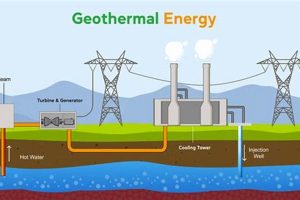
5. Geothermal Plant Efficiency

Geothermal plant efficiency is a critical factor in determining the economic viability of geothermal energy and its potential to be classified as a comparatively inexpensive renewable source. The efficiency with which a geothermal plant converts geothermal heat into electricity directly impacts the levelized cost of energy (LCOE). Higher efficiency translates to greater electricity output for a given amount of geothermal heat extracted, reducing the per-kilowatt-hour cost of electricity generation. This relationship is causal: enhanced efficiency leads to lower costs. The importance of geothermal plant efficiency is underscored by the fact that it is a primary driver of geothermal energy’s competitiveness with other renewable and conventional energy sources.
The practical significance of understanding geothermal plant efficiency is exemplified by the development of advanced geothermal technologies, such as enhanced geothermal systems (EGS) and binary cycle power plants. EGS aims to access geothermal resources in areas without naturally occurring hydrothermal reservoirs by creating artificial fractures in hot, dry rock and circulating water to extract heat. Binary cycle plants, in turn, utilize a secondary working fluid with a lower boiling point to convert geothermal heat into electricity, enabling the exploitation of lower-temperature geothermal resources. These technological advancements directly enhance geothermal plant efficiency and expand the geographic applicability of geothermal energy. The Nesjavellir Geothermal Power Plant in Iceland, for example, utilizes advanced technologies to maximize energy extraction and improve overall plant efficiency, demonstrating the real-world impact of efficiency enhancements.
In conclusion, geothermal plant efficiency is a key determinant of its economic competitiveness. Enhanced efficiency directly reduces the cost of electricity generation, increasing the potential for geothermal energy to be considered among the cheapest renewable energy sources. Addressing challenges related to reservoir management, technological innovation, and capital costs is crucial for maximizing geothermal plant efficiency and realizing its full economic potential in the global energy landscape. Continued research and development efforts focused on improving geothermal plant efficiency will contribute to the wider adoption of geothermal energy and its role in mitigating climate change.
Frequently Asked Questions
This section addresses common inquiries regarding the economic viability of various renewable energy sources, providing factual and unbiased information.
Question 1: What factors fundamentally determine the cost-effectiveness of a renewable energy source?
The cost-effectiveness is governed by resource availability, capital expenditures, operational costs, technology maturity, geographic suitability, government policies, and financing options. Resource availability directly influences fuel costs (if any), while capital and operational expenditures dictate the total investment and maintenance requirements. Technology maturity impacts efficiency and reliability, affecting long-term energy output. Favorable government policies, such as tax incentives and subsidies, can significantly reduce project costs.
Question 2: Is solar energy always the most economical renewable option?
Solar energy’s economic competitiveness varies geographically. In regions with high solar irradiance and supportive policies, solar photovoltaic (PV) systems can achieve low levelized costs of energy (LCOE). However, solar’s intermittency necessitates energy storage solutions or grid integration measures, potentially increasing overall costs. Other renewable sources, such as wind or hydropower, may be more cost-effective in regions with abundant wind resources or suitable hydroelectric potential.
Question 3: How do government subsidies and incentives affect the cost of renewable energy?
Government subsidies and incentives can significantly reduce the upfront costs and improve the financial viability of renewable energy projects. Tax credits, grants, feed-in tariffs, and renewable energy certificates (RECs) provide financial support that lowers the LCOE of renewable energy technologies. These policies incentivize investment in renewable energy and promote deployment, accelerating the transition to a low-carbon energy system. However, the long-term sustainability of these policies is subject to political and economic factors.
Question 4: What role does energy storage play in the economics of renewable energy?
Energy storage technologies, such as batteries and pumped hydro storage, mitigate the intermittency of renewable energy sources like solar and wind. Energy storage allows for the dispatch of renewable energy when it is most needed, improving grid stability and reliability. However, the high capital costs of energy storage systems can impact the overall economics of renewable energy projects. As storage technologies mature and costs decline, their integration will become increasingly important for enhancing the competitiveness of renewable energy.
Question 5: How does the scalability of a renewable energy technology influence its cost-effectiveness?
Scalability enables economies of scale, reducing per-unit costs for renewable energy technologies. Large-scale wind farms, for instance, benefit from shared infrastructure and maintenance facilities, lowering the LCOE. The scalability of solar PV manufacturing has also contributed to significant cost reductions in recent years. However, the scalability of some renewable sources, such as geothermal and hydropower, is constrained by geographic limitations and resource availability.
Question 6: How are technological advancements impacting the cost of renewable energy?
Technological advancements are continuously driving down the costs of renewable energy. Innovations in solar PV, wind turbine design, energy storage, and smart grid technologies are improving efficiency, reducing capital costs, and enhancing grid integration. These advancements contribute to the decreasing LCOE of renewable energy and increase its competitiveness with traditional energy sources. Continued investment in research and development is essential for unlocking further cost reductions and accelerating the deployment of renewable energy technologies.
In summary, the economic viability of diverse renewable energy sources depends on a complex interplay of factors, including resource availability, technology maturity, government policies, and grid infrastructure. A comprehensive understanding of these factors is crucial for making informed decisions regarding renewable energy investments.
The subsequent section will examine the potential future cost trajectories of various renewable energy options.
Determining the Most Economical Renewable Energy Source
The preceding analysis has explored the multifaceted factors influencing the economic viability of diverse renewable energy options. From solar photovoltaic LCOE declines to the geographic constraints affecting hydropower, each technology presents a unique set of economic considerations. Resource availability, scalability, technological advancements, and government policies collectively shape the cost landscape of renewable energy. Accurate assessment of these variables is critical for informed decision-making.
The pursuit of cost-effective renewable energy solutions remains paramount for achieving sustainable energy goals. While a single “cheapest” source is context-dependent, continued innovation, strategic policy implementation, and comprehensive resource assessments are essential for maximizing the economic benefits and promoting the widespread adoption of renewable energy technologies. Future advancements and a commitment to overcoming current limitations will ultimately determine the long-term economic trajectory of the global transition to renewable energy.