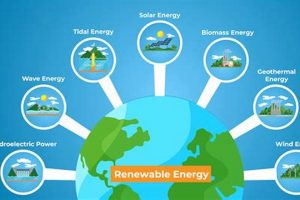
Energy derived from naturally replenishing resources, such as sunlight, wind, rain, tides, and geothermal heat, constitutes a vital component of sustainable energy practices. These resources are constantly replenished by natural processes, differentiating them from finite fossil fuels. Solar radiation, for example, provides the energy that can be harnessed through photovoltaic cells to generate electricity or used directly for heating.
The significance of utilizing sustainable power generation methods lies in their reduced environmental impact. They contribute substantially to mitigating climate change by minimizing greenhouse gas emissions, improving air quality, and conserving natural resources. Historically, these methods have been employed on a smaller scale, but advancements in technology and growing environmental awareness have led to increased adoption and deployment worldwide.
Several technologies exist to harness these resources effectively. Wind turbines convert kinetic energy into electricity, while hydropower utilizes the force of moving water. Geothermal plants tap into the Earth’s internal heat for electricity and heating. Biomass, derived from organic matter, offers another avenue for power generation, albeit one that requires careful management to ensure sustainability.
Harnessing Sustainable Resources
Optimizing the integration of sustainable energy systems requires careful planning and execution. The following guidance offers practical advice for those seeking to utilize these resources effectively.
Tip 1: Assess Resource Availability. Conduct a thorough evaluation of the potential of sustainable resources in a specific geographic location. Solar irradiance maps, wind speed data, and geothermal resource assessments are essential for informed decision-making.
Tip 2: Prioritize Energy Efficiency. Before investing in sustainable power generation, reduce energy consumption through efficiency measures. Improved insulation, efficient appliances, and optimized building design minimize energy demand, thereby decreasing the required capacity of the sustainable system.
Tip 3: Select Appropriate Technologies. Choose technologies best suited to the local environment and energy needs. Consider factors such as cost, reliability, environmental impact, and grid compatibility when evaluating different options like photovoltaic panels, wind turbines, and geothermal heat pumps.
Tip 4: Implement Energy Storage Solutions. Incorporate energy storage technologies, such as batteries or pumped hydro, to address the intermittency of some sustainable resources. Storage improves grid stability and allows for a more consistent energy supply.
Tip 5: Ensure Proper Maintenance. Develop a comprehensive maintenance plan to ensure the long-term performance and reliability of the sustainable energy system. Regular inspections, component replacements, and performance monitoring are crucial for maximizing efficiency and minimizing downtime.
Tip 6: Seek Expert Consultation. Engage qualified professionals for system design, installation, and maintenance. Experienced engineers and technicians can provide valuable insights and ensure that the system is properly implemented and operated.
Adherence to these principles facilitates effective implementation of sustainable energy technologies, contributing to energy security and environmental sustainability. Careful planning and informed decision-making are paramount for achieving optimal results.
Effective sustainable energy practices ultimately depend on informed decisions and committed actions.
1. Solar Irradiation

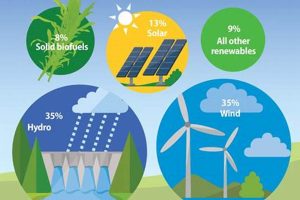
Solar irradiation, the power per unit area received from the Sun in the form of electromagnetic radiation, is a primary driver for several forms of sustainable power generation. Its intensity and duration directly influence the performance of photovoltaic (PV) systems and solar thermal technologies. Regions with higher solar irradiation levels, such as deserts or areas near the equator, offer greater potential for electricity generation through solar farms. In contrast, regions with lower average solar irradiation may still benefit from smaller-scale, distributed solar installations tailored to local energy demands. The efficient conversion of solar irradiation into usable energy is a crucial factor in determining the economic viability and environmental impact of solar power projects.
The relationship between solar irradiation and sustainable energy extends beyond electricity production. Concentrated solar power (CSP) plants, for example, use mirrors to focus solar irradiation onto a receiver, heating a working fluid to drive a turbine and generate electricity. Solar irradiation also plays a role in passive solar heating systems, which use the design and materials of buildings to capture and store solar energy for heating purposes. Furthermore, solar-driven desalination plants harness solar irradiation to purify water, addressing water scarcity in arid and semi-arid regions. The versatility of solar irradiation as an energy source underscores its importance in meeting diverse energy needs in a sustainable manner.
In summary, solar irradiation is a fundamental determinant of the potential for solar energy technologies. Understanding its regional variations and the efficiency with which it can be converted into usable energy is crucial for the effective planning and deployment of sustainable power solutions. While challenges related to intermittency and energy storage persist, the continued advancement of solar technologies and the increasing cost-competitiveness of solar power are driving its expansion as a key component of a global, sustainable energy system.
2. Wind Velocity
Wind velocity, defined as the speed of air movement, is a critical parameter in determining the energy yield of wind power systems, a prominent facet of sustainable power generation methods. The kinetic energy available in wind increases exponentially with velocity; consequently, even small variations in wind speed can significantly impact the amount of electricity produced by a wind turbine. Sites with consistently high average wind velocities are therefore preferred for wind farm development, maximizing energy capture and overall economic viability. For instance, offshore wind farms, located in areas with strong and consistent winds, often demonstrate higher capacity factors compared to onshore installations in less windy regions.
The relationship between wind velocity and power output is not linear; it follows a cubic relationship. This means that doubling the wind velocity results in an eightfold increase in theoretical power. However, practical considerations such as turbine efficiency and aerodynamic limits constrain the actual power output. Wind velocity data is gathered through meteorological measurements and sophisticated modeling techniques to identify optimal locations for wind turbine deployment. These data inform decisions regarding turbine selection, tower height, and overall wind farm layout, all aimed at extracting the maximum potential energy from the available wind resource.
In summary, wind velocity is a fundamental determinant of the effectiveness and economic feasibility of wind energy systems. Accurate assessment of wind resources and the strategic placement of wind turbines are essential for harnessing this resource effectively. While challenges associated with wind intermittency and grid integration remain, the continued advancement in turbine technology and resource assessment techniques continue to drive the growth of wind energy as a major component of a global sustainable energy portfolio.
3. Hydro Potential
Hydro potential, representing the exploitable energy within water resources due to elevation differences and flow rates, constitutes a significant element within the spectrum of sustainable power options. This potential is primarily harnessed through hydroelectric power plants, which convert the kinetic energy of flowing water into electricity. The availability of substantial hydro potential is geographically constrained, influenced by factors such as precipitation patterns, topography, and river flow characteristics. Regions with high rainfall, steep terrain, and large river systems typically exhibit the greatest hydro potential, making them suitable for large-scale hydroelectric projects. The existence of hydro potential directly enables the generation of sustainable electricity, contributing to reduced reliance on fossil fuels and mitigation of greenhouse gas emissions. Examples include the Three Gorges Dam in China, which utilizes the Yangtze River’s hydro potential to generate substantial electricity, and the numerous hydroelectric dams along the Columbia River in North America. The ability to accurately assess and effectively utilize hydro potential is crucial for optimizing sustainable power generation capacity.
Beyond large-scale dams, hydro potential can also be exploited through smaller-scale projects such as run-of-river systems and micro-hydro installations. Run-of-river systems divert a portion of a river’s flow through a turbine, minimizing environmental impact compared to large dams. Micro-hydro installations, often used in remote areas, provide decentralized electricity generation by harnessing the energy of small streams or waterfalls. These applications demonstrate the adaptability of hydro power to diverse geographic and environmental contexts. Furthermore, pumped hydro storage systems utilize hydro potential to store energy by pumping water uphill to a reservoir during periods of low energy demand, then releasing the water to generate electricity during peak demand. This addresses the intermittency challenges associated with other forms of sustainable power.
In summary, hydro potential is a valuable asset within the portfolio of sustainable power resources, enabling the generation of electricity through diverse technologies and scales. While environmental concerns associated with large dams require careful consideration, smaller-scale and innovative applications of hydro power offer sustainable alternatives for harnessing water’s energy. Maximizing the responsible use of hydro potential contributes significantly to achieving energy security and reducing the environmental footprint of power generation. Its effective integration, however, requires a nuanced approach, balancing energy needs with environmental preservation.
4. Geothermal Gradient

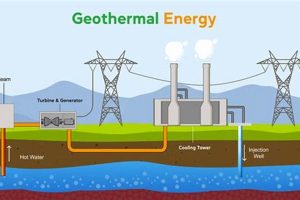
The geothermal gradient, defined as the rate of increasing temperature with respect to increasing depth in the Earth’s interior, is a fundamental factor in determining the viability and efficiency of geothermal energy extraction, a significant component within the spectrum of sustainable power generation methods.
- Deep Geothermal Resources
Deep geothermal resources, located several kilometers below the Earth’s surface, possess extremely high temperatures, suitable for electricity generation using conventional steam turbines. These resources are accessed through deep drilling, a costly and technically challenging endeavor. The geothermal gradient directly impacts the depth and cost of drilling required to reach temperatures sufficient for power generation. For instance, in regions with a high geothermal gradient, such as Iceland or parts of the western United States, shallower wells can access temperatures suitable for electricity production. Conversely, regions with lower geothermal gradients require significantly deeper and more expensive wells, potentially rendering geothermal power generation economically unfeasible.
- Shallow Geothermal Resources
Shallow geothermal resources, found closer to the Earth’s surface, exhibit lower temperatures but are still suitable for direct-use applications, such as heating and cooling. These resources are often accessed using geothermal heat pumps, which transfer heat between the Earth and buildings. The geothermal gradient determines the efficiency and effectiveness of geothermal heat pump systems. In regions with a higher geothermal gradient, the Earth’s temperature is warmer at shallower depths, resulting in more efficient heat pump operation. This reduces the amount of electricity required to operate the heat pump, thereby enhancing its overall sustainability. Examples include residential heating systems in countries like Sweden and Switzerland, where shallow geothermal resources are widely utilized.
- Enhanced Geothermal Systems (EGS)
Enhanced Geothermal Systems (EGS) are engineered reservoirs created in hot, dry rocks with insufficient permeability for conventional geothermal development. EGS involve fracturing the rock to create pathways for water to circulate and extract heat. The geothermal gradient is a critical factor in determining the potential of an EGS site. Higher geothermal gradients result in higher reservoir temperatures, leading to greater electricity generation potential. EGS technology holds promise for expanding the geographic availability of geothermal power, particularly in regions with low geothermal gradients where conventional geothermal resources are limited. Pilot EGS projects are underway in various countries, including Australia and the United States, aimed at demonstrating the technical and economic viability of this technology.
- Geothermal Resource Mapping
Geothermal resource mapping involves surveying and characterizing the subsurface temperature distribution to identify areas with high geothermal potential. The geothermal gradient is a key parameter used in these mapping efforts. By measuring the temperature at different depths, geoscientists can estimate the geothermal gradient and identify areas where geothermal resources are likely to be economically viable. This information is crucial for guiding exploration and development activities, reducing exploration risks, and optimizing the design of geothermal power plants. Governments and research institutions often conduct geothermal resource mapping programs to promote the development of geothermal energy.
In summary, the geothermal gradient plays a pivotal role in the feasibility and efficiency of geothermal energy projects. Its influence spans from the depth and cost of drilling for deep geothermal resources to the effectiveness of shallow geothermal heat pump systems and the potential of enhanced geothermal systems. Accurate assessment of the geothermal gradient is therefore essential for responsible development of geothermal energy, contributing to diversified sustainable power options.
5. Biomass Availability

Biomass availability represents a critical determinant in the feasibility and scalability of bioenergy as a sustainable power source. The term encompasses the quantity, quality, and accessibility of organic matter derived from plants and animals, which can be converted into various forms of energy. This resource directly impacts the potential for generating electricity, heat, and biofuels, establishing a foundational constraint on the viability of biomass-based energy projects. For instance, the successful operation of biomass power plants necessitates a consistent and reliable supply of feedstock, whether sourced from dedicated energy crops, agricultural residues, or forestry byproducts. In regions where biomass resources are scarce or geographically dispersed, the economic and logistical challenges associated with feedstock procurement can significantly hinder the development and deployment of bioenergy technologies. Therefore, a thorough assessment of biomass availability is paramount in evaluating the suitability of biomass as a source of renewable energy in a given context.
The impact of biomass availability extends beyond mere quantity. The composition and properties of the biomass also play a crucial role in determining the efficiency and environmental impact of bioenergy conversion processes. For example, woody biomass generally yields higher energy content compared to herbaceous biomass, making it more suitable for direct combustion or gasification. Similarly, agricultural residues such as corn stover or wheat straw can be utilized for biofuel production, but their composition and pretreatment requirements can influence the overall sustainability of the process. Furthermore, the sustainability of biomass harvesting practices is contingent on maintaining soil health, preserving biodiversity, and avoiding competition with food production. Sustainable biomass management strategies are therefore essential for ensuring that bioenergy contributes to genuine environmental benefits.
In conclusion, biomass availability functions as a foundational pillar in the development of sustainable power generation. Understanding the intricacies of biomass quantity, quality, and sustainable sourcing is critical for making informed decisions regarding bioenergy deployment. While biomass offers the potential to reduce reliance on fossil fuels and mitigate greenhouse gas emissions, its effective and responsible utilization hinges on a holistic approach that considers both energy production and environmental stewardship. Challenges such as land-use competition, feedstock logistics, and emissions from combustion processes require careful consideration to ensure that biomass contributes to a truly sustainable energy future.
6. Tidal Forces
Tidal forces, generated by the gravitational interaction between celestial bodies, particularly the Earth, the Moon, and the Sun, represent a predictable and consistent source of mechanical energy with potential for conversion into usable electricity. The cyclical rise and fall of sea levels, driven by these forces, create opportunities for harnessing this energy through various technological approaches.
- Tidal Barrage Systems
Tidal barrage systems function by constructing a dam, or barrage, across an estuary or bay, trapping water during high tide and releasing it through turbines during low tide. The outgoing water flow drives the turbines, generating electricity. An example is the Rance Tidal Power Station in France, which has been operational for several decades. The primary limitation of tidal barrage systems lies in their high initial construction costs and potential environmental impacts on estuarine ecosystems, including alterations to sediment transport and disruption of fish migration patterns.
- Tidal Stream Generators
Tidal stream generators operate on the principle of extracting kinetic energy from flowing tidal currents, similar to wind turbines. These generators are submerged underwater and are designed to harness the energy of strong tidal currents. The MeyGen project in Scotland is a notable example of a tidal stream generator project. Advantages of tidal stream generators include lower visual impact compared to tidal barrages and reduced environmental disturbance. However, challenges remain in terms of survivability in harsh marine environments and potential impacts on marine life.
- Tidal Lagoons
Tidal lagoons involve constructing artificial enclosures within the coastal environment to capture tidal water. These lagoons fill and empty with the tides, and the water flow can be used to drive turbines. Unlike tidal barrages, tidal lagoons can be constructed along open coastlines, potentially reducing environmental impacts on estuarine ecosystems. However, the economic viability and environmental consequences of large-scale tidal lagoon development remain subjects of ongoing research and debate.
- Dynamic Tidal Power
Dynamic tidal power is a theoretical concept that involves constructing long dams or barriers perpendicular to the coastline to exploit phase differences in tidal waves. The dams would create a head difference, which could then be used to drive turbines. This concept is still in the early stages of development, and its feasibility and environmental impacts are not yet fully understood. However, dynamic tidal power could potentially harness significant amounts of energy from tidal forces along coastlines with strong tidal currents.
Harnessing energy from tidal forces offers a predictable and renewable alternative to fossil fuels, but the technological and environmental challenges associated with tidal energy extraction require careful consideration. The successful implementation of tidal energy projects depends on balancing energy needs with environmental protection and economic feasibility, continuing the expansion of viable sources for sustainable power.
Frequently Asked Questions
The following questions address common inquiries regarding various sustainable energy sources, aiming to clarify their potential and limitations.
Question 1: How is solar irradiation converted into usable energy?
Solar irradiation is converted into usable energy through photovoltaic cells that directly convert sunlight into electricity via the photovoltaic effect, or through concentrated solar power systems that use mirrors to focus sunlight to heat a working fluid, which then drives a turbine to generate electricity.
Question 2: What factors determine the suitability of a location for wind power generation?
The suitability of a location for wind power generation is primarily determined by consistent wind velocity, accessibility for construction and maintenance, proximity to transmission infrastructure, and minimal environmental and social impact.
Question 3: What are the primary environmental concerns associated with hydroelectric power?
Primary environmental concerns associated with hydroelectric power include habitat destruction due to dam construction, alteration of river flow regimes affecting aquatic ecosystems, displacement of human populations, and greenhouse gas emissions from reservoirs.
Question 4: What are the limitations of geothermal energy as a sustainable power source?
Limitations of geothermal energy include the geographic constraints of suitable geothermal resources, high initial capital costs for drilling and infrastructure development, potential for induced seismicity, and the release of greenhouse gases such as hydrogen sulfide.
Question 5: How can biomass be sustainably managed for energy production?
Sustainable biomass management involves practices such as using agricultural residues and forestry waste, cultivating dedicated energy crops on marginal lands, ensuring soil health and biodiversity, and employing efficient conversion technologies to minimize emissions and maximize energy output.
Question 6: What challenges hinder the widespread adoption of tidal energy technologies?
Challenges hindering the widespread adoption of tidal energy technologies include high capital costs, technical complexities in designing and maintaining systems in harsh marine environments, potential impacts on marine ecosystems, and limited availability of suitable sites with strong tidal currents.
In essence, the effective implementation of these technologies depends on careful planning, environmental stewardship, and technological advancements to overcome existing limitations.
The following section explores practical applications and considerations for individuals and organizations seeking to utilize sustainable power resources.
What are some sources of renewable energy
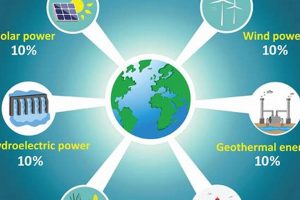
The preceding analysis has examined the diverse options available for sustainable power generation. Solar irradiation, wind velocity, hydro potential, geothermal gradient, biomass availability, and tidal forces each present unique opportunities and challenges. The effective utilization of these resources demands a comprehensive understanding of their inherent characteristics, geographical constraints, and environmental implications. Technological advancements and strategic resource management are essential for maximizing the contribution of these sources to the global energy supply.
The transition towards a sustainable energy future necessitates a sustained commitment to research, development, and deployment of renewable technologies. Policymakers, researchers, and industry stakeholders must collaborate to address the technical, economic, and social barriers hindering the widespread adoption of sustainable power generation. Only through collective action can the full potential of these renewable options be realized, securing a cleaner and more sustainable energy future for generations to come.