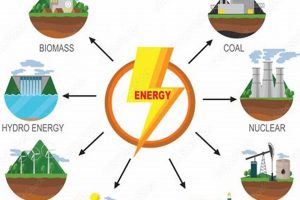
The legislative framework in Germany designed to promote electricity generation from renewable sources is a cornerstone of the nation’s energy policy. It mandates priority grid access for renewable energy and establishes feed-in tariffs, guaranteeing producers a fixed price for each kilowatt-hour of electricity they generate. This mechanism has spurred significant investment in solar, wind, biomass, and hydropower technologies across the country.
This legal structure has demonstrably accelerated the expansion of green energy production within Germany. The resulting decrease in reliance on fossil fuels has contributed to reduced carbon emissions and fostered the development of a domestic renewable energy industry, creating jobs and driving technological innovation. Its implementation has also encouraged decentralization of the energy supply, enhancing energy security.
The impact of this energy policy extends beyond environmental benefits. It influences the economics of energy production, the structure of the power grid, and the evolution of related technologies. Further discussion will delve into the specific mechanisms within this law, its economic consequences, and its ongoing challenges in the context of Germany’s broader energy transition.
Key Considerations Regarding the German Renewable Energy Sources Act
The following points offer essential insights for stakeholders involved in or affected by the German legislation designed to support green electricity production.
Tip 1: Understand Priority Grid Access. The law mandates that electricity from renewable sources receives priority access to the power grid. This ensures that green energy is utilized before energy from conventional sources, impacting dispatch protocols and grid management strategies.
Tip 2: Analyze Feed-in Tariff Structures. The Act establishes fixed feed-in tariffs (FITs) for renewable electricity. Careful evaluation of these tariffs, their duration, and any modifications is critical for project developers and investors to accurately assess the financial viability of renewable energy projects.
Tip 3: Monitor Legislative Amendments. The legal framework is subject to periodic revisions and amendments. Staying informed about these changes is crucial for ensuring compliance and optimizing investment strategies. For example, adjustments to FIT rates or eligibility criteria can significantly impact project profitability.
Tip 4: Assess Technological Implications. The Acts incentives drive innovation in renewable energy technologies. Understanding these technological trends and their potential impact on grid stability and cost-effectiveness is essential for utilities and policymakers.
Tip 5: Consider the Impact on Energy Security. By promoting domestic renewable energy production, the law reduces reliance on imported fossil fuels. This enhancement of energy security is a key strategic benefit that should be factored into energy policy decisions.
Tip 6: Evaluate the Role of Auctions. In recent years, auctions have become increasingly prominent in the allocation of support for renewable energy projects. Familiarity with the auction mechanisms, bidding rules, and eligibility criteria is necessary for developers seeking to secure funding.
Tip 7: Examine the Effects on Electricity Prices. While promoting renewable energy, the Act also influences electricity prices. Analyzing these effects is important for understanding the overall economic impact of the legislation on consumers and businesses.
These considerations are essential for navigating the complexities of the German green energy support scheme and maximizing its benefits while mitigating potential risks.
The subsequent sections will explore specific aspects of the Act in greater detail, providing a comprehensive understanding of its impact on the German energy landscape.
1. Feed-in Tariffs

Feed-in tariffs (FITs) are a central mechanism within the German legal framework designed to promote renewable energy. They represent a guaranteed payment rate for each unit of electricity generated from renewable sources and fed into the grid. This policy instrument is intrinsically linked to the Act’s goals of expanding green energy production and reducing dependence on fossil fuels.
- Guaranteed Price Security
FITs provide renewable energy producers with a fixed price for their electricity over a specified period, typically several years. This price security reduces investment risk, encouraging developers to invest in renewable energy projects. For instance, solar farms and wind parks benefit from predictable revenue streams, enabling them to secure financing and expand capacity.
- Differentiated Tariff Levels
The German legislation has employed differentiated FIT levels based on technology type, size of the installation, and commissioning date. Higher tariffs were initially offered to nascent technologies like solar to foster their development. Over time, as technologies matured and costs decreased, tariff levels have been adjusted downwards, promoting cost efficiency and market competitiveness.
- Impact on Renewable Energy Expansion
The FIT system has demonstrably contributed to the significant expansion of renewable energy in Germany. The stable revenue streams provided by FITs have incentivized both large-scale commercial projects and smaller-scale distributed generation, such as residential solar installations. This has resulted in a diversified renewable energy mix and increased overall green energy capacity.
- Transition to Auction-Based Systems
While FITs have been instrumental in the initial deployment of renewable energy, the German system has transitioned towards auction-based mechanisms for awarding support. In these auctions, renewable energy developers bid for contracts to receive a premium on top of the market price for their electricity. This shift aims to further enhance cost efficiency and integrate renewable energy more effectively into the market.
The evolution and ongoing refinement of FITs, and their eventual partial replacement by auction-based systems, reflect Germany’s commitment to adapting its renewable energy policy to optimize both environmental benefits and economic efficiency. The initial success of FITs in accelerating renewable energy deployment provides a valuable case study for other countries considering similar policies.
2. Grid Priority

The principle of grid priority, a core tenet of the German legislation supporting green energy, mandates that electricity generated from renewable sources be given precedence when injected into the power grid. This legally enforced directive addresses the intermittency and variability inherent in many renewable sources, particularly solar and wind power. Without such a priority, output from these sources could be curtailed when grid demand is met by conventional power plants, undermining the economic viability of renewable energy projects and hindering their growth. The implementation of grid priority is a direct consequence of the Act’s objectives to expand renewable energy production and reduce reliance on fossil fuels. Its presence significantly bolsters investor confidence in renewable energy projects, as it ensures that the electricity generated will be utilized, and revenue generated, before output from conventional power plants.
The practical effects of grid priority are evident in the daily operation of the German power grid. During periods of high wind or solar output, conventional power plants may need to reduce their generation to accommodate the influx of green electricity. This necessitates sophisticated grid management strategies, including advanced forecasting techniques to anticipate renewable energy output and flexible dispatch of conventional power plants to balance supply and demand. For instance, during a sunny and windy day, nuclear or coal plants may temporarily reduce their output to accommodate increased generation from solar panels and wind turbines, ensuring that the green energy is fully utilized. This requires coordination between grid operators, renewable energy producers, and conventional power plant operators, facilitated by real-time monitoring and control systems.
Grid priority, as enshrined within the legal framework, represents a fundamental pillar in Germany’s energy transition. While it presents challenges related to grid stability and the integration of intermittent resources, it is indispensable for achieving the Act’s goals of promoting renewable energy, reducing emissions, and fostering a sustainable energy future. The ongoing development of smart grid technologies and advanced energy storage solutions is crucial for further enhancing the effectiveness of grid priority and addressing the associated challenges, solidifying its role in the evolving energy landscape.
3. Renewable Expansion

The German legislation promoting green energy serves as a primary driver for renewable expansion within the country. This Act, through mechanisms such as feed-in tariffs and grid priority, creates a supportive framework that encourages investment and deployment of renewable energy technologies. The Acts provisions directly incentivize the growth of solar, wind, biomass, and hydropower capacity, resulting in a significant increase in the proportion of electricity generated from renewable sources. For example, the early adoption of generous feed-in tariffs for solar photovoltaic (PV) installations led to a boom in solar energy production, transforming Germany into a global leader in solar capacity, even despite its relatively limited sunshine hours. This exemplifies the causal relationship between the regulatory framework and the expansion of renewable energy infrastructure.
Renewable expansion, as a direct consequence of the legal stipulations, is essential for achieving broader energy policy objectives, including the reduction of greenhouse gas emissions and the enhancement of energy security. By increasing the share of renewable energy in the electricity mix, Germany reduces its reliance on fossil fuels, mitigating the environmental impact of energy production and lessening its vulnerability to geopolitical instability in energy markets. Furthermore, the growth of the renewable energy sector has created new industries and employment opportunities, stimulating economic growth and innovation. The practical significance of this expansion is evident in the reduced carbon intensity of electricity generation and the development of cutting-edge renewable energy technologies, such as advanced wind turbine designs and energy storage systems.
In summary, the expansion of renewable energy generation in Germany is inextricably linked to the supportive legal foundation. The Act’s financial incentives and regulatory guarantees create a favorable environment for renewable energy investments, fostering rapid growth in renewable energy capacity and contributing to the country’s climate and energy goals. While challenges related to grid integration and system stability remain, the Act has undeniably catalyzed a transformative shift towards a cleaner and more sustainable energy system. This expansion continues to evolve with ongoing policy adjustments and technological advancements, solidifying the Act’s enduring influence on the energy landscape.
4. Investment Security

The correlation between the German legislation designed to promote green energy and investment security is direct and substantial. The legal framework, through its structure and provisions, aims to reduce the perceived and actual risks associated with investing in renewable energy projects. Mechanisms such as guaranteed feed-in tariffs and priority grid access are specifically engineered to provide a predictable revenue stream and ensure market access for electricity generated from renewable sources. These provisions, in turn, foster investor confidence and encourage the allocation of capital to renewable energy infrastructure. For example, before the legal guarantee, investors hesitated to finance new wind farms due to uncertainty about whether the generated electricity could be sold at a profitable price. The law addressed this concern, allowing developers to secure financing based on guaranteed long-term revenue, thereby stimulating significant investment in wind energy projects across the country.
The assurance of investment security is paramount to the success of the German strategy for decarbonizing its energy sector. Without this security, the financial viability of renewable energy projects would be highly vulnerable to fluctuations in market prices for electricity and the availability of grid capacity. Such volatility would discourage both domestic and international investors, hindering the growth of the renewable energy sector and undermining the nation’s climate goals. Furthermore, the establishment of investment security fosters a stable and predictable regulatory environment, which attracts long-term capital investments in research and development, manufacturing, and deployment of advanced renewable energy technologies. This virtuous cycle of investment and innovation reinforces the competitiveness of the German renewable energy industry and contributes to the nation’s overall economic prosperity.
In conclusion, the legal backing for green energy plays a crucial role in establishing investment security for renewable energy projects. By mitigating risks and providing a stable framework for investment, the law has been instrumental in driving the expansion of renewable energy capacity and fostering a sustainable energy transition. However, ongoing challenges remain, including adapting the legal framework to evolving market conditions and ensuring that investment security does not come at the expense of economic efficiency. Successfully navigating these challenges will be essential for maintaining the long-term viability of the German renewable energy sector and achieving its ambitious climate goals.
5. Emission Reduction

The German legislation designed to promote green energy is fundamentally intertwined with the nation’s efforts to reduce greenhouse gas emissions. The shift from fossil fuels to renewable sources is a central strategy for achieving climate goals, and this legal framework directly supports that transition. The effectiveness of the Act can be partially evaluated by assessing its impact on emissions across various sectors.
- Power Sector Decarbonization
The Act incentivizes the generation of electricity from renewable sources, leading to a reduction in the reliance on coal-fired and gas-fired power plants. This shift directly lowers carbon emissions from the power sector, which is historically a major contributor to Germany’s greenhouse gas footprint. For instance, increased wind and solar capacity have displaced significant amounts of electricity generation from coal, resulting in measurable declines in CO2 emissions.
- Reduced Fossil Fuel Consumption
By prioritizing renewable energy in the electricity grid, the Act reduces the overall demand for fossil fuels. This decrease in demand translates into lower imports of coal, oil, and natural gas, reducing Germany’s carbon footprint associated with extraction, transportation, and combustion of these fuels. This effect is particularly pronounced during periods of high renewable energy output, when conventional power plants can be temporarily curtailed.
- Sector Coupling Effects
The increase in renewable electricity generation also creates opportunities for sector coupling, such as using surplus electricity to power electric vehicles or produce green hydrogen. These applications further reduce emissions in other sectors, such as transportation and industry, contributing to broader decarbonization efforts. For example, excess wind power can be used to electrolyze water, producing hydrogen that can be used as a fuel in industrial processes, thereby reducing reliance on fossil fuels.
- Long-Term Climate Benefits
The Act’s support for renewable energy technologies encourages innovation and cost reductions, making these technologies increasingly competitive over time. This creates a positive feedback loop, driving further renewable energy deployment and emissions reductions in the long term. Investments in renewable energy infrastructure today will continue to yield emission reduction benefits for decades to come, contributing to a more sustainable energy system.
The German legal framework is instrumental in fostering emission reductions across multiple sectors. The shift to renewable energy sources has led to a decline in fossil fuel consumption and promotes sector coupling, maximizing the impact on greenhouse gas emissions. These efforts play a vital role in Germany’s transition toward a low-carbon economy.
6. Technological Innovation

The pursuit of advancements within the renewable energy sector in Germany is significantly propelled by its enabling legal framework. The framework stimulates innovation across various technological domains related to renewable energy generation, grid integration, and energy storage. This support drives research, development, and deployment of new technologies essential for a sustainable energy future.
- Advanced Materials and Manufacturing
The legal framework fosters innovation in materials science and manufacturing processes relevant to renewable energy technologies. For instance, research into higher-efficiency solar cells, more durable wind turbine blades, and lightweight materials for electric vehicles receives indirect support through the incentivization of renewable energy deployment. These advancements improve performance and reduce costs, thereby increasing the competitiveness of renewable energy technologies. For example, companies developing advanced composite materials for wind turbine blades benefit from increased demand, leading to further investment in innovation.
- Smart Grid Technologies
Integrating intermittent renewable energy sources into the power grid requires sophisticated control and management systems. The framework’s emphasis on grid priority and renewable energy integration drives innovation in smart grid technologies, including advanced sensors, forecasting algorithms, and real-time control systems. These advancements enhance grid stability and efficiency, allowing for a greater penetration of renewable energy without compromising reliability. Development of smart grid solutions often involves pilot projects and field tests, enabling the validation of innovative approaches in real-world settings.
- Energy Storage Solutions
Energy storage is crucial for addressing the intermittency of renewable energy sources. The legal framework’s support for renewable energy also stimulates innovation in energy storage technologies, including battery storage, pumped hydro storage, and thermal energy storage. These advancements enable the decoupling of energy supply and demand, enhancing grid flexibility and improving the utilization of renewable energy. Companies developing advanced battery technologies, for example, benefit from increased demand from renewable energy projects, spurring further innovation and cost reductions.
- Digitalization and Data Analytics
The increasing complexity of the renewable energy sector necessitates the use of digitalization and data analytics for optimizing performance and managing operations. The framework encourages innovation in these areas, leading to the development of advanced software tools and data-driven solutions for forecasting renewable energy output, optimizing grid dispatch, and managing energy consumption. For example, data analytics can be used to predict the output of wind farms based on weather forecasts, allowing grid operators to anticipate fluctuations in supply and adjust dispatch accordingly.
These components of technological advancement, catalysed by the German government, are key for improving the sustainability of the German energy system, promoting both cost-effectiveness and long-term reliance on renewable energy sources.
7. Energy Decentralization
The German legislative framework for renewable energy serves as a catalyst for energy decentralization. Traditional centralized energy systems rely on large-scale power plants, often located far from consumers, with energy transported over long distances. This legal structure, however, fosters a shift towards distributed generation, where renewable energy sources are located closer to the point of consumption. The feed-in tariffs incentivize individuals, businesses, and communities to invest in small-scale renewable energy systems, such as rooftop solar panels or local wind turbines. This proliferation of localized energy generation reduces reliance on centralized power plants and transmission infrastructure.
Energy decentralization, facilitated by the Act, empowers consumers to become active participants in the energy system. Prosumers, those who both produce and consume energy, are increasingly common. They generate electricity for their own use and sell excess power back to the grid, further diversifying the energy supply and enhancing energy security at the local level. Community-owned renewable energy projects, such as solar cooperatives, are another example of this decentralization trend. These initiatives foster local ownership and control over energy resources, promoting social acceptance of renewable energy and increasing energy independence for communities. For instance, numerous rural areas have established energy cooperatives to produce their own electricity from wind and biomass, reducing their dependence on external energy suppliers and generating local economic benefits.
The effect of increased energy decentralization is the transformation of Germany’s energy landscape from a top-down to a more distributed model. This shift presents both opportunities and challenges. It reduces transmission losses, improves grid resilience, and empowers local communities. However, it also requires sophisticated grid management to integrate distributed generation sources effectively and ensure system stability. The ongoing evolution of the legal framework seeks to address these challenges by promoting smart grid technologies and encouraging flexible demand response mechanisms. In summary, this law plays a vital role in driving energy decentralization in Germany, fostering a more democratic, resilient, and sustainable energy system.
Frequently Asked Questions
The following questions address common inquiries and misconceptions surrounding the legislative support framework for renewable energy in Germany.
Question 1: What is the primary objective of the legal framework in question?
The core aim is to promote the expansion of electricity generation from renewable sources, including solar, wind, biomass, and hydropower, within Germany’s energy mix.
Question 2: How does the priority grid access provision operate in practice?
This provision mandates that electricity generated from renewable sources is given precedence when fed into the power grid. Conventional power plants may be required to reduce output to accommodate the influx of green energy.
Question 3: What are feed-in tariffs, and how have they influenced renewable energy development?
Feed-in tariffs (FITs) are guaranteed payment rates for each unit of electricity generated from renewable sources. These tariffs have provided price security, incentivizing investment in renewable energy projects.
Question 4: Has the legislative framework reduced carbon emissions in Germany?
The framework contributes to reducing greenhouse gas emissions by promoting renewable energy and displacing electricity generation from fossil fuel-based power plants.
Question 5: How does the framework influence energy security in Germany?
By promoting domestic renewable energy production, the framework reduces reliance on imported fossil fuels, thereby enhancing energy security.
Question 6: How are renewable energy projects funded in Germany under this legislative structure?
Support for renewable energy projects has evolved from feed-in tariffs to auction-based systems, where developers bid for contracts to receive a premium on top of the market price for their electricity.
The German legal structure for green energy is a multifaceted policy tool designed to foster sustainability, reduce emissions, and enhance energy security.
Additional sections will further explore the challenges and future developments within this legislative structure.
Conclusion
The preceding analysis underscores the multifaceted role of the German Renewable Energy Sources Act in shaping Germany’s energy landscape. From incentivizing renewable energy production through feed-in tariffs and ensuring grid priority for green electricity to fostering technological innovation and driving down emissions, the Act has had a demonstrable impact on the nation’s energy transition.
The Act’s continuing evolution, coupled with sustained commitment to a decarbonized energy system, will be crucial in navigating forthcoming challenges. Future successes depend on adapting to market dynamics, enhancing grid stability, and ensuring affordability and reliability in a transforming energy sector. The Act’s future development will be key to promoting energy sustainability.