The question of optimal power provision for societal needs involves evaluating numerous factors, including environmental impact, economic viability, and long-term sustainability. Identifying a superlative option necessitates considering resource availability, technological maturity, and scalability to meet global demand. For instance, a geographically isolated community might find a localized, renewable solution preferable to a centralized, fossil fuel-dependent system.
The pursuit of superior power solutions is driven by concerns over climate change, resource depletion, and energy security. Historically, the development and adoption of various technologies have shaped human civilization, influencing industrial progress, geopolitical landscapes, and quality of life. Shifting towards cleaner and more sustainable alternatives is essential for mitigating environmental damage and ensuring resource accessibility for future generations. This transition involves considering the trade-offs between cost, efficiency, and environmental footprint associated with each potential option.
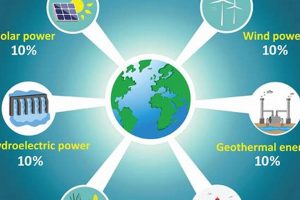
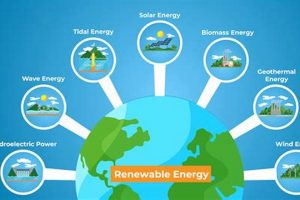
Subsequent discussions will delve into various energy sources, analyzing their respective strengths, weaknesses, and potential roles in a comprehensive energy strategy. This examination will encompass renewable options like solar, wind, hydro, and geothermal power, as well as non-renewable sources such as nuclear and fossil fuels. The analysis will also address the technological advancements required for efficient energy storage and distribution, crucial components of a resilient and sustainable system.
Strategies for Evaluating Power Options
Evaluating potential options for powering society requires a systematic approach. The following guidance provides a framework for comparing and contrasting different resources, considering their long-term viability and impact.
Tip 1: Prioritize Life Cycle Assessment: A comprehensive analysis should encompass the full life cycle, from resource extraction and manufacturing to operation, decommissioning, and waste disposal. This approach reveals the true environmental footprint, accounting for emissions, resource consumption, and potential pollution at each stage.
Tip 2: Assess Resource Availability and Scalability: Scrutinize the geographic distribution and abundance of the resource. A source dependent on limited resources, concentrated in specific regions, or difficult to scale may not be a viable long-term solution for global energy needs.
Tip 3: Evaluate Technological Maturity and Infrastructure Requirements: Consider the technological readiness level (TRL) of the power generation technology. Technologies still in early stages of development may face significant hurdles to widespread adoption. Also, assess the infrastructure requirements, including transmission lines, storage facilities, and smart grids, which can significantly impact cost and feasibility.
Tip 4: Quantify Economic Viability: Perform a thorough cost-benefit analysis, considering capital expenditures, operating costs, fuel costs (if applicable), and potential revenue streams. Factors such as government subsidies, carbon pricing, and market competition can influence the economic competitiveness of different options.
Tip 5: Analyze Environmental Impact: Examine the potential environmental consequences, including greenhouse gas emissions, air and water pollution, land use, and impact on biodiversity. Compare the environmental performance of different resources using standardized metrics and consider mitigation strategies to minimize negative impacts.
Tip 6: Factor in Social Considerations: Investigate the social impacts, including job creation, community development, and potential displacement of communities due to resource extraction or infrastructure development. Ensure that energy projects are developed in a manner that respects human rights and promotes social equity.
A holistic evaluation, considering these factors, enables a more informed decision-making process and helps identify energy sources that are environmentally sound, economically viable, and socially responsible.
The subsequent section will explore the specific attributes of various power resources, building upon this framework for a more in-depth analysis.
1. Sustainability

Sustainability constitutes a pivotal criterion when evaluating energy sources, directly influencing their long-term viability and environmental impact. An energy source lacking sustainability necessitates resource depletion, ecosystem degradation, or poses long-term threats to the environment. The selection of an energy source directly affects future generations, with unsustainable practices potentially compromising their access to essential resources and a stable climate. For example, the widespread use of fossil fuels, while historically significant, is unsustainable due to finite reserves and the emission of greenhouse gases, contributing to climate change.
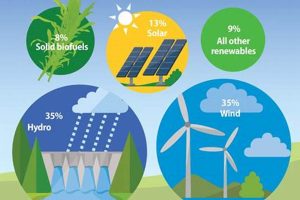
The principles of sustainability demand a shift towards renewable resources, such as solar, wind, and geothermal energy, which replenish naturally and have a minimal environmental footprint during operation. However, even renewable sources must be assessed for sustainability across their entire life cycle. Manufacturing solar panels, for instance, involves the use of energy and materials, requiring responsible sourcing and end-of-life management to minimize environmental impact. Sustainable energy solutions also necessitate energy storage technologies to address intermittency challenges and ensure a reliable power supply. Hydroelectric power, while renewable, can have adverse environmental effects, such as habitat disruption and altered river flows, highlighting the need for careful planning and mitigation strategies.
Ultimately, the quest for the most effective means of power generation is intrinsically linked to sustainability. It calls for prioritizing resources with minimal environmental impacts, promoting resource efficiency, and implementing circular economy principles. Challenges include the development of cost-effective and scalable energy storage solutions, the improvement of energy efficiency in various sectors, and the implementation of policies that incentivize sustainable energy practices. By integrating sustainability as a fundamental principle, societies can transition towards a more secure and environmentally responsible energy future.
2. Efficiency
In the realm of power generation, efficiency represents a critical determinant of resource utilization and overall environmental impact. Identifying the most effective means of energy production necessitates a thorough evaluation of the conversion efficiency inherent in each method, along with associated losses throughout the entire energy supply chain.
- Conversion Efficiency of Primary Resource
The efficiency with which a primary energy resource is transformed into usable energy constitutes a fundamental factor. For example, solar panels exhibit varying efficiencies in converting sunlight into electricity, with advanced technologies such as perovskite cells demonstrating potential for significantly higher conversion rates compared to traditional silicon-based panels. Similarly, the efficiency of a coal-fired power plant in converting thermal energy into electricity is inherently limited by the laws of thermodynamics, resulting in substantial waste heat. Improving conversion efficiency reduces the demand for primary resources and minimizes associated environmental impacts.
- Transmission and Distribution Losses
Energy losses during transmission and distribution represent a significant challenge in delivering power to consumers. Long-distance transmission of electricity through conventional power lines results in resistive losses, leading to reduced overall efficiency. High-voltage direct current (HVDC) transmission and the deployment of superconducting cables can mitigate these losses, enabling more efficient delivery of power from remote renewable energy sources. Furthermore, smart grid technologies that optimize energy flow and reduce grid congestion can contribute to minimizing transmission and distribution losses.
- Energy Storage Efficiency
The intermittency of renewable energy sources, such as solar and wind, necessitates efficient energy storage solutions to ensure a reliable power supply. Energy storage technologies, including batteries, pumped hydro storage, and compressed air energy storage, exhibit varying levels of efficiency in storing and retrieving energy. The round-trip efficiency of a battery, for instance, represents the percentage of energy that can be recovered after storage, with higher efficiencies minimizing energy losses and maximizing the utilization of renewable resources. The development of high-efficiency energy storage technologies is critical for enabling the widespread adoption of renewable energy.
- End-Use Efficiency
The efficiency with which energy is utilized at the point of consumption significantly impacts overall energy demand. Energy-efficient appliances, lighting systems, and building designs can substantially reduce energy consumption without compromising performance. For example, LED lighting consumes significantly less energy than traditional incandescent bulbs, while high-efficiency HVAC systems minimize energy waste in heating and cooling buildings. Promoting end-use efficiency through technological innovation and behavioral changes is essential for reducing the strain on energy resources and mitigating environmental impacts.
In summation, a comprehensive evaluation of any power source must incorporate a thorough analysis of efficiency across the entire energy value chain, from resource extraction to end-use consumption. Optimizing efficiency at each stage reduces resource demand, minimizes environmental impacts, and enhances the economic viability of various energy technologies. The pursuit of high-efficiency solutions is, therefore, paramount in determining the most effective means of power generation for a sustainable future.
3. Cost-effectiveness

The economic viability of any power source constitutes a crucial determinant of its widespread adoption and long-term sustainability. The concept of cost-effectiveness extends beyond initial capital expenditures, encompassing operational expenses, maintenance requirements, fuel costs (if applicable), and decommissioning liabilities. A comprehensive evaluation of these factors is paramount in determining the true economic merits of diverse energy technologies.
- Levelized Cost of Energy (LCOE)
LCOE represents a widely used metric for comparing the cost-effectiveness of different power generation technologies. It calculates the average cost of electricity generated over the lifetime of a power plant, factoring in all relevant expenses, including capital costs, operating costs, fuel costs, and decommissioning costs. A lower LCOE indicates a more cost-effective power source. For instance, solar and wind energy have experienced significant declines in LCOE in recent years, making them increasingly competitive with conventional fossil fuel-based power plants. However, LCOE does not account for grid integration costs, intermittency challenges, or the external costs associated with environmental impacts.
- External Costs and Environmental Accounting
The cost-effectiveness assessment must extend beyond direct financial outlays to incorporate external costs associated with environmental impacts and social consequences. For example, fossil fuel-based power generation imposes external costs related to air pollution, climate change, and public health impacts. Environmental accounting methodologies, such as full-cost accounting, attempt to quantify these external costs and incorporate them into the overall economic assessment. Including external costs in the analysis can significantly alter the relative cost-effectiveness of different energy sources, favoring cleaner alternatives with lower environmental footprints.
- Energy Storage and Grid Integration Costs
The intermittency of renewable energy sources necessitates investments in energy storage and grid infrastructure to ensure a reliable power supply. Energy storage technologies, such as batteries and pumped hydro storage, add to the overall cost of renewable energy systems. Furthermore, grid integration costs, including transmission line upgrades and smart grid technologies, can be substantial, particularly for large-scale deployment of renewable energy. A comprehensive cost-effectiveness analysis must account for these additional costs to accurately assess the economic viability of renewable energy solutions.
- Long-Term Fuel Price Volatility
The cost-effectiveness of power sources reliant on fossil fuels is susceptible to fluctuations in fuel prices, which can significantly impact their long-term economic competitiveness. Geopolitical events, supply disruptions, and changes in government policies can all influence fuel prices, creating uncertainty for investors and consumers. Renewable energy sources, with minimal or no fuel costs, offer greater price stability and predictability, reducing exposure to fuel price volatility. This stability can enhance the long-term cost-effectiveness of renewable energy technologies, particularly in regions with volatile fuel markets.
In conclusion, a comprehensive evaluation of the economic merits of different power sources necessitates a holistic approach that considers LCOE, external costs, grid integration costs, and fuel price volatility. Such an analysis enables informed decision-making and promotes the selection of power sources that are not only environmentally sustainable but also economically viable in the long term.
4. Scalability

Scalability, in the context of power generation, is the capacity of an energy source to expand its production to meet increasing demand without compromising efficiency, reliability, or cost-effectiveness. This characteristic is paramount when assessing power sources to determine their suitability for widespread adoption and long-term energy security.
- Resource Availability and Geographic Distribution
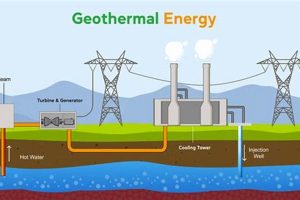
Scalability is fundamentally linked to the abundance and accessibility of the primary resource required by a given energy technology. For example, solar energy’s potential for scalability is enhanced by the widespread availability of sunlight across the globe. Conversely, geothermal energy, while sustainable, is limited by its geographic distribution, restricting its potential for large-scale deployment in many regions. The long-term viability of any energy source hinges on its ability to leverage readily available resources without creating resource constraints or geopolitical dependencies.
- Technological Maturity and Manufacturing Capacity
The technological maturity of a power generation technology directly impacts its scalability. Established technologies, such as fossil fuel power plants, benefit from mature supply chains and readily available manufacturing capacity, facilitating rapid deployment. Conversely, emerging technologies, such as advanced nuclear reactors or novel energy storage solutions, often face challenges related to scaling up manufacturing processes and establishing robust supply chains. Overcoming these technological and manufacturing hurdles is essential for realizing the full scalability potential of promising energy sources.
- Infrastructure Requirements and Grid Integration
The scalability of a power source is also constrained by the existing infrastructure and the ease with which it can be integrated into the electrical grid. Renewable energy sources, such as solar and wind, often require significant investments in grid infrastructure to accommodate their intermittent nature and ensure reliable power delivery. Furthermore, the siting of large-scale power plants can face regulatory hurdles and community opposition, potentially hindering scalability. Addressing these infrastructure and grid integration challenges is crucial for enabling the widespread adoption of scalable energy solutions.
- Economic Viability and Market Competitiveness
The economic viability of a power source directly influences its scalability. Technologies that are cost-competitive with existing alternatives are more likely to attract investment and achieve widespread deployment. Government policies, such as subsidies and carbon pricing, can also play a significant role in shaping the economic landscape and influencing the scalability of different energy sources. The ability of a power source to compete effectively in the market is a critical factor in determining its long-term scalability potential.
In conclusion, scalability is a multifaceted consideration when evaluating power options. It encompasses resource availability, technological maturity, infrastructure requirements, and economic viability. Selecting power sources with inherent scalability advantages is essential for meeting future energy demands in a sustainable, reliable, and cost-effective manner. Strategies that address the challenges associated with scaling up promising energy technologies will be crucial for achieving long-term energy security and mitigating the impacts of climate change.
5. Environmental Impact
The selection of a suitable power generation method is intrinsically linked to its environmental impact. Each energy source carries a unique environmental profile, encompassing aspects such as greenhouse gas emissions, air and water pollution, land use, and impacts on biodiversity. The environmental ramifications of energy production can extend from resource extraction to waste disposal, necessitating a comprehensive assessment of the entire lifecycle. Identifying a superior energy source requires minimizing negative externalities and promoting environmental stewardship.
Fossil fuels, for instance, are associated with significant greenhouse gas emissions, contributing to climate change and its associated consequences, including rising sea levels, extreme weather events, and ecosystem disruption. Air pollution from coal-fired power plants can lead to respiratory illnesses and other health problems. Nuclear power, while emitting minimal greenhouse gases during operation, raises concerns regarding radioactive waste disposal and the potential for nuclear accidents. Renewable energy sources, such as solar and wind power, generally have lower environmental impacts compared to fossil fuels and nuclear power. However, solar panel manufacturing can involve the use of hazardous materials, and wind turbines can pose a threat to birds and bats. Hydropower projects can alter river ecosystems and displace local communities. Therefore, a thorough evaluation of environmental impacts is essential for making informed decisions about energy sources.
Ultimately, a transition towards a sustainable energy future necessitates prioritizing energy sources with minimal environmental footprints. This includes investing in renewable energy technologies, improving energy efficiency, and implementing policies that internalize the environmental costs of energy production. The integration of environmental considerations into energy planning and decision-making processes is crucial for mitigating the adverse impacts of energy production on the environment and ensuring a healthy planet for future generations. The optimization of energy choices should prioritize a lessened environmental burden, aiming for technologies and practices that harmonize energy provision with ecological preservation.
Frequently Asked Questions
The following section addresses common inquiries regarding the selection of energy sources. These questions and answers aim to clarify the complexities involved in determining the most effective means of powering society while minimizing environmental impact and ensuring long-term sustainability.
Question 1: Is one single energy source universally superior to all others?
No singular option represents an ideal solution across all contexts. The suitability of a power source depends on factors such as geographic location, resource availability, technological infrastructure, and economic considerations. A diversified energy portfolio, incorporating a mix of renewable and non-renewable sources, often provides the most resilient and sustainable approach.
Question 2: How is the environmental impact of different energy sources accurately assessed?
Life cycle assessment (LCA) provides a comprehensive framework for evaluating the environmental footprint of energy sources. LCA considers all stages, from resource extraction and manufacturing to operation, decommissioning, and waste disposal, to quantify emissions, resource consumption, and potential pollution. This holistic approach enables a more accurate comparison of the environmental performance of various energy technologies.
Question 3: What role does energy storage play in a sustainable energy future?
Energy storage is crucial for addressing the intermittency of renewable energy sources, such as solar and wind power. Efficient energy storage technologies, including batteries, pumped hydro storage, and compressed air energy storage, enable the reliable delivery of renewable energy even when sunlight or wind is unavailable. Energy storage also enhances grid stability and reduces the need for fossil fuel-based backup power.
Question 4: How can energy efficiency contribute to minimizing environmental impact?
Improving energy efficiency reduces overall energy demand, minimizing the environmental consequences associated with power generation. Energy-efficient appliances, lighting systems, and building designs can significantly decrease energy consumption without sacrificing performance. Investments in energy efficiency are often more cost-effective than building new power plants and can contribute to significant reductions in greenhouse gas emissions.
Question 5: What are the primary challenges associated with transitioning to a renewable energy economy?
Challenges include the intermittency of renewable resources, the need for grid infrastructure upgrades, the high upfront costs of certain renewable energy technologies, and the integration of distributed energy resources into the grid. Overcoming these challenges requires technological innovation, supportive government policies, and proactive planning to ensure a reliable and affordable energy supply.
Question 6: How does the Levelized Cost of Energy (LCOE) factor into energy source selection?
LCOE is a metric for comparing the cost-effectiveness of different power generation technologies over their lifetime. It incorporates capital costs, operating costs, fuel costs (if applicable), and decommissioning costs. A lower LCOE generally indicates a more economically attractive power source. However, LCOE does not account for external costs, grid integration costs, or the intermittency of certain renewable resources.
The selection of appropriate energy sources necessitates a nuanced understanding of diverse factors, including environmental impact, economic viability, and technological considerations. A holistic approach is paramount for ensuring a sustainable and resilient energy future.
The subsequent section will summarize key findings and offer recommendations for navigating the complexities of power generation choices.
Conclusion
The preceding analysis has demonstrated that determining “what is the best source of energy” necessitates a multifaceted evaluation encompassing sustainability, efficiency, cost-effectiveness, scalability, and environmental impact. No single energy resource emerges as universally optimal; instead, the ideal solution depends heavily on specific regional, technological, and economic circumstances. A diversified energy portfolio, strategically integrating renewable and non-renewable sources, offers the most promising pathway toward a secure and sustainable energy future. Further, the significance of considering environmental impact across the full lifecycle of any given source can’t be understated.
The global energy landscape is in a state of continuous evolution, driven by technological advancements, policy shifts, and increasing awareness of environmental imperatives. The challenge lies in fostering innovation, promoting responsible resource management, and implementing policies that incentivize the adoption of cleaner, more efficient energy technologies. Ultimately, a collective commitment to informed decision-making and proactive engagement is essential to navigate the complexities of energy provision and ensure a prosperous and sustainable future for all.