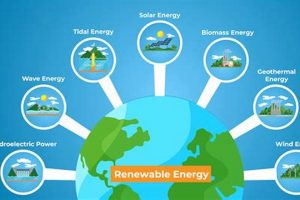
Sources of energy that are naturally replenished on a human timescale are considered sustainable. These energy forms derive from ongoing natural processes, such as sunlight, wind, tides, and geothermal heat. An example includes harnessing solar radiation through photovoltaic cells to generate electricity.
The employment of sustainable energy is crucial for mitigating climate change, reducing reliance on finite fossil fuels, and promoting energy security. Historically, the utilization of these resources was limited by technological constraints, but advancements have significantly increased their viability and efficiency. Widespread adoption offers numerous benefits, including cleaner air, job creation in the green sector, and a more resilient energy infrastructure.
This article will examine various forms of sustainable energy, explore their current applications, and discuss their potential to meet future energy demands. Analysis will include factors influencing their development, challenges associated with their integration into existing energy systems, and policy considerations that can facilitate their expansion.
Guidance on Sustainable Energy Selection
The following outlines key considerations for evaluating and implementing various forms of energy that are naturally replenished.
Tip 1: Conduct a Comprehensive Resource Assessment: Accurately evaluate available resources like solar irradiance, wind speed, or geothermal gradients at a specific location to determine the feasibility of different technologies.
Tip 2: Evaluate Environmental Impacts Holistically: Consider the complete environmental lifecycle, including manufacturing, installation, operation, and decommissioning, to minimize ecological footprint.
Tip 3: Prioritize Grid Integration Strategies: Implement advanced grid management technologies, such as smart grids and energy storage solutions, to address the intermittency of certain resources like solar and wind power.
Tip 4: Consider Long-Term Economic Viability: Analyze the levelized cost of energy (LCOE) and factor in potential fluctuations in fuel prices, carbon taxes, and government incentives to ensure economic competitiveness.
Tip 5: Support Policy and Regulatory Frameworks: Advocate for clear and consistent policies, such as feed-in tariffs and renewable energy standards, to create a stable investment environment.
Tip 6: Promote Community Engagement and Acceptance: Actively involve local communities in the planning and development process to address concerns and foster support for projects.
Tip 7: Invest in Research and Development: Support ongoing research into advanced technologies, such as next-generation solar cells and energy storage systems, to improve efficiency and reduce costs.
Adopting these guidelines enables informed decision-making and facilitates the effective implementation of strategies that harness naturally replenished sources of power, contributing to a more secure and sustainable energy future.
The subsequent sections of this article will delve deeper into the specific characteristics, applications, and challenges associated with diverse approaches to sustainable energy generation.
1. Solar Irradiance

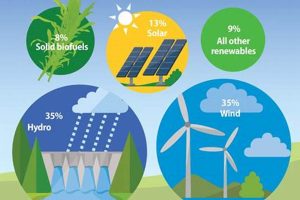
Solar irradiance, defined as the power per unit area received from the sun in the form of electromagnetic radiation, directly determines the energy production potential of solar technologies. As a fundamental input, solar irradiance influences the output of photovoltaic (PV) panels and concentrated solar power (CSP) systems, making it a primary driver in the feasibility of employing sunlight to meet energy needs. For instance, regions with high average solar irradiance, such as the southwestern United States, are particularly well-suited for large-scale solar energy projects, while areas with lower irradiance may require more extensive installations to achieve comparable energy output. Variations in solar irradiance due to weather patterns and seasonal changes underscore the need for accurate forecasting and energy storage solutions to ensure a reliable electricity supply.
The effectiveness of solar energy as a source that is naturally replenished is thus contingent on harnessing and managing solar irradiance efficiently. Advancements in PV technology, such as the development of higher-efficiency solar cells and bifacial panels that capture sunlight from both sides, aim to optimize energy conversion across varying irradiance levels. Additionally, accurate measurement and prediction of solar irradiance using satellite data and ground-based sensors are crucial for planning and operating solar power plants effectively. The integration of solar energy into national grids also necessitates sophisticated grid management strategies to mitigate the intermittency inherent in solar radiation.
In summary, solar irradiance is a key factor governing the viability of sunlight as a method of energy production. Understanding and optimizing its utilization through technological innovation and strategic grid integration are essential for maximizing the contribution of sunlight towards a sustainable energy future. The ongoing development of tools and techniques for monitoring and predicting solar irradiance will continue to play a vital role in the expansion and reliability of solar power generation globally.
2. Wind Velocity

Wind velocity, the speed of air movement, is a critical determinant in assessing the potential of a site for wind energy production. As a direct driver of energy generation in wind turbines, wind velocity directly influences the economic feasibility and energy output of wind farms. Higher and more consistent wind speeds translate to greater energy capture, making wind velocity a primary consideration in site selection and technology deployment for harnessing air movement.
- Kinetic Energy Conversion
Wind velocity directly impacts the kinetic energy available for conversion into electricity. The power generated by a wind turbine is proportional to the cube of the wind speed. Consequently, even small increases in average wind velocity can result in significant gains in energy output, making precise measurement and prediction of wind patterns essential for optimizing turbine placement and project economics. For instance, a site with an average wind speed of 8 meters per second will yield substantially more energy than a site averaging 6 meters per second, all other factors being equal.
- Turbine Design and Operation
Wind velocity influences turbine design and operational parameters. Turbines are engineered to operate within a specific range of wind speeds, with cut-in speeds (the minimum speed required for energy generation) and cut-out speeds (the maximum speed at which the turbine shuts down to prevent damage). Understanding the distribution of wind velocities at a site is crucial for selecting turbines optimized for local conditions. Furthermore, advanced control systems manage turbine operation based on real-time wind velocity data, adjusting blade pitch and yaw to maximize energy capture while protecting the turbine from extreme weather events.
- Site Selection and Resource Assessment
Accurate measurement and analysis of wind velocity are fundamental to site selection for wind energy projects. Meteorological data, including long-term wind speed averages, turbulence intensity, and wind direction, are collected using anemometers and wind vanes mounted on meteorological masts. This data informs resource assessments, which estimate the annual energy production of a potential wind farm. Sophisticated modeling techniques, such as computational fluid dynamics (CFD), are employed to simulate wind flow over complex terrain and identify optimal turbine locations that maximize exposure to prevailing winds.
- Grid Integration and Forecasting
The variability of wind velocity necessitates advanced grid integration strategies. Fluctuations in wind speed can lead to intermittent power generation, posing challenges for maintaining grid stability. Accurate wind forecasting models, utilizing weather prediction data and machine learning algorithms, are essential for predicting energy output and managing grid operations effectively. Furthermore, energy storage solutions, such as batteries and pumped hydro storage, can mitigate the impact of wind intermittency, ensuring a reliable and consistent supply of energy.
In conclusion, wind velocity is a critical factor in the assessment and utilization of air movement as a means of power generation. The economic viability and operational effectiveness of wind energy projects depend on a thorough understanding of wind patterns and the application of advanced technologies to capture and manage air movement efficiently. Continual advancements in wind turbine technology, resource assessment techniques, and grid integration strategies will further enhance the role of wind velocity as a driver of sustainable energy production.
3. Hydropower Potential

Hydropower potential, representing the exploitable energy from flowing water, constitutes a significant component of sources that naturally replenish. The amount of power extractable from a water source depends on two primary factors: the flow rate of the water and the height differential, or head, through which the water descends. Greater flow rates and higher heads yield increased hydropower potential, making geographic locations with substantial rainfall and steep topographies particularly suitable for hydroelectric development. This reliance on naturally replenished water cycles positions hydropower as a long-term, sustainable energy option when managed responsibly.
The practical significance of understanding hydropower potential lies in its contribution to base-load energy generation and grid stability. Unlike some other naturally replenished sources, hydroelectric facilities can provide a relatively consistent and controllable energy output, which is critical for balancing fluctuating demand. For example, the Three Gorges Dam in China, one of the largest hydroelectric facilities in the world, generates substantial amounts of electricity, meeting a significant portion of the country’s energy needs. Similarly, the Itaipu Dam on the border of Brazil and Paraguay provides a crucial source of electricity for both nations. The efficient operation of these facilities hinges on accurate assessments of river flow, seasonal variations, and long-term water availability, all of which factor into hydropower potential calculations.
However, the development of hydropower is not without challenges. The construction of dams can alter river ecosystems, impact fish migration patterns, and displace communities. Therefore, sustainable hydropower development requires careful environmental impact assessments, mitigation strategies, and engagement with local stakeholders. Evaluating hydropower potential must include not only technical and economic feasibility but also ecological and social considerations to ensure responsible utilization of this naturally replenished resource. Ultimately, maximizing the contribution of hydropower to a sustainable energy portfolio demands a holistic approach that balances energy generation with environmental stewardship and community well-being.
4. Geothermal Gradients
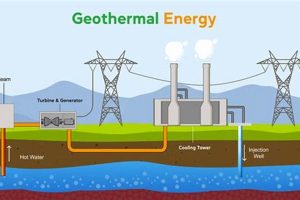
Geothermal gradients, representing the rate of temperature increase with depth within the Earth, serve as a fundamental determinant of subsurface heat energy available for exploitation. As a core element in determining access to geothermal energy resources, gradients influence the feasibility and efficiency of geothermal power generation and direct-use applications. Elevated geothermal gradients, often found in volcanically active regions or areas with thin crust, indicate substantial thermal energy within accessible depths, allowing for the generation of electricity from steam or hot water. Conversely, regions with lower gradients require deeper drilling or enhanced geothermal systems (EGS) to access sufficiently high temperatures for energy extraction. Thus, the magnitude and distribution of geothermal gradients are critical factors influencing the viability of geothermal resources.
The practical application of geothermal gradients extends to various methods of power generation and direct heating. In conventional geothermal power plants, naturally occurring steam or hot water is extracted from underground reservoirs to drive turbines connected to generators. The efficacy of these systems relies on the presence of high-temperature reservoirs at relatively shallow depths, conditions dictated by the geothermal gradient. In regions with lower gradients, EGS technologies involve injecting water into fractured hot rocks deep underground to create artificial geothermal reservoirs. This process allows for the generation of steam, which can then be used to produce electricity. Additionally, geothermal energy can be directly utilized for heating buildings, greenhouses, and industrial processes. For instance, Iceland, situated atop a major geothermal hotspot, utilizes geothermal energy extensively for space heating and electricity generation. Similarly, regions in the western United States, such as California and Nevada, benefit from significant geothermal resources due to favorable gradients, enabling substantial geothermal power production.
In summary, geothermal gradients are intrinsic to the potential of geothermal energy as a naturally replenished source. Understanding and accurately mapping these gradients is essential for identifying suitable locations for geothermal energy development. While geographical constraints and technological challenges remain, the proper evaluation and utilization of geothermal gradients are vital for harnessing subsurface heat to meet energy demands sustainably. Continuous research and advancements in EGS and other geothermal technologies hold the key to expanding the geographical accessibility and economic viability of geothermal energy, further contributing to a diverse and sustainable energy portfolio.
5. Biomass Availability

Biomass availability serves as a fundamental constraint and opportunity in the context of energy resources that are naturally replenished. The term refers to the quantity and accessibility of organic matter available for conversion into energy. This organic matter includes agricultural residues, forestry byproducts, dedicated energy crops, and organic waste streams. The abundance and sustainable management of these resources directly influence the potential contribution of biomass to energy systems. Insufficient biomass availability can limit the scalability of bioenergy projects, while responsible management ensures long-term sustainability and avoids negative environmental impacts such as deforestation or competition with food production. For example, the use of sugarcane bagasse in Brazil for electricity generation and ethanol production illustrates the potential of agricultural residues when biomass availability is properly leveraged. Similarly, the utilization of sustainably harvested wood in combined heat and power plants in Scandinavian countries demonstrates the viability of forestry biomass. The practical significance of this understanding lies in the need for accurate resource assessments and sustainable sourcing practices to ensure the long-term viability of bioenergy systems.
The integration of biomass into energy portfolios necessitates careful consideration of logistical, economic, and environmental factors. Transportation costs, conversion efficiencies, and land-use implications can significantly impact the overall sustainability of biomass-based energy. Advanced biofuel production technologies, such as cellulosic ethanol and algae-based fuels, aim to address some of these challenges by utilizing non-food feedstocks and improving conversion rates. Furthermore, anaerobic digestion of organic waste streams offers a dual benefit by reducing landfill waste and generating biogas, a renewable fuel. Examples include municipal solid waste facilities that convert organic waste into electricity and combined heat and power plants that utilize biogas produced from wastewater treatment. The successful implementation of these technologies depends on secure and sustainable biomass supply chains, which require careful planning, infrastructure investment, and supportive policies.
In conclusion, biomass availability is a critical determinant in the role of bioenergy among energy resources that are naturally replenished. Its responsible management and efficient conversion are essential for maximizing the potential contribution of biomass to a sustainable energy future. While challenges related to resource availability, logistics, and environmental impacts persist, ongoing innovation in biomass conversion technologies and sustainable sourcing practices promises to enhance the viability of bioenergy as part of a diversified and sustainable energy mix. The careful balancing of environmental, economic, and social considerations is necessary to ensure that biomass contributes positively to energy security and climate change mitigation.
6. Tidal Energy
Tidal energy, derived from the gravitational forces exerted by the moon and sun on Earth’s oceans, represents a consistent and predictable form of energy that is naturally replenished. The cyclical nature of tides allows for reliable energy generation, differentiating it from intermittent options like solar and wind. Tidal energy systems harness the kinetic energy of moving water through various technologies, including tidal barrages, tidal stream generators, and tidal fences. Their effectiveness depends on the tidal range, the difference in height between high and low tides, and the strength of tidal currents at a given location. An instance of harnessing air/water sources is the La Rance Tidal Power Station in France. It uses a barrage to capture tidal flow to generate electricity.
The practical application of harnessing air/water sources holds significant potential for regions with substantial tidal resources. Tidal stream generators, which resemble underwater wind turbines, are deployed in areas with strong tidal currents, such as narrow straits and channels. These generators convert the kinetic energy of the moving water into electricity. Tidal barrages, on the other hand, function like dams, impounding water during high tide and releasing it through turbines during low tide. However, barrage construction can have significant environmental impacts, including altering tidal flow patterns and affecting marine ecosystems. Tidal fences represent another approach, utilizing vertical turbines to capture energy from tidal currents. Site selection is crucial for the success of tidal energy projects. This involves assessing tidal range, current velocity, and environmental factors. The Bay of Fundy in Canada and the Pentland Firth in Scotland are examples of regions with high tidal energy potential.
In conclusion, tidal energy represents a promising avenue within the broader portfolio of energy sources that are naturally replenished. Its predictability and consistency offer distinct advantages over other renewable options. While challenges remain regarding environmental impacts and deployment costs, ongoing technological advancements and careful site selection can enhance the viability of harnessing air/water sources to meet future energy demands. Continued research and development are essential to unlock the full potential of capturing tidal flow and integrating it into the global energy mix.
7. Wave Energy

Wave energy, derived from ocean surface waves, represents a dynamic and largely untapped component of sources that are naturally replenished. Its potential stems from the continuous motion of waves generated by wind, offering a resource with global distribution. Harnessing this energy involves various technologies designed to convert wave motion into electricity or other useful forms of energy.
- Wave Energy Conversion Technologies
Wave energy converters (WECs) encompass a diverse array of devices designed to capture the energy of ocean waves. These technologies include oscillating water columns (OWCs), which use wave action to compress air and drive turbines; point absorbers, which float on the surface and convert wave motion into electricity; and overtopping devices, which capture water as waves break and use it to drive hydroelectric turbines. The selection of a specific WEC technology depends on factors such as wave climate, water depth, and proximity to shore. Real-world examples include the Mutriku breakwater power plant in Spain, which utilizes OWC technology, and various pilot projects deploying point absorbers in locations such as Scotland and Australia.
- Resource Assessment and Site Selection
The viability of harnessing wave energy hinges on accurate resource assessment and strategic site selection. Wave climates vary significantly across different geographic locations, with some regions exhibiting consistently high wave energy potential. Factors such as wave height, wave period, and wave direction must be carefully analyzed to determine the suitability of a site for wave energy development. Numerical models and wave buoys are used to collect data and characterize wave climates. Regions with high wave energy potential include the west coasts of Europe, North America, and Australia. However, site selection also involves considering environmental factors, such as marine habitats and shipping lanes, as well as proximity to grid infrastructure.
- Environmental Considerations
While wave energy offers a renewable alternative to fossil fuels, its deployment can have environmental impacts. Potential concerns include effects on marine ecosystems, noise pollution, and visual impacts. Careful planning and mitigation strategies are essential to minimize these impacts. For example, the placement of WECs must avoid sensitive habitats and migratory routes. Noise reduction technologies can be employed to minimize disturbance to marine mammals. Visual impacts can be mitigated through careful siting and design. Ongoing research is focused on developing environmentally friendly WEC technologies and assessing the long-term effects of wave energy deployment.
- Grid Integration and Energy Storage
Integrating wave energy into existing electricity grids presents challenges due to the variability of wave motion. Wave energy generation can fluctuate depending on wave conditions, requiring grid operators to manage intermittency. Energy storage technologies, such as batteries and pumped hydro storage, can help to smooth out fluctuations and ensure a reliable supply of electricity. Furthermore, advanced grid management systems can optimize the integration of wave energy by forecasting wave conditions and coordinating generation with other renewable energy sources. The development of smart grids and flexible energy markets is essential for enabling the widespread adoption of wave energy.
In conclusion, wave energy represents a substantial, yet underutilized, element in the global portfolio of sources that are naturally replenished. Effective implementation demands careful evaluation of technological, environmental, and economic factors. Advances in WEC design, resource assessment techniques, and grid integration strategies hold the key to unlocking the full potential of wave energy and contributing to a more sustainable energy future.
Frequently Asked Questions About Renewable Energy Sources
This section addresses common inquiries regarding sustainable forms of energy generation, aiming to clarify understanding and dispel misconceptions.
Question 1: What fundamentally distinguishes sustainable energy from conventional energy sources?
Sustainable energy is derived from resources that are naturally replenished on a human timescale, such as solar irradiance, wind velocity, and geothermal gradients. Conventional energy, conversely, primarily relies on finite fossil fuels like coal, oil, and natural gas.
Question 2: How does the intermittency of sunlight and air movement affect the reliability of related technologies?
The variable nature of sunlight and air movement poses challenges for consistent energy generation. Advanced grid management strategies, including energy storage solutions and accurate forecasting models, are essential to mitigate intermittency and ensure grid stability.
Question 3: What are the primary environmental considerations associated with the development of hydropower?
Hydropower development can alter river ecosystems, impede fish migration, and necessitate community relocation. Sustainable practices require comprehensive environmental impact assessments and mitigation strategies to minimize adverse effects.
Question 4: Is biomass always considered a sustainable resource?
Biomass sustainability depends on responsible sourcing and management practices. Deforestation, competition with food production, and inefficient conversion processes can negate the benefits of biomass as a source of renewable energy.
Question 5: What factors determine the economic viability of geothermal energy projects?
Geothermal gradient, drilling depth, and access to suitable geological formations influence the economic viability of geothermal energy. Enhanced geothermal systems and technological advancements are expanding the potential for geothermal energy utilization.
Question 6: How can coastal communities benefit from harnessing tidal and wave energy?
Tidal and wave energy offer coastal communities opportunities for local energy generation and economic development. Strategic site selection, technological innovation, and environmental stewardship are essential to maximize the benefits of these sources.
In summary, a thorough understanding of the characteristics, challenges, and opportunities associated with sustainable forms of energy is crucial for informed decision-making and effective implementation.
The following sections will explore policy recommendations and future directions for advancing the widespread adoption of renewable energy technologies.
Conclusion
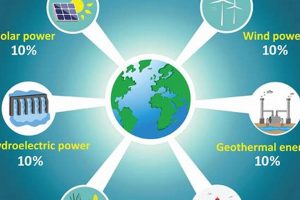
This article has explored various facets of “which is renewable energy source,” emphasizing the diversity of options ranging from solar irradiance and wind velocity to hydropower potential, geothermal gradients, biomass availability, and tidal and wave energy. Critical analysis reveals that the selection and implementation of a specific source depend on factors such as geographic location, technological feasibility, economic viability, and environmental impact. Furthermore, the integration of these sources into existing energy systems requires advanced grid management strategies and supportive policy frameworks.
The transition toward energy systems reliant on resources that are naturally replenished necessitates a sustained commitment to research, development, and deployment. Future efforts must prioritize optimizing energy conversion technologies, enhancing grid infrastructure, and fostering public awareness and acceptance. The long-term sustainability and resilience of global energy supplies depend on the informed and responsible utilization of resources that are naturally replenished.