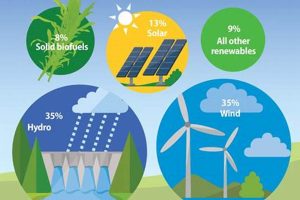
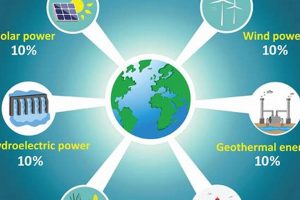
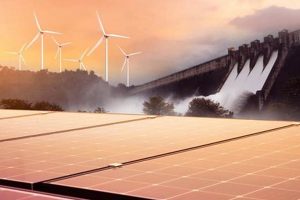
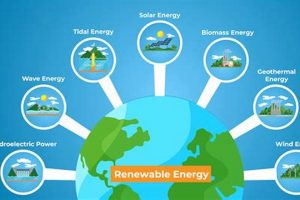
The most economically advantageous method of generating power from inexhaustible resources involves harnessing naturally replenishing flows, such as sunlight, wind, and water, to produce electricity at the lowest possible cost. An example of this is onshore wind power in regions with consistent, strong wind resources.
Employing these methods is crucial for mitigating climate change by reducing reliance on fossil fuels, thereby decreasing greenhouse gas emissions. This shift offers long-term economic benefits through stabilized energy prices and the creation of new industries and employment opportunities. Historically, the cost of many renewable technologies has decreased significantly, making them increasingly competitive with traditional energy sources.
Understanding the specific factors that influence the economic viability of diverse renewable options is paramount. Therefore, an examination of current costs, technological advancements, and regional variations within the renewable energy sector is warranted to provide a clear overview of the most cost-effective solutions available.
Strategies for Identifying the Most Economical Renewable Energy Options
The following outlines strategies to determine the most cost-effective renewable energy sources for diverse applications.
Tip 1: Conduct a Thorough Resource Assessment: Evaluate the availability and consistency of renewable resources specific to the location, such as solar irradiance, wind speeds, or hydro potential. High resource availability directly translates to greater energy generation and lower per-unit costs.
Tip 2: Analyze Levelized Cost of Energy (LCOE): Compare the LCOE of different renewable technologies. LCOE considers all costs associated with building and operating a power plant over its lifetime, divided by the total energy output. Lower LCOE indicates a more cost-effective option.
Tip 3: Factor in Grid Connection Costs: Consider the expenses related to connecting the renewable energy system to the existing power grid. Remote locations may incur higher transmission costs, impacting the overall economic viability.
Tip 4: Investigate Government Incentives and Subsidies: Explore available financial incentives, tax credits, and subsidies offered by local, regional, or national governments. These programs can significantly reduce the initial investment costs and improve the economic attractiveness of renewable energy projects.
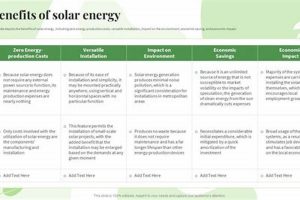
Tip 5: Assess Maintenance and Operational Expenses: Evaluate the long-term maintenance and operational costs associated with different renewable technologies. Some options, such as solar photovoltaic systems, generally have lower ongoing maintenance requirements compared to others.
Tip 6: Consider Energy Storage Solutions: Analyze the need for energy storage to address intermittency issues associated with some renewable sources. Integrating cost-effective storage solutions can enhance the reliability and value of the renewable energy system.
Tip 7: Evaluate System Lifespan and Performance Degradation: Account for the expected lifespan and performance degradation of the chosen technology. Selecting durable and high-performing systems ensures long-term cost-effectiveness.
By considering these strategies, informed decisions can be made regarding the most economically sound renewable energy investment. This approach supports the efficient and sustainable transition to a cleaner energy future.
The following sections will further explore specific renewable energy technologies and their respective economic advantages.
1. Initial Investment

The initial investment represents a substantial determining factor in the economic viability of renewable energy projects and, consequently, directly impacts whether a specific renewable energy source can be deemed the most economically advantageous. A high upfront capital expenditure, encompassing equipment procurement, installation, and grid connection, can significantly increase the overall cost of a project, potentially negating the benefits of low operating expenses and abundant resources. For example, a large-scale offshore wind farm, despite having high energy output potential, requires immense initial investment due to specialized equipment and challenging installation conditions, potentially making it less economically attractive than an onshore wind farm with lower initial costs, even if the latter has slightly lower energy production.
The cost of initial investment is directly linked to the technology utilized and the scale of the project. Solar photovoltaic (PV) systems, while requiring a moderate initial investment, have seen costs plummet over the last decade due to technological advancements and economies of scale in manufacturing. Conversely, geothermal energy plants, despite their potential for consistent baseload power generation, often face substantial initial investment costs associated with exploration, drilling, and infrastructure development. Consequently, subsidies and financial incentives become vital in offsetting these high upfront costs and accelerating the deployment of renewable energy sources that might otherwise be economically prohibitive.
In summary, the magnitude of the initial investment serves as a primary determinant of the eventual levelized cost of energy (LCOE). Reducing these upfront costs through technological innovation, streamlined deployment processes, and strategic financial support is critical for making certain renewable energy sources the most economically viable option in specific regions and contexts. Understanding this connection is essential for policymakers, investors, and project developers alike to ensure efficient allocation of resources and effective transition towards a sustainable energy future.
2. Resource Availability

The abundance and consistency of renewable resources at a given location critically determine the economic feasibility of a renewable energy project. Resource availability directly influences the output potential of the energy generation system, thereby affecting the overall cost per unit of energy produced. This parameter fundamentally shapes the categorization of the most economical renewable energy source for a specific geographic region.
- Solar Irradiance and Photovoltaic Efficiency
Regions with high solar irradiance, measured in kilowatt-hours per square meter per day (kWh/m/day), are prime candidates for cost-effective solar photovoltaic (PV) deployment. Higher irradiance levels translate to greater electricity generation from PV panels of a given capacity. Desert regions, for instance, often exhibit excellent solar resources, making solar PV an economically attractive option. However, the efficiency of PV panels in converting sunlight into electricity also plays a crucial role. Advancements in PV technology that increase efficiency can further reduce the cost per kilowatt-hour (kWh) generated, contributing to its economic competitiveness.
- Wind Speed and Turbine Capacity Factor
Areas with consistent and strong wind speeds are well-suited for wind energy generation. The capacity factor of a wind turbine, defined as the actual energy output over a period divided by the theoretical maximum output, is directly correlated with wind resource availability. Sites with higher average wind speeds generally exhibit higher capacity factors, leading to greater electricity production and lower costs per kWh. Onshore wind farms in the Great Plains region of the United States and offshore wind farms in the North Sea exemplify locations where abundant wind resources contribute to the economic viability of wind energy.
- Hydrological Potential and Water Resource Management
Hydropower relies on the availability of water resources and the potential energy associated with water flow. Regions with substantial rainfall, snowmelt, and suitable topography for dam construction are ideal for hydropower development. However, sustainable water resource management is paramount to ensure long-term viability. Factors such as seasonal variations in water flow, potential environmental impacts on aquatic ecosystems, and competing water demands from agriculture and other sectors must be carefully considered to determine the true economic and environmental costs associated with hydropower projects. Smaller-scale run-of-river hydro projects can be economically viable in locations with consistent water flow and minimal environmental impact.
- Geothermal Gradient and Subsurface Conditions
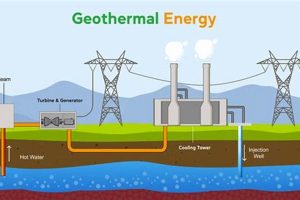
Geothermal energy harnesses heat from the Earth’s interior. Regions with high geothermal gradients, indicating a rapid increase in temperature with depth, and permeable subsurface geological formations are favorable for geothermal energy development. Geothermal resources can be used for direct heating applications or for electricity generation using geothermal power plants. The economic viability of geothermal projects depends on the depth and temperature of the geothermal resource, the cost of drilling and well construction, and the efficiency of the power generation technology. Iceland, with its abundant geothermal resources, serves as a prime example of a country where geothermal energy plays a significant role in the energy mix.
In conclusion, a comprehensive assessment of resource availability is indispensable for determining the most economically advantageous renewable energy source for a given location. The interplay between resource abundance, technology efficiency, and sustainable resource management dictates the overall cost-effectiveness of a renewable energy project. By accurately quantifying resource potential and optimizing energy conversion technologies, informed decisions can be made to promote the deployment of the most economically sound and environmentally responsible renewable energy solutions.
3. Operating Costs

Operating costs exert a considerable influence on the long-term economic viability of renewable energy projects and, consequently, their ranking as the “cheapest renewable energy source”. Lower operational expenses, encompassing maintenance, fuel, and personnel, significantly reduce the overall lifecycle cost, making certain renewable options more economically attractive over their lifespan.
- Maintenance Requirements and Component Lifespan
The frequency and complexity of maintenance directly impact operating costs. Renewable technologies with fewer moving parts and longer component lifespans tend to have lower maintenance requirements. For example, solar photovoltaic (PV) systems generally require less frequent maintenance compared to wind turbines, which necessitate regular inspections and repairs due to mechanical wear and tear. The lifespan of key components, such as solar panels or wind turbine blades, also affects the frequency of replacements and associated costs. Careful selection of durable and reliable technology can substantially reduce operational expenses over the long term.
- Fuel Costs and Resource Dependency
While most renewable energy sources are not reliant on fuel in the traditional sense, some technologies, such as biomass power plants, do require a constant supply of biomass feedstock. The cost of sourcing, transporting, and processing biomass fuel directly impacts the operating expenses of these plants. Furthermore, the availability and price volatility of biomass feedstock can significantly affect the economic viability of biomass energy projects. Renewable energy sources that do not rely on fuel inputs, such as solar, wind, and hydro, are generally less susceptible to fluctuations in operating costs related to fuel prices.
- Personnel Costs and Automation
The labor required for operating and maintaining renewable energy facilities contributes to personnel costs. Highly automated systems that require minimal human intervention tend to have lower personnel costs. For instance, remote monitoring and control systems can reduce the need for on-site personnel at solar PV and wind farms. Additionally, skilled technicians are often required for specialized maintenance tasks, which can drive up labor costs. Investing in automation and remote monitoring technologies can help to minimize personnel costs and improve the overall economic competitiveness of renewable energy projects.
- Grid Connection and Transmission Losses
The distance of a renewable energy facility from the grid and the capacity of the transmission infrastructure influence operating costs through transmission losses. Electricity lost during transmission represents a real cost, as the generated energy does not reach the end consumer. Siting renewable energy projects closer to load centers can reduce transmission losses and improve overall efficiency. Moreover, investing in grid upgrades and smart grid technologies can minimize transmission losses and enhance the integration of renewable energy into the existing power grid. These factors must be considered when evaluating the economic attractiveness of different renewable energy sources.
In conclusion, operating costs represent a critical consideration when assessing the economic competitiveness of renewable energy options. Technologies with low maintenance requirements, minimal fuel costs, reduced personnel needs, and efficient grid integration tend to have lower overall operating expenses, making them more economically attractive over the long term. By carefully evaluating these factors, stakeholders can make informed decisions and prioritize the deployment of renewable energy sources that offer the best combination of cost-effectiveness and environmental sustainability.
4. Energy Efficiency

Energy efficiency improvements directly influence the characteristics of the most economically advantageous renewable energy options. Reduced energy demand, achieved through efficiency measures, lessens the overall capacity required from renewable energy installations. This, in turn, lowers the initial capital investment needed for a project, which is a primary driver of cost. For example, implementing better insulation in buildings reduces the need for heating and cooling, thereby decreasing the required size, and cost, of a solar panel array or geothermal heating system.
The synergistic relationship between energy efficiency and renewable energy deployment extends beyond initial costs. Increased energy efficiency reduces operational expenses by minimizing the amount of energy consumed. This translates to lower per-unit energy costs from the renewable source, further enhancing its economic competitiveness. Practical applications include smart grid technologies that optimize energy distribution, reducing waste and enabling better integration of intermittent renewable sources like wind and solar. Industries adopting energy-efficient manufacturing processes also reduce their overall energy footprint, making renewable energy a more feasible and affordable option to meet their needs.
In summary, prioritizing energy efficiency is a critical component of identifying and deploying the most economically viable renewable energy solutions. Reducing energy demand not only lowers the cost of renewable energy infrastructure but also improves its operational efficiency and grid integration. While challenges remain in scaling up energy efficiency initiatives across all sectors, the integration of efficiency measures with renewable energy deployment is essential for creating a sustainable and cost-effective energy future.
5. Government Subsidies

Government subsidies play a pivotal role in shaping the economic landscape of renewable energy sources. These financial incentives can significantly alter the cost structure, potentially positioning a specific renewable energy technology as the most economically advantageous option, regardless of its inherent cost competitiveness.
- Direct Financial Incentives and Capital Cost Reduction
Direct financial incentives, such as grants, rebates, and tax credits, serve to reduce the initial capital expenditure for renewable energy projects. For instance, a substantial tax credit for solar photovoltaic (PV) installations can effectively lower the upfront cost for homeowners and businesses, making solar energy a more appealing economic choice compared to fossil fuel alternatives, even when considering long-term operational expenses. The implications include accelerating the adoption of renewable energy technologies and creating a more level playing field with established energy sources.
- Feed-in Tariffs and Revenue Assurance
Feed-in tariffs (FITs) guarantee a fixed price for electricity generated from renewable sources. This policy provides revenue certainty for renewable energy project developers, reducing financial risk and attracting investment. A generous FIT for wind energy, for example, can make wind farm projects highly profitable, stimulating their development and deployment, even if the technology is not inherently the least expensive on a levelized cost of energy (LCOE) basis. The primary benefit is increased deployment due to revenue certainty, at a cost to consumers or taxpayers.
- Renewable Portfolio Standards and Market Demand
Renewable portfolio standards (RPS) mandate that a certain percentage of electricity sold by utilities must come from renewable sources. This creates a guaranteed market for renewable energy, driving demand and stimulating investment in renewable energy projects. An RPS can incentivize utilities to purchase electricity from renewable sources, even if they are slightly more expensive than fossil fuels, thereby increasing the deployment of renewable technologies and driving down costs through economies of scale. However, the actual delivered cost of the renewable energy to the consumer is often increased.
- Research and Development Funding and Technological Advancement
Government funding for research and development (R&D) plays a crucial role in advancing renewable energy technologies and driving down costs. Investing in R&D can lead to breakthroughs in materials science, manufacturing processes, and energy conversion efficiency, making renewable energy sources more economically competitive in the long run. Public investment in solar cell technology, for example, has significantly reduced the cost of solar PV over the past several decades. The implication is that by reducing the cost of future technologies, R&D funding creates more economically viable renewable options.
In conclusion, government subsidies are a powerful tool for shaping the economic viability of renewable energy sources. While the goal is often to accelerate the transition to a cleaner energy future, the economic impacts are complex and can result in artificially lowered costs, ultimately impacting consumer prices and overall market dynamics. Careful consideration of the design and implementation of subsidy policies is crucial to ensure long-term sustainability and cost-effectiveness in the renewable energy sector.
6. Technological Advances

Technological advances are fundamentally reshaping the economic landscape of renewable energy, driving down costs and enhancing performance across diverse technologies. These innovations are integral to identifying and deploying the most economically viable renewable energy sources, as improved efficiency and reduced manufacturing expenses directly translate to lower levelized costs of energy (LCOE).
- Advanced Materials and Manufacturing Processes
The development of novel materials and streamlined manufacturing techniques is significantly reducing the production costs of renewable energy components. Examples include perovskite solar cells, which promise higher efficiencies and lower manufacturing costs than traditional silicon-based cells. Similarly, advancements in wind turbine blade design and manufacturing, utilizing composite materials, are leading to lighter, more durable, and more efficient turbines. These improvements directly impact the economic viability by decreasing both upfront investment and long-term maintenance expenses.
- Improved Energy Storage Solutions
The intermittency of renewable energy sources like solar and wind necessitates effective energy storage solutions. Technological advancements in battery technology, such as lithium-ion and flow batteries, are enhancing energy storage capacity, lifespan, and charging efficiency. Furthermore, alternative storage methods like pumped hydro storage and compressed air energy storage are being refined to provide large-scale, cost-effective energy storage options. These improvements enhance the reliability of renewable energy systems and allow for better grid integration, increasing their economic attractiveness.
- Smart Grid Technologies and Grid Integration
Smart grid technologies are revolutionizing the way renewable energy is integrated into existing power grids. Advanced sensors, data analytics, and control systems enable real-time monitoring and optimization of energy flow, reducing transmission losses and improving grid stability. Smart grids also facilitate the integration of distributed renewable energy generation, such as rooftop solar panels, enabling consumers to become active participants in the energy market. These advancements lead to more efficient and reliable renewable energy delivery, thereby enhancing their economic competitiveness.
- Artificial Intelligence and Optimization Algorithms
Artificial intelligence (AI) and sophisticated optimization algorithms are being employed to improve the performance and efficiency of renewable energy systems. AI algorithms can predict energy production from solar and wind farms with greater accuracy, allowing for better grid management and resource allocation. Machine learning techniques are also being used to optimize the operation and maintenance of renewable energy equipment, reducing downtime and improving overall efficiency. These applications of AI are contributing to lower operating costs and increased energy output, making renewable energy sources more economically viable.
In conclusion, ongoing technological advancements across various facets of the renewable energy sector are driving down costs, improving performance, and enhancing grid integration. These innovations are crucial for enabling the widespread deployment of cost-effective renewable energy solutions and facilitating the transition to a sustainable energy future. Continued investment in research and development is essential to further accelerate technological progress and unlock the full economic potential of renewable energy.
Frequently Asked Questions
The subsequent questions and answers address common inquiries and misconceptions regarding the pursuit of economical renewable energy solutions.
Question 1: What specific metrics are utilized to determine the most economically advantageous renewable energy source?
The Levelized Cost of Energy (LCOE), which incorporates all costs over the lifetime of a project divided by the total energy produced, is the primary metric. Additional factors include initial investment, operational expenses, resource availability, and potential revenue streams.
Question 2: Does the designation of “cheapest” remain constant across all geographic locations?
No. Resource availability, regulatory frameworks, and infrastructure development vary significantly by location. What constitutes the most economical option in one region may not be the same in another.
Question 3: How do government subsidies impact the true cost of renewable energy?
Subsidies artificially lower the apparent cost to consumers or project developers but do not eliminate the underlying economic realities. The long-term effects of subsidies must be considered in any comprehensive cost analysis.
Question 4: To what extent does energy storage influence the economic viability of intermittent renewable sources?
Energy storage is critical for mitigating the intermittency of sources like solar and wind. While it adds to the initial capital investment, it enhances reliability and grid stability, potentially improving the overall economic profile.
Question 5: How rapidly are technological advancements impacting the cost-effectiveness of renewable energy?
Technological advancements are continuously driving down costs and improving efficiency. Emerging technologies, such as perovskite solar cells and advanced battery storage, promise further reductions in the LCOE.
Question 6: What are the environmental externalities associated with different renewable energy technologies, and how are they factored into economic analyses?
Environmental externalities, such as land use impacts and resource depletion, are often difficult to quantify monetarily. However, comprehensive life cycle assessments should be performed to account for environmental costs, providing a more holistic economic perspective.
The accurate evaluation of renewable energy costs necessitates a nuanced understanding of financial incentives, technological advancements, and location-specific factors.
The following sections will delve into case studies and real-world applications of economically optimized renewable energy systems.
Conclusion
This analysis has dissected the multifaceted factors determining the “cheapest renewable energy source.” It underscores that economic viability is not a static attribute but rather a dynamic function of resource availability, technological progress, policy support, and the integration of energy efficiency measures. A comprehensive understanding of these interdependencies is essential for informed decision-making.
The pursuit of cost-effective renewable energy solutions is not merely an economic imperative but a crucial step towards a sustainable and resilient energy future. Continued innovation, strategic investment, and a commitment to holistic cost assessments are vital to realizing the full potential of renewable energy and mitigating the long-term risks associated with conventional energy sources. Further research and implementation are needed to ensure global accessibility of “cheapest renewable energy source”.