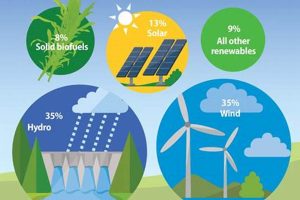
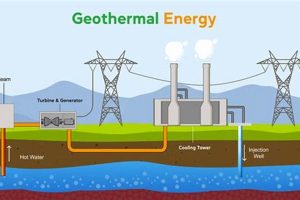
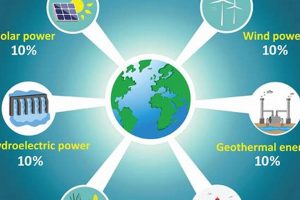
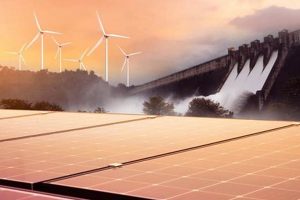
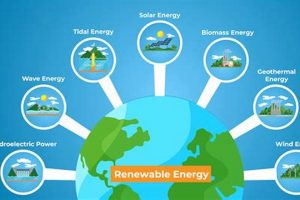
Resources that provide power in varied forms encompass a broad spectrum, ranging from naturally replenishing flows to finite reserves accumulated over geological timescales. Examples include solar radiation, wind currents, geothermal gradients, the kinetic energy of water, fossil fuels, and nuclear materials. These resources are harnessed to generate electricity, provide heat, and fuel transportation.
The effective utilization of these diverse inputs is critical for societal function and economic development. They underpin industrial processes, residential comfort, and the mobility of populations. Historically, the harnessing of different power mediums has driven technological innovation and shaped geopolitical landscapes, with access to reliable and affordable options influencing national security and global stability.
The subsequent sections will examine the characteristics, applications, and environmental impacts associated with different electricity and power generation methodologies. Considerations regarding sustainability, cost-effectiveness, and technological advancements within each resource category will be detailed, providing a thorough overview of the current energy landscape.
Practical Guidance for Resource Management
The following recommendations are intended to provide guidance for evaluating and strategically deploying power generation solutions within various contexts. Careful consideration of these points can lead to more efficient and responsible energy utilization.
Tip 1: Diversify Resource Portfolio: Reliance on a single resource can create vulnerabilities due to price fluctuations, supply disruptions, or geopolitical instability. A diversified approach mitigates these risks.
Tip 2: Prioritize Efficiency Improvements: Reducing energy consumption through efficiency measures lowers overall demand, lessening the need for additional power generation capacity. Examples include building insulation, efficient appliances, and optimized industrial processes.
Tip 3: Account for Lifecycle Costs: Evaluating the total cost of ownership, including capital expenditures, operating expenses, maintenance, and decommissioning, provides a more accurate assessment of economic viability than focusing solely on initial costs.
Tip 4: Incorporate Environmental Impact Assessments: Thoroughly assess the environmental consequences associated with each resource option, including greenhouse gas emissions, water usage, land use, and potential impacts on biodiversity. This assessment informs responsible decision-making.
Tip 5: Support Technological Innovation: Investing in research and development related to advanced technologies, such as energy storage, smart grids, and carbon capture, can accelerate the transition to a more sustainable and resilient power system.
Tip 6: Develop Robust Grid Infrastructure: A modern and reliable grid is essential for efficiently transmitting power from diverse sources to consumers. Investments in grid infrastructure, including transmission lines and distribution networks, are crucial.
Tip 7: Consider Local Resource Availability: Leveraging resources that are readily available within a specific geographic region can reduce transportation costs and enhance energy security. For example, areas with abundant sunshine can prioritize solar power deployment.
Applying these principles contributes to the development of a robust, sustainable, and economically viable energy system. A comprehensive approach, considering both supply and demand-side factors, is essential for long-term success.
The subsequent sections will delve into the role of policy and regulation in shaping the future of energy and promoting responsible resource management practices.
1. Availability

Resource accessibility represents a fundamental determinant in the feasibility and practicality of utilizing any given power input. Its influence permeates the entire energy landscape, shaping investment decisions, infrastructure development, and geopolitical strategies. Without adequate availability, even the most technologically advanced or environmentally benign resource remains largely theoretical.
- Geographical Distribution
The spatial distribution of primary energy resources varies significantly across the globe. Solar irradiance is highest in desert regions, wind resources are concentrated in coastal and mountainous areas, and geothermal activity is localized around tectonic plate boundaries. Fossil fuel reserves are unevenly distributed, leading to international trade and strategic dependencies. This uneven geographical distribution directly influences the energy mix of different regions and necessitates resource diversification strategies where feasible.
- Technological Readiness
While some resources may be physically abundant, their practical availability depends on the maturity of the technologies required for their extraction, conversion, and utilization. For example, deep geothermal resources may hold vast potential, but their exploitation requires advanced drilling and reservoir management techniques. Similarly, widespread adoption of renewable technologies like solar and wind necessitates advancements in energy storage and grid integration capabilities.
- Economic Viability
Even with favorable geographical distribution and technological readiness, economic factors can limit resource availability. The cost of extraction, processing, transportation, and conversion must be economically competitive with alternative options. Fluctuations in commodity prices, technological advancements that reduce costs, and government policies that incentivize specific resources can all influence economic availability. Stranded resources, such as remote natural gas deposits, exemplify the challenges posed by economic constraints.
- Infrastructure Capacity
The availability of adequate infrastructure including pipelines, transmission lines, storage facilities, and processing plants is essential for delivering energy resources to end users. Limited infrastructure capacity can restrict the flow of energy from resource-rich regions to areas of high demand, creating bottlenecks and impacting overall supply. Investments in infrastructure are therefore critical for enhancing resource availability and ensuring energy security.
In summary, availability, in the context of power sources, encompasses geographical presence, technological feasibility, financial practicability, and infrastructural support. These elements collectively determine whether a given power source can contribute meaningfully to the overall energy portfolio and satisfy growing global demands.
2. Sustainability

Sustainability, in the context of resources used to generate power, denotes the capacity to meet present needs without compromising the ability of future generations to meet their own. It involves balancing environmental, economic, and social considerations to ensure long-term resource availability and minimize adverse impacts. The integration of sustainability principles is imperative across all resource types to secure a viable energy future.
- Resource Depletion Mitigation
Sustainability necessitates minimizing the depletion of non-renewable resources. Fossil fuels, for instance, are finite and their extraction and combustion contribute to climate change. Sustainable approaches involve transitioning to renewable sources and improving efficiency in resource utilization. Examples include adopting circular economy principles to recycle materials and promoting energy conservation to reduce overall demand.
- Environmental Impact Reduction
A core tenet of sustainability is reducing the environmental footprint associated with power generation. This encompasses minimizing greenhouse gas emissions, preventing air and water pollution, and protecting biodiversity. Technologies such as carbon capture and storage, advanced emission control systems, and environmentally conscious site selection are critical for mitigating environmental impacts.
- Lifecycle Assessment Integration
Sustainability considerations demand a comprehensive lifecycle assessment of each resource option, encompassing extraction, processing, transportation, utilization, and disposal. This assessment identifies potential environmental and social impacts throughout the entire value chain, allowing for informed decision-making and the selection of more sustainable alternatives. For example, evaluating the lifecycle emissions of electric vehicles versus internal combustion engines provides a clearer picture of their respective sustainability profiles.
- Social Equity Considerations
Sustainability extends beyond environmental and economic aspects to encompass social equity. Power projects should be developed and implemented in a manner that benefits local communities, respects human rights, and promotes social well-being. This includes ensuring fair labor practices, minimizing displacement of communities, and addressing potential health impacts associated with power generation facilities.
Integrating these sustainability facets across all resource categories promotes responsible energy development, fostering a resilient and equitable power system for present and future generations. Prioritizing sustainability unlocks economic opportunities through innovation and responsible resource management. Prioritization ensures that energy resources serve both current and long-term societal needs.
3. Cost-effectiveness

The economic viability of varied power generation resources exerts a decisive influence on their adoption and deployment. Cost-effectiveness analysis scrutinizes the entire lifecycle of a resource, from initial capital expenditures to ongoing operational expenses, including fuel, maintenance, and eventual decommissioning, to determine its economic attractiveness in comparison to alternative options. This analysis shapes investment decisions, influences policy development, and ultimately determines the composition of the power generation mix.
- Levelized Cost of Energy (LCOE)
LCOE is a widely used metric for comparing the cost-effectiveness of different power generation resources. It represents the average net present cost of electricity generation for a plant over its lifetime, allowing for a normalized comparison across technologies with varying capital costs, operating expenses, and lifespans. For example, a solar photovoltaic plant may have higher upfront costs but lower operating expenses compared to a natural gas plant, potentially resulting in a lower LCOE over its operational life. Policy decisions and investment strategies frequently rely on LCOE comparisons.
- Externalities and Social Costs
A comprehensive assessment of cost-effectiveness must incorporate externalities and social costs that are not directly reflected in market prices. These externalities may include environmental damage from pollution, health impacts from emissions, and the social costs associated with resource depletion. Assigning a monetary value to these externalities, through mechanisms such as carbon pricing or pollution taxes, can provide a more accurate reflection of the true cost of different electricity and power generation sources and promote the adoption of more sustainable options. Without accounting for these costs, conventional economic analyses may favor less expensive yet environmentally damaging resources.
- Grid Integration Costs
The integration of variable renewable resources, such as solar and wind, into the electricity grid can entail significant costs related to grid upgrades, transmission infrastructure, and balancing services. These grid integration costs must be factored into the overall cost-effectiveness analysis of these resources. Investments in smart grid technologies, energy storage solutions, and advanced forecasting techniques can help to mitigate these costs and enhance the economic viability of renewable power generation. Ignoring these costs can lead to an overestimation of the economic benefits of renewable power.
- Fuel Price Volatility
The cost-effectiveness of power generation resources that rely on fossil fuels is heavily influenced by fuel price volatility. Fluctuations in natural gas, coal, and oil prices can significantly impact the operating expenses of these plants and affect their economic competitiveness. Resources that are not subject to fuel price volatility, such as solar, wind, and nuclear power, offer greater price stability and can provide a hedge against fuel price risks. This stability enhances their long-term economic predictability and competitiveness, particularly when long-term contracts are in place.
In conclusion, cost-effectiveness constitutes a critical determinant in shaping power portfolios. A comprehensive analysis incorporating LCOE, externalities, grid integration costs, and fuel price volatility is essential for making informed decisions about resource selection and deployment. Such analysis supports the development of a power generation system that is both economically viable and environmentally sustainable, and highlights the trade-offs inherent in prioritizing different resources for the purpose of electricity and power supply.
4. Environmental Impact

The utilization of any power source invariably entails environmental consequences, varying significantly in nature and magnitude depending on the resource and technology employed. These impacts span the entire lifecycle, from resource extraction and processing to power generation, transmission, and waste disposal. A thorough comprehension of these environmental ramifications is essential for informed decision-making, facilitating the selection of resource options that minimize harm to ecosystems and human health.
Fossil fuels, for example, release greenhouse gases upon combustion, contributing to climate change and exacerbating its effects, such as rising sea levels and extreme weather events. Coal mining can disrupt landscapes and pollute waterways, while oil spills can devastate marine ecosystems. Nuclear power generation, while emitting minimal greenhouse gases during operation, presents challenges related to radioactive waste disposal and the potential for accidents. Renewable sources, such as hydroelectric power, can alter river flows and impact aquatic habitats, while wind turbines may pose a threat to bird and bat populations. The construction of large-scale solar farms can also lead to habitat loss and land degradation. Each source presents unique environmental challenges that must be carefully assessed and mitigated.
The long-term sustainability of energy systems hinges on the effective management of environmental impacts. This requires the implementation of stringent environmental regulations, the adoption of cleaner technologies, and the promotion of resource efficiency. Investing in research and development of innovative approaches to mitigate environmental damage, such as carbon capture and storage, is crucial for transitioning to a more sustainable power future. Prioritizing environmental stewardship in the energy sector is not merely an ethical imperative but also an economic necessity, as environmental degradation can undermine long-term economic prosperity and social well-being.
5. Technological Feasibility

Technological feasibility serves as a critical determinant in the practical utilization of all energy sources. It represents the measure of whether existing technology, or technology reasonably expected to be developed within a relevant timeframe, can successfully harness a given power source and convert it into usable energy. The relationship is causal; the technological maturity directly influences the availability and viability of an energy source. An energy source’s potential remains purely theoretical absent the requisite technology for extraction, conversion, storage, and distribution.
The importance of technological feasibility is exemplified by the evolution of solar energy. Initially, solar radiation was recognized as an abundant energy source, yet its practical application was limited by the inefficiency and high cost of photovoltaic cells. Continuous advancements in materials science, manufacturing processes, and solar panel design have gradually improved efficiency and reduced costs, rendering solar energy increasingly competitive and technologically feasible for widespread deployment. Conversely, fusion power remains a largely unrealized potential due to persistent technological hurdles in achieving sustained and stable nuclear fusion reactions. Practical significance manifests in energy policy, investment decisions, and infrastructure planning, as feasibility dictates which resources are considered bankable and deployable.
In conclusion, technological feasibility acts as a gatekeeper for all energy sources. It dictates which resources can transition from theoretical potential to practical energy solutions. Addressing technological challenges is paramount for unlocking the full potential of both conventional and renewable energy resources. Continued investment in research and development, focused on improving the efficiency, reliability, and cost-effectiveness of existing technologies, and exploring innovative energy conversion methods, remains essential for securing a diversified and sustainable energy future.
6. Infrastructure Requirements
The successful utilization of any energy source hinges upon the establishment of suitable infrastructure. This infrastructure facilitates the extraction, processing, conversion, transmission, storage, and distribution of energy, thereby enabling its delivery to end-users. The type and scale of infrastructure required varies significantly depending on the energy source, impacting the overall feasibility and cost-effectiveness of its deployment.
- Extraction and Processing Facilities
For resources such as fossil fuels and uranium, specialized infrastructure is essential for their extraction from the earth. This may include drilling rigs, mines, pipelines, and processing plants. Renewable sources, such as hydropower, necessitate the construction of dams and reservoirs. The scale and complexity of these facilities can be substantial, requiring significant capital investment and specialized engineering expertise. The absence of adequate extraction and processing infrastructure can severely limit the availability and accessibility of these power sources.
- Conversion and Generation Plants
Raw resources must be converted into usable forms of energy, typically through power plants. These plants vary significantly depending on the resource being utilized. Coal-fired power plants require facilities for storing and handling large quantities of coal, while nuclear power plants demand stringent safety measures and specialized containment structures. Renewable energy facilities, such as wind farms and solar photovoltaic arrays, require extensive land areas and specialized equipment for converting wind and sunlight into electricity. The technological sophistication and operational requirements of these plants play a critical role in determining the efficiency and reliability of energy generation.
- Transmission and Distribution Networks
Once energy has been generated, it must be transported to end-users through transmission and distribution networks. These networks typically consist of high-voltage transmission lines, substations, and lower-voltage distribution lines that deliver electricity to homes, businesses, and industries. The capacity and reliability of these networks are essential for ensuring a consistent and uninterrupted power supply. Modernizing and expanding existing grid infrastructure is often necessary to accommodate the integration of new power sources, particularly variable renewable energy sources that require sophisticated grid management technologies.
- Storage Solutions
Energy storage technologies are increasingly important for mitigating the intermittency of renewable energy sources and enhancing grid stability. These technologies range from pumped hydro storage and battery storage systems to compressed air energy storage and thermal energy storage. The deployment of energy storage solutions can significantly improve the reliability and flexibility of power systems, allowing for greater utilization of renewable energy sources and reducing the need for conventional power plants. The development of cost-effective and scalable energy storage technologies is therefore a critical priority for the future of energy.
In conclusion, the deployment of any power source is inextricably linked to the availability and adequacy of supporting infrastructure. The investment in and maintenance of such infrastructure is critical for ensuring a reliable, affordable, and sustainable energy supply, and requires careful planning and coordination across multiple stakeholders, including governments, utilities, and private investors.
Frequently Asked Questions Regarding All Energy Sources
The following questions and answers address common inquiries and misconceptions surrounding diverse resources for generating power. The intent is to provide clarity on their characteristics, challenges, and potential contributions to a sustainable energy future.
Question 1: What constitutes “all energy sources?”
The phrase encompasses the entire spectrum of resources that can be harnessed to generate power, including both renewable (e.g., solar, wind, geothermal, hydro) and non-renewable (e.g., fossil fuels, nuclear) options. It is a comprehensive term acknowledging the variety of available power inputs.
Question 2: Why is it essential to consider “all energy sources” in energy planning?
A comprehensive approach is necessary to ensure energy security, affordability, and sustainability. By evaluating the strengths and weaknesses of each option, informed decisions can be made regarding optimal resource allocation and diversification strategies.
Question 3: What are the primary challenges associated with transitioning to a system reliant on renewable “all energy sources?”
Intermittency, grid integration costs, land use requirements, and the need for energy storage solutions pose significant challenges. Overcoming these hurdles requires technological advancements, infrastructure investments, and supportive policy frameworks.
Question 4: How do fossil fuels factor into the future of “all energy sources?”
Despite the transition to cleaner power options, fossil fuels are expected to continue playing a role in the energy mix for the foreseeable future, particularly in sectors where alternative solutions are not yet economically viable or technologically mature. Efforts to reduce greenhouse gas emissions from fossil fuel use include improving efficiency and exploring carbon capture technologies.
Question 5: Is nuclear power considered a sustainable option among “all energy sources?”
Nuclear power does not emit greenhouse gases during operation, but concerns remain regarding nuclear waste disposal and the risk of accidents. Its sustainability depends on advancements in reactor technology and the establishment of safe and permanent waste storage solutions.
Question 6: What role does energy storage play in maximizing the utilization of “all energy sources?”
Energy storage is critical for addressing the intermittency of renewable sources and ensuring grid stability. It allows for the storage of excess power generated during periods of high production and its release during periods of low production, thereby increasing the reliability and value of renewable energy resources.
The preceding questions and answers emphasize the complexity of energy planning and the need for a balanced approach that considers the environmental, economic, and social implications of each option.
The subsequent section will explore policy recommendations and regulatory frameworks designed to promote the responsible development and utilization of all energy resources.
Conclusion
The comprehensive evaluation of all energy sources reveals a complex interplay of factors, including availability, sustainability, cost-effectiveness, environmental impact, technological feasibility, and infrastructure requirements. Each resource presents unique advantages and disadvantages, necessitating a nuanced approach to energy planning and policy development. The long-term viability of any power system relies on a thorough understanding of these interconnected elements and a commitment to responsible resource management.
As energy demands continue to rise globally, a strategic and multifaceted approach is imperative. Addressing the challenges of climate change, ensuring energy security, and promoting economic development necessitates ongoing innovation, thoughtful policy implementation, and a collective commitment to fostering a sustainable energy future for all.