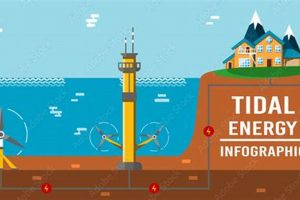
Projects harnessing naturally replenishing resources like solar, wind, hydro, geothermal, and biomass energy often involve complex infrastructure development. These endeavors encompass not only the construction of power generation facilities but also the integration of these resources into existing grids, potentially involving energy storage solutions and smart grid technologies. For example, a tidal energy project might involve constructing barrages and installing turbines, along with the necessary grid connections and control systems.
Such infrastructure projects offer significant advantages, including reduced reliance on finite fossil fuels, decreased greenhouse gas emissions, and enhanced energy security. Historically, energy production has been dominated by fossil fuels. However, the growing awareness of climate change and the pursuit of sustainable development have propelled the growth of the sector. This shift contributes to economic growth through job creation and technological innovation within the energy sector and related industries.
The following sections delve into specific aspects of sustainable energy infrastructure development, exploring technical challenges, economic considerations, and policy frameworks that shape the transition towards a cleaner energy future.
Tips for Sustainable Energy Infrastructure Development
Successful implementation of sustainable energy projects requires careful planning and execution. The following tips offer guidance for navigating the complexities of such endeavors.
Tip 1: Conduct Thorough Resource Assessments: Accurate evaluation of available resourcessolar irradiance, wind speeds, water flow, geothermal gradients, or biomass availabilityis fundamental to project feasibility and optimal design. For instance, wind farm placement requires detailed wind resource maps and on-site measurements.
Tip 2: Prioritize Grid Integration: Seamless integration with existing electricity grids is crucial for efficient energy delivery. This necessitates careful consideration of grid capacity, stability, and the potential need for grid modernization investments.
Tip 3: Explore Energy Storage Solutions: The intermittent nature of some renewable resources necessitates exploring energy storage options, such as batteries, pumped hydro, or thermal storage, to ensure a consistent power supply.
Tip 4: Engage with Local Communities: Early and ongoing engagement with local communities is essential to address potential concerns, build consensus, and ensure project acceptance. Transparent communication and collaborative approaches are crucial.
Tip 5: Consider Environmental Impacts: Minimize environmental impacts by conducting thorough environmental impact assessments and implementing mitigation strategies. This includes protecting biodiversity, managing water resources, and minimizing land use changes.
Tip 6: Implement Robust Monitoring and Maintenance: Regular monitoring and preventative maintenance are essential for optimizing performance, ensuring longevity, and maximizing the return on investment in sustainable energy infrastructure.
Tip 7: Leverage Policy and Financial Incentives: Utilize available policy frameworks, subsidies, tax incentives, and financing mechanisms to support project development and reduce investment risks.
By incorporating these considerations, sustainable energy projects can be developed and implemented effectively, contributing to a more resilient and environmentally responsible energy future.
The insights provided throughout this discussion underscore the critical role of careful planning and execution in achieving a successful transition to a sustainable energy landscape.
1. Resource Availability

Resource availability forms the bedrock of renewable energy project viability. The type and magnitude of exploitable resourcessolar irradiance, wind speeds, water flow, geothermal gradients, or biomass potentialdictate project feasibility, scale, and technological choices. A region with high average wind speeds favors wind farm development, while areas with consistent sunlight are ideal for solar power generation. Geothermal resources are geographically constrained to areas with suitable geological conditions. Resource assessment, therefore, plays a crucial role in the early stages of project planning, informing decisions regarding site selection, technology deployment, and expected energy output. For example, a detailed solar irradiance analysis is essential for optimizing solar panel placement and predicting power generation potential.
The intermittent nature of certain renewable resources, such as solar and wind, introduces further complexities. Resource variability necessitates incorporating energy storage solutions or relying on grid stability mechanisms to ensure a consistent energy supply. This intermittency underscores the importance of accurate resource forecasting models to anticipate fluctuations and manage energy dispatch effectively. Furthermore, the availability of resources can influence the economic viability of a project. Abundant resources can lead to lower operating costs, while scarce resources might necessitate higher capital investments in specialized technologies or larger-scale infrastructure. For example, tidal energy projects require specific coastal geographies with significant tidal ranges to be economically feasible.
In summary, careful consideration of resource availability is paramount throughout the lifecycle of renewable energy projects. From initial site selection and technology choices to long-term operational efficiency and economic viability, resource availability plays a defining role. Understanding the specific resource characteristics of a region, coupled with accurate forecasting and appropriate technological integration, are fundamental to unlocking the full potential of renewable energy sources and achieving a sustainable energy future. The challenge lies in optimizing resource utilization while minimizing environmental impacts and maximizing societal benefits.
2. Technological Advancements

Technological advancements are intrinsically linked to the growth and efficacy of renewable energy infrastructure. Innovation across various domains significantly influences the feasibility, efficiency, cost-effectiveness, and overall impact of projects harnessing renewable resources. Continuous improvement in related technologies is essential for wider adoption and integration of sustainable energy solutions.
- Improved Energy Conversion Efficiency
Advances in materials science, manufacturing processes, and design optimization contribute to higher energy conversion efficiencies in solar panels, wind turbines, and other energy generation technologies. For example, the development of perovskite solar cells promises higher efficiencies compared to traditional silicon-based cells, potentially increasing energy output from solar installations. Such improvements directly translate to greater power generation from a given resource capacity, reducing the overall footprint of renewable energy infrastructure.
- Enhanced Energy Storage Solutions
The intermittent nature of renewable resources necessitates efficient and cost-effective energy storage solutions. Advancements in battery technology, pumped hydro storage, thermal storage, and other storage methods are crucial for ensuring grid stability and reliable power delivery. Improved battery energy density, for instance, allows for more effective storage of surplus energy generated during peak production periods, making renewable resources more dispatchable and reducing reliance on traditional power plants.
- Smart Grid Technologies
Integration of renewable energy sources into existing grids requires sophisticated grid management systems. Smart grid technologies, including advanced sensors, real-time monitoring systems, and predictive analytics, enable dynamic energy management, optimizing grid stability and facilitating efficient integration of intermittent renewable resources. These technologies also enable demand-side management, allowing consumers to adjust energy usage patterns in response to grid conditions, further optimizing resource utilization and reducing strain on the grid.
- Robotics and Automation
Automation plays an increasingly important role in the construction, operation, and maintenance of renewable energy infrastructure. Robotics and automated systems can streamline installation processes, reduce labor costs, and improve worker safety, particularly in challenging environments like offshore wind farms or large-scale solar installations. Furthermore, automated monitoring and maintenance systems can optimize equipment performance, predict potential failures, and reduce downtime, contributing to increased efficiency and longevity of renewable energy assets.
These technological advancements, when integrated effectively, contribute significantly to the overall effectiveness and viability of renewable energy projects. As innovation continues, further improvements in efficiency, cost-effectiveness, and grid integration will drive the transition towards a sustainable energy future, reducing reliance on fossil fuels and mitigating the impacts of climate change. The ongoing interplay between technological progress and renewable energy development is crucial for achieving a cleaner and more resilient energy landscape.
3. Economic Viability

Economic viability is a cornerstone of successful renewable energy project development. The financial feasibility of these projects hinges on a complex interplay of factors, including initial capital costs, operating expenses, revenue streams, financing mechanisms, and policy landscapes. A project’s economic viability directly influences investment decisions, deployment timelines, and the overall success of transitioning to a sustainable energy future. The ability of a renewable energy project to compete with traditional energy sources often depends on achieving a favorable levelized cost of energy (LCOE), which represents the total cost of electricity generation over a project’s lifetime. For example, the declining costs of solar photovoltaic (PV) modules have significantly improved the economic competitiveness of solar power, leading to widespread adoption.
Several factors influence the economic viability of renewable energy projects. Initial capital costs associated with equipment purchase, installation, and grid connection represent a significant investment. Operating and maintenance expenses, while typically lower than fossil fuel-based power plants, still contribute to overall project costs. Revenue streams, generated through electricity sales or feed-in tariffs, must adequately cover expenses and provide a reasonable return on investment. Access to financing mechanisms, such as green bonds or government subsidies, plays a crucial role in project development. Furthermore, supportive policy frameworks, including carbon pricing mechanisms or renewable portfolio standards, can significantly influence the economic viability of renewable energy projects by creating favorable market conditions. For instance, tax incentives for renewable energy investments can stimulate market growth and accelerate the deployment of clean energy technologies.
Assessing the economic viability of renewable energy projects requires thorough financial modeling and risk assessment. Factors such as resource availability, technological advancements, energy market dynamics, and regulatory frameworks must be carefully considered. Long-term projections of electricity prices, fuel costs, and technological advancements influence the projected profitability of renewable energy investments. Moreover, understanding the risks associated with policy changes, resource variability, and technological obsolescence is crucial for informed decision-making. The economic viability of renewable energy projects not only drives investment decisions but also shapes the trajectory of the energy transition, influencing the pace and scale of adoption of sustainable energy solutions. Ultimately, achieving economic competitiveness is crucial for ensuring the long-term success and widespread deployment of renewable energy technologies, paving the way for a cleaner and more sustainable energy future.
4. Environmental Impact
Renewable energy projects, while offering a pathway to a cleaner energy future, are not without environmental impacts. Understanding these impacts is crucial for responsible development and implementation of sustainable energy infrastructure. A comprehensive assessment of potential environmental effects informs mitigation strategies, optimizes project design, and ensures the long-term sustainability of renewable energy solutions. Minimizing negative consequences while maximizing environmental benefits is paramount for achieving a truly sustainable energy transition.
- Land Use and Habitat Alteration
Renewable energy projects, particularly large-scale solar and wind farms, can require significant land areas. This land conversion can potentially alter habitats, fragment ecosystems, and displace wildlife. For example, improperly sited wind farms can pose a threat to migratory birds and bats. Careful site selection, environmental impact assessments, and mitigation measures, such as habitat restoration or wildlife corridors, are essential for minimizing land use impacts and preserving biodiversity. Furthermore, exploring alternative deployment strategies, such as rooftop solar installations or offshore wind farms, can reduce land use pressures.
- Water Consumption and Quality
Certain renewable energy technologies, such as concentrated solar power and hydropower, can require significant water resources. Water withdrawal for cooling purposes in concentrated solar power plants or reservoir creation for hydropower dams can impact local water availability and aquatic ecosystems. Implementing water-efficient technologies, minimizing water consumption, and carefully managing water resources are essential for mitigating potential impacts on water quality and availability. Furthermore, assessing potential impacts on downstream ecosystems and riparian habitats is crucial for responsible water resource management in renewable energy projects.
- Manufacturing and Material Impacts
The manufacturing of renewable energy technologies, such as solar panels and wind turbines, requires raw materials and energy. The extraction, processing, and transportation of these materials can have environmental impacts, including greenhouse gas emissions, habitat disruption, and waste generation. Promoting sustainable manufacturing practices, utilizing recycled materials, and minimizing waste generation throughout the supply chain are crucial for reducing the overall environmental footprint of renewable energy technologies. Life-cycle assessments can provide valuable insights into the environmental impacts associated with different stages of renewable energy technology production and deployment.
- Visual and Noise Impacts
Renewable energy infrastructure, such as wind turbines and solar farms, can alter the visual landscape and generate noise. Visual impacts, particularly in scenic areas, can raise aesthetic concerns among local communities. Noise generated by wind turbines can also be a source of disturbance. Careful site selection, visual impact assessments, noise mitigation measures, and community engagement are essential for addressing potential aesthetic and noise-related concerns and ensuring project acceptance. Furthermore, incorporating landscape design principles and optimizing turbine placement can minimize visual impacts and integrate renewable energy infrastructure more harmoniously into the surrounding environment.
Understanding and mitigating these environmental impacts is crucial for ensuring the long-term sustainability of renewable energy development. By carefully considering potential consequences, implementing appropriate mitigation strategies, and prioritizing environmentally responsible practices, renewable energy projects can effectively contribute to a cleaner energy future while minimizing negative impacts on the environment. Balancing environmental protection with the need for clean energy solutions is essential for achieving a truly sustainable energy transition.
5. Policy Frameworks
Policy frameworks play a crucial role in shaping the development and deployment of renewable energy infrastructure. These frameworks, encompassing a range of policy instruments, regulations, and incentives, influence investment decisions, market dynamics, and the overall pace of the transition to a sustainable energy future. Effective policy frameworks provide the necessary support and direction for renewable energy projects, creating an enabling environment for innovation, investment, and market growth. The interplay between policy frameworks and renewable energy development is complex and multifaceted, with policy decisions often having significant implications for the economic viability, environmental impact, and social acceptance of renewable energy projects.
Several key policy instruments influence the renewable energy sector. Renewable portfolio standards (RPS) mandate a certain percentage of electricity generation from renewable sources, creating a guaranteed market for renewable energy. Feed-in tariffs (FITs) provide long-term price guarantees for renewable energy generation, reducing investment risks and encouraging project development. Tax incentives, such as investment tax credits (ITCs) or production tax credits (PTCs), can significantly reduce the cost of renewable energy technologies, making them more competitive with traditional energy sources. Carbon pricing mechanisms, such as carbon taxes or cap-and-trade systems, internalize the environmental costs of fossil fuels, creating a level playing field for renewable energy. For example, the German feed-in tariff system played a key role in the rapid growth of the country’s solar PV industry. Similarly, the renewable portfolio standard in California has driven significant investments in renewable energy capacity. Streamlining permitting processes for renewable energy projects can further accelerate deployment by reducing administrative barriers and facilitating timely project implementation. Conversely, policy uncertainty or inconsistent regulations can hinder investment and impede the growth of the renewable energy sector.
The effectiveness of policy frameworks in promoting renewable energy development depends on several factors. Policy stability and predictability are essential for fostering investor confidence and long-term planning. Clear and consistent regulations provide a stable framework for project development and reduce regulatory risks. Well-designed incentives can effectively stimulate investment and accelerate the deployment of renewable energy technologies. Regular policy evaluations and adjustments are necessary to adapt to evolving market conditions and technological advancements. Furthermore, policy coherence across different levels of government and across different policy domains is crucial for avoiding conflicting policy signals and maximizing the effectiveness of policy interventions. International cooperation and policy coordination can further facilitate the global transition to a sustainable energy future by promoting knowledge sharing, harmonizing standards, and addressing transboundary environmental challenges. Ultimately, well-designed policy frameworks are indispensable for accelerating the transition to a sustainable energy future, creating a supportive environment for renewable energy innovation, investment, and deployment.
6. Social Acceptance

Social acceptance plays a pivotal role in the successful development and implementation of renewable energy projects. Public perception, community engagement, and stakeholder involvement significantly influence project timelines, permitting processes, and overall project success. Renewable energy infrastructure, often visually prominent and potentially impacting local landscapes, requires careful consideration of community values, aesthetic concerns, and potential socio-economic impacts. Lack of social acceptance can lead to project delays, community opposition, and even project cancellation, highlighting the importance of building trust and fostering positive relationships with local stakeholders. For example, community resistance to wind farms due to visual impacts or perceived noise pollution has, in some cases, led to project delays or cancellations, even in areas with favorable wind resources. Conversely, strong community support, fostered through transparent communication and meaningful engagement, can streamline permitting processes and facilitate project implementation.
Several factors influence social acceptance of renewable energy projects. Open communication and transparent engagement with local communities are crucial for building trust and addressing concerns. Early and ongoing stakeholder involvement allows communities to participate in the decision-making process, fostering a sense of ownership and shared responsibility. Addressing potential socio-economic impacts, such as job creation, local economic benefits, and potential disruptions to traditional industries, is essential for gaining community support. Visual impacts and aesthetic considerations, particularly for large-scale projects like wind farms or solar parks, require careful assessment and mitigation strategies. Noise pollution, land use changes, and potential impacts on local ecosystems must also be addressed transparently and mitigated effectively. Successful projects often incorporate community benefit programs, such as local investment funds or educational initiatives, to foster positive relationships and demonstrate commitment to local well-being. For instance, community-owned wind farms can provide direct economic benefits to local residents, increasing social acceptance and fostering local ownership of renewable energy initiatives.
Securing social acceptance is not merely a matter of public relations; it is a fundamental component of sustainable renewable energy development. Building trust, fostering collaboration, and addressing community concerns are essential for ensuring project success and maximizing the long-term benefits of renewable energy infrastructure. The social dimension of renewable energy transitions is inextricably linked to their technical, economic, and environmental dimensions. Integrating social considerations throughout the project lifecycle, from initial planning and site selection to construction, operation, and decommissioning, is crucial for realizing the full potential of renewable energy and achieving a just and sustainable energy future. Failing to address social acceptance can undermine even the most technically and economically viable renewable energy projects, highlighting the crucial importance of community engagement and stakeholder collaboration in the pursuit of a cleaner energy future.
Frequently Asked Questions about Renewable Energy Projects
This section addresses common inquiries regarding the development, implementation, and impact of projects utilizing renewable resources.
Question 1: How do renewable energy projects impact local employment?
Renewable energy projects often generate employment opportunities in manufacturing, installation, operation, and maintenance. The extent of job creation varies depending on the scale and type of project, with some projects potentially creating more jobs than traditional energy counterparts.
Question 2: What are the primary challenges associated with integrating renewable energy into existing grids?
Integrating intermittent renewable resources, such as solar and wind, requires grid modernization and energy storage solutions to address intermittency and ensure grid stability. Balancing fluctuating power supply with demand necessitates advanced grid management technologies and potentially expansion of transmission infrastructure.
Question 3: How do governments incentivize renewable energy development?
Governments employ various policy mechanisms to incentivize renewable energy development, including feed-in tariffs, renewable portfolio standards, tax incentives, and carbon pricing mechanisms. These policies aim to create favorable market conditions and stimulate investment in renewable energy technologies.
Question 4: What environmental considerations are associated with renewable energy projects?
Environmental impacts vary depending on the type of renewable energy technology. Potential impacts include land use changes, habitat alteration, water consumption, and visual or noise impacts. Thorough environmental impact assessments and mitigation strategies are crucial for minimizing negative consequences.
Question 5: How do renewable energy costs compare with traditional energy sources?
The cost competitiveness of renewable energy varies depending on the technology, resource availability, and policy landscape. Many renewable energy technologies have experienced significant cost reductions in recent years, making them increasingly competitive with fossil fuel-based power generation.
Question 6: What role does community engagement play in renewable energy development?
Community engagement is crucial for successful renewable energy project implementation. Open communication, transparent stakeholder involvement, and addressing community concerns are essential for building trust, securing social acceptance, and ensuring project success.
Understanding these key aspects of renewable energy projects is essential for informed decision-making, effective policy development, and successful implementation of sustainable energy solutions.
For further exploration, the following section delves deeper into specific case studies of renewable energy projects worldwide, illustrating practical applications and lessons learned.
Conclusion
Sustainable infrastructure development involving renewable resources represents a multifaceted undertaking with significant implications for global energy transitions. Exploration of resource availability, technological advancements, economic viability, environmental impacts, policy frameworks, and social acceptance reveals the complex interplay of factors shaping project success. Careful consideration of each element is crucial for maximizing benefits and minimizing potential drawbacks.
The transition to a sustainable energy future necessitates a holistic approach encompassing not only technological innovation but also thoughtful policy design, community engagement, and environmental stewardship. The continued advancement and integration of renewable energy infrastructure offer a pathway towards greater energy security, reduced environmental impact, and a more sustainable future for generations to come. The challenge lies in navigating the complexities of these endeavors to unlock the full potential of renewable resources while ensuring equitable and sustainable outcomes.