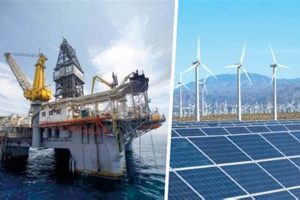
Sources like solar, wind, geothermal, and hydropower generate power from resources that are naturally replenished. For example, solar power harnesses the sun’s energy, which is constantly being produced. Unlike fossil fuels, these resources are not finite and are not depleted through use.
The continuous availability of these resources offers significant advantages. It reduces reliance on finite fossil fuels, contributing to energy security and mitigating the environmental impact of fossil fuel extraction and combustion. Historically, energy production has heavily relied on depletable resources, creating both environmental and geopolitical challenges. The shift towards sustainable sources addresses these concerns, paving the way for a more secure and environmentally responsible energy future.
Understanding the nature of renewable energy sources is crucial for evaluating their role in the broader energy landscape. This discussion will further explore various types of renewable energy, their advantages and disadvantages, and their potential to meet future energy demands.
Practical Applications of Renewable Energy
Implementing renewable energy solutions can be approached strategically to maximize benefits. The following tips offer guidance for individuals and communities seeking to integrate these technologies effectively.
Tip 1: Evaluate Resource Availability: Assess the local potential for various renewable energy sources. Wind power requires consistent wind speeds, while solar power necessitates ample sunlight. Geothermal energy relies on geological conditions suitable for harnessing heat from the earth.
Tip 2: Consider Energy Consumption Patterns: Analyze current energy usage to determine appropriate renewable energy solutions. Matching energy demand with renewable energy generation capacity ensures efficient utilization.
Tip 3: Explore Hybrid Systems: Combining different renewable energy sources can provide a more consistent and reliable power supply. Integrating solar and wind power, for instance, can offset the intermittent nature of each individual source.
Tip 4: Investigate Storage Solutions: Energy storage technologies, such as batteries, can store excess energy generated during peak production periods for use during times of lower generation or higher demand. This enhances the reliability of intermittent renewable sources.
Tip 5: Research Government Incentives: Many governments offer financial incentives, such as tax credits and rebates, to encourage the adoption of renewable energy technologies. Utilizing these programs can significantly reduce the initial investment costs.
Tip 6: Engage with Local Communities: Community-based renewable energy projects can offer shared benefits and foster collaborative efforts towards sustainable energy solutions. Engaging with local stakeholders can facilitate project development and implementation.
By considering these practical aspects, individuals and communities can effectively integrate renewable energy solutions to reduce environmental impact and enhance energy independence.
The transition to renewable energy represents a significant shift in energy production and consumption patterns. The following section will explore the future potential of renewable energy and its role in shaping a sustainable energy future.
1. Naturally Replenished

The defining characteristic of renewable energy, differentiating it from finite fossil fuels, lies in its capacity for natural replenishment. This continuous regeneration stems from the source itself. Solar energy, for instance, relies on the sun’s constant radiation, a process unaffected by human energy consumption. Wind energy harnesses the power of atmospheric circulation, a perpetually occurring natural phenomenon. Hydropower leverages the water cycle, where water continuously evaporates, condenses, and precipitates, driven by solar energy. These natural processes ensure a consistent supply of energy, effectively addressing the question of resource depletion inherent in non-renewable energy sources.
The practical significance of natural replenishment is substantial. Consider geothermal energy, which taps into the Earth’s internal heat. While the Earth’s core cools over geological timescales, for practical human purposes, this heat is effectively constant and replenishes itself through radioactive decay within the planet. This allows for a consistent energy supply without diminishing the underlying resource. Similarly, biomass energy, derived from organic matter, relies on the natural growth cycle of plants. Sustainable forestry and agricultural practices ensure continuous biomass production, creating a closed-loop system where energy generation does not deplete the resource base. These examples demonstrate how natural replenishment underpins the long-term viability of renewable energy sources.
In summary, natural replenishment is the cornerstone of renewable energy sustainability. It ensures a consistent and reliable energy source without the limitations imposed by finite resources. Understanding this principle is fundamental to appreciating the role of renewable energy in addressing future energy demands and mitigating the environmental impact associated with conventional energy sources. While challenges remain in harnessing and distributing renewable energy efficiently, the continuous replenishment of these resources offers a pathway towards a more sustainable energy future.
2. Sustainable Source

The concept of a “sustainable source” is central to understanding why renewable energy does not run out. Sustainability, in this context, refers to the ability of a resource to be used indefinitely without depleting its supply. This contrasts sharply with finite resources like fossil fuels, which are consumed faster than natural processes can replenish them. Exploring the facets of sustainability provides crucial insights into the long-term viability of renewable energy.
- Continuous Regeneration:
Renewable energy sources are driven by natural processes that continuously regenerate them. Solar energy relies on the sun’s constant radiation, while wind energy harnesses ongoing atmospheric movement. Hydropower depends on the water cycle, a continuous loop powered by solar energy. This inherent regeneration distinguishes renewable energy from finite resources and ensures its long-term availability.
- Minimal Environmental Impact:
Sustainable sources ideally minimize negative environmental impacts. While some renewable energy technologies have localized environmental effects (e.g., land use for solar farms, habitat alteration for hydropower dams), these impacts are generally less severe and more manageable than those associated with fossil fuel extraction and combustion. For example, solar power generates electricity without greenhouse gas emissions, contributing to a cleaner environment compared to fossil fuel-based power plants.
- Long-Term Resource Availability:
The defining characteristic of a sustainable source is its long-term availability. Unlike fossil fuels, which are projected to be depleted within a finite timeframe, renewable resources are effectively inexhaustible on a human timescale. This long-term availability ensures energy security for future generations and reduces dependence on volatile global energy markets often associated with finite resources.
- Decentralized Energy Production:
Sustainable energy sources often facilitate decentralized energy production, empowering individuals and communities to generate their own power. Rooftop solar panels, for instance, enable homeowners to become electricity producers. This decentralized model enhances energy independence and resilience, reducing reliance on centralized power grids susceptible to disruptions. It also fosters local economic development and empowers communities to participate in the transition to a sustainable energy future.
These facets of sustainability collectively demonstrate why renewable energy resources do not run out. The continuous regeneration, minimal environmental impact, long-term availability, and potential for decentralized production position renewable energy as a cornerstone of a sustainable energy future. While technological advancements and infrastructure development are essential for maximizing the potential of renewable energy, the inherent sustainability of these resources provides a secure and environmentally responsible foundation for meeting future energy demands.
3. Continuous Availability

The continuous availability of renewable energy resources is central to understanding why they offer a viable alternative to finite fossil fuels. This characteristic addresses the fundamental concern of resource depletion, ensuring a consistent energy supply for present and future generations. Examining the multifaceted nature of continuous availability reveals the underlying mechanisms and implications of this critical aspect of renewable energy.
- Consistent Energy Supply:
Renewable energy sources, driven by naturally recurring processes, offer a consistent energy supply. Solar radiation, wind patterns, and geothermal heat are continuous or cyclical, providing a reliable stream of energy unlike the depleting reserves of fossil fuels. This consistency translates to a predictable and stable energy supply, reducing reliance on finite resources with fluctuating availability and price volatility. For example, solar power plants can generate electricity consistently during daylight hours, providing a predictable contribution to the energy grid.
- Independence from Depletion:
Unlike fossil fuels extracted from the earth, renewable resources are not diminished through use. Harnessing solar energy does not reduce the sun’s output, nor does capturing wind energy deplete wind currents. This independence from depletion ensures long-term energy security, contrasting with the inherent limitations of finite resources. Geothermal power plants, for instance, utilize the Earth’s internal heat without depleting this vast thermal reservoir.
- Predictable Resource Availability:
The cyclical nature of many renewable resources allows for predictable energy generation. Daily solar cycles, seasonal wind patterns, and consistent geothermal heat provide a basis for forecasting energy output. This predictability facilitates efficient grid management and integration of renewable energy sources into existing energy infrastructure. Hydropower plants, relying on river flows, can predict energy output based on hydrological data and reservoir management strategies.
- Mitigation of Supply Disruptions:
Diversifying energy sources with continuously available renewable energy reduces vulnerability to supply disruptions associated with geopolitical instability or resource scarcity. Renewable energy, often generated locally, enhances energy independence and resilience within communities and regions. For example, distributed solar power generation can maintain essential services during grid outages, showcasing the resilience offered by renewable energy systems.
The continuous availability of renewable energy offers a fundamental shift in energy production paradigms. By decoupling energy generation from finite resource depletion, renewable sources provide a pathway towards a more secure and sustainable energy future. While challenges remain in harnessing and integrating renewable energy effectively, the continuous availability of these resources addresses the critical limitation of finite resources, paving the way for a reliable and sustainable energy landscape.
4. Doesn't deplete

The assertion that renewable energy “doesn’t deplete” lies at the heart of understanding why it offers a sustainable alternative to finite resources. This characteristic directly addresses the core concern inherent in the question, “does renewable energy run out?” Fossil fuels, by their very nature, are depleted through consumption. Extraction and combustion permanently diminish the available reserves. Renewable resources, conversely, are replenished by ongoing natural processes. Solar radiation, wind patterns, geothermal heat, and water cycles continue regardless of human energy consumption. This fundamental distinction explains why renewable energy sources do not run out. Consider solar energy: harnessing sunlight to generate electricity does not diminish the sun’s future output. Similarly, extracting geothermal heat does not cool the Earth’s core on a timescale relevant to human energy needs. This “non-depleting” nature is the cornerstone of renewable energy sustainability.
The practical significance of this characteristic is profound. Societies reliant on fossil fuels face inevitable resource depletion, price volatility, and geopolitical challenges associated with securing access to dwindling reserves. Renewable energy, decoupled from these constraints, offers long-term energy security. Wind farms, for example, can operate indefinitely without exhausting wind resources. Hydropower plants rely on the continuous water cycle, ensuring ongoing electricity generation. This continuous availability, rooted in the non-depleting nature of renewable resources, provides a pathway to energy independence and price stability, contrasting sharply with the inherent limitations of finite fossil fuels.
The non-depleting nature of renewable energy resources underpins the transition to a sustainable energy future. While technological advancements and infrastructure development are crucial for maximizing the potential of renewable energy, the inherent sustainability of these resourcestheir ability to provide continuous power without depletionaddresses the fundamental challenge of resource finitude. This characteristic distinguishes renewable energy as a viable and sustainable solution to meet long-term energy demands while mitigating the environmental and geopolitical challenges associated with depleting fossil fuel reserves.
5. Unlike Fossil Fuels

The distinction between renewable and non-renewable energy sources, often encapsulated by the phrase “unlike fossil fuels,” is crucial to understanding why renewable energy does not run out. Fossil fuelscoal, oil, and natural gasrepresent finite resources formed over geological timescales. Their formation is significantly slower than their current rate of consumption, leading to inevitable depletion. Renewable energy sources, unlike fossil fuels, are driven by ongoing natural processes. Solar energy relies on the sun’s continuous radiation, wind energy harnesses atmospheric movement, and hydropower utilizes the water cycle. These natural processes are not subject to depletion through human energy consumption. This fundamental difference explains why renewable energy resources can provide a continuous energy supply while fossil fuels are inherently limited.
The practical implications of this distinction are substantial. Dependence on fossil fuels creates vulnerabilities to price volatility, supply disruptions, and geopolitical instability. Renewable energy, unlike fossil fuels, offers greater energy security and price stability due to its continuous availability. For instance, a solar power plant’s output is not constrained by dwindling fuel reserves, unlike a coal-fired power plant. Furthermore, the environmental impact of fossil fuel combustion, a major contributor to climate change, is absent in many renewable energy technologies. Solar and wind power, unlike fossil fuels, generate electricity without greenhouse gas emissions, mitigating the environmental consequences associated with conventional energy production.
In summary, the phrase “unlike fossil fuels” highlights the fundamental difference in resource availability and environmental impact between renewable and non-renewable energy. Renewable energy’s independence from finite reserves ensures its long-term viability as a sustainable energy source, addressing the core question of whether it will run out. While challenges remain in optimizing renewable energy technologies and integrating them into existing infrastructure, their non-depleting nature, unlike fossil fuels, positions them as a crucial component of a sustainable and secure energy future.
Frequently Asked Questions about Renewable Energy
This section addresses common inquiries regarding the long-term viability and practical aspects of renewable energy resources.
Question 1: If renewable energy relies on natural processes, can these processes be interrupted or affected by external factors?
Natural processes driving renewable energy generation can be influenced by external factors. Solar energy output can be affected by cloud cover, and wind power generation varies with wind speeds. However, these variations are predictable and manageable through grid management strategies and energy storage solutions. The long-term availability of these resources remains unaffected.
Question 2: Do renewable energy technologies require significant land use, potentially impacting natural habitats?
Some renewable energy technologies, such as solar and wind farms, require land allocation. However, careful site selection and mitigation strategies can minimize environmental impact. Technological advancements, such as floating solar farms and offshore wind turbines, further reduce land use requirements.
Question 3: Are renewable energy technologies expensive to implement, making them inaccessible to many?
The initial costs of renewable energy technologies have decreased significantly in recent years. Government incentives, such as tax credits and rebates, further reduce upfront expenses. Long-term cost savings from reduced fuel consumption and operational expenses often offset initial investments.
Question 4: Can renewable energy sources reliably meet the energy demands of a modern society?
Advancements in energy storage technologies, grid management systems, and the integration of diverse renewable resources enable reliable power generation from renewable sources. Hybrid systems combining different renewable technologies further enhance reliability and address intermittency challenges.
Question 5: What role does energy storage play in ensuring a consistent supply of renewable energy?
Energy storage technologies, such as batteries and pumped hydro storage, store excess energy generated during peak production for use during periods of lower generation or higher demand. This ensures a consistent and reliable power supply from intermittent renewable sources like solar and wind.
Question 6: How does the transition to renewable energy impact energy independence and national security?
Renewable energy resources are often locally available, reducing dependence on imported fossil fuels. This enhances energy independence and national security by mitigating vulnerability to global energy market fluctuations and geopolitical instability.
Understanding the nuances of renewable energy technologies and their integration into existing energy infrastructure is crucial for informed decision-making. Continued research, development, and policy support are essential for realizing the full potential of renewable energy in shaping a sustainable energy future.
The following section explores case studies of successful renewable energy implementations across diverse geographic regions and societal contexts.
Does Renewable Energy Run Out
The exploration of whether renewable energy runs out reveals a fundamental distinction between finite fossil fuels and resources replenished by ongoing natural processes. Solar radiation, wind patterns, geothermal heat, and the water cycle, the drivers of renewable energy generation, are not depleted through human use. This inherent characteristic differentiates renewable energy from fossil fuels, ensuring a continuous supply of energy without the limitations of resource depletion. The analysis has highlighted the sustainable nature of renewable resources, emphasizing their continuous availability, independence from depletion, and minimal environmental impact compared to conventional energy sources. Addressing practical considerations, such as land use and technological advancements, further reinforces the long-term viability of renewable energy.
The transition to a sustainable energy future hinges on embracing renewable resources. While challenges remain in optimizing renewable energy technologies and integrating them seamlessly into existing infrastructure, the inherent advantages of these resources offer a pathway to long-term energy security and environmental sustainability. Continued research, development, and policy support are essential for realizing the full potential of renewable energy. The finite nature of fossil fuels underscores the urgency of embracing sustainable alternatives. Renewable energy, by its very nature, offers a solution to the critical question of resource depletion, providing a foundation for a secure and sustainable energy future for generations to come. The choice between finite resources and renewable energy is a choice between a limited future and one of sustained possibility.