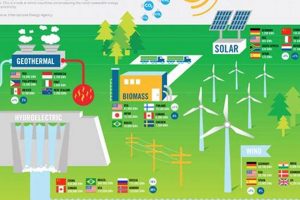
Resource efficiency lies at the heart of sustainable development. One approach involves minimizing waste and maximizing the reuse of materials in closed loops, mimicking natural ecosystems. This regenerative model contrasts sharply with the traditional linear “take-make-dispose” approach. For example, instead of discarding plastic packaging after a single use, it can be redesigned for durability, reuse, and eventual recycling back into new products. Complementing this resource-focused strategy is the transition to energy systems powered by sources that naturally replenish themselves. Wind, solar, hydro, and geothermal energy offer pathways toward decarbonizing power generation and reducing reliance on finite fossil fuels.
These interconnected approaches offer significant potential for mitigating environmental damage, enhancing resource security, and fostering economic growth. By decoupling economic activity from resource depletion and pollution, a more resilient and equitable future can be achieved. Historically, industrial economies have relied heavily on readily available fossil fuels and a linear consumption model. However, growing awareness of the environmental and social costs associated with this approach has spurred interest in sustainable alternatives.
The following sections will delve deeper into the specific principles and practices of sustainable resource management and clean energy adoption. We will explore the latest innovations, challenges, and policy landscapes shaping the transition towards a more sustainable future.
Practical Steps Towards Sustainability
Transitioning towards greater sustainability requires action at all levels, from individual choices to systemic changes. The following practical steps offer pathways for embracing resource efficiency and clean energy adoption.
Tip 1: Prioritize Reduce, Reuse, and Repair: Before purchasing new items, consider whether existing products can be repurposed or repaired. This reduces demand for new resources and minimizes waste generation. For example, repairing electronics instead of replacing them extends their lifespan and conserves valuable materials.
Tip 2: Support Businesses with Sustainable Practices: Patronize companies committed to closed-loop systems, responsible sourcing, and renewable energy use. Consumer demand can drive market shifts towards more sustainable products and services.
Tip 3: Advocate for Policy Changes: Engage with local and national governments to support policies that incentivize sustainable practices, such as extended producer responsibility schemes and renewable energy mandates.
Tip 4: Invest in Energy Efficiency: Improving energy efficiency in buildings and transportation reduces energy consumption and reliance on fossil fuels. This can involve upgrades like insulation, efficient lighting, and the adoption of electric vehicles.
Tip 5: Embrace Renewable Energy Sources: Explore opportunities to transition to renewable energy sources, such as installing solar panels on homes or supporting community solar projects.
Tip 6: Compost Organic Waste: Composting food scraps and yard waste reduces landfill burden and creates nutrient-rich soil amendments, closing the loop on organic materials.
Tip 7: Minimize Plastic Consumption: Reduce reliance on single-use plastics by opting for reusable alternatives, such as water bottles, shopping bags, and food containers.
By adopting these practices, individuals and communities can contribute to a more sustainable future characterized by resource efficiency and clean energy. These efforts collectively drive progress towards a more resilient and environmentally sound economy.
The concluding section will offer a broader perspective on the future of sustainable development and the ongoing evolution of resource management and energy systems.
1. Resource Efficiency

Resource efficiency forms a cornerstone of the transition towards a circular economy powered by renewable energy. It represents a fundamental shift from the traditional linear “take-make-dispose” model to a more cyclical approach that minimizes waste and maximizes the value derived from resources. This connection is crucial because resource depletion and the associated environmental impacts, such as habitat destruction and pollution, pose significant challenges to sustainable development. By optimizing resource utilization, the demand for virgin materials decreases, reducing pressure on natural ecosystems. For example, implementing industrial symbiosis, where the waste or byproducts of one industry become the raw materials for another, exemplifies resource efficiency within a circular economy framework. Furthermore, designing products for durability, repairability, and recyclability extends their lifespan and reduces the need for frequent replacements, further enhancing resource efficiency.
The practical significance of resource efficiency becomes even more pronounced when considering the transition to renewable energy. Manufacturing solar panels, wind turbines, and other renewable energy technologies requires significant resource inputs. By improving resource efficiency throughout the lifecycle of these technologies, from material extraction to end-of-life management, the overall environmental footprint of the renewable energy sector can be minimized. For instance, developing innovative recycling processes for solar panel components can recover valuable materials like silicon and silver, reducing the need for virgin resource extraction. Moreover, optimizing the design and manufacturing processes of wind turbines can minimize material usage and improve their efficiency, leading to greater energy generation with fewer resources.
In summary, resource efficiency plays a vital role in enabling both circular economy principles and the widespread adoption of renewable energy. It represents a crucial strategy for decoupling economic growth from resource depletion and environmental degradation. While challenges remain in implementing resource-efficient practices across various sectors, the potential benefits for both the environment and the economy are substantial. Addressing these challenges through technological innovation, policy interventions, and changes in consumption patterns will be essential for achieving a truly sustainable future. This understanding underscores the importance of integrating resource efficiency considerations into all aspects of production and consumption, paving the way for a more resilient and equitable future.
2. Waste Minimization

Waste minimization represents a critical component of the transition towards a circular economy powered by renewable energy. It addresses the environmental and economic consequences of generating and managing large volumes of waste. This connection is essential because waste generation often entails resource depletion, pollution, and greenhouse gas emissions, undermining the sustainability of both linear economic models and conventional energy systems. By minimizing waste, societies can conserve valuable resources, reduce environmental impacts, and enhance the feasibility of circularity. For example, implementing strategies like source reduction, which focuses on preventing waste generation at the outset, directly aligns with circular economy principles by minimizing the need for end-of-life waste management.
The practical implications of waste minimization extend beyond resource conservation. Reducing waste often leads to cost savings for businesses and municipalities by decreasing waste disposal expenses and promoting efficient resource utilization. Moreover, minimizing waste can stimulate innovation by encouraging the development of new technologies and processes that optimize resource use and minimize waste generation. For instance, adopting closed-loop systems for industrial processes, where waste streams are captured and reused within the production cycle, exemplifies waste minimization within a circular economy framework. Furthermore, incorporating waste minimization strategies into the design and manufacturing of renewable energy technologies, such as minimizing material waste during solar panel production, further enhances the sustainability of the renewable energy sector. By reducing the overall environmental footprint, waste minimization contributes to the long-term viability and effectiveness of renewable energy solutions.
In conclusion, waste minimization plays a crucial role in enabling the transition towards a more sustainable future characterized by circularity and renewable energy. It represents a pragmatic approach to addressing the environmental and economic challenges associated with waste generation and disposal. While significant progress has been made in implementing waste minimization strategies, further efforts are needed to integrate these principles across all sectors of the economy. This integration will require ongoing technological advancements, policy interventions, and changes in consumption patterns. Ultimately, embracing waste minimization as a core principle of sustainable development will contribute to a more resource-efficient, environmentally sound, and economically prosperous future.
3. Closed-Loop Systems

Closed-loop systems represent a cornerstone of the circular economy, mirroring natural ecosystems by minimizing waste and maximizing resource reuse. These systems play a crucial role in decoupling economic activity from resource depletion and environmental degradation, thereby enhancing the sustainability of both production and consumption. This approach contrasts sharply with traditional linear models, which rely on a “take-make-dispose” pattern. The integration of closed-loop systems with renewable energy further amplifies the environmental benefits, creating a synergistic relationship that promotes both resource efficiency and clean energy adoption.
- Industrial Symbiosis:
Industrial symbiosis exemplifies closed-loop systems at a larger scale. It involves collaboration among different industries to exchange byproducts and waste streams, transforming what was once considered waste into valuable resources for other processes. For instance, the waste heat from a power plant can be used to heat a nearby greenhouse, reducing energy consumption and minimizing waste. This approach fosters resource optimization and reduces reliance on virgin materials, contributing significantly to a circular economy powered by renewable energy.
- Product Lifecycle Management:
Closed-loop systems necessitate a holistic approach to product lifecycle management, considering the entire journey of a product from design and manufacturing to end-of-life management. Designing products for durability, repairability, and recyclability extends their lifespan and enables material recovery at the end of their useful life. This approach minimizes waste generation and promotes resource circularity, aligning with the principles of a circular economy and supporting the transition to renewable energy by reducing the environmental footprint associated with product manufacturing and disposal.
- Biomimicry and Natural Cycles:
Nature provides a wealth of inspiration for designing closed-loop systems. By emulating natural cycles and processes, such as the decomposition and regeneration of organic matter, industries can develop innovative solutions for waste management and resource recovery. For example, composting food waste mimics natural decomposition processes and creates valuable compost that can be used to enrich soil, closing the loop on organic materials and minimizing the need for synthetic fertilizers. This biomimetic approach enhances the sustainability of both production and consumption, contributing to a circular economy and reducing reliance on energy-intensive processes associated with synthetic fertilizer production.
- Renewable Energy Integration:
Integrating closed-loop systems with renewable energy sources further enhances sustainability. For instance, powering a closed-loop recycling facility with solar energy minimizes the environmental footprint of the recycling process and reduces reliance on fossil fuels. This synergistic relationship between circularity and renewable energy creates a positive feedback loop, where resource efficiency supports clean energy adoption and vice versa. This integration is crucial for achieving a truly sustainable future characterized by both resource conservation and decarbonized energy systems.
These interconnected facets of closed-loop systems demonstrate the potential for achieving a more sustainable and resilient economy. By embracing circularity and integrating renewable energy, societies can minimize waste, optimize resource utilization, and reduce their environmental impact. This transition requires systemic changes across various sectors, including manufacturing, waste management, and energy production. The adoption of closed-loop systems represents a fundamental shift towards a more regenerative and environmentally conscious approach to economic activity, supporting the long-term goals of both circular economy principles and the widespread adoption of renewable energy.
4. Renewable Energy Sources

Renewable energy sources represent a critical component of the circular economy model. This connection stems from the need to decarbonize energy systems and reduce reliance on finite resources inherent in the linear “take-make-dispose” paradigm. Transitioning to renewable energy sources like solar, wind, hydro, and geothermal power directly addresses the environmental impact of fossil fuel-based energy generation, a significant contributor to climate change and resource depletion. This shift facilitates a move towards closed-loop systems where energy production aligns with resource conservation principles. For instance, powering a recycling plant with solar energy reduces the overall environmental footprint of the recycling process, embodying the synergistic relationship between renewable energy and circularity.
The practical significance of integrating renewable energy sources within a circular economy framework becomes evident when considering the lifecycle of renewable energy technologies. Manufacturing solar panels, wind turbines, and other renewable energy infrastructure requires resource extraction and processing. Applying circular economy principles to these processessuch as designing for durability, recyclability, and material recoveryminimizes the environmental impact of renewable energy deployment. Furthermore, using renewable energy to power the manufacturing of these technologies reduces reliance on fossil fuels throughout the supply chain. An example is a wind turbine manufacturing facility powered by wind energy, showcasing a closed-loop approach to renewable energy production. This interconnectedness highlights the importance of viewing renewable energy not just as a clean energy source but as an integral part of a broader system of sustainable resource management.
In summary, the transition to a circular economy necessitates a concurrent shift towards renewable energy sources. Decoupling economic activity from fossil fuel dependence is essential for achieving true sustainability. While challenges remain in scaling renewable energy infrastructure and managing the lifecycle impacts of renewable energy technologies, the integration of circular economy principles offers pathways for mitigating these challenges. This understanding underscores the importance of a holistic approach to sustainable development, where renewable energy and circular resource management work in concert to create a more resilient, equitable, and environmentally sound future.
5. Sustainable Manufacturing

Sustainable manufacturing represents a crucial link between the circular economy and renewable energy, fostering resource efficiency and minimizing environmental impact throughout the production lifecycle. This interconnectedness arises from the need to decouple economic activity from resource depletion and pollution, aligning with the core principles of both circularity and renewable energy adoption. Sustainable manufacturing practices prioritize resource optimization, waste reduction, and the use of clean energy sources, creating a synergistic relationship that enhances the overall sustainability of production processes. For instance, a furniture manufacturer utilizing sustainably harvested wood and powering its operations with solar energy embodies this integrated approach. This example demonstrates how sustainable manufacturing can contribute to both resource conservation and the transition to renewable energy.
The practical significance of this connection becomes evident when considering the lifecycle impacts of manufactured goods. Traditional manufacturing often relies on linear processes, resulting in significant waste generation and greenhouse gas emissions. Sustainable manufacturing, conversely, emphasizes closed-loop systems, where waste is minimized through strategies like design for disassembly, reuse, and recycling. Furthermore, incorporating renewable energy into manufacturing processes reduces reliance on fossil fuels, further minimizing the environmental footprint. For example, a textile company implementing a closed-loop system for water and dye usage while powering its facility with wind energy demonstrates a tangible application of sustainable manufacturing principles within a circular economy framework. This approach not only reduces resource consumption and pollution but also enhances the company’s long-term viability by mitigating risks associated with resource scarcity and environmental regulations. Moreover, it can enhance brand reputation and attract environmentally conscious consumers.
In conclusion, sustainable manufacturing plays a pivotal role in bridging the circular economy and renewable energy. By adopting resource-efficient practices and transitioning to clean energy sources, manufacturing industries can significantly reduce their environmental impact while contributing to a more resilient and sustainable economy. While challenges remain in implementing sustainable manufacturing across diverse sectors, the potential benefits for both the environment and businesses are substantial. Addressing these challenges through technological innovation, policy incentives, and collaborative partnerships will be essential for realizing the full potential of sustainable manufacturing as a key driver of the circular economy and the transition to renewable energy. This understanding underscores the importance of integrating sustainability considerations into all aspects of manufacturing, from product design and material selection to energy consumption and waste management, paving the way for a more environmentally sound and economically prosperous future.
6. Decarbonized Energy

Decarbonized energy systems represent a cornerstone of the circular economy, inextricably linked to the adoption of renewable energy sources. This connection stems from the urgent need to mitigate climate change and reduce reliance on finite, carbon-intensive fossil fuels. Decarbonization aligns with circular economy principles by minimizing environmental impact, promoting resource efficiency, and fostering a more sustainable energy future. This transition involves not only adopting renewable energy generation but also enhancing energy efficiency across all sectors, including manufacturing, transportation, and buildings. The following facets explore key components and implications of decarbonized energy within the circular economy framework.
- Electrification:
Electrification plays a vital role in decarbonizing various sectors by replacing fossil fuel-based processes with electricity generated from renewable sources. For example, transitioning from gasoline-powered vehicles to electric vehicles (EVs) powered by renewable electricity significantly reduces transportation emissions. Furthermore, electrifying industrial processes, such as heating and manufacturing, using renewable electricity further contributes to decarbonization. This shift aligns with circular economy principles by reducing reliance on finite resources and minimizing pollution.
- Energy Storage:
Energy storage technologies are crucial for enabling the widespread adoption of intermittent renewable energy sources like solar and wind power. Batteries, pumped hydro storage, and other storage solutions address the intermittency challenge by storing excess renewable energy generated during peak periods and releasing it when demand exceeds generation. This capability enhances grid stability and reliability, facilitating the integration of higher percentages of renewable energy into the energy mix. This, in turn, supports the circular economy by enabling a shift away from fossil fuel-based energy generation, reducing resource depletion and emissions.
- Grid Modernization:
Modernizing existing power grids is essential for accommodating the increasing penetration of renewable energy sources. Smart grids, equipped with advanced sensors and communication technologies, optimize energy distribution, manage intermittent renewable energy flows, and enhance grid resilience. This modernization effort is crucial for ensuring the reliable and efficient delivery of renewable energy to consumers, supporting the transition towards a decarbonized energy system. This aligns with circular economy principles by maximizing the utilization of renewable energy resources and minimizing energy waste.
- Energy Efficiency:
Improving energy efficiency across all sectors plays a critical role in decarbonization efforts. Reducing energy consumption through measures like building insulation, efficient lighting, and optimized industrial processes minimizes the overall demand for energy, reducing the need for both fossil fuel-based and renewable energy generation. This approach complements the transition to renewable energy by reducing the scale of infrastructure required to meet energy needs. Furthermore, energy efficiency aligns with circular economy principles by minimizing resource use and waste generation associated with energy production and consumption.
These interconnected facets of decarbonized energy demonstrate the strong synergy between renewable energy adoption and the principles of the circular economy. By transitioning to clean energy sources, enhancing energy efficiency, and modernizing energy infrastructure, societies can significantly reduce their environmental impact and create a more sustainable and resilient energy future. This transition requires systemic changes across various sectors, but the potential benefits for both the environment and the economy are substantial. Decarbonized energy represents a crucial step towards achieving the long-term goals of both the circular economy and a sustainable energy transition, paving the way for a more equitable and environmentally sound future.
7. Regenerative Practices

Regenerative practices represent a crucial evolution beyond the circular economy, moving from merely sustaining current resources to actively restoring and replenishing ecological systems. This approach aligns seamlessly with the goals of a circular economy powered by renewable energy by addressing the root causes of environmental degradation and promoting long-term sustainability. Regenerative practices go beyond minimizing negative impacts; they actively seek to create positive environmental and social outcomes. This shift is essential for achieving true sustainability, moving from a mindset of resource efficiency to one of ecological restoration and regeneration. The following facets explore key components and implications of regenerative practices within this broader context.
- Ecosystem Restoration:
Ecosystem restoration plays a vital role in regenerative practices by actively working to repair damaged ecosystems and enhance biodiversity. Examples include reforestation projects, wetland restoration, and coral reef rehabilitation. These efforts contribute to the circular economy by enhancing natural resource cycles, improving carbon sequestration, and supporting ecosystem services crucial for human well-being. For instance, restoring degraded agricultural land through regenerative farming practices not only improves soil health and carbon sequestration but also enhances food security and reduces reliance on synthetic fertilizers, aligning with the principles of both a circular economy and renewable energy by reducing the need for energy-intensive fertilizer production.
- Regenerative Agriculture:
Regenerative agriculture represents a shift from conventional farming practices towards methods that prioritize soil health, biodiversity, and carbon sequestration. Practices like no-till farming, cover cropping, and crop rotation enhance soil fertility, reduce erosion, and improve water retention. These practices contribute to the circular economy by reducing reliance on synthetic inputs, minimizing agricultural waste, and enhancing the long-term productivity of agricultural land. Furthermore, healthy soils sequester significant amounts of carbon dioxide from the atmosphere, mitigating climate change and supporting the transition to renewable energy by reducing greenhouse gas emissions.
- Renewable Material Sourcing:
Regenerative practices extend to material sourcing, emphasizing the use of renewable and sustainably harvested materials. This approach prioritizes materials that regenerate naturally, such as bamboo, hemp, and sustainably managed timber. Using these materials in manufacturing and construction reduces reliance on finite resources and minimizes the environmental impact of material extraction and processing. This aligns with circular economy principles by promoting resource circularity and reducing waste generation. Furthermore, sourcing renewable materials often requires less energy than extracting and processing virgin materials, supporting the transition to renewable energy by reducing overall energy demand.
- Circular Design and Biomimicry:
Circular design and biomimicry play a crucial role in regenerative practices by emulating natural systems and processes to create products and systems that are inherently regenerative. Designing products for disassembly, reuse, and biological degradation ensures that materials can be returned to natural cycles at the end of their useful life. Biomimicry, which draws inspiration from nature’s designs and processes, offers innovative solutions for sustainable production and consumption. For example, designing packaging materials inspired by the decomposition processes of leaves enables biodegradable packaging that returns nutrients to the soil, mimicking natural cycles and minimizing waste. This approach aligns with the goals of both the circular economy and renewable energy by reducing resource consumption and promoting ecological regeneration.
These interconnected facets of regenerative practices demonstrate a profound shift towards a more holistic and restorative approach to sustainability. By actively restoring ecosystems, embracing regenerative agriculture, sourcing renewable materials, and implementing circular design principles, societies can move beyond simply minimizing negative impacts to actively creating positive environmental and social outcomes. This transition requires systemic changes across various sectors, but the potential benefits for both the planet and human well-being are substantial. Regenerative practices represent a crucial evolution in the pursuit of sustainability, aligning seamlessly with the goals of the circular economy and the transition to renewable energy. This integrated approach paves the way for a future where economic activity not only minimizes harm but actively contributes to the regeneration and flourishing of ecological systems.
Frequently Asked Questions
This section addresses common inquiries regarding the interconnectedness of circular economies and renewable energy, aiming to provide clear and concise information.
Question 1: How does the circular economy reduce reliance on finite resources?
The circular economy minimizes resource depletion by prioritizing reuse, repair, remanufacturing, and recycling, reducing the demand for virgin materials. This contrasts with linear “take-make-dispose” models that deplete finite resources.
Question 2: What role does renewable energy play in a circular economy?
Renewable energy provides a sustainable power source for circular economy processes, reducing reliance on fossil fuels and minimizing environmental impact. This decarbonizes manufacturing, recycling, and other industrial activities.
Question 3: Can the circular economy be achieved without transitioning to renewable energy?
While some circularity benefits can be achieved independently, full realization requires decarbonized energy systems. Renewable energy minimizes the environmental footprint of circular processes, ensuring long-term sustainability.
Question 4: What are the key barriers to implementing circular economy principles?
Significant obstacles include existing infrastructure designed for linear models, consumer behavior patterns, and the need for robust collection and sorting systems for materials recovery. Overcoming these barriers requires systemic changes across various sectors.
Question 5: How do governments incentivize the adoption of circular economy practices?
Policy interventions such as extended producer responsibility schemes, landfill bans, and tax incentives for recycled content encourage businesses to adopt circular practices. Supportive regulations and standards can further accelerate the transition.
Question 6: What is the relationship between the circular economy and sustainable development goals?
The circular economy directly contributes to several Sustainable Development Goals, including responsible consumption and production, climate action, and affordable and clean energy. Its principles offer pathways for achieving a more sustainable and equitable future.
Understanding these fundamental aspects of circular economies and renewable energy is crucial for informed decision-making and effective implementation. The transition towards a circular economy powered by renewable energy requires collaborative efforts across industries, governments, and communities.
The next section will explore specific case studies and real-world examples of successful circular economy initiatives.
Conclusion
This exploration has highlighted the symbiotic relationship between circular economy principles and the transition to renewable energy. Decoupling economic activity from resource depletion and fossil fuel dependence represents a fundamental shift towards a more sustainable future. Key aspects discussed include resource efficiency, waste minimization, closed-loop systems, sustainable manufacturing, decarbonized energy, and regenerative practices. These interconnected strategies offer pathways for mitigating environmental challenges, enhancing resource security, and fostering economic innovation. The integration of renewable energy sources empowers circular processes, minimizing the environmental footprint of manufacturing, recycling, and other industrial activities.
The transition towards a circular economy powered by renewable energy demands collective action and systemic change. While significant challenges remain, the potential benefits for the environment, the economy, and society are substantial. Embracing these principles offers a pathway toward a more resilient, equitable, and prosperous future. Continued innovation, policy support, and collaborative partnerships across sectors will be essential for realizing the full potential of this transformative approach to sustainable development. The imperative for decisive action is clear: the future of sustainability hinges on the successful integration of circular economy principles and the widespread adoption of renewable energy.