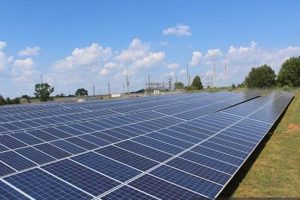
Harnessing the radiant light and heat from the sun provides a renewable power source. This form of energy conversion utilizes photovoltaic cells or concentrated solar power systems to generate electricity, heat water, or even power vehicles. An example includes rooftop panels that convert sunlight directly into electrical current for residential or commercial use.
The significance of this resource lies in its potential to mitigate reliance on fossil fuels, thereby reducing carbon emissions and combating climate change. Historically, rudimentary methods of capturing its power date back centuries, but advancements in technology have dramatically increased efficiency and scalability. Benefits include reduced energy costs, increased energy independence, and a cleaner environment.
The following sections will delve into specific applications, technological advancements, and the economic impact associated with this crucial resource. Furthermore, discussions will cover storage solutions and policy considerations that influence its widespread adoption.
Optimizing the Use of Solar Power
This section provides practical guidance for maximizing the benefits derived from sunlight as an energy source, focusing on efficiency and cost-effectiveness.
Tip 1: Conduct a Thorough Site Assessment: Prior to installation, evaluate shading patterns, roof orientation, and structural integrity. A professional assessment ensures optimal panel placement and system performance, maximizing the conversion of radiant energy into usable power.
Tip 2: Select High-Efficiency Panels: Invest in panels with a high energy conversion rate. Monocrystalline silicon panels generally offer superior performance compared to polycrystalline options, leading to greater power output for a given surface area exposed to the sun’s rays.
Tip 3: Incorporate Energy Storage Solutions: Implement battery storage systems to capture excess power generated during peak sunlight hours. This stored energy can be utilized during periods of low sunlight or at night, ensuring a continuous power supply and reducing reliance on the grid.
Tip 4: Implement Regular Maintenance: Schedule periodic cleaning to remove dust, debris, and other obstructions from the panel surface. This ensures that the panels continue to absorb the maximum amount of light. Furthermore, regular inspections can identify and address any potential issues before they escalate.
Tip 5: Monitor System Performance: Utilize monitoring software to track energy production and consumption patterns. This data allows for identification of inefficiencies and optimization of system settings to maximize energy savings.
Tip 6: Explore Net Metering Programs: Investigate and participate in net metering programs offered by local utility companies. These programs allow excess power generated to be fed back into the grid, resulting in credits on monthly energy bills.
Tip 7: Consider a Smart Inverter: Opt for smart inverters that can optimize power output and provide real-time performance data. These inverters can also communicate with the grid, facilitating more efficient energy distribution.
Implementing these strategies can significantly enhance the efficiency and economic viability of sunlight as a power source. These steps contribute to a more sustainable energy future by maximizing the utilization of a clean, renewable resource.
The following section will address the latest innovations and future trends in this increasingly important field.
1. Photovoltaic Conversion

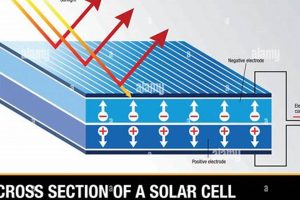
Photovoltaic conversion represents the fundamental process by which radiant energy from the sun is directly transformed into electrical energy, establishing it as a core mechanism within solar power systems. This process relies on the photovoltaic effect, observed in semiconductor materials, wherein photons from sunlight liberate electrons, generating an electric current. Without efficient photovoltaic conversion, the large-scale utilization of sunlight as an energy source would be impractical. The efficacy of this conversion directly impacts the amount of electricity generated from a specific area of solar panels.
The development of efficient photovoltaic cells is a driving force within the field. For instance, advancements in silicon-based solar cells and the exploration of novel materials, such as perovskites, have resulted in increased energy conversion rates. High-efficiency photovoltaic systems are critical in regions with limited land availability. Furthermore, integration of photovoltaic technology extends beyond large-scale solar farms to residential and commercial applications, demonstrating versatility.
Understanding the intricacies of photovoltaic conversion is essential for optimizing the performance and economic viability of solar power. Challenges remain in improving efficiency, durability, and cost-effectiveness, thereby ensuring that this renewable resource can contribute significantly to global energy needs. The continued progress in photovoltaic research and development will be vital for expanding the reach and impact of sustainable electrical power generation.
2. Energy Storage Systems

The inherent intermittency of sunshine poses a significant challenge to the consistent delivery of power generated from solar energy. Energy storage systems directly address this challenge by capturing and storing excess electrical energy produced during periods of high insolation, such as midday, for utilization during periods of low or no sunlight, such as nighttime or overcast conditions. Without effective storage, the value and reliability of power from the sun are substantially diminished. A prime example is the use of lithium-ion batteries in conjunction with residential solar panel installations, allowing homeowners to maintain a consistent power supply irrespective of sunlight availability. The cause-and-effect relationship is clear: ample sunshine leads to surplus electricity, which is then stored; subsequently, during periods of darkness, the stored electricity is released, ensuring a continuous power supply. This interplay underscores the vital role of storage in transforming sunshine from an intermittent source to a dependable energy resource.
Beyond residential applications, large-scale energy storage projects are becoming increasingly prevalent. Utility-scale battery storage facilities are being deployed alongside solar power plants to smooth out fluctuations in energy output and provide ancillary services to the grid, such as frequency regulation. For example, the Hornsdale Power Reserve in South Australia, connected to a wind farm but effectively demonstrating the principle for solar as well, significantly stabilized the regional grid by rapidly injecting power during outages. Pumped hydro storage, where water is pumped uphill to a reservoir during periods of excess production and released to generate electricity during periods of high demand, also represents a mature technology applicable to balancing the variable output from photovoltaic arrays. Furthermore, ongoing research explores alternative storage technologies, including flow batteries and compressed air energy storage, each with unique advantages and disadvantages regarding cost, scalability, and environmental impact. The practical application extends to enhanced grid stability, reduced reliance on fossil fuel peaker plants, and increased opportunities for distributed generation.
In summary, energy storage systems are an indispensable component of successful solar power implementation. Their ability to decouple energy production from consumption directly mitigates the intermittency challenges associated with this renewable resource. Technological advancements in storage capacity, discharge rate, lifespan, and cost are essential for increasing the competitiveness of sun-derived electricity and facilitating its widespread adoption. Ongoing research and policy support will be crucial for overcoming existing barriers and unlocking the full potential of sun combined with energy storage as a dependable and sustainable energy solution.
3. Grid Integration Challenges

The integration of electricity generated from sunlight into existing power grids presents several technical and economic challenges. These challenges stem primarily from the variable and intermittent nature of sunlight, coupled with the inherent design characteristics of conventional electricity grids optimized for dispatchable power sources.
- Voltage Fluctuations
The intermittent nature of sunshine can cause rapid voltage fluctuations on the grid, particularly at locations with high penetration of distributed photovoltaic systems. These fluctuations can stress grid equipment and potentially lead to instability. For example, a sudden cloud cover can cause a rapid drop in electricity production, resulting in a voltage dip that impacts grid performance.
- Reverse Power Flow
Traditional distribution grids are designed for unidirectional power flow, from centralized generation sources to end consumers. When distributed photovoltaic systems generate more electricity than local demand, power flows backward onto the grid, potentially overloading distribution infrastructure and requiring costly grid upgrades. Utility companies must manage this reverse flow to maintain grid stability.
- Forecasting Accuracy
Accurate forecasting of electricity generation from sunlight is crucial for grid operators to balance supply and demand. However, weather patterns and cloud cover are inherently difficult to predict with absolute certainty. Inaccurate forecasts can lead to imbalances between supply and demand, requiring grid operators to rely on fast-response dispatchable resources or energy storage to maintain grid stability.
- Grid Infrastructure Upgrades
Integrating substantial amounts of electricity from sunlight may require significant upgrades to grid infrastructure, including transmission lines, substations, and distribution feeders. These upgrades can be costly and time-consuming, posing a barrier to the widespread adoption of distributed electricity production from the sun. Furthermore, the costs of these upgrades must be allocated equitably among ratepayers and solar electricity producers.
Addressing these grid integration challenges is essential for realizing the full potential of electricity derived from the sun. Technological solutions, such as advanced grid management systems, smart inverters, and energy storage, coupled with supportive regulatory frameworks, are necessary to facilitate seamless and reliable integration of electricity into the existing power grid. Failure to address these challenges will impede the widespread adoption of sustainable electrical power generation.
4. Material Science Advancements

Material science advancements are inextricably linked to the progression of solar energy technologies. The efficiency, durability, and cost-effectiveness of electricity derived from the sun are directly governed by the properties of materials employed in photovoltaic cells and associated systems. The cause-and-effect relationship is evident: breakthroughs in material science directly result in improved performance metrics for electricity production, reduced manufacturing costs, and extended operational lifespans for solar energy systems. Without ongoing materials research and development, the widespread adoption of this renewable energy source would be severely constrained.
Specific examples illustrate this vital connection. The development of high-purity silicon and thin-film materials has dramatically increased the light-to-electricity conversion efficiency of photovoltaic cells. The discovery and refinement of transparent conductive oxides, such as indium tin oxide, have enabled the creation of more efficient solar panels by minimizing light reflection and maximizing electrical conductivity. Furthermore, advancements in polymer materials have led to the development of lightweight and flexible solar cells, expanding the range of applications from traditional rooftop installations to portable electronics and building-integrated photovoltaics. The practical application of these material innovations translates to greater electricity production, lower overall costs, and increased accessibility of solar power.
In summary, material science advancements are not merely incremental improvements but rather essential drivers of progress in the field. Overcoming existing challenges, such as improving the long-term stability of perovskite solar cells or reducing the cost of high-efficiency semiconductors, will pave the way for more widespread deployment and broader impact of solar power in meeting global energy needs. Continued investment in materials research and development is therefore critical for realizing the full potential of this renewable energy source.
5. Policy & Economic Incentives

The deployment and economic viability of solar power are heavily influenced by government policies and economic incentives. These mechanisms shape market conditions, influencing investment decisions and adoption rates. Policies create the framework within which the solar energy sector operates, while incentives provide financial inducements to encourage investment and consumption. Without effective policies and incentives, the growth of solar energy would be significantly hampered. For example, tax credits, feed-in tariffs, and renewable portfolio standards have demonstrably spurred the expansion of photovoltaic installations globally. The cause-and-effect relationship is clear: supportive policies reduce the financial burden of adopting solar, leading to increased demand and deployment.
Examples of successful policy implementation are abundant. Germany’s feed-in tariff policy, for instance, provided guaranteed payments for solar electricity fed back into the grid, fostering rapid growth in the solar sector. Similarly, the Investment Tax Credit (ITC) in the United States has reduced the upfront cost of solar systems, stimulating investment and driving down prices. Renewable Portfolio Standards (RPS) mandate that utilities procure a certain percentage of their electricity from renewable sources, creating a guaranteed market for solar electricity. These examples highlight the effectiveness of well-designed policies in overcoming market barriers and promoting the widespread adoption of solar power. The practical application of these policies extends to job creation, economic development, and reduced reliance on fossil fuels.
In conclusion, policies and economic incentives are indispensable components of a thriving solar energy sector. They address market failures, reduce financial barriers, and create a stable and predictable investment environment. While challenges remain in optimizing policy design and ensuring equitable distribution of benefits, the evidence clearly demonstrates that strategic government intervention is essential for accelerating the transition to a sustainable energy future. These mechanisms, when thoughtfully implemented, serve as catalysts for innovation, economic growth, and environmental protection.
6. Geographic Resource Availability

The geographic distribution of solar irradiation profoundly influences the viability and efficiency of power generation. Sunlight, the essential input for electricity derived from the sun, varies significantly across different regions, necessitating a thorough understanding of resource availability for effective project planning and investment.
- Solar Irradiance Levels
Regions closer to the equator generally experience higher solar irradiance levels compared to those at higher latitudes. This is due to the angle of incidence of sunlight and the length of daylight hours. For example, the southwestern United States, parts of the Middle East, and Australia receive significantly more sunlight than northern Europe, making them more suitable for large-scale power generation. Solar irradiance maps provide crucial data for assessing the potential electricity output of prospective photovoltaic installations in different locations.
- Climatic Conditions
Climatic factors, such as cloud cover, humidity, and air pollution, can significantly affect the amount of sunlight reaching the surface of photovoltaic panels. Areas with frequent cloud cover or high levels of atmospheric particulates will experience reduced electricity output. Deserts, while characterized by high solar irradiance, may also face challenges due to dust accumulation on panel surfaces, requiring regular cleaning. Consideration of these climatic conditions is essential for accurately estimating electricity generation and planning for maintenance requirements.
- Land Availability and Topography
The availability of suitable land for large-scale solar projects is a critical factor in resource availability. Flat, open areas are generally preferred to minimize shading and installation costs. Hilly or mountainous terrain can be more challenging and expensive to develop, although innovative approaches, such as building-integrated photovoltaics, can mitigate some of these limitations. Population density and competing land uses, such as agriculture or conservation, can also restrict the availability of suitable sites.
- Grid Infrastructure Proximity
The proximity of prospective solar power plants to existing grid infrastructure is an important consideration. Connecting remote power plants to the grid can be costly and time-consuming, potentially increasing project development costs. Areas with well-developed grid infrastructure and high electricity demand are generally more attractive for solar projects. The availability of transmission capacity and the stability of the grid are also important factors to consider.
In summation, the interplay of solar irradiance levels, climatic conditions, land availability, and grid infrastructure proximity collectively determines the geographic resource availability for power generation. A comprehensive assessment of these factors is essential for optimizing project siting, maximizing energy output, and ensuring the economic viability of solar investments. Understanding the nuances of geographic resource availability is crucial for achieving the full potential of sustainable electrical power generation.
7. Environmental Impact Assessment
The implementation of power generation, while often perceived as environmentally benign, necessitates careful scrutiny through Environmental Impact Assessments (EIAs). These assessments are critical for identifying and mitigating potential adverse effects associated with the entire lifecycle, from manufacturing to decommissioning. Neglecting these evaluations can result in unforeseen environmental consequences, undermining the intended sustainability benefits. For instance, an inadequately assessed large-scale photovoltaic farm might disrupt local ecosystems, alter hydrological patterns, or contribute to soil erosion. Furthermore, the manufacturing processes of photovoltaic cells involve materials and energy inputs that must be carefully evaluated for their environmental footprint. The cause-and-effect relationship is clear: thorough EIAs can minimize negative impacts, whereas their absence can exacerbate environmental problems.
Specific examples underscore the importance of EIAs. The mining of rare earth minerals used in some photovoltaic technologies can have significant environmental repercussions, including habitat destruction and water contamination. A comprehensive EIA would identify these risks and propose mitigation strategies, such as responsible sourcing practices and waste management protocols. Similarly, the decommissioning of power plants requires careful planning to prevent the release of hazardous materials into the environment. An EIA would assess the potential risks associated with panel disposal and recommend appropriate recycling or disposal methods. The practical application of EIAs extends to ensuring that the benefits of solar energy outweigh any potential negative environmental consequences. It also promotes transparency and accountability in the sector.
In summary, Environmental Impact Assessments are indispensable for responsible development and deployment. These assessments safeguard against unintended environmental harm, promote sustainable practices, and ensure that this renewable energy source truly contributes to a cleaner and more sustainable future. Addressing challenges such as standardizing EIA methodologies and incorporating lifecycle assessments is crucial for maximizing the effectiveness of these evaluations. By prioritizing environmental stewardship, the solar industry can solidify its position as a leading contributor to global sustainability efforts.
Frequently Asked Questions About Solar Energie
This section addresses common inquiries regarding the utilization of radiant energy as a power source. The information provided aims to clarify misconceptions and offer factual insights into various aspects of this renewable energy technology.
Question 1: What is the typical lifespan of photovoltaic panels?
Photovoltaic panels generally have a lifespan of 25 to 30 years. Performance degrades gradually over time, typically at a rate of 0.5% to 1% per year. Most manufacturers offer performance warranties guaranteeing a certain percentage of original power output after 25 years.
Question 2: How does cloud cover affect the performance of electricity generation from the sun?
Cloud cover significantly reduces the amount of sunlight reaching photovoltaic panels, resulting in decreased power output. The extent of the reduction depends on the density and duration of cloud cover. However, photovoltaic panels can still generate some electricity under cloudy conditions, albeit at a reduced rate.
Question 3: Is the production of photovoltaic panels environmentally friendly?
The manufacturing process of photovoltaic panels involves the use of certain materials and energy, which can have environmental impacts. However, lifecycle assessments generally show that the environmental benefits of electricity generation from the sun outweigh the impacts of manufacturing. Ongoing research focuses on developing more sustainable manufacturing processes and materials.
Question 4: What are the primary cost components of a photovoltaic system?
The main cost components include the photovoltaic panels themselves, inverters, mounting hardware, labor for installation, and permitting fees. The cost of photovoltaic panels has decreased significantly in recent years, making electricity generation from the sun more competitive with traditional sources.
Question 5: What is net metering, and how does it benefit electricity producers?
Net metering is a billing mechanism that allows producers to receive credit for excess electricity fed back into the grid. When the energy produced exceeds consumption, the utility meter runs backward, crediting the consumer’s account. This credit can offset future electricity bills, effectively compensating electricity producers for their surplus energy.
Question 6: How can the efficiency of photovoltaic systems be maximized?
Maximizing efficiency involves several strategies, including selecting high-efficiency panels, optimizing panel orientation and tilt angle, minimizing shading, and implementing regular maintenance. Additionally, utilizing advanced inverter technologies and monitoring system performance can contribute to enhanced power output.
Understanding these fundamental aspects contributes to informed decision-making regarding adoption and investment. Further exploration into specific applications and technological advancements is encouraged.
The following section will provide an overview of future trends and innovations in the field.
Conclusion
This exploration has illuminated various facets of power generation from the sun, encompassing technological advancements, economic considerations, policy frameworks, and environmental impacts. Key areas covered include the importance of photovoltaic conversion efficiency, the necessity of energy storage solutions, and the challenges associated with grid integration. Material science breakthroughs and the significance of geographical resource assessment were also examined.
Continued research, strategic policy implementation, and responsible environmental stewardship are essential for maximizing the potential of this renewable resource. The future of electricity production hinges on the sustained development and deployment of technologies that harness radiant energy, ensuring a sustainable and resilient energy future for subsequent generations. The pursuit of innovation in this realm remains a critical imperative.