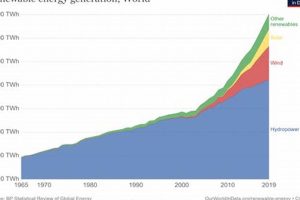
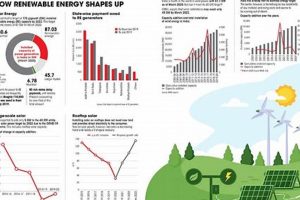
Current sustainable power sources, derived from naturally replenishing resources like sunlight, wind, water, and geothermal heat, offer a viable alternative to finite fossil fuels. Harnessing these resources through technologies such as solar panels, wind turbines, and hydroelectric dams provides electricity generation with minimal environmental impact. For example, a solar farm converting sunlight directly into electricity demonstrates this principle in action.
The increasing utilization of these sustainable resources plays a vital role in mitigating climate change by reducing greenhouse gas emissions associated with traditional energy production. Historically, reliance on fossil fuels has contributed significantly to atmospheric pollution and global warming. The shift towards cleaner alternatives represents a crucial step towards environmental sustainability and energy independence, fostering economic growth in related sectors and enhancing energy security.
This discussion will further explore specific types of sustainable energy sources, their respective advantages and challenges, along with current advancements and future prospects within the evolving energy landscape. Furthermore, policy implications and economic considerations surrounding the transition to a cleaner energy future will be addressed.
Tips for Supporting Sustainable Power
Transitioning towards greater reliance on sustainable power sources requires collective effort. The following tips offer practical guidance for individuals and communities seeking to contribute to this important shift.
Tip 1: Invest in Home Energy Efficiency: Reducing energy consumption lowers demand on the power grid. Improving insulation, using energy-efficient appliances, and adopting smart thermostats are effective steps.
Tip 2: Explore Residential Solar Installations: Rooftop solar panels empower homeowners to generate their own clean electricity, reducing reliance on external suppliers. Evaluating local incentives and installation costs is recommended.
Tip 3: Support Community Solar Projects: Participating in community solar initiatives provides access to clean energy benefits for those without suitable rooftops or sufficient capital for individual installations.
Tip 4: Advocate for Policy Changes: Contacting elected officials and supporting policies that promote sustainable power development, such as tax incentives and renewable portfolio standards, strengthens the transition.
Tip 5: Choose Sustainable Transportation: Opting for electric vehicles, utilizing public transit, and considering cycling or walking reduces reliance on fossil fuel-powered transportation.
Tip 6: Educate and Engage: Sharing information about the benefits of sustainable power with friends, family, and community members raises awareness and encourages broader adoption.
Tip 7: Consider Green Energy Providers: Selecting electricity providers that prioritize sustainable sources helps increase the market share of clean energy.
By embracing these strategies, individuals can actively contribute to a cleaner, more sustainable energy future. Collective action empowers communities to reduce their environmental footprint and foster a healthier planet.
The transition to a sustainable energy landscape necessitates ongoing innovation, collaboration, and informed decision-making. The following section will conclude with a perspective on the future of sustainable power and its potential to reshape the global energy landscape.
1. Current Technologies

Contemporary advancements in energy technology are central to the ongoing transition towards sustainable power generation. Examining these technologies provides crucial insight into the practical application of renewable resources.
- Solar Photovoltaic (PV)
Solar PV technology directly converts sunlight into electricity using semiconductor materials. Large-scale solar farms and rooftop installations exemplify its widespread adoption. This technology plays a pivotal role in decarbonizing electricity generation and reducing reliance on fossil fuels. Advancements in PV cell efficiency and energy storage solutions further enhance its viability.
- Wind Energy
Wind turbines capture kinetic energy from wind and convert it into electricity. Onshore and offshore wind farms contribute significantly to renewable energy capacity. Technological advancements in turbine design and blade aerodynamics continue to improve energy capture efficiency and reduce operational costs. Integrating wind power into existing grids requires careful consideration of intermittency and grid stability.
- Hydropower
Hydroelectric dams harness the potential energy of water stored at elevation to generate electricity. While a mature technology, ongoing advancements focus on improving dam design for minimal environmental impact and enhancing fish passage systems. Hydropower provides a reliable source of baseload power but requires careful consideration of ecological impacts and water resource management.
- Geothermal Energy
Geothermal power plants utilize heat from the Earth’s interior to generate electricity. This technology offers a consistent and reliable energy source, although its geographic applicability is limited to areas with accessible geothermal resources. Advancements in drilling technology and enhanced geothermal systems aim to expand its potential reach.
These core technologies represent the foundation of the current renewable energy landscape. Continued innovation and strategic deployment of these technologies are essential for achieving global sustainability goals and ensuring long-term energy security. Further exploration of energy storage solutions, grid modernization, and supportive policies will be critical for maximizing the potential of these technologies and enabling a complete transition away from fossil fuels.
2. Economic Impact

The economic implications of transitioning to contemporary renewable energy sources are multifaceted, influencing job creation, investment opportunities, energy prices, and overall economic growth. Understanding these impacts is crucial for informed decision-making and effective policy implementation.
- Job Creation
The renewable energy sector is a significant source of employment, generating jobs in manufacturing, installation, maintenance, and research. For example, the growth of the solar industry has created numerous installation and maintenance jobs, stimulating local economies. Continued expansion of renewable energy deployment offers substantial potential for further job growth and economic diversification.
- Investment Opportunities
Renewable energy technologies attract significant investment from both public and private sectors. Investment in research and development drives innovation, while investment in project deployment creates new infrastructure and stimulates economic activity. The increasing cost-competitiveness of renewable energy technologies further enhances their attractiveness for investors seeking long-term, sustainable returns. For instance, large-scale wind farms attract substantial private investment, contributing to regional economic development.
- Energy Price Stability
Renewable energy sources, unlike fossil fuels, are not subject to volatile price fluctuations in global commodity markets. This price stability provides greater predictability for consumers and businesses, fostering a stable environment for long-term economic planning. Furthermore, declining costs of renewable energy technologies contribute to lower energy prices, enhancing affordability and accessibility.
- Economic Growth and Development
The transition to renewable energy stimulates economic growth by creating new industries, attracting investment, and reducing reliance on imported fossil fuels. This shift can lead to greater energy independence and enhanced energy security. Furthermore, renewable energy projects often benefit local communities through increased tax revenue and improved infrastructure. For example, rural communities hosting wind farms experience increased economic activity and improved local services.
The economic benefits of contemporary renewable energy extend beyond immediate job creation and investment. The transition to a sustainable energy system fosters long-term economic resilience, enhances energy security, and contributes to a more stable and sustainable economic future. Continued policy support and technological innovation are essential for maximizing these economic advantages and ensuring a smooth transition to a clean energy economy.
3. Environmental Benefits

Contemporary renewable energy technologies offer significant environmental advantages compared to conventional fossil fuel-based energy generation. Transitioning to these cleaner sources is crucial for mitigating climate change, improving air quality, and protecting ecosystems. The following facets highlight key environmental benefits associated with the current state of renewable energy.
- Reduced Greenhouse Gas Emissions
Renewable energy sources produce little to no greenhouse gas emissions during operation. This characteristic is paramount in addressing climate change, as the burning of fossil fuels is a primary driver of increasing atmospheric greenhouse gas concentrations. Utilizing solar or wind power significantly reduces carbon dioxide emissions compared to coal-fired power plants, mitigating the long-term impacts of climate change.
- Improved Air Quality
Unlike fossil fuel combustion, renewable energy generation does not release harmful air pollutants such as sulfur oxides, nitrogen oxides, and particulate matter. These pollutants contribute to respiratory illnesses and other health problems. Widespread adoption of renewable energy improves air quality, leading to public health benefits and reduced healthcare costs. For instance, replacing coal power plants with wind farms in a region demonstrably improves local air quality.
- Water Conservation
Several renewable energy technologies, such as solar and wind, require minimal water for operation. This contrasts sharply with conventional power plants that rely heavily on water for cooling purposes. In water-stressed regions, transitioning to renewable energy can alleviate pressure on water resources, contributing to water conservation efforts. For example, solar farms in arid regions offer a water-efficient alternative to traditional power generation.
- Reduced Land Degradation
While renewable energy projects require land for infrastructure, their overall impact on land degradation is often less severe than that of fossil fuel extraction. Sustainable land management practices can further minimize the environmental footprint of renewable energy projects. For example, appropriately sited solar farms can coexist with agricultural activities or support pollinator habitats, reducing land-use conflicts.
These environmental benefits underscore the critical role of contemporary renewable energy technologies in building a sustainable future. The ongoing transition towards cleaner energy sources offers a pathway to mitigate environmental damage, protect ecosystems, and improve public health. Continued technological advancements and supportive policies are essential for maximizing these benefits and accelerating the global shift towards a clean energy future. Integrating these clean energy sources with smart grids and robust energy storage solutions further enhances their environmental and economic viability.
4. Grid Integration Challenges

The increasing reliance on contemporary renewable energy sources presents significant challenges for integrating these variable and distributed resources into existing power grids. Addressing these challenges is crucial for ensuring grid stability, reliability, and the efficient utilization of renewable energy. This exploration delves into the key facets of grid integration complexities within the context of current renewable energy deployment.
- Intermittency and Variability
Solar and wind power generation fluctuate depending on weather conditions, creating intermittency and variability in energy supply. This poses challenges for grid operators who must balance supply and demand in real-time. For example, cloud cover can significantly reduce solar power output, requiring backup power sources or advanced forecasting methods to maintain grid stability. Addressing this variability requires sophisticated grid management systems, energy storage solutions, and demand-side management strategies.
- Grid Stability and Reliability
Integrating large amounts of renewable energy can impact grid stability and reliability due to fluctuations in power output. Grid inertia, the ability of the grid to resist changes in frequency, can be affected by the intermittency of renewable sources. This necessitates grid modernization efforts, including advanced control systems and grid-forming inverters, to ensure stable and reliable grid operation. For instance, grid-forming inverters can provide essential grid services, enhancing stability and resilience in the presence of variable renewable generation.
- Transmission and Distribution Infrastructure
Existing transmission and distribution infrastructure may not be adequately equipped to handle the influx of renewable energy from geographically dispersed sources like wind and solar farms. Upgrading and expanding transmission lines are often necessary to accommodate the increased capacity and ensure efficient delivery of renewable energy to consumers. For example, connecting remote wind farms to urban centers requires substantial investment in transmission infrastructure to maximize the benefits of renewable generation.
- Forecasting and Grid Management
Accurate forecasting of renewable energy generation is essential for effective grid management and balancing supply and demand. Advanced forecasting tools and techniques, combined with real-time monitoring and control systems, are crucial for optimizing grid operations and minimizing reliance on backup power sources. Predicting solar power output based on weather patterns, for example, allows grid operators to anticipate fluctuations and adjust dispatch schedules accordingly, ensuring grid stability.
Overcoming these grid integration challenges is paramount for realizing the full potential of contemporary renewable energy sources. Continued investment in grid modernization, energy storage technologies, and advanced forecasting tools is essential for ensuring a smooth transition to a sustainable and reliable energy future. Addressing these challenges will not only facilitate greater integration of renewable energy but also enhance grid resilience, improve energy efficiency, and contribute to a more sustainable and decarbonized energy system. Furthermore, incorporating smart grid technologies and demand-side management strategies can play a crucial role in optimizing grid operations and maximizing the utilization of renewable resources.
5. Policy and Regulation

Governmental policies and regulations play a crucial role in shaping the current landscape of renewable energy. These frameworks influence investment decisions, technological development, market growth, and the overall transition towards sustainable energy systems. Examining the key policy and regulatory mechanisms provides essential insights into the dynamics of renewable energy deployment.
- Renewable Portfolio Standards (RPS)
RPS policies mandate that electricity suppliers source a specific percentage of their electricity from renewable sources. These standards create market demand for renewable energy, driving investment in new projects and accelerating the deployment of clean energy technologies. For example, a state with an RPS requiring 50% renewable energy by 2030 compels utilities to invest in solar, wind, or other renewable sources to meet the target. The effectiveness of RPS policies depends on factors such as the stringency of the targets, enforcement mechanisms, and the inclusion of diverse renewable energy technologies.
- Feed-in Tariffs (FITs)
FITs provide guaranteed prices for renewable energy fed into the electricity grid. This policy instrument offers price stability and long-term revenue certainty for renewable energy developers, encouraging investment and facilitating project financing. Germany’s early success with FITs spurred significant growth in its solar PV industry. However, the design and implementation of FITs require careful consideration of tariff levels, contract durations, and grid integration costs to avoid unintended consequences such as excessive subsidies or grid instability.
- Tax Incentives and Subsidies
Governments often employ tax incentives, such as investment tax credits and production tax credits, to reduce the cost of renewable energy technologies and stimulate market growth. These incentives can make renewable energy projects more financially viable, attracting private investment and accelerating deployment. The effectiveness of tax incentives depends on their design, duration, and interaction with other policy mechanisms. For example, tax credits for solar panel installations can significantly reduce upfront costs for consumers, encouraging wider adoption of rooftop solar.
- Carbon Pricing Mechanisms
Carbon pricing mechanisms, such as carbon taxes or cap-and-trade systems, internalize the environmental cost of carbon emissions. By putting a price on carbon, these policies incentivize the shift towards lower-carbon energy sources, including renewables. A well-designed carbon pricing mechanism can create a level playing field for renewable energy technologies by accounting for the externalities associated with fossil fuel combustion. The effectiveness of carbon pricing depends on factors such as the price level, coverage of emitting sectors, and the use of revenue generated from carbon pricing.
These policy and regulatory mechanisms are essential tools for driving the current growth and development of the renewable energy sector. The effectiveness of these policies depends on careful design, implementation, and ongoing evaluation. Furthermore, policy coordination across different levels of government and international collaboration are crucial for creating a supportive environment for renewable energy deployment and achieving global climate goals. The continued evolution of policy and regulatory frameworks will play a critical role in shaping the future trajectory of renewable energy and its contribution to a sustainable energy system. Policymakers must consider the long-term implications of policy choices, balancing the need for rapid decarbonization with economic competitiveness and energy security considerations. Adaptive and flexible policy frameworks will be essential for navigating the evolving energy landscape and maximizing the benefits of renewable energy technologies.
6. Future Energy Security

Future energy security is inextricably linked to the current state of renewable energy development. Transitioning to renewable energy sources offers a pathway to enhanced energy independence, reduced reliance on volatile global fossil fuel markets, and greater resilience to geopolitical instability. Current investments in renewable energy technologies and infrastructure represent a crucial step towards securing future energy supplies. For example, nations investing heavily in domestic solar and wind capacity reduce their dependence on imported fossil fuels, mitigating vulnerabilities to supply disruptions and price volatility. This proactive approach to energy security strengthens national resilience and reduces exposure to geopolitical risks associated with fossil fuel dependence.
The diversification of energy sources inherent in the transition to renewables further strengthens future energy security. Relying on a portfolio of renewable resources, such as solar, wind, hydro, and geothermal, reduces vulnerability to disruptions affecting any single source. This distributed generation model enhances grid resilience and minimizes the impact of localized events on overall energy supply. Furthermore, advancements in energy storage technologies, coupled with smart grid management systems, enable more effective integration of variable renewable sources, ensuring reliable and consistent energy delivery. The development of robust energy storage solutions, like large-scale battery storage facilities, addresses the intermittency challenges associated with solar and wind power, providing grid stability and enhancing energy security.
The shift towards renewable energy also contributes to mitigating the risks associated with climate change, which poses a significant threat to long-term energy security. Climate change impacts, such as extreme weather events and sea-level rise, can disrupt energy infrastructure and supply chains. Transitioning to a decarbonized energy system based on renewables reduces greenhouse gas emissions, mitigating the severity of climate change impacts and enhancing the resilience of energy systems. Investing in climate-resilient energy infrastructure, such as decentralized renewable energy systems and microgrids, further strengthens energy security in the face of climate change challenges. Therefore, embracing renewable energy now is not merely an environmental imperative but a strategic investment in future energy security, ensuring reliable, affordable, and sustainable energy access for generations to come. The transition to a renewable energy future requires continued policy support, technological innovation, and international collaboration to overcome challenges and unlock the full potential of sustainable energy systems for enhanced global energy security.
Frequently Asked Questions about Contemporary Renewable Energy
This section addresses common inquiries regarding the current state of renewable energy technologies, their implementation, and their role in the broader energy landscape.
Question 1: How cost-competitive are current renewable energy technologies compared to traditional fossil fuel-based generation?
Renewable energy technologies, particularly solar and wind, have experienced dramatic cost reductions in recent years, making them increasingly competitive with fossil fuels in many regions. Factors such as technological advancements, economies of scale, and supportive policies have contributed to this cost decline. In some cases, renewable energy is now the least-cost option for new power generation.
Question 2: What is the role of energy storage in enabling greater reliance on intermittent renewable sources like solar and wind?
Energy storage technologies, such as batteries and pumped hydro, play a crucial role in addressing the intermittency of solar and wind power. Storing excess energy generated during periods of high renewable output and releasing it during periods of low output or high demand enhances grid stability and enables greater utilization of renewable resources.
Question 3: What are the primary environmental impacts associated with the manufacturing and disposal of renewable energy technologies?
While renewable energy technologies offer significant environmental benefits during operation, the manufacturing and disposal processes can have some environmental impacts. These impacts vary depending on the specific technology and include factors such as material sourcing, manufacturing emissions, and end-of-life recycling or disposal. Life-cycle assessments are used to evaluate the overall environmental footprint of renewable energy technologies.
Question 4: How can grid infrastructure be modernized to accommodate the increasing integration of distributed renewable energy resources?
Grid modernization efforts, including investments in advanced grid management systems, smart grid technologies, and expanded transmission capacity, are essential for integrating distributed renewable energy resources effectively. These upgrades enhance grid flexibility, stability, and reliability, enabling greater utilization of renewable energy while maintaining grid security.
Question 5: What policies and incentives are effective in promoting the deployment of renewable energy technologies and achieving decarbonization goals?
A combination of policies, including renewable portfolio standards, feed-in tariffs, tax incentives, carbon pricing mechanisms, and research and development funding, can effectively promote renewable energy deployment and support decarbonization efforts. The specific policy mix that is most effective depends on the local context, resource availability, and policy objectives.
Question 6: How does the transition to renewable energy contribute to job creation and economic development?
The renewable energy sector is a significant source of job creation, offering employment opportunities in manufacturing, installation, maintenance, research, and development. The growth of renewable energy industries stimulates economic activity, attracts investment, and contributes to a more diversified and sustainable economy. Furthermore, transitioning to renewable energy can reduce reliance on imported fossil fuels, enhancing energy independence and national security.
Understanding the current state of renewable energy, along with addressing common concerns, is essential for informed decision-making and public engagement. Continued innovation, policy support, and public awareness are critical for accelerating the transition to a sustainable energy future.
The subsequent section will offer a concluding perspective on the trajectory of renewable energy and its transformative potential.
Renewable Energy Now
This exploration has examined the multifaceted aspects of contemporary renewable energy, encompassing technological advancements, economic implications, environmental benefits, grid integration challenges, policy and regulatory frameworks, and contributions to future energy security. Current advancements in solar, wind, hydro, and geothermal technologies offer viable alternatives to fossil fuels, driving economic growth, creating jobs, and mitigating environmental damage. While grid integration challenges require ongoing innovation and investment in grid modernization and energy storage solutions, supportive policies and regulations play a crucial role in accelerating the transition to a sustainable energy system.
The transition to renewable energy represents not merely a technological shift but a fundamental transformation of the global energy landscape. Embracing sustainable energy sources is essential for mitigating climate change, enhancing energy security, and fostering a more sustainable and prosperous future. Continued investment in research and development, supportive policy frameworks, and international collaboration are crucial for realizing the full potential of renewable energy and ensuring a clean, reliable, and equitable energy future for all. The time for decisive action is now; the future of energy depends on the choices made today.