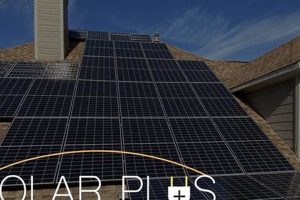
Harnessing the sun’s radiant light and heat offers a sustainable method for electricity generation and thermal energy production. This approach utilizes photovoltaic cells to directly convert sunlight into electrical power, while solar thermal systems concentrate solar energy to heat fluids, which can then be used to drive turbines and generate electricity or provide direct heating for buildings and industrial processes. This method is a clean and abundant energy resource.
Its significance stems from its potential to mitigate climate change by reducing dependence on fossil fuels, thereby lowering greenhouse gas emissions. The technology’s decreasing costs and increasing efficiency are driving its adoption worldwide, contributing to energy security and creating new economic opportunities. Historically, early applications were limited to remote locations, but advancements in materials science and engineering have expanded its feasibility for grid-scale power generation and distributed energy systems.
The following sections will delve into various aspects of this technology, including its applications, economic considerations, environmental impacts, and future potential. We will examine the different types of systems, the challenges associated with their deployment, and the innovations that are shaping its future.
Optimizing Solar Energy Integration
The following recommendations are designed to enhance the effective incorporation of photovoltaic and solar thermal technologies into existing and future energy systems.
Tip 1: Conduct Thorough Site Assessments: Prior to installation, a comprehensive evaluation of solar irradiance levels, shading factors, and structural integrity of the location is essential. Accurate data ensures optimal system performance.
Tip 2: Select Appropriate Technology: Evaluate different photovoltaic panel types (monocrystalline, polycrystalline, thin-film) and solar thermal collector designs based on efficiency, cost, and environmental conditions specific to the deployment area.
Tip 3: Implement Energy Storage Solutions: Incorporate battery storage systems or thermal energy storage to address the intermittent nature of solar resources. This enhances grid stability and ensures a consistent energy supply.
Tip 4: Prioritize Grid Integration: Ensure seamless interconnection with the existing power grid by adhering to relevant standards and regulations. This facilitates the efficient distribution of generated electricity and minimizes potential disruptions.
Tip 5: Optimize System Maintenance: Establish a regular maintenance schedule that includes panel cleaning, inverter inspections, and performance monitoring. Proactive maintenance extends the system’s lifespan and maximizes energy production.
Tip 6: Maximize Energy Consumption Awareness: Use smart energy solution based on solar installation for maximize usage in the business or house. This reduces cost of energy usage and increase efficiency.
Effective integration of this technology requires careful planning, informed decision-making, and a commitment to ongoing maintenance. Adherence to these principles will maximize its benefits and contribute to a more sustainable energy future.
The subsequent sections will provide further insights into the economic and environmental implications of its widespread adoption.
1. Clean Power Generation

Clean power generation, specifically when derived from the sun, represents a cornerstone of environmentally sustainable energy production. The direct conversion of sunlight into electricity via photovoltaic cells, or the use of solar thermal systems to generate steam for turbine-driven electricity production, inherently avoids the combustion of fossil fuels. This absence of combustion results in minimal emissions of greenhouse gases, particulate matter, and other air pollutants that are typically associated with conventional power plants. For instance, a solar farm replacing a coal-fired power plant directly reduces the amount of carbon dioxide released into the atmosphere, mitigating the effects of climate change.
The importance of clean power generation within this context is paramount. It enables the reduction of reliance on finite and environmentally damaging fossil fuels, promoting energy security and sustainability. Consider the case of regions heavily dependent on imported oil; adopting solar energy technologies can decrease their vulnerability to volatile global energy markets and geopolitical instability. Furthermore, large-scale deployment of this form of power generation can foster the development of green industries, creating jobs and stimulating economic growth. Real-world examples include countries like Germany and China, where significant investments in these technologies have led to substantial reductions in carbon emissions and the creation of numerous jobs in the renewable energy sector.
In summary, the connection between clean power generation and solar energy is a direct one, defined by a cause-and-effect relationship where the sun becomes a prime mover to reduce carbon emissions. By understanding the practical significance of this relationship, communities and nations can make informed decisions about their energy policies, investments, and infrastructure development, ultimately contributing to a cleaner, more sustainable energy future. Challenges remain in terms of energy storage and grid integration, but ongoing technological advancements are steadily addressing these issues, furthering the potential of clean power generation to transform the global energy landscape.
2. Reduced Carbon Footprint

The reduction of carbon footprints constitutes a primary driver for the adoption and expansion of power generation from solar resources. Its capacity to displace carbon-intensive energy sources directly correlates with the mitigation of greenhouse gas emissions, a critical factor in combating climate change. The following points detail key aspects of this relationship.
- Displacement of Fossil Fuel Consumption
Replacing electricity generated from coal, natural gas, or oil with power from the sun directly reduces the demand for fossil fuels. This displacement diminishes the extraction, transportation, and combustion of these fuels, each of which contributes significantly to carbon emissions. For example, a utility-scale photovoltaic plant can offset the emissions of a similarly sized coal-fired plant, leading to a substantial decrease in the overall carbon footprint of the energy sector.
- Lifecycle Emission Considerations
While the manufacturing and installation of solar panels do involve some greenhouse gas emissions, the lifecycle emissions associated with solar energy are significantly lower than those of fossil fuels. Studies consistently demonstrate that the carbon payback period for solar installations is relatively short, meaning that the energy produced over the system’s lifespan far outweighs the energy consumed during its production and deployment. This net reduction in lifecycle emissions is a key advantage.
- Contribution to Carbon Neutrality Goals
Governments and organizations worldwide are setting ambitious targets for carbon neutrality, and its technologies play a vital role in achieving these goals. Its large-scale adoption enables the decarbonization of electricity grids and other sectors, such as transportation and industry, contributing to a broader transition toward a low-carbon economy. For instance, policies that incentivize its use, such as feed-in tariffs and renewable energy standards, are accelerating the deployment of solar and supporting the achievement of carbon neutrality targets.
- Potential for Carbon Sequestration Enhancement
While solar power generation itself does not directly sequester carbon, its adoption can indirectly contribute to carbon sequestration. By reducing deforestation driven by fossil fuel extraction and promoting the development of green infrastructure, the deployment of this solar can help preserve and enhance natural carbon sinks, such as forests and wetlands. These ecosystems play a critical role in absorbing carbon dioxide from the atmosphere, further mitigating the effects of climate change.
The multifaceted impact highlights the critical role it plays in mitigating climate change and achieving a more sustainable energy future. Its continued expansion and technological advancements will further amplify its contribution to reducing carbon footprints across various sectors.
3. Distributed Energy Resources

The integration of renewable solar resources into distributed energy systems represents a significant paradigm shift in energy generation and management. Distributed energy resources (DERs) are defined as smaller-scale power generation technologies located close to the point of consumption. Solar energy, particularly through photovoltaic (PV) installations on rooftops or in community solar farms, is increasingly becoming a core component of DER systems. The cause-and-effect relationship is straightforward: the availability of sunlight enables localized electricity generation, thereby reducing reliance on centralized power plants and long-distance transmission lines. The importance of DERs within the context of power from the sun lies in their ability to enhance grid resilience, reduce transmission losses, and empower consumers to generate their own electricity. For example, a residential solar PV system with battery storage can provide backup power during grid outages, increasing energy security for the homeowner. Furthermore, excess energy generated by these systems can be fed back into the grid, contributing to the overall electricity supply.
Practical applications of power from the sun as a DER extend beyond residential settings. Commercial and industrial facilities are increasingly adopting on-site PV systems to reduce their energy costs and environmental footprint. Microgrids, which are localized energy grids that can operate independently from the main grid, often incorporate solar PV as a primary energy source. These microgrids can provide reliable electricity to remote communities, military bases, or critical infrastructure facilities. Real-world examples include the implementation of solar-powered microgrids in island nations and remote villages, where access to the centralized grid is limited or unreliable. These projects demonstrate the potential of this power coupled with DERs to improve energy access and promote economic development in underserved areas.
In summary, the convergence of renewable resources of sun with DERs presents a compelling pathway towards a more decentralized, resilient, and sustainable energy future. Challenges remain in terms of grid integration, regulatory frameworks, and the intermittency of solar resources. However, ongoing advancements in technology, supportive policies, and innovative business models are steadily addressing these challenges, paving the way for the widespread adoption of power from the sun as a key element of DER systems. The practical significance of this understanding lies in its potential to transform the energy landscape, empowering communities, businesses, and individuals to actively participate in the energy transition.
4. Long-Term Cost Savings
The economic viability of renewable, particularly those harnessed from the sun, is increasingly recognized through its capacity to deliver substantial long-term cost savings. This financial benefit stems from various factors that, when considered collectively, make solar energy a sound economic investment over the lifespan of the system.
- Reduced or Eliminated Electricity Bills
One of the most immediate and tangible cost savings associated with harnessing the sun’s power is the reduction or elimination of monthly electricity bills. By generating electricity on-site, homeowners and businesses can decrease their reliance on grid-supplied electricity, thereby lowering their payments to utility companies. In some cases, systems may generate more electricity than is consumed, leading to credits on utility bills or even payments from the utility company for excess energy fed back into the grid.
- Government Incentives and Tax Credits
Many governments and municipalities offer incentives, tax credits, and rebates to encourage the adoption of harnessing the sun’s energy. These financial incentives can significantly reduce the initial upfront costs of installing a solar system, making it more affordable and accelerating the payback period. For example, the federal investment tax credit (ITC) in the United States allows homeowners and businesses to deduct a percentage of the cost of their solar system from their federal taxes.
- Low Maintenance and Operational Costs
Systems generally require minimal maintenance compared to conventional power generation facilities. With no moving parts to wear down or fuel to purchase, operational costs are relatively low. Periodic cleaning of panels and occasional inverter maintenance are typically the only recurring expenses. This translates to significant cost savings over the 25-30 year lifespan of a typical solar system.
- Protection Against Fluctuating Energy Prices
Power generated from the sun provides a hedge against the volatility of fossil fuel prices. Once a system is installed, the cost of generating electricity remains relatively stable and predictable, shielding consumers from unexpected price increases in the traditional energy market. This price stability can be particularly valuable for businesses and industries with high energy consumption, allowing them to better manage their operating costs and improve their financial planning.
The various avenues for long-term cost savings make it an increasingly attractive option for homeowners, businesses, and communities seeking to reduce their energy expenses and enhance their financial stability. As technology continues to improve and prices continue to decline, these benefits are expected to become even more pronounced, further solidifying its role as a cost-effective and sustainable energy solution.
5. Energy Independence Growth

Energy independence, defined as a nation’s ability to meet its energy needs from domestic sources, is fundamentally intertwined with the expansion of power derived from the sun. Reducing reliance on imported fossil fuels through the deployment of this techonolgy enhances national security, stabilizes economies, and promotes long-term sustainability.
- Diversification of Energy Sources
Harnessing the sun’s power diversifies a nation’s energy portfolio, decreasing its dependence on a limited number of fuel sources. Countries heavily reliant on imported oil or natural gas are vulnerable to price fluctuations and geopolitical instability. By developing domestic power derived from the sun capabilities, nations can mitigate these risks and strengthen their energy security. Germany, for instance, has invested heavily in sources from the sun to reduce its reliance on Russian natural gas.
- Reduced Exposure to Geopolitical Risks
Reliance on imported energy exposes nations to geopolitical risks, including supply disruptions and political manipulation. Domestic energy production, particularly from renewable sources like harnessing the sun’s power, minimizes these vulnerabilities. Nations with significant sun-based resources can develop a stable and secure energy supply, insulated from the geopolitical pressures associated with fossil fuel imports. The United States, through its increased domestic oil and gas production, has reduced its dependence on foreign energy sources, enhancing its geopolitical leverage.
- Stimulation of Domestic Economies
Investing in power from sun stimulates domestic economies by creating jobs, fostering innovation, and attracting capital investment. The development, manufacturing, installation, and maintenance of sun systems generate employment opportunities across various sectors, from manufacturing to engineering to finance. Furthermore, domestic power from the sun industries can drive technological innovation, leading to the development of new products and services that can be exported to other countries. China, a global leader in sun-based power manufacturing, has experienced significant economic growth driven by its renewable energy sector.
- Enhanced Grid Security and Resilience
Distributed of sun-based resources enhances grid security and resilience by reducing the need for long-distance transmission lines and promoting decentralized power generation. Power grids are vulnerable to cyberattacks, natural disasters, and other disruptions that can cause widespread blackouts. Distributed sun systems, particularly when combined with energy storage solutions, can provide backup power during emergencies, enhancing grid resilience and minimizing the impact of disruptions. Microgrids powered by systems enhance energy security for critical infrastructure facilities, such as hospitals and military bases.
The aforementioned facets underscore the strategic importance of harnessing the sun’s power as a driver of energy independence. By diversifying energy sources, mitigating geopolitical risks, stimulating domestic economies, and enhancing grid security, nations can strengthen their energy independence and build a more sustainable energy future. Continued investment in from-sun-based technologies, coupled with supportive policies, is essential for unlocking the full potential of sun to promote energy independence and economic prosperity.
6. Technological Innovation Driving

Advancements in materials science, engineering, and information technology are critical drivers in the evolution and widespread adoption of power derived from solar resources. Continuous innovation fuels improvements in efficiency, cost-effectiveness, and grid integration capabilities, making it a progressively more competitive and viable energy solution.
- Enhanced Photovoltaic Cell Efficiency
Ongoing research and development efforts are focused on improving the efficiency of photovoltaic (PV) cells, the core component of solar panels. Higher efficiency means that more sunlight is converted into electricity, reducing the amount of land and materials required for power generation. Examples include the development of multi-junction cells, which utilize multiple layers of different semiconductor materials to capture a broader spectrum of sunlight, and perovskite cells, a promising emerging technology with the potential for high efficiency and low manufacturing costs. These advancements directly translate to lower electricity costs and improved energy output from systems.
- Advanced Energy Storage Solutions
The intermittent nature of sunlight necessitates the development of efficient and cost-effective energy storage solutions. Technological innovations in battery technology, such as lithium-ion batteries, flow batteries, and solid-state batteries, are enabling systems to store excess electricity generated during peak sunlight hours for use during periods of low sunlight or at night. Furthermore, thermal energy storage systems, which store heat generated by solar thermal collectors, are being developed for use in concentrated solar power (CSP) plants. These storage solutions enhance grid stability, improve reliability, and increase the overall value of power from the sun.
- Smart Grid Integration Technologies
The seamless integration of solar-generated electricity into the existing power grid requires advanced smart grid technologies. These technologies enable real-time monitoring, control, and optimization of electricity flow, ensuring grid stability and efficient distribution. Examples include advanced metering infrastructure (AMI), which provides utilities with detailed data on electricity consumption and generation, and smart inverters, which can regulate voltage and frequency to maintain grid stability. These technologies facilitate the integration of increasing amounts of solar-generated electricity into the grid, reducing curtailment and maximizing the utilization of renewable resources.
- Improved Manufacturing Processes and Materials
Innovations in manufacturing processes and materials are driving down the cost of solar panels and related equipment. Advanced manufacturing techniques, such as roll-to-roll processing and laser cutting, are increasing production efficiency and reducing material waste. The development of new materials, such as thinner and lighter solar cells, is reducing transportation costs and installation complexity. These improvements in manufacturing and materials are making systems more affordable and accessible, accelerating their deployment worldwide.
These technological advancements collectively contribute to the increasing competitiveness and widespread adoption of harnessing the sun’s power. Continued investment in research and development, coupled with supportive policies and market mechanisms, is essential for unlocking the full potential of the technology to transform the global energy landscape and promote a more sustainable energy future.
Frequently Asked Questions About Solar Technology
The following section addresses common inquiries regarding the principles, benefits, and challenges associated with solar energy conversion.
Question 1: What is the fundamental process by which sunlight is converted into electricity?
Solar energy conversion relies primarily on the photovoltaic effect. Semiconductor materials, such as silicon, absorb photons from sunlight, liberating electrons and creating an electrical current. This direct conversion of light into electricity distinguishes solar power generation from conventional methods involving thermal processes.
Question 2: What are the primary advantages of utilizing this for electricity generation compared to fossil fuels?
Harnessing the sun’s energy offers several advantages. It reduces greenhouse gas emissions, mitigating climate change. It provides a sustainable energy source, reducing reliance on finite fossil fuel reserves. Finally, it can enhance energy security by diversifying energy sources and promoting domestic energy production.
Question 3: How does the intermittency of sunlight affect the reliability of grid electricity supply?
The intermittent nature of sunlight presents challenges for grid stability. Electricity generation fluctuates depending on weather conditions and time of day. Energy storage technologies, such as batteries, and smart grid solutions are essential for addressing this intermittency and ensuring a reliable electricity supply.
Question 4: What are the key factors influencing the cost-effectiveness of system installations?
The cost-effectiveness of installations depends on various factors. Solar irradiance levels at the installation site, the efficiency of the photovoltaic panels, the availability of government incentives, and the cost of financing all play a significant role. Economies of scale and technological advancements also contribute to reducing system costs.
Question 5: What environmental concerns are associated with the manufacturing and disposal of panels?
The production of panels involves the use of certain materials, including silicon, metals, and chemicals, which can pose environmental risks if not managed properly. The disposal of panels at the end of their lifespan also presents challenges due to the presence of these materials. Recycling and responsible disposal practices are crucial for minimizing these environmental impacts.
Question 6: What role does policy and regulation play in promoting the adoption of this?
Government policies and regulations play a critical role in promoting its adoption. Financial incentives, such as tax credits and feed-in tariffs, encourage investment in technology. Renewable energy standards mandate a certain percentage of electricity generation from renewable sources. Streamlined permitting processes and grid interconnection rules also facilitate its deployment.
In summary, understanding these key aspects of this power is essential for making informed decisions about its role in a sustainable energy future.
The following section will explore future trends and innovations in the renewable solar energy sector.
renewable energy solar energy
This discussion has elucidated key facets of utilizing the sun’s energy, ranging from basic principles to economic implications and technological advancements. The capacity to displace fossil fuels, reduce carbon footprints, and promote energy independence has been highlighted, alongside considerations for cost-effectiveness and environmental impacts. The role of technological innovation and supportive policies in driving the sector’s growth has also been emphasized.
The ongoing transition toward a sustainable energy future requires a continued commitment to research, development, and responsible deployment of systems. Overcoming challenges related to intermittency, grid integration, and materials management is crucial for maximizing its potential as a reliable and environmentally sound energy source. Investment in renewable solar energy represents an investment in a cleaner, more secure, and economically viable future for generations to come.
![Why Solar is a Renewable Source of Energy [Benefits] | Renewable Energy Solutions for a Sustainable Future | Clean & Green Power](https://pplrenewableenergy.com/wp-content/uploads/2026/04/th-454-300x200.jpg "Why Solar is a Renewable Source of Energy [Benefits] Renewable Energy Solutions for a Sustainable Future | Clean & Green Power")