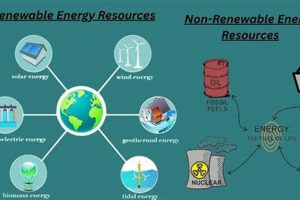
Nuclear power generation, while offering a low-carbon alternative to fossil fuels, relies on materials that are finite in supply. Specifically, uranium, a key element in nuclear fission, is extracted from the Earth’s crust. This extraction process is similar to mining for other minerals. Just as reserves of coal, oil, and natural gas are depleted through consumption, the availability of uranium is also limited.
The Earth’s uranium deposits are not replenished at a rate that can keep pace with human energy consumption. While some estimates suggest there are sufficient uranium reserves to last for several decades, or even centuries, the rate of consumption affects the long-term viability of nuclear power. Furthermore, the environmental impact of uranium mining and processing, including habitat destruction and potential water contamination, are factors that must be considered. The construction and decommissioning of nuclear power plants also contribute to the overall environmental footprint of this energy source.
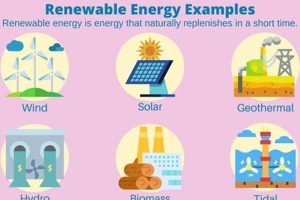
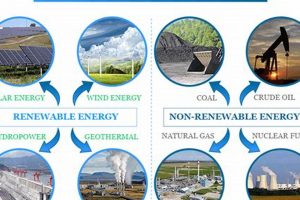
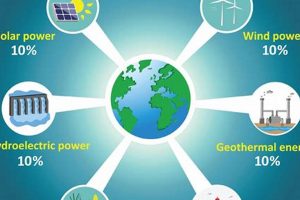
Therefore, due to the finite nature of its fuel source, nuclear energy is categorized within the realm of non-renewable energy sources. This classification distinguishes it from renewable sources such as solar, wind, and hydropower, which harness energy flows that are continuously replenished by natural processes. The implications of this classification are significant for long-term energy planning and sustainability initiatives. Alternative reactor designs and fuel cycles, such as breeder reactors and thorium-based reactors, are being explored to potentially extend the lifespan and resource availability of nuclear power.
Considerations Regarding the Classification of Nuclear Energy
The following are key points to consider when evaluating the rationale behind the classification of nuclear energy as a non-renewable resource. These points emphasize the finite nature of the fuel, the environmental implications of its extraction and processing, and alternative approaches for resource management.
Tip 1: Acknowledge Uranium’s Finite Nature: Uranium, the primary fuel for most nuclear reactors, exists in limited quantities within the Earth’s crust. Its availability is subject to depletion over time, similar to fossil fuels.
Tip 2: Evaluate Mining and Processing Impacts: The extraction and processing of uranium ore can have significant environmental consequences, including habitat destruction, water contamination, and the generation of radioactive waste. These impacts contribute to the non-renewable characterization.
Tip 3: Assess Resource Depletion Rates: The rate at which uranium reserves are consumed directly affects the longevity of nuclear power as a viable energy source. High consumption rates can accelerate depletion, necessitating alternative strategies.
Tip 4: Investigate Alternative Fuel Cycles: Research and development into advanced reactor designs, such as breeder reactors, and alternative fuel cycles, such as thorium-based reactors, could potentially extend the availability of nuclear fuel resources.
Tip 5: Incorporate Life Cycle Analysis: A comprehensive life cycle analysis of nuclear power should account for all stages, from uranium mining to reactor decommissioning and waste disposal, to accurately assess its overall sustainability and resource consumption.
Tip 6: Prioritize Efficient Reactor Operation: Optimizing the efficiency of existing nuclear reactors can help to reduce uranium consumption and extend the lifespan of current reserves. This includes improving fuel utilization and minimizing waste generation.
Tip 7: Monitor Global Uranium Reserves: Staying informed about the global distribution and estimated size of uranium reserves is crucial for long-term energy planning and resource management.
Understanding these considerations is paramount for informed decision-making regarding nuclear energy’s role in a sustainable energy future. The finite nature of the fuel source, coupled with the environmental impacts of its extraction, warrants careful evaluation and proactive management.
Moving forward, a balanced approach that considers the limitations of current nuclear technology, while also exploring innovative solutions, is essential for navigating the complexities of energy production and resource utilization.
1. Finite uranium supply

The finite uranium supply is a primary determinant of nuclear energy’s classification as a non-renewable resource. Uranium-235, the isotope predominantly used in nuclear fission reactors, is a naturally occurring element found in the Earth’s crust. However, its concentration is relatively low, and readily accessible, high-grade deposits are not inexhaustible. As these richer deposits are depleted, the energy required to extract and process lower-grade ores increases, impacting the overall energy balance and economic feasibility of nuclear power. Consequently, the limited availability of this critical fuel directly contributes to the categorization of nuclear energy alongside other non-renewable sources like fossil fuels.
The significance of the finite uranium supply extends beyond mere availability. It necessitates careful resource management and strategic planning for the nuclear power industry. For example, the use of Mixed Oxide (MOX) fuel, which incorporates plutonium recovered from spent nuclear fuel, represents an attempt to extend the available resource base and reduce nuclear waste volume. However, MOX fuel production and utilization are not without their own challenges, including proliferation concerns and higher processing costs. Furthermore, research into advanced reactor designs, such as breeder reactors, which can convert non-fissile isotopes into fissile material, aims to improve uranium utilization and potentially extend the longevity of nuclear power.
In conclusion, the finite uranium supply is an undeniable constraint on the sustainability of nuclear energy. This resource limitation necessitates ongoing research into alternative fuel cycles, improved reactor designs, and responsible uranium resource management. Addressing this constraint is crucial for ensuring the long-term viability and contribution of nuclear power to the global energy mix, recognizing that, without these efforts, nuclear energy’s dependence on a finite resource places it firmly within the category of non-renewable energy sources.
2. Resource depletion rates

Resource depletion rates play a crucial role in categorizing nuclear energy as a non-renewable resource. The speed at which uranium, the primary fuel, is consumed significantly impacts the long-term viability of nuclear power generation. A rapid depletion rate shortens the lifespan of uranium reserves, reinforcing its non-renewable character.
- Global Demand Impact
Increasing global energy demand directly accelerates uranium consumption. As more nations adopt nuclear power, or expand existing nuclear capacity, the demand for uranium rises. This increased demand leads to a faster depletion of available resources, decreasing the potential duration of nuclear power as a significant energy source.
- Efficiency of Reactors
The efficiency of nuclear reactors in utilizing uranium-235 affects the depletion rate. Less efficient reactors require more uranium to produce the same amount of energy, thereby accelerating the consumption of uranium reserves. Improving reactor designs and fuel management techniques can help mitigate this effect, but they do not eliminate the fundamental issue of finite resources.
- Economic Viability of Extraction
As higher-grade uranium deposits are depleted, extraction shifts to lower-grade ores. The energy and financial costs associated with extracting uranium from these less concentrated sources increase, potentially rendering such extraction economically unviable. This economic constraint further limits the availability of usable uranium, effectively shortening the timeframe during which nuclear energy can be sustained.
- Waste Management and Reprocessing
The absence of widespread uranium reprocessing technologies contributes to faster resource depletion. If spent nuclear fuel is not reprocessed to recover usable uranium and plutonium, these valuable materials are treated as waste, effectively removing them from the resource pool. Reprocessing can extend the lifespan of uranium resources but involves complex technical and political challenges.
In conclusion, resource depletion rates are a key factor solidifying the non-renewable status of nuclear energy. The interplay between global demand, reactor efficiency, economic viability, and waste management practices collectively determines how quickly uranium reserves are exhausted. These considerations emphasize the importance of sustainable resource management and the exploration of alternative nuclear fuel cycles to potentially extend the availability of this energy source, though they cannot alter the basic reality of finite uranium reserves.
3. Mining's environmental impact

The environmental consequences associated with uranium mining operations are inextricably linked to the classification of nuclear energy as a non-renewable resource. These impacts extend beyond the immediate depletion of a finite material, affecting ecosystems, water resources, and human health, ultimately influencing the long-term viability and sustainability of nuclear power.
- Habitat Destruction and Biodiversity Loss
Uranium mining often involves large-scale open-pit or underground extraction methods. These processes can lead to significant habitat destruction, fragmentation, and biodiversity loss. The removal of vegetation, topsoil, and underlying rock formations disrupts ecosystems, impacting wildlife populations and altering ecological processes. For instance, the Ranger Uranium Mine in Australia has faced ongoing scrutiny for its proximity to Kakadu National Park and the potential impacts on its delicate ecosystems. This destruction diminishes the overall environmental value associated with nuclear energy production.
- Water Contamination and Aquatic Ecosystem Disruption
Uranium mining operations can lead to water contamination through the release of heavy metals, radioactive materials, and chemicals used in ore processing. Acid mine drainage, a common byproduct of mining, can lower the pH of water bodies, harming aquatic life and rendering water unsuitable for human consumption or agricultural use. The Church Rock uranium mill spill in New Mexico, one of the largest releases of radioactive material in U.S. history, serves as a stark reminder of the potential for catastrophic water contamination from uranium mining activities. This contamination reduces the availability of clean water resources and negatively impacts surrounding ecosystems.
- Radioactive Waste Generation and Long-Term Storage Concerns
Uranium mining generates significant quantities of radioactive waste, including tailings and waste rock, which contain elevated levels of uranium, thorium, and radium. These materials require long-term storage and monitoring to prevent the release of radioactive contaminants into the environment. The long-term management of uranium mine tailings presents a significant challenge, as these materials can remain radioactive for thousands of years. The potential for leakage or accidental release from tailings impoundments poses an ongoing environmental risk. The legacy of uranium mining extends far beyond the operational life of a mine, contributing to the overall environmental burden associated with nuclear energy.
- Air Pollution and Greenhouse Gas Emissions
Mining operations, including uranium extraction, contribute to air pollution through the release of dust particles, heavy metals, and greenhouse gases. The combustion of fossil fuels to power mining equipment and transport ore releases carbon dioxide, a major greenhouse gas, contributing to climate change. Furthermore, the processing of uranium ore can release radioactive gases, such as radon, into the atmosphere. The overall contribution of uranium mining to air pollution and greenhouse gas emissions adds to the environmental footprint of nuclear energy.
The interconnectedness of these environmental impacts with the finite nature of uranium resources underscores the non-renewable classification of nuclear energy. The extraction and processing of uranium, even with technological advancements, invariably involve environmental degradation. As higher-grade deposits are exhausted, mining operations become more intensive, exacerbating these environmental impacts. The challenges associated with mitigating these impacts and ensuring long-term environmental stewardship further emphasize the limitations and non-renewable characteristics of nuclear energy.
4. Waste disposal challenges

The issue of radioactive waste disposal is a significant factor contributing to the categorization of nuclear energy as a non-renewable resource. The challenges associated with safely managing and permanently storing nuclear waste underscore the limitations and environmental burdens inherent in this energy source, impacting its long-term sustainability.
- Long-Term Storage Requirements
Nuclear waste, particularly spent nuclear fuel, remains radioactive for thousands of years, necessitating secure storage solutions that can isolate these materials from the environment for extended periods. The lack of permanent disposal facilities in many countries relying on nuclear power raises serious questions about the long-term viability of this energy source. The need for continuous monitoring and potential remediation of interim storage sites adds to the cost and complexity of nuclear power, emphasizing its dependence on finite resources and management capabilities.
- Geological Repository Suitability
The selection and development of geological repositories for nuclear waste disposal are complex and time-consuming processes. Factors such as geological stability, groundwater flow, seismic activity, and societal acceptance must be carefully considered. The failure to secure suitable repository sites delays the permanent disposal of nuclear waste, increasing the risk of environmental contamination and undermining public confidence in nuclear energy. The ongoing debate surrounding the Yucca Mountain Nuclear Waste Repository in the United States illustrates the challenges associated with finding a geologically and politically acceptable long-term storage solution.
- Waste Volume Reduction and Reprocessing Limitations
While nuclear fuel reprocessing can reduce the volume and radiotoxicity of nuclear waste, this technology is not widely implemented due to economic, environmental, and proliferation concerns. The accumulation of large volumes of unprocessed spent nuclear fuel poses a significant storage challenge and limits the potential for resource recovery. The limited adoption of reprocessing technologies reinforces the reliance on finite uranium resources and perpetuates the non-renewable characteristics of nuclear energy.
- Environmental and Health Risks
The potential for leakage or accidental release of radioactive materials from waste storage facilities poses a risk to the environment and human health. Contamination of soil, water, and air can have long-lasting consequences, affecting ecosystems and potentially leading to adverse health effects in exposed populations. The legacy of past nuclear accidents, such as Chernobyl and Fukushima, highlights the importance of robust waste management practices and the need for continuous improvement in safety standards. These potential risks contribute to the overall environmental burden associated with nuclear energy, reinforcing its non-renewable classification.
The waste disposal challenges associated with nuclear energy highlight the complexities and limitations of this energy source. The need for long-term storage solutions, the difficulties in securing suitable repository sites, the limitations of waste volume reduction technologies, and the potential environmental and health risks all contribute to the categorization of nuclear energy as non-renewable. These challenges underscore the importance of exploring alternative energy sources and developing sustainable waste management strategies to mitigate the environmental burdens associated with nuclear power.
5. Extraction limitations
Extraction limitations play a significant role in understanding why nuclear energy is classified as a non-renewable resource. The finite nature of uranium, coupled with the challenges associated with its extraction, directly impacts the long-term viability and sustainability of nuclear power generation. The difficulties and constraints inherent in uranium extraction contribute substantially to the non-renewable designation.
- Diminishing Ore Grades
As higher-grade uranium deposits become depleted, mining operations must increasingly rely on lower-grade ores. This necessitates processing larger volumes of ore to obtain the same amount of uranium, resulting in higher energy consumption and increased environmental impact. For instance, in regions like Kazakhstan, which holds significant uranium reserves, the average ore grade has been declining, requiring more intensive extraction methods. This decline in ore grade directly limits the economically recoverable uranium reserves and reinforces the non-renewable characteristic of nuclear energy by increasing the resources required for fuel acquisition.
- Geopolitical Accessibility
Uranium resources are not evenly distributed across the globe. A significant portion of known uranium reserves is concentrated in a limited number of countries, such as Australia, Canada, and Kazakhstan. Geopolitical factors, including political instability, regulatory frameworks, and international relations, can impact the accessibility and availability of these resources. For example, changes in government policies or trade restrictions can disrupt uranium supply chains and affect the overall availability of nuclear fuel. These geopolitical constraints limit the accessible uranium supply, further solidifying its classification as a non-renewable resource.
- Environmental Constraints
Uranium mining operations can have significant environmental consequences, including habitat destruction, water contamination, and the generation of radioactive waste. Increasingly stringent environmental regulations and public concerns about the environmental impact of mining can limit the development of new uranium mines or restrict the operation of existing ones. For example, in some regions, indigenous communities have opposed uranium mining projects due to concerns about potential health and environmental impacts. These environmental constraints limit the economically and socially acceptable extraction of uranium, contributing to the non-renewable nature of nuclear energy.
- Technological Barriers
The extraction of uranium from unconventional sources, such as seawater or phosphate rocks, presents significant technological challenges. While uranium exists in seawater, its concentration is extremely low, requiring innovative and energy-intensive extraction methods. Similarly, extracting uranium from phosphate rocks involves complex chemical processes and generates large volumes of waste. These technological barriers limit the economically viable extraction of uranium from unconventional sources, reinforcing the reliance on conventional uranium deposits and further solidifying the non-renewable classification of nuclear energy. While research continues, the scalability and economic feasibility of these technologies remain uncertain.
In conclusion, extraction limitations, encompassing declining ore grades, geopolitical accessibility, environmental constraints, and technological barriers, significantly contribute to the categorization of nuclear energy as a non-renewable resource. These factors collectively limit the availability of uranium, increase the environmental impact of its extraction, and constrain the long-term sustainability of nuclear power generation. Addressing these extraction limitations requires innovation in mining technologies, responsible resource management, and a commitment to mitigating the environmental consequences of uranium extraction, but fundamentally, they highlight the finite nature of the resource and its non-renewable characteristics.
6. Uranium concentration

Uranium concentration, referring to the proportion of uranium present in a given ore deposit, is a critical factor influencing the classification of nuclear energy as a non-renewable resource. The economic viability and environmental impact of uranium extraction are directly related to the concentration of uranium in the ore.
- Economic Viability of Mining
High uranium concentrations translate to lower extraction costs per unit of uranium produced. Richer deposits require less energy and fewer resources to mine and process, making them economically attractive. Conversely, low concentrations demand more intensive extraction methods, increasing costs and potentially rendering the operation economically unfeasible. For instance, if the uranium concentration is below a certain threshold, the energy required to extract the uranium may exceed the energy that can be generated from it, thereby negating the economic benefit. This economic dependence on concentration levels reinforces the non-renewable nature, as readily accessible, high-concentration deposits are finite.
- Environmental Impact of Extraction
Lower uranium concentrations necessitate the processing of larger volumes of ore to obtain the same amount of uranium. This results in increased environmental disturbance, including habitat destruction, water contamination, and the generation of larger quantities of radioactive waste. Open-pit mining, often used for low-grade ores, significantly alters landscapes and can release harmful substances into the environment. The increased environmental footprint associated with processing lower-concentration ores contributes to the overall unsustainability of nuclear energy, solidifying its categorization as a non-renewable resource.
- Resource Depletion Rates
The availability of high-concentration uranium deposits is limited. As these deposits are depleted, the nuclear industry must rely on lower-concentration ores, accelerating the rate at which accessible uranium resources are consumed. This depletion of economically viable uranium resources reinforces the finite nature of nuclear fuel and contributes to the non-renewable classification. The transition to lower-grade ores necessitates technological advancements and more efficient extraction methods to maintain a sustainable uranium supply, but it cannot alter the fundamental limitation imposed by uranium concentration.
- Technological Feasibility of Extraction
Extracting uranium from very low-concentration sources, such as seawater, presents significant technological challenges. While seawater contains vast quantities of uranium, its concentration is extremely low, requiring innovative and energy-intensive extraction methods that are currently not economically viable on a large scale. The technological limitations associated with extracting uranium from unconventional sources restrict the available uranium supply, reinforcing the non-renewable character of nuclear energy. Overcoming these technological barriers would require significant investment and breakthroughs in materials science and chemical engineering.
In summary, uranium concentration is a pivotal factor in assessing the non-renewable nature of nuclear energy. The economic viability, environmental impact, resource depletion rates, and technological feasibility of uranium extraction are all directly influenced by the concentration of uranium in the ore. As high-concentration deposits are depleted, the challenges associated with accessing lower-concentration resources will become increasingly significant, underscoring the finite nature of uranium and solidifying the classification of nuclear energy as a non-renewable resource.
7. Geological availability

Geological availability, referring to the distribution, concentration, and accessibility of uranium ore deposits within the Earth’s crust, is a fundamental factor contributing to the classification of nuclear energy as a non-renewable resource. The constraints imposed by geological factors limit the long-term sustainability of nuclear power and solidify its reliance on finite resources.
- Uneven Global Distribution
Uranium resources are not uniformly distributed across the globe. Significant deposits are concentrated in a relatively small number of countries, such as Australia, Kazakhstan, and Canada. This uneven distribution creates geopolitical dependencies and supply chain vulnerabilities. Nations lacking domestic uranium resources must rely on imports, making them susceptible to price fluctuations and disruptions in supply. The limited geographical spread of uranium deposits reinforces the non-renewable character of nuclear energy by restricting access and increasing reliance on specific regions.
- Ore Grade Variability
The concentration of uranium within ore deposits varies significantly. High-grade deposits, containing a higher proportion of uranium, are easier and more economical to extract. However, these richer deposits are becoming depleted, forcing the nuclear industry to rely on lower-grade ores. Extracting uranium from low-grade ores requires processing larger volumes of rock, leading to increased energy consumption, higher costs, and greater environmental impact. The variability in ore grade necessitates the exploitation of increasingly challenging deposits, contributing to the non-renewable status of nuclear energy.
- Accessibility Constraints
Even when uranium deposits exist, their accessibility can be limited by geological and environmental factors. Deposits located in remote or environmentally sensitive areas may be difficult or impossible to exploit. For example, uranium deposits located beneath aquifers or in areas with high seismic activity pose significant challenges for safe and sustainable extraction. The accessibility constraints imposed by geological and environmental factors further restrict the available uranium supply and reinforce the non-renewable nature of nuclear energy.
- Exploration and Discovery Challenges
Discovering new uranium deposits is becoming increasingly challenging and expensive. Exploration requires sophisticated geological surveys, drilling, and analysis, often in remote and difficult-to-access locations. The costs and risks associated with uranium exploration can deter investment and limit the potential for discovering new reserves. The reliance on existing, known deposits, coupled with the challenges of finding new ones, contributes to the non-renewable character of nuclear energy by limiting the potential for expanding the resource base.
In conclusion, the geological availability of uranium, encompassing its uneven global distribution, ore grade variability, accessibility constraints, and exploration challenges, significantly contributes to the classification of nuclear energy as a non-renewable resource. These geological factors limit the accessible uranium supply, increase the environmental impact of its extraction, and constrain the long-term sustainability of nuclear power generation. While technological advancements may improve extraction efficiency and enable the exploitation of unconventional uranium sources, the fundamental limitation imposed by geological availability remains a key determinant of the non-renewable nature of nuclear energy.
Frequently Asked Questions
The following addresses common queries regarding the classification of nuclear energy as a non-renewable resource, providing factual information and clarifying prevalent misconceptions.
Question 1: What is the primary reason nuclear energy is considered a non-renewable resource?
The fundamental reason stems from the finite supply of uranium, the primary fuel used in most nuclear reactors. Uranium-235, the fissile isotope, is extracted from the Earth’s crust and is not replenished at a rate comparable to its consumption.
Question 2: How do uranium mining practices contribute to the non-renewable classification?
Uranium mining involves significant environmental disturbance, including habitat destruction, water contamination, and the generation of radioactive waste. These factors contribute to the overall unsustainability of nuclear energy, linking its non-renewable classification to the environmental burdens associated with its fuel source.
Question 3: Do alternative reactor designs, such as breeder reactors, change the non-renewable classification?
While breeder reactors can extend the lifespan of uranium resources by converting non-fissile isotopes into fissile material, they do not eliminate the fundamental dependence on finite resources. Breeder reactors improve resource utilization but do not transform nuclear energy into a renewable source.
Question 4: Is the energy required for uranium extraction considered when classifying nuclear energy?
Yes, the energy inputs associated with uranium extraction and processing are considered. As higher-grade deposits are depleted, the energy required to extract uranium from lower-grade ores increases, impacting the overall energy balance and sustainability of nuclear power.
Question 5: How does the lack of widespread nuclear fuel reprocessing affect the non-renewable classification?
The limited implementation of nuclear fuel reprocessing contributes to faster resource depletion. Reprocessing can recover usable uranium and plutonium from spent nuclear fuel, extending the lifespan of uranium resources. Without widespread reprocessing, valuable materials are treated as waste, reinforcing the reliance on finite uranium reserves.
Question 6: Are there any potential future technologies that could alter the non-renewable classification of nuclear energy?
While research is ongoing into alternative fuel cycles and extraction methods, no current or foreseeable technology can fundamentally transform nuclear energy into a renewable resource. These advancements may improve resource utilization and reduce environmental impacts, but they cannot overcome the inherent limitation imposed by the finite nature of uranium.
The key takeaway is that the reliance on a finite fuel source, coupled with the environmental impacts of its extraction and waste disposal, solidifies the classification of nuclear energy as a non-renewable resource. While improvements in technology and resource management can enhance the sustainability of nuclear power, they cannot alter its fundamental dependence on a limited supply of uranium.
The discussion now transitions to potential strategies for mitigating the resource limitations of nuclear energy and exploring alternative energy sources.
Why Is Nuclear Energy Non Renewable Resource
The preceding exploration has established the core reasons underlying the classification of nuclear energy as a non-renewable resource. The analysis underscores the finite nature of uranium, the primary fuel source, and its limited availability within the Earth’s crust. The assessment also highlights the environmental burdens associated with uranium mining, processing, and waste disposal, all of which contribute to the designation of nuclear energy within the realm of non-renewable energy sources. Resource depletion rates, extraction limitations, uranium concentration variances, and geological availability constraints further reinforce this classification. While advancements in reactor technology and fuel cycles may improve resource utilization and reduce environmental impacts, they do not fundamentally alter the dependency on a finite resource.
Therefore, a comprehensive understanding of the factors contributing to the non-renewable status of nuclear energy is crucial for informed energy policy and strategic planning. Acknowledging these limitations necessitates a continued focus on diversifying energy sources, investing in renewable technologies, and developing sustainable resource management practices. The long-term viability of nuclear power, within the broader energy landscape, hinges on addressing these challenges and mitigating the environmental consequences associated with its fuel cycle.