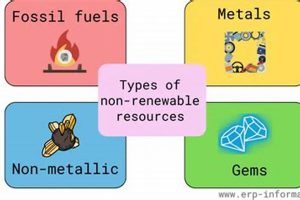
Materials from the earth that cannot be replenished within a human lifespan are categorized as finite. These natural assets are consumed at a rate exceeding their ability to regenerate through natural processes. Examples include fossil fuels such as coal, oil, and natural gas, as well as nuclear fuels like uranium.
The significance of these assets lies in their historical role in powering industrialization and modern society. They have provided relatively inexpensive and readily available energy sources, driving economic growth and technological advancements. However, their depletion raises concerns about long-term energy security and environmental consequences, notably the release of greenhouse gases contributing to climate change.
Understanding the characteristics and limitations of these finite commodities is critical for developing sustainable energy policies and promoting the transition to alternative, renewable energy sources. The management and conservation of existing reserves also play a pivotal role in mitigating potential economic and environmental disruptions.
Managing Finite Resources
Effective management is crucial given the constraints associated with resources that cannot be readily replaced. The following recommendations provide guidance for governments, industries, and individuals:
Tip 1: Prioritize Energy Efficiency: Implement strategies to minimize energy consumption across all sectors. This includes improving building insulation, adopting efficient transportation systems, and utilizing energy-saving technologies in industrial processes.
Tip 2: Diversify Energy Sources: Reduce dependence on single commodities by exploring and investing in a mix of energy solutions, including renewable options like solar, wind, and geothermal energy, alongside responsibly managed resources.
Tip 3: Invest in Research and Development: Allocate resources to innovative technologies that enhance resource extraction efficiency, promote carbon capture and storage, and facilitate the development of next-generation energy technologies.
Tip 4: Promote Resource Conservation: Encourage responsible consumption habits through public awareness campaigns, pricing mechanisms that reflect the true cost, and regulations that discourage wasteful practices.
Tip 5: Implement Circular Economy Principles: Emphasize recycling, reuse, and remanufacturing to extend the lifespan of materials and reduce the demand for newly extracted natural assets. This minimizes waste and lessens environmental impact.
Tip 6: Strengthen International Cooperation: Foster collaborative efforts among nations to share best practices, coordinate resource management policies, and address transboundary environmental challenges associated with resource extraction and utilization.
These approaches are crucial for mitigating the risks associated with reliance on commodities which cannot be renewed. Strategic management ensures long-term resource availability, minimizes environmental harm, and promotes economic stability.
The application of these tips represents a proactive step towards a more sustainable and resilient future, minimizing the challenges posed by dependence on diminishing supplies.
1. Finite Earth's supply

The concept of a “Finite Earth’s supply” fundamentally defines the challenge posed by the reliance on resources that cannot be renewed. The term underscores the inherent limitation in the quantity of these materials available on the planet, inherently connecting it to the concerns surrounding our dependence on them.
- Fixed Quantity of Fossil Fuels
Deposits of coal, oil, and natural gas exist in fixed amounts within the Earth’s crust. Their formation required millions of years of geological processes. Extraction depletes these reserves, with no prospect of significant replenishment within a relevant timeframe. Continued consumption directly diminishes the available supply, leading to potential scarcity and price increases.
- Uneven Distribution of Resources
Geographic distribution is not uniform, leading to geopolitical complexities. Nations with significant reserves wield substantial economic and political influence, while others remain dependent, creating vulnerabilities. This uneven distribution exacerbates concerns about equitable access and resource security, particularly as global demand rises.
- Environmental Impact of Extraction
Acquiring access involves environmental disturbance, including habitat destruction, water pollution, and greenhouse gas emissions. The environmental consequences of extraction further diminish the overall value proposition, as the cost of environmental remediation must be considered alongside the economic benefits. This presents a complex tradeoff that requires careful management.
- Technological Limitations on Access
Extraction becomes increasingly difficult and costly as easily accessible deposits are exhausted. Deepwater drilling and unconventional extraction methods such as fracking are more technically challenging and carry higher environmental risks. These limitations, combined with the fixed quantity, amplify the need for alternative sources and responsible consumption practices.
These facets underscore the central dilemma: reliance on dwindling stocks with profound environmental and geopolitical implications. The inherent limitation dictates the necessity for innovative energy solutions, efficient resource management, and a transition towards sustainable alternatives to mitigate the challenges associated with the planet’s fixed endowment.
2. Geological Timescale Formation

The protracted processes occurring over vast spans define the origin and availability of materials, inherently linking timescale formation to its finite nature. The understanding of these geological origins is crucial for comprehending the limits of these sources and necessitates prudent resource management.
- Fossil Fuel Genesis
Fossil fuels, such as coal, oil, and natural gas, originated from the remains of ancient organisms. These organic materials accumulated over millions of years, subjected to immense pressure and heat within the Earth’s crust. The transformation into usable fuel necessitates conditions and duration unattainable on a human timescale, precluding rapid replenishment. This slow formation rate accentuates the depletion risks associated with continued reliance on fossil fuels.
- Mineral Deposit Creation
Many mineral deposits, including metallic ores, also form through geological processes spanning eons. Volcanic activity, hydrothermal circulation, and sedimentary deposition concentrate minerals over extensive periods. The gradual accumulation highlights the finite nature of these resources; extraction rates greatly exceed the natural formation rates, thereby diminishing reserves. The scarcity of critical minerals poses significant challenges for technological advancement and economic development.
- Radioactive Element Origins
Radioactive elements like uranium, used in nuclear power generation, originate from supernovae and are incorporated into the Earth during its formation. Their decay rate is exceedingly slow, with half-lives extending billions of years. While nuclear energy offers an alternative to fossil fuels, the availability of fissionable materials is limited, reflecting the timescale involved in their creation. Sustainable nuclear energy strategies require responsible fuel management and exploration of alternative reactor designs.
- The Carbon Cycle Imbalance
The long-term carbon cycle, involving geological sequestration of carbon dioxide, contrasts sharply with the rapid release of carbon from fossil fuel combustion. Burning these fuels returns carbon into the atmosphere at rates far exceeding the natural processes that remove it. This imbalance drives climate change, underscoring the unsustainable nature of current energy practices. Mitigating climate change necessitates reducing carbon emissions and promoting technologies that facilitate carbon sequestration on timescales aligned with the Earth’s geological cycles.
The extended duration of formation underscores the fundamental disparity between resource consumption and replenishment. Comprehending the timescale is vital for formulating strategies aimed at sustainable resource utilization and promoting a transition toward renewable energy sources. These measures are imperative for ensuring long-term environmental and economic stability in a world constrained by finite geological assets.
3. Fossil fuels

Coal and oil are prime examples of finite resources derived from ancient organic matter transformed over millions of years through geological processes. Their categorization as such stems directly from this non-renewable nature. Extraction and combustion rates vastly exceed the geological timescale required for their natural replenishment. This imbalance underscores the central challenge posed by their use, which is the eventual depletion of available reserves.
These fuels have historically served as major energy sources, powering industrialization and driving economic growth. However, reliance on coal and oil introduces critical problems. Their combustion releases greenhouse gases, contributing significantly to climate change. Furthermore, the extraction processes, such as coal mining and oil drilling, frequently result in habitat destruction, water contamination, and other forms of environmental degradation. The finite nature, coupled with environmental consequences, necessitates transition to alternative sources.
Understanding the connection between coal, oil, and resource limitations is essential for informed energy policy. Prioritizing energy efficiency, diversifying energy sources to include renewable options, and investing in carbon capture technologies are crucial steps. The long-term sustainability of energy production hinges on acknowledging the finite nature of coal and oil and implementing strategies to mitigate their environmental impact while transitioning to a more sustainable energy future.
4. Environmental degradation impacts
The extraction, processing, and utilization of materials inherently tied to the concept of finite supplies exert detrimental pressures on the environment. These repercussions are integral to understanding the true cost and long-term implications of relying on resources that cannot be replenished. The environmental damage serves as a critical component in evaluating sustainability and in shaping future energy and resource management strategies.
Examples of environmental damage include habitat destruction from mining activities, water and air pollution from fossil fuel combustion, and the release of greenhouse gases that drive climate change. Coal mining, for instance, often results in the clearing of forests and the alteration of landscapes, disrupting ecosystems and displacing wildlife. Oil spills from offshore drilling operations can devastate marine environments, impacting fisheries and coastal communities. The cumulative effect of these disturbances contributes to biodiversity loss, ecosystem degradation, and the disruption of natural cycles. The burning of fossil fuels releases pollutants that degrade air quality, leading to respiratory problems and other health issues. The release of carbon dioxide contributes to global warming and ocean acidification, exacerbating environmental challenges.
The recognition of these consequences is essential for informed decision-making. A comprehensive assessment of the cost associated with finite resources must incorporate the environmental externalities. This understanding is crucial for promoting responsible resource management and transitioning to more sustainable alternatives. The development and adoption of cleaner energy technologies, the implementation of stringent environmental regulations, and the promotion of circular economy principles are critical steps toward mitigating environmental damage. The long-term viability of human society depends on addressing the environmental consequences associated with the extraction and use of resources and transitioning towards practices that minimize harm and promote ecological resilience.
5. Energy security dependency

The reliance on materials that cannot be renewed introduces significant vulnerabilities in the context of national and global energy security. This dependency stems from the finite nature of these resources, their uneven distribution, and the geopolitical factors influencing their availability and price.
- Geopolitical Instability
Nations heavily reliant on imported sources are susceptible to disruptions caused by political instability in producing regions. Conflicts, sanctions, or internal turmoil in key supplier countries can trigger supply shortages and price spikes, impacting economies and creating strategic vulnerabilities. Examples include oil embargoes and disruptions to natural gas pipelines, which have demonstrated the potential for political events to destabilize energy markets and compromise national security.
- Price Volatility
The finite nature of materials contributes to price volatility. Demand fluctuations, production constraints, or geopolitical events can induce rapid price swings, affecting consumer costs, industrial competitiveness, and macroeconomic stability. The price volatility of oil, for example, impacts transportation costs, manufacturing expenses, and inflation rates. Such instability can hinder long-term economic planning and investments in energy infrastructure.
- Resource Scarcity and Competition
As reserves deplete and global demand rises, competition for remaining resources intensifies. This competition can lead to disputes, conflicts, and strategic maneuvering among nations seeking to secure their supplies. The increasing demand from emerging economies further exacerbates resource scarcity and intensifies geopolitical tensions. Competition over access to fossil fuels underscores the urgent need for diversifying energy sources and promoting international cooperation.
- Infrastructure Vulnerabilities
The transportation and processing infrastructure associated with commodities is vulnerable to disruptions from natural disasters, cyberattacks, and terrorism. Pipelines, refineries, and shipping lanes are potential targets that can cripple energy supply chains and create widespread disruptions. The security of energy infrastructure is a critical component of overall energy security. Robust security measures and diversified transportation routes are essential for mitigating these vulnerabilities.
These facets highlight the complex interplay between material limitations and energy security concerns. The finite nature of fuels necessitates proactive strategies to mitigate risks and enhance energy independence. Investing in renewable energy sources, improving energy efficiency, and diversifying supply chains are essential steps for reducing reliance and enhancing resilience to global energy market fluctuations. The long-term sustainability of energy systems hinges on transitioning away from dependence on dwindling resources and embracing diversified, secure, and environmentally responsible energy solutions.
Frequently Asked Questions
This section addresses common queries regarding commodities that cannot be replenished within a human lifespan. The intent is to provide clear, concise answers to fundamental questions about these resources and their implications.
Question 1: Why are certain materials categorized as finite?
Certain materials are designated as such due to their formation processes occurring over geological timescales, spanning millions of years. The rate of consumption significantly outpaces the rate of natural regeneration, rendering them effectively non-renewable within a human lifespan.
Question 2: What are the primary examples of resources fitting this description?
The most prominent examples include fossil fuels such as coal, oil, and natural gas, as well as nuclear fuels like uranium. These materials are extracted from the Earth’s crust and utilized for energy production and industrial processes.
Question 3: How does reliance impact environmental sustainability?
Dependence on these materials introduces numerous environmental challenges. The extraction processes can lead to habitat destruction, water pollution, and soil degradation. The combustion of fossil fuels releases greenhouse gases, contributing to climate change and air pollution.
Question 4: What are the potential economic consequences?
Depletion introduces economic vulnerabilities due to price volatility and potential supply disruptions. Countries heavily reliant on imports may face economic instability due to geopolitical factors affecting availability and cost. Scarcity can lead to increased competition and higher prices, impacting industries and consumers.
Question 5: What steps can be taken to mitigate challenges?
Mitigation strategies involve diversifying energy sources, improving energy efficiency, and implementing conservation measures. Investments in renewable energy technologies, such as solar, wind, and geothermal, are crucial for reducing dependence on dwindling stocks. Policy measures promoting responsible consumption and sustainable practices are also essential.
Question 6: What is the role of technological innovation?
Technological advancements can play a significant role in addressing limitations. Innovations in extraction techniques, carbon capture technologies, and renewable energy systems can improve resource utilization and minimize environmental impact. Research and development are vital for creating sustainable and economically viable solutions.
The finite nature of certain materials necessitates a shift towards sustainable practices and alternative solutions. The answers provided aim to clarify the key aspects of these challenges and inform strategies for a more sustainable future.
The following section transitions to exploring alternative energy solutions and sustainable resource management in greater detail.
Understanding Finite Resources
This exploration has elucidated the implications of utilizing materials that cannot be replaced within a relevant timeframe, encompassing their formation, environmental impact, and economic significance. The inherent constraints of these resources necessitate a transition toward sustainable practices and the adoption of alternative energy solutions.
Recognizing the finite nature of these assets demands a concerted effort from policymakers, industries, and individuals to prioritize resource conservation, invest in renewable technologies, and foster responsible consumption habits. The future sustainability of energy systems and the preservation of the environment hinge on a collective commitment to addressing the challenges posed by the depletion of Earths limited endowments.
![Guide to What Energy Resources Are Renewable [+Future] | Renewable Energy Solutions for a Sustainable Future | Clean & Green Power](https://pplrenewableenergy.com/wp-content/uploads/2026/03/th-516-300x200.jpg "Guide to What Energy Resources Are Renewable [+Future] Renewable Energy Solutions for a Sustainable Future | Clean & Green Power")