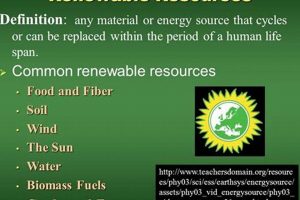
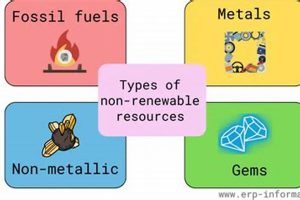
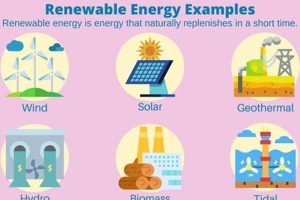
The assertion that coal is a renewable resource is fundamentally inaccurate. Renewable resources are defined as those that can be replenished naturally within a human lifespan, such as solar energy, wind power, and biomass. These resources are continuously available through natural processes. Coal, conversely, is a fossil fuel formed from the remains of ancient plant matter over millions of years under immense pressure and heat. This geological timescale renders its formation process far beyond the scope of human renewability.
The intensive extraction and combustion of coal contribute significantly to environmental challenges, including greenhouse gas emissions, air pollution, and habitat destruction. Its role in power generation and industrial processes has historically been significant, providing a relatively inexpensive energy source. However, the environmental costs associated with its use are increasingly recognized and factored into energy policy decisions. The finite nature of coal reserves further underscores the critical need for a transition toward truly renewable and sustainable energy alternatives.
Given the non-renewable nature of coal and its environmental implications, subsequent discussions will delve into the attributes of genuinely renewable resources, the technologies enabling their utilization, and the economic considerations driving the shift away from fossil fuels. Understanding the distinctions between renewable and non-renewable energy sources is crucial for developing informed strategies for a sustainable energy future.
Addressing the Misconception
It is critical to understand the definition of renewable resources and to correct any misconceptions regarding the categorization of coal. The following points clarify the factual characteristics of coal as a non-renewable resource.
Tip 1: Clarify the Definition of Renewable Resources: Renewable resources are naturally replenished on a human timescale. Provide examples such as solar, wind, and hydro power, which are continuously available through natural processes.
Tip 2: Explain the Formation of Coal: Coal originates from ancient plant matter compressed over millions of years. This lengthy geological process directly contrasts with the rapid replenishment rate of renewable resources.
Tip 3: Emphasize the Finite Nature of Coal Reserves: Global coal reserves are limited. Ongoing extraction depletes these reserves, making it impossible to consider coal a sustainable energy source.
Tip 4: Highlight Environmental Impacts: The extraction and combustion of coal contribute to significant environmental problems, including greenhouse gas emissions, air and water pollution, and habitat destruction. These impacts reinforce the unsustainable nature of coal utilization.
Tip 5: Compare with Renewable Alternatives: Contrast coal with truly renewable resources like solar and wind. These alternatives offer significantly reduced environmental impacts and are continuously replenished, representing a viable path towards energy sustainability.
Tip 6: Promote Accurate Terminology: Consistently use accurate terminology to describe coal as a fossil fuel and a non-renewable resource to avoid perpetuating misinformation.
Understanding the fundamental differences between coal and renewable energy sources is vital for informed discussions on energy policy and sustainability. Correcting misconceptions ensures a more accurate assessment of energy options.
The factual basis presented necessitates a shift in focus toward sustainable energy sources. The subsequent discussions can delve into renewable energy technologies and policies.
1. Geological Timescale

The concept of a geological timescale is central to understanding why coal is definitively not a renewable resource. Coal formation is a process occurring over immense spans of geological time, a timeframe that renders any possibility of renewability within a human context impossible. This connection necessitates a clear comprehension of the timescale involved and its implications for resource classification.
- Formation Period
Coal originates from plant matter that accumulated in swampy environments millions of years ago, primarily during the Carboniferous period (approximately 359 to 299 million years ago). The transformation into coal requires specific conditions of pressure, heat, and time that cannot be replicated on a human timescale. This prolonged genesis is a key factor distinguishing coal from renewable energy sources.
- Transformative Processes
The gradual conversion of plant material into peat, then lignite, bituminous coal, and finally anthracite involves complex chemical and physical changes driven by geological forces. Each stage requires increasing pressure and heat, processes that unfold over millions of years. Such lengthy transformative processes directly contradict the definition of a renewable resource that can be replenished within a human lifespan.
- Resource Depletion vs. Replenishment
The extraction and combustion of coal deplete reserves far faster than any natural processes could replenish them. The rate of coal consumption far exceeds the rate of its natural formation. This imbalance highlights the fundamental difference between coal, a finite resource, and truly renewable resources like solar or wind energy, which are continuously replenished.
- Implications for Sustainability
The geological timescale associated with coal formation underscores the unsustainable nature of relying on it as a primary energy source. Given the finite reserves and the millions of years required for its creation, coal cannot be considered a sustainable resource. The long-term consequences of coal extraction and combustion necessitate a shift towards renewable energy alternatives to ensure environmental and energy security.
In essence, the vastness of the geological timescale required for coal formation directly refutes any classification of coal as a renewable resource. The disparity between the rate of consumption and the rate of natural replenishment emphasizes the need for a transition toward sustainable energy solutions that align with environmental responsibility and long-term resource management. Recognizing this distinction is paramount for informed energy policy and environmental stewardship.
2. Plant matter origin

The origin of coal from plant matter is central to understanding why the assertion that coal is a renewable resource is incorrect. This connection highlights the extensive geological timescales involved and the finite nature of the resource. Examining the plant matter origin provides insight into the fundamental differences between coal and genuinely renewable energy sources.
- Ancient Ecosystems
Coal is derived from the accumulated remains of plant life in ancient ecosystems, particularly those prevalent during the Carboniferous period. Vast swamps and forests, rich in organic matter, provided the biomass that eventually transformed into coal. The specific conditions required for this accumulation and subsequent transformation are not readily replicated in contemporary environments, underscoring its non-renewable nature.
- Decomposition and Peat Formation
The initial stage in coal formation involves the partial decomposition of plant matter in oxygen-poor environments, resulting in the formation of peat. This process, while ongoing in some wetlands today, occurs at a rate far slower than the rate at which coal is currently extracted and consumed. The gradual accumulation of peat is the first step in a multi-stage geological process that spans millions of years.
- Coalification Process
The transformation of peat into various grades of coal (lignite, bituminous, anthracite) requires increasing pressure and heat over extended periods. This process, known as coalification, involves complex chemical and physical changes that alter the composition and structure of the plant matter. The energy density of the resulting coal increases with the degree of coalification. Given the timescales and conditions required, this process is not replicable on a human timescale, reinforcing the non-renewable classification.
- Carbon Sequestration and Release
The formation of coal represents a form of long-term carbon sequestration, as carbon from the atmosphere is incorporated into the plant matter and subsequently locked away in the Earth’s crust. However, the combustion of coal releases this stored carbon back into the atmosphere as carbon dioxide, a greenhouse gas. This release contributes to climate change and highlights the unsustainable nature of relying on coal as an energy source, especially when compared to renewable alternatives that do not involve the release of ancient carbon stores.
In conclusion, the origin of coal from plant matter, coupled with the immense geological timescales and specific conditions required for its formation, unequivocally establishes coal as a non-renewable resource. The rate of coal consumption far exceeds its rate of natural formation, and its combustion releases stored carbon into the atmosphere. This understanding is essential for developing informed energy policies and transitioning toward sustainable energy solutions.
3. Finite reserves

The concept of finite reserves is intrinsically linked to the fallacy of classifying coal as a renewable resource. The limited quantity of global coal deposits directly contradicts the fundamental characteristic of renewability, which implies a continuous or rapidly replenishable supply. The following points elaborate on the implications of finite coal reserves in relation to this misconception.
- Resource Depletion
Coal, unlike solar or wind energy, exists in a finite quantity within the Earth’s crust. Extraction activities continuously deplete these reserves, with no natural process capable of replenishing them at a comparable rate. As consumption continues, economically viable reserves diminish, highlighting the unsustainable nature of reliance on coal.
- Uneven Distribution
Coal reserves are not evenly distributed geographically. Certain regions possess significantly larger deposits than others, leading to geopolitical considerations and potential resource scarcity for nations with limited domestic supplies. This uneven distribution underscores the finite and localized nature of coal resources, differentiating it from ubiquitous renewable energy sources.
- Economic Implications
The finite nature of coal reserves directly impacts its economic value. As readily accessible deposits are exhausted, extraction costs increase, making coal a less economically competitive energy source. This economic pressure, coupled with environmental concerns, drives the transition towards renewable energy alternatives.
- Sustainability Challenges
The combination of finite reserves and environmental impacts poses significant sustainability challenges. Continued reliance on coal jeopardizes long-term energy security and exacerbates climate change. The finite nature of the resource necessitates a strategic shift towards sustainable energy sources that can be replenished naturally, ensuring a stable and environmentally responsible energy future.
The understanding of coal as a resource with finite reserves directly refutes the idea of its renewability. The eventual depletion of these reserves, coupled with the associated environmental consequences, necessitates a transition to sustainable and truly renewable energy sources. Recognizing this distinction is paramount for informed energy policy and responsible resource management.
4. Combustion pollution

Combustion pollution, a direct consequence of burning coal, fundamentally contradicts any notion of its renewability. The environmental burdens associated with coal combustion underscore its unsustainable nature and highlight the critical differences between it and genuinely renewable energy sources.
- Air Quality Degradation
The combustion of coal releases various pollutants into the atmosphere, including particulate matter (PM), sulfur dioxide (SO2), nitrogen oxides (NOx), and mercury. These pollutants contribute to respiratory illnesses, cardiovascular problems, and other health issues. The adverse effects on air quality demonstrate the unsustainable nature of coal combustion, contrasting sharply with the minimal air pollution associated with most renewable energy technologies.
- Greenhouse Gas Emissions
Coal combustion is a significant source of carbon dioxide (CO2), the primary greenhouse gas driving climate change. The release of CO2 from burning coal far exceeds that of most other energy sources, contributing substantially to global warming and its associated impacts. The greenhouse gas emissions directly refute any classification of coal as renewable, as its use actively undermines environmental sustainability.
- Acid Rain Formation
Sulfur dioxide and nitrogen oxides emitted during coal combustion react with water vapor in the atmosphere to form sulfuric acid and nitric acid, the primary components of acid rain. Acid rain damages ecosystems, acidifies bodies of water, and corrodes infrastructure. The formation of acid rain further illustrates the environmental damage associated with coal combustion and its incompatibility with renewable energy principles.
- Water Contamination
Coal combustion produces ash, which often contains heavy metals and other toxic substances. Improper disposal of coal ash can lead to water contamination, posing risks to aquatic ecosystems and human health. This contamination underscores the long-term environmental consequences of coal combustion and reinforces its non-renewable and unsustainable character.
The various forms of pollution resulting from coal combustion demonstrate its profound environmental impact and directly counter any claim of renewability. The unsustainable nature of coal combustion necessitates a transition toward cleaner, renewable energy sources that do not contribute to air pollution, greenhouse gas emissions, acid rain, and water contamination. The environmental burden associated with coal reinforces the need for a sustainable energy future based on renewable resources.
5. Non-renewable

The classification of coal as non-renewable is intrinsically connected to the fundamentally flawed question of its renewability. The very definition of a non-renewable resource is one that cannot be replenished at a rate comparable to its consumption, directly contradicting the concept of renewability. The reason this connection is crucial stems from the misinformation that can arise without a clear understanding of resource classification. Accepting the premise that coal is renewable, even for the sake of argument, overlooks the geological timescale required for its formation a timescale vastly exceeding any human timeframe. This misclassification can lead to unsustainable energy policies and practices. For example, promoting coal as a renewable source would undermine efforts to develop genuinely sustainable energy technologies and perpetuate environmental damage.
The finite nature of coal reserves, coupled with the environmental consequences of its extraction and combustion, further solidifies its non-renewable status. Consider the case of Germany’s reliance on coal for energy, despite its commitment to renewable energy targets. This continued dependence on a non-renewable resource, even while investing in renewable technologies, illustrates the challenges associated with transitioning away from fossil fuels. The economic and logistical hurdles of switching to alternative energy sources often lead to the prolonged use of non-renewable resources, despite the recognition of their environmental impact. This highlights the practical difficulties in phasing out non-renewable resources, even when the scientific consensus on their unsustainability is clear.
In summary, the non-renewable nature of coal directly refutes the question of its renewability. The misconception undermines the development and implementation of sustainable energy strategies, contributing to environmental degradation. The finite reserves and environmental impacts associated with coal necessitate a strategic shift towards renewable alternatives. A clear understanding of this distinction is essential for policymakers, energy producers, and consumers to make informed decisions regarding energy consumption and environmental stewardship. The challenge lies in overcoming the economic and infrastructural barriers that hinder the transition to a sustainable energy future.
Frequently Asked Questions
This section addresses common questions and clarifies misconceptions surrounding the classification of coal as a renewable resource.
Question 1: Is coal a renewable energy source?
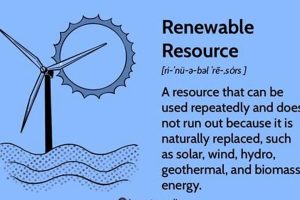
No, coal is definitively not a renewable energy source. Renewable energy sources are replenished naturally within a human lifespan, such as solar, wind, and hydro power. Coal, however, is a fossil fuel formed over millions of years.
Question 2: How long does it take for coal to form?
The formation of coal requires millions of years. Ancient plant matter undergoes transformation under intense pressure and heat, resulting in various grades of coal over geological timescales.
Question 3: What makes a resource renewable?
A renewable resource is characterized by its ability to be replenished naturally at a rate comparable to its consumption. Solar energy, wind power, and biomass are examples of resources that meet this criterion.
Question 4: Why is coal considered a fossil fuel?
Coal is classified as a fossil fuel because it is derived from the fossilized remains of ancient plant life. This origin, coupled with the long formation time, distinguishes it from renewable resources.
Question 5: What are the environmental impacts of using coal?
The extraction and combustion of coal have substantial environmental consequences, including greenhouse gas emissions, air pollution, water contamination, and habitat destruction. These impacts render its use unsustainable.
Question 6: What are some alternatives to coal?
Viable alternatives to coal include renewable energy sources such as solar, wind, hydro, and geothermal power. These sources offer cleaner energy production with minimal environmental impact.
In summary, coal is unequivocally a non-renewable resource due to its formation process, finite reserves, and environmental impact. Understanding this distinction is crucial for informed energy policy and a sustainable future.
The subsequent section will discuss the characteristics of genuinely renewable energy sources and their potential to replace fossil fuels.
Conclusion
This exploration has unequivocally refuted the premise “why is coal a renewable resource.” The analysis has underscored the fundamental differences between coal and genuinely renewable energy sources, emphasizing coal’s origin from ancient plant matter through a geological process spanning millions of years, its finite reserves subject to depletion, and the significant environmental consequences arising from its combustion. The assertion that coal possesses characteristics of renewability is factually incorrect and potentially misleading in discussions of energy policy and sustainability.
The continued perpetuation of this misconception hinders the necessary transition toward a sustainable energy future. Accurate classification and responsible resource management are paramount to mitigate environmental damage and ensure long-term energy security. A concerted effort to promote genuinely renewable energy sources, coupled with a clear understanding of the limitations and impacts associated with fossil fuels, is essential for informed decision-making and a sustainable future for generations to come.
![Guide to What Energy Resources Are Renewable [+Future] | Renewable Energy Solutions for a Sustainable Future | Clean & Green Power](https://pplrenewableenergy.com/wp-content/uploads/2026/03/th-516-300x200.jpg "Guide to What Energy Resources Are Renewable [+Future] Renewable Energy Solutions for a Sustainable Future | Clean & Green Power")