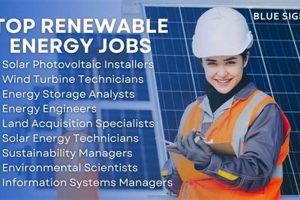
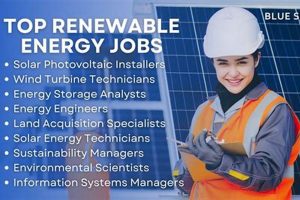
Positions within this sector encompass a wide range of specializations, from engineering and project management to sales, marketing, and policy advocacy. For instance, a wind turbine technician installs and maintains turbines, while a solar panel installer positions and connects solar panels on residential and commercial buildings. A financial analyst might work on investment strategies for sustainable energy projects. These roles are found within diverse organizations, including private companies, government agencies, and non-profit organizations.
Employment opportunities related to sustainable power generation contribute significantly to economic growth and environmental sustainability. They drive innovation in technology and infrastructure, reducing reliance on fossil fuels and mitigating climate change. Historically, this field has experienced significant growth, driven by increasing public awareness of environmental issues and supportive government policies. This positive trajectory is expected to continue as the global transition towards cleaner energy sources accelerates.
This article will further explore specific career paths within the sustainable power sector, discuss required skills and qualifications, and analyze future trends shaping this dynamic and vital field. It will also provide resources for individuals seeking employment in this impactful area.
Tips for Pursuing Careers in the Sustainable Power Sector
Navigating the dynamic landscape of sustainable power employment requires strategic planning and focused effort. The following tips provide guidance for individuals interested in pursuing careers within this impactful field.
Tip 1: Develop Specialized Skills: Acquire in-demand technical skills, such as proficiency in Geographic Information Systems (GIS) for solar project development or expertise in wind turbine maintenance. Consider certifications relevant to specific renewable energy technologies.
Tip 2: Network Strategically: Attend industry conferences, join professional organizations, and connect with individuals working in sustainable power. Building a strong network can lead to valuable insights and career opportunities.
Tip 3: Research Industry Trends: Stay informed about emerging technologies, policy changes, and market dynamics within the renewable energy sector. Understanding current trends can help individuals position themselves for success.
Tip 4: Tailor Application Materials: Highlight relevant skills and experience in resumes and cover letters. Demonstrate a genuine interest in sustainability and a clear understanding of the target organization’s mission.
Tip 5: Gain Practical Experience: Seek internships, volunteer positions, or entry-level roles to gain practical experience in the field. Practical experience can significantly enhance career prospects.
Tip 6: Consider Advanced Education: Pursue relevant graduate degrees or professional certifications to enhance technical expertise and career advancement potential. A master’s degree in engineering or a specialized certification in project management can be beneficial.
Tip 7: Demonstrate Soft Skills: Cultivate essential soft skills, including communication, teamwork, and problem-solving abilities. These skills are crucial for success in any role within the sustainable power sector.
By following these tips, individuals can increase their competitiveness and effectively pursue fulfilling and impactful careers within the expanding sustainable power sector.
This information provides a foundation for a successful career in the sustainable power sector. The following sections will delve deeper into specific career paths and offer additional resources for career exploration.
1. Technical Expertise

Technical expertise forms the backbone of the renewable energy sector, driving innovation and ensuring the effective implementation of sustainable power solutions. This expertise encompasses a broad range of disciplines, including engineering (electrical, mechanical, chemical), computer science, and environmental science. For instance, electrical engineers design and optimize the performance of solar photovoltaic systems, while mechanical engineers contribute to the development of more efficient wind turbines. Chemical engineers play a critical role in advancing biofuel technologies and energy storage solutions. Proficiency in specialized software, data analysis tools, and modeling techniques is also crucial for many technical roles within the sector.
The increasing complexity of renewable energy systems demands a high level of technical proficiency. The integration of smart grids, the development of advanced energy storage solutions, and the optimization of renewable energy generation require specialized knowledge and skills. For example, designing a microgrid for a remote community requires expertise in power systems engineering, battery storage technologies, and control systems. Similarly, developing and implementing algorithms for optimizing the output of a wind farm necessitates advanced knowledge of data analytics and wind turbine technology. The practical application of this expertise translates directly into improved efficiency, reduced costs, and increased reliability of renewable energy systems.
In conclusion, technical expertise is not merely a desirable asset but a fundamental requirement for success within the renewable energy sector. As the industry continues to evolve and innovate, the demand for highly skilled professionals with specialized technical knowledge will only intensify. Addressing the skills gap through targeted education and training programs is essential for sustaining the growth and development of this vital sector. This focus on technical competence ensures the effective transition toward a sustainable energy future.
2. Project Management
Project management plays a critical role in the successful execution of renewable energy initiatives. From the initial feasibility study to the final commissioning of a project, effective project management ensures that projects are completed on time, within budget, and to the required quality standards. This discipline is essential for coordinating diverse teams, managing resources, and mitigating risks inherent in complex renewable energy projects.
- Planning and Development
This facet encompasses defining project scope, setting objectives, creating detailed work breakdown structures, and developing comprehensive project plans. For example, in a wind farm project, this phase involves site assessment, wind resource analysis, turbine selection, and permitting. Thorough planning is crucial for establishing a clear roadmap and minimizing potential delays and cost overruns.
- Resource Allocation
Effective resource allocation involves identifying and securing the necessary resources, including human resources, materials, equipment, and finances. In a solar power plant project, this might involve contracting with specialized installation crews, procuring solar panels and inverters, and securing financing from investors. Optimizing resource utilization is essential for maximizing efficiency and cost-effectiveness.
- Risk Management
Renewable energy projects often face various risks, including regulatory changes, environmental challenges, and supply chain disruptions. Identifying, assessing, and mitigating these risks is crucial for project success. For instance, a geothermal project might face geological uncertainties, requiring thorough risk assessment and contingency planning to address potential drilling challenges.
- Stakeholder Management
Renewable energy projects involve a wide range of stakeholders, including government agencies, local communities, investors, and contractors. Effective communication and collaboration with all stakeholders are essential for ensuring project acceptance and minimizing potential conflicts. For example, engaging with local communities through public consultations and addressing their concerns is vital for building trust and securing project support.
These interconnected facets of project management are fundamental to the successful development and implementation of renewable energy projects. The increasing scale and complexity of these projects further underscore the importance of skilled project managers in driving the transition to a sustainable energy future. Mastering these elements contributes significantly to optimized project outcomes and the overall advancement of the renewable energy sector.
3. Data Analysis

Data analysis plays a crucial role in optimizing the performance, reliability, and financial viability of renewable energy systems. From predicting energy generation to assessing environmental impact, data-driven insights inform key decisions across the renewable energy sector, creating opportunities for specialized roles and driving innovation.
- Performance Optimization
Analyzing data from renewable energy sources, such as wind turbines and solar panels, enables engineers to optimize their performance. For example, analyzing wind speed, direction, and turbine output data can identify opportunities to adjust turbine blade angles or control systems, maximizing energy capture. Similarly, analyzing solar irradiance, panel temperature, and energy output data can help optimize the placement and configuration of solar panels for maximum efficiency.
- Predictive Maintenance
Data analysis enables predictive maintenance strategies, minimizing downtime and reducing maintenance costs. By analyzing sensor data, such as vibration patterns, temperature fluctuations, and power output, potential equipment failures can be identified before they occur. This allows for proactive maintenance scheduling, preventing costly breakdowns and ensuring continuous operation of renewable energy systems. For example, analyzing vibration data from a wind turbine gearbox can predict potential bearing failure, allowing for timely replacement and preventing catastrophic damage.
- Grid Integration
Integrating renewable energy sources into the existing power grid requires sophisticated data analysis to ensure grid stability and reliability. Analyzing data on energy demand, weather patterns, and renewable energy generation allows grid operators to forecast supply and demand imbalances and implement strategies to maintain grid stability. For example, analyzing weather forecasts and solar irradiance data can predict periods of high solar energy generation, enabling grid operators to adjust conventional power plant output accordingly.
- Resource Assessment
Data analysis is essential for assessing the potential of renewable energy resources. Analyzing wind speed data, solar irradiance data, and hydrological data informs decisions about the optimal location and size of renewable energy projects. For instance, analyzing long-term wind speed data helps determine the viability of a wind farm project, while analyzing solar irradiance data helps assess the potential of a solar power plant.
These diverse applications of data analysis highlight its crucial role in the renewable energy sector. As the industry continues to grow and evolve, the demand for skilled data analysts with expertise in renewable energy systems will only increase. This growing demand creates significant career opportunities for individuals with strong analytical skills and a passion for sustainable energy. Furthermore, the insights gained from data analysis drive innovation and accelerate the transition towards a cleaner and more sustainable energy future.
4. Policy Advocacy

Policy advocacy plays a crucial role in shaping the landscape of the renewable energy sector, directly influencing the growth and development of employment opportunities. Advocates work to create a supportive regulatory environment that encourages investment in renewable energy technologies, accelerates the transition to a sustainable energy future, and ultimately fosters job creation within the sector. Understanding the various facets of policy advocacy is essential for individuals seeking careers in this impactful field.
- Influencing Legislation
Advocates engage with policymakers at local, state, and national levels to promote legislation that supports renewable energy development. This includes advocating for renewable portfolio standards (RPS), tax incentives for renewable energy projects, and policies that streamline the permitting process for renewable energy installations. For example, successfully advocating for a higher RPS target can lead to increased demand for solar and wind power, creating jobs in manufacturing, installation, and maintenance.
- Promoting Regulatory Frameworks
Advocates work to establish regulatory frameworks that facilitate the integration of renewable energy into the electricity grid. This includes advocating for net metering policies, which allow renewable energy generators to sell excess electricity back to the grid, and interconnection standards that ensure the safe and efficient integration of renewable energy resources. Establishing clear and consistent regulations provides certainty for investors and encourages further development of the renewable energy sector, leading to increased job opportunities.
- Public Awareness Campaigns
Raising public awareness about the benefits of renewable energy is a key component of policy advocacy. Advocates engage in public education campaigns, organize community events, and work with the media to promote the economic and environmental advantages of transitioning to a sustainable energy future. Increased public support for renewable energy can translate into stronger political will to enact supportive policies, further driving job growth in the sector. For example, a successful public awareness campaign highlighting the job creation potential of offshore wind projects can garner public support and influence policymakers to approve such projects.
- Research and Analysis
Policy advocacy relies on robust research and analysis to inform policy recommendations. Advocates conduct studies on the economic impact of renewable energy policies, analyze the environmental benefits of different renewable energy technologies, and assess the job creation potential of various policy options. Data-driven analysis provides policymakers with the information they need to make informed decisions that support the growth of the renewable energy sector and create high-quality jobs. For example, research demonstrating the positive economic impact of solar tax credits can be used to advocate for the extension or expansion of such incentives.
These interconnected facets of policy advocacy demonstrate its significant influence on employment within the renewable energy sector. By shaping policies that encourage investment, innovation, and market growth, advocates play a crucial role in creating a sustainable energy future and fostering a robust job market within this dynamic and impactful field. Careers in policy advocacy offer individuals the opportunity to contribute directly to the advancement of renewable energy and the creation of a cleaner, more sustainable world.
5. Sales and Marketing

Sales and marketing efforts are essential for driving the widespread adoption of renewable energy solutions and, consequently, influencing the growth of employment opportunities within this sector. These functions connect technological advancements with consumer demand, creating a market for sustainable energy products and services, and ultimately contributing to the expansion of the renewable energy workforce.
- Business Development
This facet focuses on identifying and developing new business opportunities within the renewable energy market. Professionals in this area cultivate relationships with potential clients, conduct market research to understand customer needs, and develop strategies for expanding market share. For example, a business development manager might target large corporations interested in purchasing renewable energy credits or explore partnerships with municipalities to develop community solar projects. Successful business development translates directly into increased demand for renewable energy solutions, creating a need for skilled professionals across the sector.
- Marketing and Communications
Marketing and communications professionals raise public awareness about the benefits of renewable energy and promote the adoption of sustainable energy solutions. They develop marketing campaigns, create educational materials, manage social media presence, and engage with the media to highlight the advantages of renewable energy. Effective marketing campaigns can influence consumer behavior, driving demand for renewable energy products and services, and ultimately creating job opportunities within the sector. For example, a targeted marketing campaign might educate homeowners about the financial benefits of installing rooftop solar panels, leading to increased demand for solar installers and technicians.
- Sales and Customer Relations
Sales professionals play a key role in connecting customers with renewable energy solutions that meet their specific needs. They work directly with clients, providing technical expertise, developing customized proposals, and closing sales. Strong customer relationships are essential for building trust and ensuring customer satisfaction, which contributes to the long-term growth of the renewable energy market. For example, a solar sales representative might work with a homeowner to design a customized solar panel system, addressing their energy needs and budget constraints, and facilitating the installation process.
- Product Management
Product managers in the renewable energy sector oversee the development and lifecycle management of renewable energy products and services. They conduct market research to identify customer needs, define product specifications, and work with engineering teams to develop innovative solutions. Effective product management ensures that renewable energy products are competitive, meet market demands, and contribute to the overall growth of the sector, creating job opportunities in research, development, and manufacturing. For example, a product manager might lead the development of a new type of wind turbine, incorporating advanced technologies to improve efficiency and reduce costs.
These interconnected functions of sales and marketing are crucial for driving the growth of the renewable energy market and creating employment opportunities. By connecting technological advancements with consumer demand, these professionals play a vital role in accelerating the transition to a sustainable energy future and fostering a robust job market within this dynamic and impactful sector.
6. Sustainability Focus

A core tenet of employment within the renewable energy sector is a commitment to sustainability. This focus permeates all roles, from engineering and project management to sales and policy advocacy. It influences not only the daily tasks but also the long-term career trajectories of individuals within this field. Understanding the various facets of this sustainability focus is essential for navigating career paths within the renewable energy sector.
- Environmental Stewardship
Renewable energy jobs inherently contribute to environmental stewardship by reducing reliance on fossil fuels and mitigating climate change. Professionals in this sector actively work towards minimizing the environmental impact of energy production, promoting sustainable practices, and advocating for the preservation of natural resources. For example, a wind farm developer might conduct extensive environmental impact assessments to minimize the effects of a project on local wildlife, while a solar panel installer might emphasize the reduced carbon footprint of solar energy to potential customers. This commitment to environmental protection is a driving force behind career choices within the renewable energy sector.
- Social Responsibility
The sustainability focus within the renewable energy sector extends beyond environmental concerns to encompass social responsibility. This includes promoting equitable access to clean energy, supporting local communities, and creating job opportunities in underserved areas. For instance, a community solar project might provide affordable clean energy to low-income households, while a renewable energy company might prioritize hiring local workers for a new wind farm construction project. This focus on social equity and community development enhances the appeal of renewable energy careers for individuals seeking socially responsible work.
- Economic Viability
Sustainability also encompasses economic viability. Professionals in the renewable energy sector work to develop and implement cost-effective renewable energy solutions that are competitive with traditional fossil fuels. This includes driving innovation in renewable energy technologies, optimizing project efficiency, and advocating for policies that support the growth of the renewable energy market. For example, a financial analyst might develop innovative financing models for renewable energy projects, while a policy advocate might work to secure tax incentives for renewable energy investments. This focus on economic viability ensures the long-term sustainability of the renewable energy sector and contributes to its continued job growth.
- Long-Term Vision
A long-term vision of a sustainable energy future underpins the work of professionals in the renewable energy sector. This vision extends beyond immediate project goals to encompass a broader commitment to creating a world powered by clean, renewable energy sources. For example, a researcher might dedicate their career to developing next-generation solar cell technology, while an educator might train future generations of renewable energy professionals. This dedication to a long-term vision of sustainability motivates individuals to pursue careers within the renewable energy sector and contributes to its continued growth and development.
These interconnected facets of sustainability demonstrate its integral role in shaping the landscape of renewable energy employment. This deep-rooted commitment to environmental protection, social responsibility, and economic viability not only defines the work itself but also attracts individuals seeking purposeful and impactful careers. The sustainability focus within the renewable energy sector is a driving force behind its continued expansion and its vital contribution to a cleaner, more sustainable future.
Frequently Asked Questions
This section addresses common inquiries regarding careers within the renewable energy sector. The responses provide concise, informative answers designed to clarify potential uncertainties and offer practical guidance.
Question 1: What educational background is typically required for positions within this field?
Educational requirements vary widely depending on the specific role. While some technical positions necessitate advanced degrees in engineering or related fields, other roles, such as sales or project management, may require a bachelor’s degree combined with relevant experience. Vocational training programs and specialized certifications can also provide pathways into specific technical roles.
Question 2: Are these career paths financially viable?
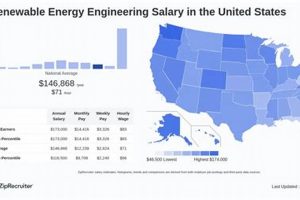
Compensation within the renewable energy sector is generally competitive with other industries requiring similar skill sets. Salaries vary based on factors such as experience, education, location, and specific job responsibilities. The increasing demand for skilled professionals in this growing field often translates into attractive compensation packages.
Question 3: What are the typical career progression opportunities?
Career progression within the renewable energy sector offers diverse opportunities. Individuals might begin in entry-level roles and advance to senior management positions within their chosen specialization. Lateral movement between different areas within the field is also common, allowing individuals to broaden their skill sets and explore various career paths. For example, a field technician might progress to a supervisory role or transition into project management.
Question 4: How stable is employment in this field?
The renewable energy sector is experiencing significant growth globally, driven by increasing demand for clean energy and supportive government policies. This growth translates into increasing job opportunities and generally stable employment prospects for qualified professionals. While market fluctuations can influence specific segments of the industry, the long-term outlook for renewable energy employment remains positive.
Question 5: What are some of the challenges faced by professionals in this field?
Challenges within the renewable energy sector can include the intermittent nature of some renewable energy sources (such as solar and wind), the need for grid modernization to accommodate increasing renewable energy integration, and the ongoing development of cost-effective energy storage solutions. Professionals in this field often address these challenges through innovative solutions and technological advancements.
Question 6: How can one find available positions within this field?
Numerous resources exist for finding employment opportunities within the renewable energy sector. Online job boards specializing in clean energy and sustainability often list available positions. Professional networking events, industry conferences, and career fairs also provide valuable opportunities to connect with potential employers. Company websites of renewable energy companies and organizations also often list open positions.
Understanding the nuances of employment within the renewable energy sector is crucial for successful career planning. The information provided in this FAQ section offers a foundation for further exploration and informed decision-making.
The subsequent section will delve deeper into specific career paths, providing detailed insights into various roles within the renewable energy sector.
Conclusion
Exploration of career opportunities within the renewable energy sector reveals a diverse and dynamic landscape. Technical expertise in areas such as engineering and data analysis underpins the development and implementation of sustainable energy solutions. Project management skills ensure the efficient execution of complex renewable energy initiatives, while policy advocacy shapes the regulatory environment that fosters industry growth. Sales and marketing efforts drive market adoption of renewable energy technologies, and a shared commitment to sustainability guides professionals across all roles. These interconnected functions contribute to a rapidly expanding field offering significant potential for impactful and rewarding careers.
The transition to a sustainable energy future necessitates a skilled and dedicated workforce. Opportunities within the renewable energy sector represent not merely jobs, but pathways to contributing to a critical global imperative. Further exploration of specific career paths and ongoing development of relevant skills are essential for individuals seeking to engage with this transformative field and contribute to a cleaner, more sustainable world.