The technology harnesses the sun’s radiant heat to produce thermal energy, subsequently utilized for diverse applications. This process often involves concentrating sunlight using mirrors or lenses to heat a fluid, which then drives turbines for electricity generation or provides direct heating for industrial processes and residential use. An example includes concentrating solar power (CSP) plants, which use large arrays of mirrors to focus sunlight onto a receiver containing a heat transfer fluid.
This approach to energy production offers several advantages. It presents a sustainable alternative to fossil fuels, reducing greenhouse gas emissions and mitigating climate change. Furthermore, it enhances energy security by leveraging a readily available, domestic resource. Historically, the use of solar heat has evolved from simple water heating systems to sophisticated power plants, demonstrating its increasing potential as a significant contributor to global energy needs.
The subsequent sections will delve into specific methods of harnessing solar heat, examine current applications and technological advancements, and evaluate the economic and environmental considerations associated with its widespread adoption. The exploration will further consider its role in a diversified energy portfolio and its potential to contribute to a more sustainable future.
Optimizing Solar Thermal Renewable Energy Systems
Effective implementation of solar thermal systems requires careful planning and execution. The following tips provide guidance for maximizing efficiency and ensuring long-term sustainability.
Tip 1: Conduct a Thorough Site Assessment: Prior to installation, a detailed analysis of the location is crucial. Factors such as solar irradiance levels, shading patterns, and available land area significantly influence system performance. Comprehensive data collection and modeling are essential for accurate projections.
Tip 2: Select Appropriate Technology for the Application: Different technologies are suited for various applications. Concentrated solar power (CSP) is typically employed for large-scale electricity generation, while solar water heating systems are ideal for residential and commercial needs. Matching the technology to the specific energy demand is vital.
Tip 3: Implement Efficient Energy Storage Solutions: The intermittent nature of solar radiation necessitates the integration of energy storage. Thermal energy storage (TES) systems, such as molten salt storage, enable continuous operation even during periods of low solar availability. Proper sizing and management of storage are critical.
Tip 4: Ensure Proper System Maintenance and Monitoring: Regular maintenance is essential for maintaining optimal performance. This includes cleaning reflective surfaces, inspecting fluid systems, and monitoring system parameters. Implementing a robust monitoring system allows for early detection of potential issues.
Tip 5: Prioritize System Integration and Control: Integrating solar thermal systems with existing energy infrastructure requires careful planning. Advanced control systems can optimize energy dispatch, manage peak demand, and enhance overall system efficiency. Seamless integration is key to maximizing economic and environmental benefits.
Tip 6: Consider Life Cycle Cost Analysis: When evaluating different solar thermal options, a comprehensive life cycle cost analysis is crucial. This analysis should consider upfront capital costs, operating and maintenance expenses, and expected energy savings over the system’s lifespan. A thorough analysis will inform optimal investment decisions.
Effective planning, technology selection, storage implementation, and consistent monitoring are key for realizing the full potential. Through rigorous execution, the contribution to global sustainable energy objectives will be increased.
The concluding section will present a summary of the main points discussed and offer future perspectives on its role in the evolving energy landscape.
1. Efficiency

Efficiency is a paramount consideration in the utilization of solar heat, directly impacting the economic viability and environmental benefits of these systems. Higher efficiencies translate to increased energy output from a given surface area, reduced land usage, and lower overall costs. Examining various facets reveals how design and technology contribute to optimized energy conversion.
- Solar Collector Design
The design of the solar collector, whether a flat plate, evacuated tube, or concentrating collector, significantly influences efficiency. Concentrating collectors, for example, use mirrors to focus sunlight onto a smaller receiver, achieving higher temperatures and therefore greater efficiency in thermodynamic processes. Flat plate collectors, while simpler and less expensive, are generally less efficient due to higher heat losses.
- Heat Transfer Fluid Properties
The choice of heat transfer fluid plays a critical role in system efficiency. Fluids with high heat capacity, low viscosity, and high thermal stability enable effective heat absorption and transport. For instance, molten salts are employed in concentrating solar power (CSP) plants due to their ability to operate at high temperatures and store thermal energy efficiently.
- Thermal Insulation and Heat Losses
Minimizing heat losses is crucial for maintaining high system efficiency. Effective thermal insulation of pipes, tanks, and other components reduces energy dissipation to the environment. Vacuum insulation, often used in evacuated tube collectors, significantly reduces conductive and convective heat losses.
- System Integration and Control
Optimizing overall system efficiency requires careful integration and control of all components. Advanced control systems can modulate flow rates, adjust mirror angles, and manage energy storage to maximize energy output based on real-time conditions. Proper integration with existing energy infrastructure, such as district heating networks, can further enhance efficiency.
Collectively, these aspects demonstrate that achieving high is essential for maximizing the economic and environmental benefits of solar heat. Continuous advancements in materials, designs, and control systems will further enhance the competitiveness as a viable renewable energy source. These improvements are necessary to decrease fossil fuels.
2. Concentration

In the context of solar thermal energy, concentration refers to the process of focusing sunlight onto a smaller area to increase the intensity of solar radiation. This intensification allows for the generation of higher temperatures, which are essential for efficient electricity production and other high-temperature applications. Various technologies employ different methods to achieve this concentration, each with specific advantages and limitations.
- Parabolic Trough Systems
Parabolic trough systems utilize curved, mirrored surfaces to focus sunlight onto a receiver tube located along the focal line of the trough. A heat transfer fluid, such as oil or molten salt, circulates through the receiver tube, absorbing the concentrated solar energy and transferring it to a power generation unit. These systems are widely used in large-scale solar thermal power plants and are effective for generating high-temperature heat.
- Solar Power Tower Systems
Solar power tower systems, also known as central receiver systems, employ a field of heliostats (mirrors) to reflect sunlight onto a central receiver located atop a tower. The concentrated solar energy heats a heat transfer fluid, which is then used to generate electricity or drive industrial processes. These systems can achieve very high temperatures and are suitable for large-scale power generation.
- Dish Stirling Systems
Dish Stirling systems consist of a parabolic dish concentrator that focuses sunlight onto a Stirling engine. The concentrated solar energy heats a working fluid within the engine, causing it to expand and drive a piston, which in turn generates electricity. These systems are typically smaller in scale compared to parabolic trough and solar power tower systems and are suitable for distributed power generation applications.
- Fresnel Reflector Systems
Fresnel reflector systems use linear arrays of flat or slightly curved mirrors to focus sunlight onto a receiver tube. The mirrors are arranged in a stepped pattern, allowing for a more compact design compared to parabolic trough systems. Fresnel reflectors are often used in commercial and industrial applications for generating steam or hot water.
The level of solar concentration significantly affects the overall efficiency and application scope. Higher concentrations enable the generation of higher temperatures, facilitating more efficient electricity production and enabling the use of heat in industrial processes. The choice of concentration technology depends on factors such as scale, application requirements, and cost considerations.
3. Storage Solutions

The intermittent nature of solar radiation necessitates effective storage solutions to ensure the reliable and continuous supply of energy from solar thermal systems. These solutions mitigate fluctuations in solar availability, enabling dispatchable power generation and expanding the applicability of solar thermal energy to diverse sectors.
- Thermal Energy Storage (TES)
Thermal energy storage involves storing energy in the form of heat. This can be achieved through various methods, including sensible heat storage (e.g., using water or molten salt), latent heat storage (e.g., using phase-change materials), and thermochemical storage (e.g., using reversible chemical reactions). TES systems are commonly integrated with concentrating solar power (CSP) plants, allowing them to generate electricity even when sunlight is not available. For example, molten salt TES enables CSP plants to provide power during peak demand periods or at night.
- Molten Salt Storage
Molten salt storage is a widely used TES technology in CSP plants. It involves using a mixture of nitrate salts as the storage medium. The salts are heated to high temperatures using solar energy and then stored in insulated tanks. When electricity is needed, the hot salts are used to generate steam, which drives a turbine to produce electricity. Molten salt storage offers high energy density, low cost, and long storage durations, making it a viable solution for large-scale energy storage.
- Phase-Change Materials (PCM) Storage
Phase-change materials (PCMs) store energy by undergoing a phase transition, such as melting or solidifying. During the phase transition, the PCM absorbs or releases a significant amount of heat without changing temperature. PCMs can be used in solar thermal systems for various applications, including solar water heating, building heating and cooling, and industrial process heat. They offer high energy density and can be integrated into building materials or heat exchangers.
- Thermochemical Storage
Thermochemical storage involves using reversible chemical reactions to store energy. The reactions absorb energy during the charging process and release energy during the discharging process. Thermochemical storage offers the potential for high energy density and long-term storage, but it is still in the early stages of development. Potential applications include solar fuel production and high-temperature process heat.
Effective storage is essential for overcoming the intermittency of sunlight and enabling solar thermal systems to provide reliable and dispatchable energy. These advancements will contribute to the widespread adoption and integration into diverse energy sectors.
4. Applications

The multifaceted nature of solar thermal technology is evident in its diverse range of applications across various sectors. These applications leverage the thermal energy harnessed from sunlight to address energy needs in electricity generation, heating, and industrial processes, demonstrating the adaptability and potential impact on global energy systems.
- Electricity Generation via Concentrated Solar Power (CSP)
CSP plants utilize concentrated sunlight to heat a working fluid, which in turn drives turbines to generate electricity. This application offers a scalable solution for large-scale power production, often incorporating thermal energy storage to provide dispatchable power. For instance, facilities in Spain and the United States demonstrate the viability of CSP in contributing to grid stability and reducing reliance on fossil fuels. The implications involve decarbonizing electricity grids and providing a renewable alternative to conventional power plants.
- Direct Heating and Cooling Systems
Solar thermal collectors can directly heat water or air for residential, commercial, and industrial use. These systems range from simple solar water heaters for domestic use to large-scale district heating networks. Examples include solar-assisted heating systems in buildings and solar-powered absorption chillers for cooling. The impact lies in reducing energy consumption for heating and cooling, lowering carbon emissions, and decreasing dependence on traditional energy sources.
- Industrial Process Heat
Many industrial processes require high-temperature heat, which can be supplied by solar thermal systems. These applications include food processing, chemical production, and desalination. For example, solar thermal systems can generate steam for industrial processes or provide direct heat for drying and sterilization. The benefits are reduced energy costs, lower carbon footprints, and increased sustainability in industrial operations.
- Solar Desalination
Solar thermal energy can power desalination processes, providing a sustainable source of fresh water in arid and semi-arid regions. Solar desalination systems use heat from sunlight to evaporate water, which is then condensed to produce potable water. This application addresses water scarcity issues, reduces the energy intensity of desalination, and promotes sustainable water management practices.
The varied applications of solar thermal systems highlight its versatility and potential to contribute to a more sustainable energy future. Whether through large-scale electricity generation, direct heating and cooling, industrial process heat, or water desalination, the technology offers viable solutions for addressing global energy and environmental challenges.
5. Cost-Effectiveness

The cost-effectiveness of solar thermal renewable energy systems is a critical factor influencing their widespread adoption and integration into the global energy landscape. A comprehensive assessment must consider initial investment, operational expenses, energy output, and potential revenue streams. The interplay of these elements determines the economic viability and competitiveness of solar thermal compared to conventional energy sources.
- Capital Costs and Economies of Scale
The initial investment in solar thermal infrastructure, including collector arrays, heat transfer systems, and power generation equipment, represents a significant barrier to entry. However, economies of scale achieved through larger project deployments can substantially reduce per-unit costs. For instance, large-scale concentrated solar power (CSP) plants benefit from optimized supply chains and standardized construction practices, leading to lower overall capital expenditures. This underscores the importance of strategic planning and investment in large-scale projects to enhance economic competitiveness.
- Operational and Maintenance Expenses
While solar thermal systems benefit from minimal fuel costs, ongoing operational and maintenance (O&M) expenses contribute to the overall lifecycle cost. These expenses encompass routine maintenance, component replacements, and system monitoring. Effective O&M strategies, such as predictive maintenance and remote monitoring, can minimize downtime and reduce O&M costs. Proper system design and component selection are also critical for ensuring long-term reliability and minimizing maintenance requirements. For example, automated cleaning systems for solar collectors can maintain optimal performance and reduce manual labor costs.
- Energy Output and Capacity Factor
The energy output of a solar thermal system, measured by its capacity factor, directly impacts its revenue generation potential. Capacity factor reflects the actual energy produced over a given period relative to the system’s maximum potential output. Factors such as solar irradiance levels, system efficiency, and thermal energy storage (TES) influence capacity factor. TES systems enable solar thermal plants to generate electricity even during periods of low solar availability, thereby increasing capacity factor and enhancing revenue generation. Maximizing energy output is essential for improving economic viability.
- Government Incentives and Policy Support
Government incentives and policy support play a crucial role in enhancing the cost-effectiveness of solar thermal renewable energy. Incentives such as tax credits, feed-in tariffs, and renewable energy certificates (RECs) reduce the financial burden on project developers and improve the investment attractiveness of solar thermal projects. Supportive policies, such as renewable energy mandates and carbon pricing mechanisms, create a stable market environment and incentivize the deployment of solar thermal technologies. These policies are essential for leveling the playing field and promoting the widespread adoption of solar thermal renewable energy.
In conclusion, the cost-effectiveness of solar thermal energy is contingent on a multifaceted interplay of capital costs, operational expenses, energy output, and policy support. Ongoing technological advancements, strategic project development, and supportive policy frameworks are crucial for enhancing the economic competitiveness and fostering the widespread adoption of solar thermal renewable energy as a viable alternative to conventional energy sources.
6. Environmental Impact

The environmental impact of solar thermal renewable energy, while significantly less detrimental than fossil fuels, warrants careful consideration to ensure sustainable deployment. The primary benefit lies in the reduction of greenhouse gas emissions associated with electricity generation and heat production. Unlike coal or natural gas power plants, solar thermal facilities do not directly emit carbon dioxide or other pollutants during operation. However, the construction and manufacturing processes involved in building solar thermal plants do have an environmental footprint.
Land use is a critical aspect of the environmental impact. Large-scale solar thermal plants, particularly concentrated solar power (CSP) facilities, require substantial land areas to accommodate the solar collector fields. This can lead to habitat disruption and potential impacts on local ecosystems. Water usage is another concern, especially in arid regions where many solar thermal plants are located. Water is often needed for cooling and cleaning the solar collectors. The extraction and use of water can strain local water resources and impact aquatic ecosystems. Mitigation strategies include using dry-cooling technologies, optimizing water usage practices, and conducting thorough environmental impact assessments prior to project development. Furthermore, the lifecycle of solar thermal components, including manufacturing, transportation, and disposal, contributes to the overall environmental footprint. Responsible sourcing of materials, efficient manufacturing processes, and proper waste management are essential to minimize these impacts.
In summary, while solar thermal renewable energy offers a cleaner alternative to fossil fuels, its deployment must be carefully managed to minimize potential environmental impacts. By addressing concerns related to land use, water consumption, and lifecycle impacts, solar thermal can contribute to a more sustainable energy future. Continued research and development in technologies and best practices are necessary to optimize the environmental performance of these systems and ensure long-term sustainability.
Frequently Asked Questions About Solar Thermal Renewable Energy
The following questions address common inquiries and misconceptions concerning the implementation and impact of harnessing the sun’s thermal energy. They aim to provide clear, concise, and objective answers based on current scientific and technical understanding.
Question 1: What distinguishes solar thermal technology from solar photovoltaic (PV) technology?
Solar thermal technology utilizes the sun’s heat to produce thermal energy, which can then be used for heating, cooling, or electricity generation via turbines. Solar PV, on the other hand, directly converts sunlight into electricity using semiconductor materials.
Question 2: Is solar thermal energy effective in regions with limited sunlight?
While direct sunlight is ideal, solar thermal systems can still function effectively in regions with diffuse sunlight, although with reduced efficiency. Thermal energy storage systems can also mitigate the impact of intermittent sunlight.
Question 3: What are the primary limitations of solar thermal energy?
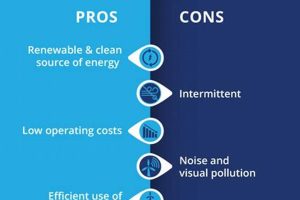
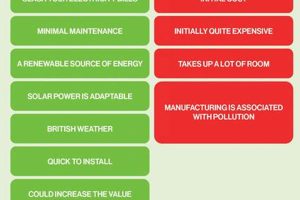
Limitations include the need for significant land area, potential environmental impacts related to water usage and habitat disruption, and the intermittency of solar radiation. High upfront capital costs can also be a barrier to entry.
Question 4: What types of energy storage are typically used with solar thermal systems?
Common energy storage methods include thermal energy storage (TES) using materials like molten salt, which can store heat for later use, and phase-change materials (PCMs) that absorb or release heat during phase transitions.
Question 5: How does the lifecycle environmental impact of solar thermal compare to fossil fuel energy?
Solar thermal has a significantly lower lifecycle environmental impact compared to fossil fuels due to the absence of direct greenhouse gas emissions during operation. However, manufacturing and disposal of system components do contribute to the overall impact, though to a lesser extent.
Question 6: What role is expected to be played by solar thermal energy in the future global energy mix?
Solar thermal is expected to play an increasingly important role in decarbonizing electricity grids, providing sustainable heating and cooling solutions, and enabling industrial processes. Advancements in storage technologies and cost reductions are expected to enhance its competitiveness and deployment.
In summation, understanding both the potential and limitations of this renewable energy method is crucial for effective planning and implementation. Its viability hinges on continuous technological advancements and strategic deployment.
Conclusion
This exploration has examined the multifaceted nature of solar thermal renewable energy, encompassing its technological aspects, economic considerations, environmental impacts, and practical applications. From concentrating solar power plants to residential heating systems, its versatility as a clean energy source has been presented. The importance of efficient energy storage, strategic site selection, and robust system maintenance has been emphasized to maximize its potential.
The trajectory of solar thermal renewable energy hinges upon continued innovation and responsible implementation. The challenge lies in optimizing its efficiency, reducing its environmental footprint, and ensuring its economic competitiveness. Future progress necessitates sustained research, development, and policy support to fully realize its role in a sustainable energy future.