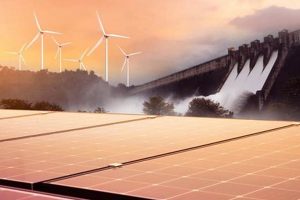
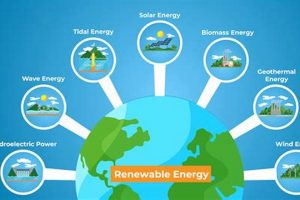
Identifying the optimal option within sustainable power generation is a complex endeavor, contingent upon technological advancement, geographical suitability, economic feasibility, and energy demand characteristics. While various methods exist, including solar photovoltaic, concentrated solar power, wind (onshore and offshore), geothermal, hydropower, and biomass, each presents distinct advantages and disadvantages in terms of scalability, environmental impact, cost-effectiveness, and resource availability. No single method constitutes a universal panacea; instead, a diversified portfolio tailored to specific regional contexts represents the most pragmatic approach.
The selection of an appropriate energy source is crucial for mitigating climate change, enhancing energy security, and fostering sustainable economic development. Historically, reliance on fossil fuels has driven industrial growth but has also contributed to greenhouse gas emissions and geopolitical instability. Transitioning to cleaner options reduces environmental burdens, diversifies energy supply chains, and creates new economic opportunities in manufacturing, installation, and maintenance sectors. Furthermore, decentralized power generation can improve energy access in remote or underserved communities.
Subsequent sections will delve into a comparative analysis of leading contenders, examining their potential for large-scale deployment, grid integration challenges, technological breakthroughs, and lifecycle costs. This examination will consider factors such as resource availability, environmental footprint, technological maturity, and social acceptance to provide a comprehensive perspective on the future of sustainable power.
Optimizing Renewable Energy Investments
Strategic decision-making is paramount when allocating resources to various forms of sustainable power generation. Careful consideration of multiple factors ensures optimal returns and contributes to a more sustainable energy future.
Tip 1: Conduct a Thorough Resource Assessment: Prior to any investment, a comprehensive evaluation of available resources is crucial. This includes assessing solar irradiance, wind speeds, geothermal gradients, hydrological data, and biomass availability in the target region. Accurate data informs realistic projections and minimizes investment risks.
Tip 2: Prioritize Technological Maturity: While emerging technologies hold promise, focusing on commercially available and proven technologies mitigates risk. Solar photovoltaic, onshore wind, and hydropower represent established options with readily available supply chains and operational experience.
Tip 3: Evaluate Grid Integration Challenges: Intermittent renewable energy sources, such as solar and wind, require sophisticated grid management strategies. Invest in technologies that facilitate grid stability, such as energy storage solutions or smart grid infrastructure.
Tip 4: Analyze Lifecycle Costs: Consider the entire lifespan of the renewable energy project, including initial capital expenditure, operational expenses, maintenance costs, and decommissioning expenses. A comprehensive lifecycle cost analysis provides a more accurate picture of the project’s economic viability.
Tip 5: Understand Regulatory Frameworks: Government policies, incentives, and regulations significantly impact the economic viability of renewable energy projects. Remain informed about relevant policies and ensure compliance with all applicable regulations.
Tip 6: Engage Stakeholders: Successful renewable energy projects require community support. Engage with local communities, address their concerns, and ensure equitable distribution of benefits.
Tip 7: Diversify Energy Portfolio: Avoid over-reliance on a single technology. A diversified portfolio incorporating multiple renewable energy sources enhances energy security and resilience.
Strategic investment in sustainable power involves a holistic approach that considers resource availability, technological maturity, grid integration challenges, lifecycle costs, and regulatory frameworks. Adherence to these guidelines fosters efficient resource allocation and maximizes the potential of environmentally friendly power generation.
The subsequent section will explore case studies illustrating successful and unsuccessful implementations, providing further insights into best practices and potential pitfalls.
1. Scalability

Scalability represents a critical determinant in assessing the viability of power generation methods, directly influencing its potential to address global energy needs. A readily scalable power source offers the capacity to expand production efficiently and cost-effectively, thus replacing conventional methods more effectively.
- Land Use Requirements
Scalability can be limited or enabled by land constraints. Solar farms and wind turbine arrays require significant land areas, which can lead to competition with agriculture or conservation efforts. Conversely, offshore wind farms and concentrated solar power plants, while requiring specialized infrastructure, may minimize land use impacts, improving potential scalability.
- Material Availability and Supply Chains
The ability to ramp up production is contingent on the availability of raw materials such as rare earth elements for wind turbines and silicon for solar panels. Scalability is inherently tied to the robustness and resilience of global supply chains; material shortages or bottlenecks can hinder rapid deployment and increase costs. Diversifying supply sources and investing in recycling technologies are crucial for mitigating these risks.
- Grid Integration Capacity
Expansion is not solely dependent on power generation capacity but also on the grid’s ability to handle the intermittent nature of sources like solar and wind. A robust grid infrastructure is essential for integrating large-scale output effectively. Investment in energy storage solutions, smart grids, and transmission infrastructure is necessary to ensure reliable and scalable integration.
- Investment and Economic Factors
The ability to attract investment is crucial for scalability. Large-scale deployment necessitates substantial capital expenditure, impacting the financial feasibility and scalability of energy sources. Government incentives, private investment, and public-private partnerships play significant roles. Economies of scale, wherein costs decrease as production increases, are a major factor in improving the economic scalability of a power source.
Scalability, therefore, is a multifaceted consideration in evaluating various forms of sustainable power. While certain methods exhibit inherent limitations in terms of land usage or resource dependencies, others offer greater potential for widespread adoption and contribution to a sustainable energy future. The ability to overcome these scalability challenges will ultimately determine the true potential of each contender.
2. Cost-Effectiveness

The economic viability of sustainable power generation methods significantly influences their adoption and widespread implementation. Assessing the long-term value proposition is crucial in determining the potential of any energy source to displace conventional fossil fuels.
- Levelized Cost of Energy (LCOE)
LCOE represents a standardized metric used to compare the cost of energy production across different sources over their lifecycle. It encompasses initial capital investment, operational expenses, fuel costs (if applicable), and decommissioning costs. The power source exhibiting the lowest LCOE becomes more attractive, indicating greater economic competitiveness. Recent trends show a decline in the LCOE of solar and wind, enhancing their cost-effectiveness compared to traditional sources.
- Government Subsidies and Incentives
Government policies, including tax credits, feed-in tariffs, and renewable energy mandates, profoundly impact the economic viability of sustainable power generation. Subsidies can reduce the upfront costs and improve the return on investment for projects. The presence or absence of supportive policies significantly influences project development decisions. Policies that internalize the external costs of fossil fuels, such as carbon pricing, further enhance the competitiveness of methods.
- Financing and Investment Risks
The availability of financing and the perceived investment risks significantly influence cost-effectiveness. Renewable energy projects often require substantial upfront capital, making access to affordable financing crucial. Lower perceived risks, stemming from technological maturity and policy stability, translate to lower interest rates and improved project economics.
- Long-Term Operational and Maintenance Costs
While the initial capital investment is a significant factor, long-term operational and maintenance expenses contribute significantly to the overall lifecycle costs. Factors such as equipment reliability, maintenance requirements, and access to skilled labor influence these expenses. Technologies with lower operational costs offer a cost advantage over the long term.
Analyzing the various facets of cost-effectiveness is crucial in evaluating the potential of forms of sustainable power generation. A favorable LCOE, supportive government policies, accessible financing, and low operational costs collectively contribute to enhancing economic competitiveness and accelerating the transition towards a sustainable energy future.
3. Resource Availability

The viability of any form of sustainable power generation hinges significantly on the abundance and consistency of the relevant resource. The geographical distribution and temporal variability of resources dictate the potential for large-scale deployment and long-term sustainability.
- Solar Irradiance and Geographical Latitude
Solar photovoltaic (PV) and concentrated solar power (CSP) depend directly on solar irradiance levels. Regions closer to the equator generally receive higher levels of sunlight, resulting in greater energy generation potential. Cloud cover, atmospheric conditions, and seasonal variations influence the consistency of solar energy. Identifying regions with high and consistent solar irradiance is critical for optimizing solar energy investments.
- Wind Speed and Topography
Wind energy generation relies on consistent and sufficient wind speeds. Coastal areas, mountain passes, and open plains often exhibit higher wind speeds, making them suitable locations for wind farms. Topographical features influence wind patterns; careful site selection is necessary to maximize energy capture. Variations in wind speed and direction require sophisticated wind forecasting and grid integration strategies.
- Geothermal Gradients and Geological Stability
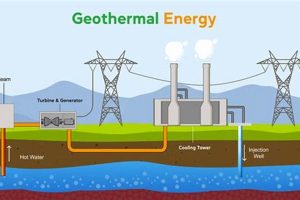
Geothermal energy harnesses heat from the Earth’s interior. Regions with high geothermal gradients, often associated with volcanic activity or tectonic plate boundaries, offer the greatest potential for geothermal energy production. Geological stability is a critical factor; seismic activity can pose risks to geothermal installations. Enhanced geothermal systems (EGS) expand the geographical reach of geothermal energy but require advanced drilling techniques.
- Hydrological Cycles and Water Availability
Hydropower depends on the availability of water resources and the hydrological cycle. River flow rates, precipitation patterns, and reservoir capacity influence the output of hydropower plants. Water availability is also crucial for CSP plants that utilize water for cooling. Climate change and water scarcity pose potential challenges to the long-term sustainability of hydropower and CSP in certain regions.
The correlation between resource availability and the potential of diverse forms of sustainable power generation is undeniable. Accurate assessment of the geographical distribution, temporal variability, and sustainability of resources is crucial for informed decision-making and effective allocation of investments towards the most promising forms of environmentally friendly power generation. Geographic limitations and resource constraints necessitate a diversified portfolio tailored to local conditions, optimizing energy security and minimizing reliance on single sources.
4. Environmental Impact

The determination of a superior option necessitates rigorous evaluation of its environmental consequences. While often perceived as inherently benign, environmentally friendly power generation methods can present unforeseen ecological challenges. A comprehensive understanding of these impacts is crucial for informed decision-making and sustainable implementation.
- Land Use and Habitat Disruption
Large-scale solar and wind farms require extensive land areas, leading to habitat fragmentation and displacement of wildlife. The clearing of forests or grasslands for installations can disrupt ecosystems and reduce biodiversity. Mitigating these effects involves careful site selection, habitat restoration, and implementation of wildlife protection measures. Offshore wind farms minimize land use but can impact marine ecosystems.
- Resource Depletion and Material Extraction
The manufacturing of solar panels, wind turbines, and batteries involves the extraction of raw materials, including rare earth elements. Mining activities can cause soil erosion, water pollution, and habitat destruction. Sustainable sourcing of materials and investment in recycling technologies are essential for reducing the environmental footprint of power generation systems.
- Water Consumption and Thermal Pollution
Concentrated solar power (CSP) plants and geothermal power plants may require significant amounts of water for cooling, potentially straining water resources in arid regions. Thermal pollution from discharged water can impact aquatic ecosystems. Dry-cooling technologies and closed-loop systems can mitigate water consumption and thermal pollution.
- Noise Pollution and Visual Impact
Wind turbines can generate noise pollution, impacting nearby communities and wildlife. The visual impact of large-scale installations can also be a concern for some populations. Careful site selection, noise reduction technologies, and aesthetic design considerations can minimize these impacts.
Assessing the full spectrum of environmental impacts is essential when evaluating various approaches to power generation. A holistic approach that considers land use, resource depletion, water consumption, and aesthetic impacts, informs sustainable project development and minimizes the ecological footprint. Comparative life-cycle assessments, incorporating environmental externalities, are critical for accurate evaluation and facilitating the selection of genuinely environmentally friendly and sustainable energy solutions.
5. Technological Maturity

The level of advancement and proven reliability of a given method bears directly upon its designation as a premier contender within the realm of sustainable power. Technologies characterized by established performance records, standardized manufacturing processes, and readily available operational expertise present a lower risk profile and a greater potential for immediate, large-scale deployment. In contrast, nascent technologies, while promising, may require significant further research, development, and demonstration before achieving comparable levels of reliability and cost-effectiveness. For example, solar photovoltaic (PV) technology, having undergone decades of refinement, boasts a well-established supply chain and a proven track record of performance in diverse climates, rendering it a presently mature and widely deployable solution. Similarly, conventional hydropower, with over a century of operational experience, represents a stable and dependable, albeit geographically constrained, energy source.
Conversely, emerging technologies such as fusion power or advanced geothermal systems, while potentially transformative, remain in earlier stages of development. Fusion power, promising near-limitless clean energy, faces significant technological hurdles in achieving sustained energy output. Advanced geothermal systems, capable of accessing geothermal resources in previously inaccessible locations, require complex and costly drilling techniques. These technologies, while holding long-term potential, cannot presently compete with the established reliability and affordability of more mature solutions. The maturity of supporting infrastructure, such as energy storage solutions and smart grid technologies, also influences the deployability of intermittent resources like solar and wind. A robust and adaptable grid is crucial for accommodating the fluctuating output of these resources, ensuring a stable and reliable energy supply.
Therefore, the assessment of technological maturity is integral to identifying sustainable power solutions capable of making immediate and substantial contributions to global energy demands. While prioritizing proven and reliable technologies ensures near-term progress, continued investment in research and development of emerging solutions is crucial for unlocking future potential and diversifying the energy landscape. A balanced approach, incorporating both established and innovative technologies, maximizes the prospects for a sustainable and resilient energy future.
Frequently Asked Questions Regarding the Most Promising Renewable Energy Source
This section addresses common inquiries concerning identifying the optimal sustainable power generation option, clarifying misconceptions and providing informative responses based on current scientific and technological understanding.
Question 1: Is there a single power source that definitively surpasses all others in terms of sustainability and potential?
No single energy source universally fulfills all criteria. The optimal choice depends on location-specific factors, technological advancements, and evolving economic conditions. A diversified approach, tailored to regional resources and needs, is generally the most effective strategy.
Question 2: How significantly does cost influence the determination of the “most promising” power option?
Cost is a critical determinant. The levelized cost of energy (LCOE), encompassing all lifecycle expenses, directly impacts competitiveness against fossil fuels. Government subsidies, financing options, and long-term operational costs further influence the economic viability of a method.
Question 3: What role does technological maturity play in assessing the potential of different approaches?
Technological maturity significantly affects risk and deployment speed. Established technologies like solar photovoltaic and conventional hydropower offer proven reliability, while nascent technologies require further development and demonstration before achieving widespread adoption.
Question 4: How are environmental impacts considered when evaluating various environmentally friendly power options?
Environmental impacts are a crucial consideration. Comprehensive life-cycle assessments (LCAs) evaluate land use, resource depletion, water consumption, and potential pollution. Minimizing ecological footprints is essential for sustainable power generation.
Question 5: Can energy storage technologies resolve the intermittency challenges associated with solar and wind power?
Energy storage technologies, such as batteries and pumped hydro storage, can mitigate intermittency by storing excess energy for later use. However, widespread deployment of energy storage requires further cost reductions and technological advancements.
Question 6: How do government policies influence the deployment of sustainable power generation methods?
Government policies, including tax credits, feed-in tariffs, and renewable energy mandates, significantly influence the economic viability and deployment of sustainable power. Supportive policies encourage investment and accelerate the transition towards cleaner energy sources.
In conclusion, identifying a prime contender requires balancing economic, environmental, and technological factors while accounting for regional nuances and policy landscapes.
The subsequent section summarizes key insights and underscores the importance of continuous innovation in achieving a sustainable energy future.
Conclusion
This exploration regarding the identification of a singular, optimal choice underscores a complex reality: a definitive, universal solution remains elusive. The assessment process requires nuanced consideration of scalability, cost-effectiveness, resource availability, environmental impact, and technological maturity. Each candidate, from solar and wind to geothermal and hydropower, presents inherent strengths and limitations that demand careful evaluation within specific regional and economic contexts. No single method can definitively claim superiority across all parameters.
The pursuit of a sustainable energy future necessitates a diversified strategy. Prioritizing innovation, fostering policy frameworks that incentivize responsible development, and investing in grid modernization are crucial steps. The ongoing refinement of existing technologies and the exploration of emerging solutions remain paramount. Ultimately, a commitment to a holistic approach, acknowledging the multifaceted nature of energy challenges, will determine the trajectory toward a resilient and environmentally responsible energy landscape.